
AI·News & analysis
Claude plans give about 5x the AI usage of ChatGPT's, SemiAnalysis finds
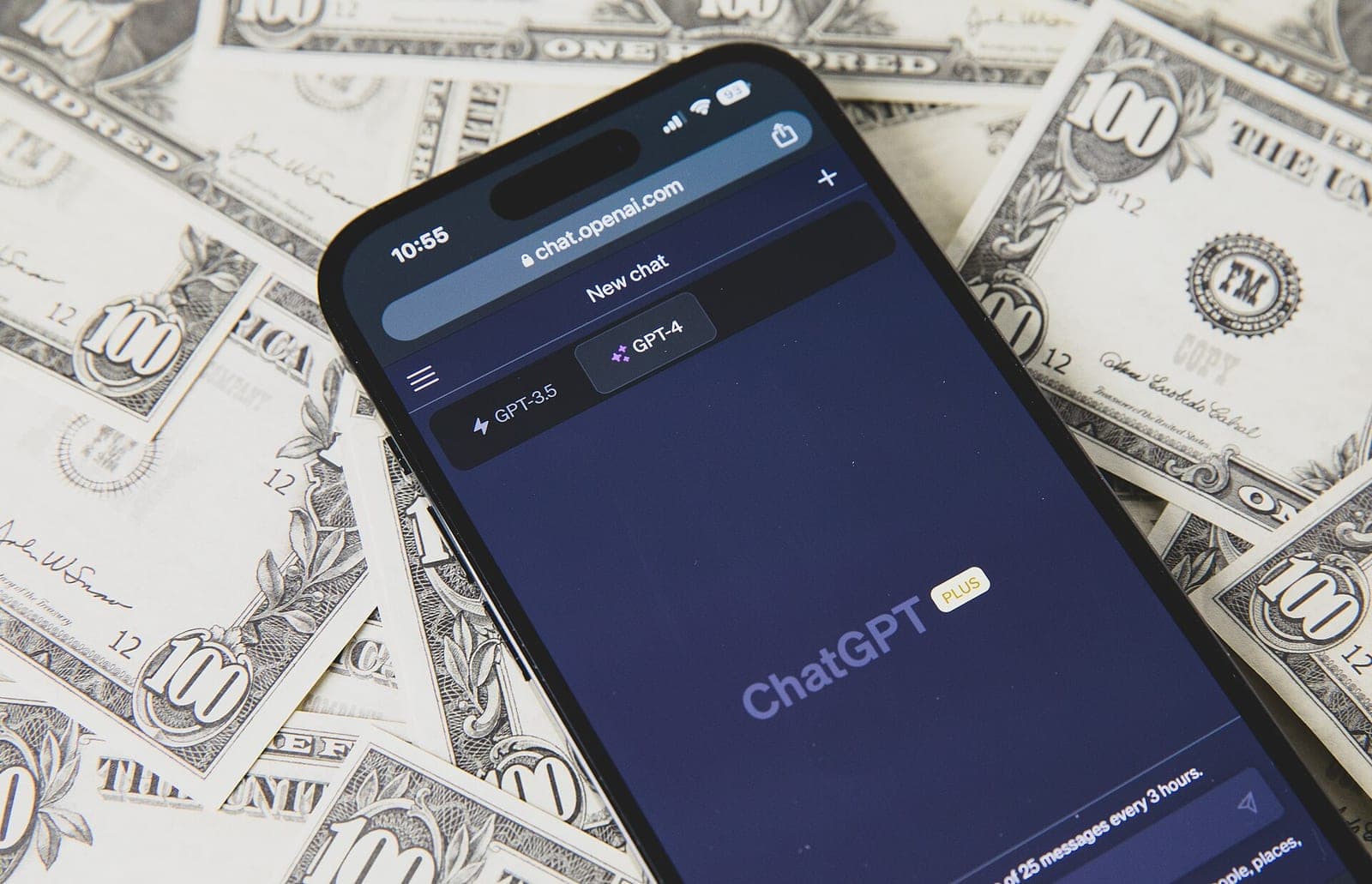
Research firm SemiAnalysis tested how far every AI subscription goes. On the everyday models, a Claude plan buys roughly five times the usage of the matching ChatGPT plan.
Tide
Wave
Sci-fi
2/10
Reality
In your hands
Reading War and Peace to a chatbot to see how fast a meter moves.How we rate
Research firm SemiAnalysis tested AI subscription limits and found Anthropic's Claude plans give about 5x the API-equivalent value of OpenAI's on their everyday models.
At the $20 tier, Claude Pro with Opus 5.5 returned $1,178 of usage a month, against $211 for ChatGPT Plus with GPT-6.1 Sol. The gap widened after OpenAI halved its $200 plan's usage last week. Both labs can quietly change these limits at any time, so the numbers can move.
What to know
- SemiAnalysis measured the hidden limits of AI subscription plans from nine companies, including Anthropic and OpenAI.
- On the mid-tier models, Claude Opus 5.5 plans returned about 5x the API-equivalent value of GPT-6.1 Sol on ChatGPT plans: $1,178 versus $211 a month at the $20 tier.
- OpenAI halved the usage on its $200 plan last week and added a $500 tier; older $200 plans keep the old limits until October 29.
- Subscriptions are about 10% of Anthropic's revenue but can take over 40% of its inference compute, SemiAnalysis estimates.
Research firm SemiAnalysis measured how much AI you really get for your monthly subscription. Its answer: on the everyday models, a Claude plan goes about five times further than the matching ChatGPT plan. So how do you measure a limit that no company publishes?
What did the study actually compare?
SemiAnalysis tested every subscription plan from nine companies: Anthropic, OpenAI, Meta, SpaceXAI, MiniMax, Moonshot, Z.ai, Cursor and Cognition. The report is by Andrew Megalaa, Max Kan and Dylan Patel. It came out on October 5.
The headline is the matchup between the two biggest US labs. SemiAnalysis compared the models each one markets as the daily driver for most users: Anthropic's Claude Opus 5.5 and OpenAI's GPT-6.1 Sol.
"Anthropic is an overwhelmingly better deal, offering ~5x the API-equivalent value across the board."
That is the firm's own summary. It adds a fair caveat: GPT-6.1 Sol is much cheaper per token than Opus 5.5. But it says the gap is still large even when you count raw tokens instead of dollars.
What's "API-equivalent value"?
There are two ways to pay for AI. You can pay a flat monthly fee, like $20 for a chat plan. Or you can pay per use through the API, the way developers do, where every token has a price.
A token is a small chunk of text, roughly part of a word. API-equivalent value asks a simple question: if you used up your whole plan, what would those tokens cost at the pay-per-use price?
Think of it like an all-you-can-eat buffet. The plan is the entry fee. API-equivalent value is what the same plates would cost if you ordered them one by one from the menu.
How do you measure a limit nobody publishes?
Here is the tricky part. Neither company tells you how many tokens a plan includes. You only see a usage meter from 0 to 100%, over a 5-hour window and a 7-day window.
So SemiAnalysis worked backward from the meter:
- One token type at a time: each test used a prompt built to burn mostly one kind of token, such as fresh input, cached input or output.
- War and Peace as the text: some models refuse to answer large blocks of gibberish, so the firm used a portion of the novel instead.
- Counting in steps: a single request often doesn't move the meter, so it tracked how many tokens it took to move the meter by one unit.
- Tight margins: it kept adding steps until the estimate was within plus or minus 5%.
- Free cache reads: if 500 million cached tokens never moved the meter, it treated them as free.
Then it applied a typical agentic workload, the kind of long-running task where AI works through many steps, based on its own September usage. Finally, it priced the result at each company's API rates.
So how big is the gap?
By the numbers: here is what SemiAnalysis's figures show for the everyday models, per month, on the agentic workload.
| Plan | Price | Model | API-equivalent value |
|---|---|---|---|
| Claude Pro | $20 | Opus 5.5 | $1,178 |
| ChatGPT Plus | $20 | GPT-6.1 Sol | $211 |
| Claude Max 20x | $200 | Opus 5.5 | $11,726 |
| ChatGPT Pro | $200 | GPT-6.1 Sol | $2,084 |
Counted in plain tokens instead of dollars, The Register reports that Claude Pro gives about 2.9 billion tokens a month, against 1 billion for ChatGPT's $20 plan.
At the very top, the picture is closer. SemiAnalysis says limits are "quite similar across the board" for OpenAI's GPT-6 Astra and Anthropic's Claude Fable 5.1.
One wrinkle: Fable can only use 50% of a Claude plan's limit. So a $200 Claude plan still has half its limit left after $2,485 of Fable 5.1, while the matching OpenAI plan is used up after $2,897 of Astra. That spare half is what makes Opus 5.5 such a good deal on Claude plans.
In real life If you pay $20 a month for an AI chatbot and mostly use the default model, this study says your plan's real size depends a lot on which company you picked. Check your plan's usage page before a big project, not halfway through it.
Why did the gap get wider?
What changed: last week, OpenAI halved the number of tokens its $200 plan gives for each model tier, and SemiAnalysis's tracking confirmed the 50% cut. OpenAI also launched a new $500 tier.
Here is what that looks like in practice:
- Old customers: $200 plans bought before the cut keep the old, higher limits until October 29. New buyers start with the lower limits right away.
- The $500 plan: it offers only 21% more GPT-6 Astra usage than the old $200 plan. Its headline feature is a 300 tokens-per-second Ultrafast mode, which SemiAnalysis is still testing.
- Pricing page: OpenAI used to advertise its plans as "5x more usage than Plus" and "20x more usage". That relative language is gone from its pricing page.
- Same value per dollar: after the change, the $100, $200 and $500 Pro plans all give the same tokens per dollar for every model.
Anthropic went the other way, a little. When it cut Opus 5.5's API prices (20% off input and output, 60% off cache reads), it raised Opus usage by about 20% on Max plans and about 50% on Pro. SemiAnalysis says that still didn't fully match the price cut. You can read more about the newest Claude lineup in our story on Claude Sonnet 5.5.
OpenAI does have one edge. None of its Pro plans has a 5-hour limit, only a weekly one, so it's easier to use your whole allowance. SemiAnalysis says it doesn't think that makes up for the gap.
Why do these plans cost the labs so much?
The big picture: subscriptions are a small slice of revenue but a big slice of computing power. SemiAnalysis estimates that subscriptions are about 10% of Anthropic's revenue but can take up over 40% of its inference compute, the chips that answer your questions. The Register puts it at about 42%.
That pulls down how much money each chunk of data center capacity earns. SemiAnalysis estimates the hit at roughly $36 million in lower revenue per megawatt for Anthropic. It says subscriptions matter even more at OpenAI, where they are a bigger part of total revenue.
So why offer such generous plans? Dhruv Amin, co-founder of AI agent company Skydive, told The Register that the labs "subsidize their prosumer plans with subscription pricing massively" as a marketing funnel. People get comfortable with the tools at home, then bring them to work.
Can these limits change overnight?
Yes, and the study caught it happening. While testing, SemiAnalysis found that one of three identical accounts had about 20% lower limits than the other two. It was also the oldest account.
The provider told the firm this was an "extremely tiny" A/B test on limits. It said it "didn't just decrease limits wholesale" and was testing "how to better balance when people hit limits". SemiAnalysis draws two lessons: providers can quietly change limits at any time, and its method is sensitive enough to notice.
Is this the only way to measure value?
No, and the report says so itself. It argues you can't say a plan is worth a set amount on its own: it depends on the plan, the model and the work you do.
Other yardsticks tell a different story. Artificial Analysis tracks the cost of finishing a specific task at API prices. By that measure, The Register notes, GPT-6.1 Sol ($0.72) is far cheaper than Claude Opus 5.5 ($5.98). SemiAnalysis also says the industry lacks reliable data on how efficiently each model uses tokens.
The catch for businesses: they often can't lean on subsidized plans. The Register cites a July McKinsey report that found 93% of enterprises went over their AI budgets. Amin said his company cut its own AI costs by more than 75% by routing work to cheaper open models such as GLM-5.3 Flash. More on the company behind Claude is on our Anthropic topic page.
The Register says OpenAI did not immediately respond to its request for comment.
What it means for you
- Pick by model, not just price: the same $20 can buy very different amounts of AI depending on which model you use most.
- Heavy ChatGPT $200 users: if you bought before the cut, your old limits run until October 29. Plan any big projects with that date in mind.
- Watch your meter: limits can change quietly, so a plan that felt roomy last month may not be the same this month.
- Businesses: subscription math doesn't carry over to the API, where cost per task can point the other way.
The bottom line
SemiAnalysis found that on today's everyday models, a Claude plan buys about five times the usage of a ChatGPT plan at the same price. The gap grew after OpenAI halved its $200 plan last week. These are one firm's estimates of private meters that can shift at any time, so treat them as a snapshot, not a promise.
Key facts
- Claude Pro, $20 (Opus 5.5)
- $1,178 of API-equivalent usage a month
- ChatGPT Plus, $20 (GPT-6.1 Sol)
- $211 of API-equivalent usage a month
- Gap on mid-tier models
- About 5x in Anthropic's favor
- Subscriptions at Anthropic
- About 10% of revenue, over 40% of inference compute
- Old ChatGPT $200 limits end
- October 29
Got questions?
Quick answers, plain wordsWhat did SemiAnalysis find about Claude and ChatGPT plans?
On the models both companies pitch as everyday drivers, Claude Opus 5.5 and GPT-6.1 Sol, a Claude subscription returned about 5x the API-equivalent value of the matching ChatGPT subscription, at every price tier it tested.
What is API-equivalent value?
It is what the tokens you can use on a monthly plan would cost if you paid the company's normal pay-per-use API prices instead. SemiAnalysis calls it the best single number for a plan's value, while noting it can mislead when a model is unusually cheap or expensive per token.
How much usage does a $20 plan give?
SemiAnalysis puts Claude Pro with Opus 5.5 at $1,178 of API-equivalent usage a month, and ChatGPT Plus with GPT-6.1 Sol at $211. Counted in tokens, The Register reports Claude Pro at 2.9 billion tokens a month and ChatGPT's $20 plan at 1 billion.
What changed in OpenAI's $200 plan?
Last week OpenAI halved the number of tokens the $200 plan gives for each model tier and added a new $500 tier. SemiAnalysis confirmed the 50% cut in its tracking. Plans bought before the change keep the old limits until October 29.
Is ChatGPT's new $500 plan a better deal?
Per dollar, not really. SemiAnalysis found the $500 plan offers only 21% more GPT-6 Astra usage than the old $200 plan, and that the $100, $200 and $500 plans now all give the same tokens per dollar. Its headline feature is a 300 tokens-per-second Ultrafast mode, which SemiAnalysis is still testing.
Is Claude better than ChatGPT at the top-end models too?
There the plans are quite similar, SemiAnalysis says. One difference: Claude's top model, Fable 5.1, can only use 50% of a plan's limit. A $200 Claude plan still has half its limit left after $2,485 of Fable 5.1, while the matching OpenAI plan is used up after $2,897 of GPT-6 Astra.
Does ChatGPT have any advantage on limits?
Yes. None of OpenAI's Pro plans has a 5-hour limit, only a weekly one, which makes it easier to use more of your monthly allowance. SemiAnalysis says it does not think that offsets the gap on Opus 5.5.
How did SemiAnalysis measure limits nobody publishes?
It sent repeated requests built to use one kind of token at a time, using a portion of War and Peace as the text, and watched how far each plan's usage meter moved. It kept counting until its estimate was within plus or minus 5%, then priced the result at each company's API rates.
Can AI companies change subscription limits without telling users?
Yes. SemiAnalysis found one of three identical accounts had about 20% lower limits. The provider told it this was an 'extremely tiny' A/B test on limits and that it 'didn't just decrease limits wholesale'.
Why are AI subscriptions so cheap compared with the API?
The labs subsidize them as a way to bring people in. Dhruv Amin, co-founder of AI agent company Skydive, told The Register the plans work as a marketing funnel: people learn the tools at home, then bring them to work.
Did OpenAI respond?
The Register reports that OpenAI did not immediately respond to its request for comment.
SourcesSemiAnalysis
Topics and tagsOpenAI, Anthropic, Funding & deals, anthropic
Related stories
Anthropic opens its strongest hacking-capable AI to more security teams
Anthropic merged Project Glasswing into a bigger Cyber Verification Program with three access tiers, so more vetted defenders can use Claude Mythos 5.1 and Opus 5.5 with fewer cyber blocks.

OpenAI apologizes to Australian lawmakers for its AI agent's Medicare website hack
OpenAI's chief strategy officer Jason Kwon flew to Sydney to face a parliamentary inquiry, pledged faster disclosure, and admitted the company should have told the government sooner. Anthropic made a similar pledge.

ChatGPT is signing fake New Yorker cartoons with real cartoonists' names
A Nieman Lab investigation found ChatGPT adding the signatures of more than 15 real New Yorker cartoonists to AI-generated cartoons. One went viral with a name its artist never signed.
More in brief
- Rapidus signs up 17 design firms to find customers for its 2nm chipsOct 7
- Arizona court hack exposed data on 1.3 million people after one phishing clickOct 7
- Man who streamed AI songs with bots for $8 million gets 18 months in prisonOct 7
- Jaguar reveals the Type 01, its 1,000-hp electric grand tourerOct 7
- OpenAI publishes 722 math papers written by an unreleased AI modelOct 6
- Hackers hijacked three country domains to get fake Google certificatesOct 6