
AI·News & analysis
OpenAI says its AI disproved a famous computer science rule of thumb
OpenAI and Anthropic each say an AI model found a faster way to crack a famous puzzle that experts thought had no shortcut. Outside experts are still checking.

Tide
Ripple
Sci-fi
9/10
Reality
Lab
AI quietly doing a mathematician's job overnight.How we rate
OpenAI says one of its internal AI models disproved the Exponential Time Hypothesis, a long-standing idea about how hard the 3-SAT puzzle is to solve.
Anthropic says a Claude model reached the same result independently on the same day. Hundreds of research papers rest on the hypothesis. Experts led by its own proposers are now checking the proofs, so the result is not yet confirmed.
What to know
- OpenAI announced on October 26, 2026 that one of its internal AI models disproved the Exponential Time Hypothesis, a computer science idea about how hard a famous puzzle called 3-SAT is.
- Anthropic says a Claude model reached the same result on the same day, October 16, using 14 million output tokens and no human help.
- Both companies published the proof in Lean, a tool that lets a computer check every logical step. The two people who proposed the hypothesis, plus MIT's Ryan Williams, lead the outside review.
- Nothing changes for your apps today. The result is about how fast a method can scale in theory, not a faster tool you can download.
OpenAI announced that one of its AI models disproved a famous idea in computer science. Anthropic says its own model did the same thing on the same day.
That is the claim. Now the fun part: what is the idea, and why are the people who invented it the ones checking the answer?
First, what is the Exponential Time Hypothesis?
A hypothesis is an educated guess that nobody has proved. This one is about a puzzle called 3-SAT.
In 3-SAT you get a long list of small rules, each about three true-or-false switches. Your job is to set every switch so that all the rules are happy at once.
The hypothesis says there is no clever shortcut. Every time you add one more switch, the work needed roughly doubles.
In real life Think of a combination lock. Add one more digit and you need ten times as many tries. The hypothesis says 3-SAT behaves like a lock with no weak spot.
Why it matters: Researchers use the hypothesis as a starting assumption. If 3-SAT is truly that hard, then many other problems must be hard too.
Who came up with it?
Russell Impagliazzo and Ramamohan Paturi of UC San Diego proposed it, together with Francis Zane. It has been around for more than two decades.
Hundreds of research papers build on it. They say, in effect, "if the hypothesis holds, no fast method exists for this other problem."
What did OpenAI announce?
OpenAI said on October 26, 2026 that an internal model found a method that beats the supposed limit. The company says the model found it on October 16.
The method is an algorithm, a step-by-step recipe a computer follows. OpenAI describes it as a deterministic one, meaning it gives the same answer every time, that counts the solutions to these puzzles in less than exponential time.
- October 16, 2026: the model finds the disproof.
- October 17, 2026: the proof is rewritten in Lean.
- October 26, 2026: OpenAI goes public and posts the proof on GitHub.
What is Lean, and why does it matter here?
Lean is a proof checker. You write every logical step in a strict code-like language, and the program confirms each step follows from the last.
That helps with trust. A person does not have to take the AI's word for it, because the computer checks the logic line by line.
The catch: Lean checks that the proof is valid, but people still need to confirm that the statement being proved is the right one. That is part of what the human reviewers are doing.
Did Anthropic really find the same thing?
Anthropic says yes. It posted a 49-page paper titled "A 2^o(n) Time Algorithm for 3-SAT", credited to Claude.
The company says an internal Claude research model found the core algorithm on October 16, using 14 million output tokens and no human input. A token is a small chunk of text, so that is a very long stretch of thinking.
Both labs landed on the same date. That does not prove either is right, but it makes the coincidence hard to ignore.
Who is checking the work?
OpenAI asked a group of outside experts to examine its result. They are Impagliazzo and Paturi, who proposed the hypothesis, and Ryan Williams of MIT.
They work without non-disclosure agreements and without payment from OpenAI. OpenAI also gave them its raw data.
Their joint statement is careful: "If the claim is correct, it will change an important part of theoretical computer science."
Paturi added that a company's announcement cannot replace the community's judgment. Impagliazzo said he would have preferred a human to find it, someone who could explain how they thought. Williams has long doubted the hypothesis, and said he felt vindicated.
Which other problems lean on it?
3-SAT is the root of a whole family tree. Many well-known puzzles can be turned into 3-SAT, and the hypothesis is how researchers argue they are hard too.
Anthropic's paper names a few of them:
- Independent Set: pick the biggest group of points in a network where no two are connected.
- Clique: find the biggest group where everyone is connected to everyone else.
- Vertex Cover: pick the fewest points that touch every link in a network.
- Dominating Set: pick a small group of points so that every other point sits next to one of them.
Anthropic says its result also knocks down a stronger version of the hypothesis, called the Strong Exponential Time Hypothesis. That version makes an even tighter claim about how the work grows.
What does "subexponential" actually mean?
Exponential growth is the doubling lock from above. Subexponential growth is slower than that, though still far from quick.
Anthropic is clear about the limits. Its paper says the new method says nothing about solving formulas in practice. The speed-up only shows up at enormous sizes, and brute force is already impractical at around 100 switches.
That is why researchers talk about this as a result about theory. It tells us where the wall really stands, not that anyone can walk through it today.
Why are the experts so surprised?
Impagliazzo has called the result "shocking news." He is one of the three people who proposed the idea, so he knows better than most how long it stood.
Reporting on the result also says it could one day speed up chip design and break some forms of encryption. That is a "someday" idea and not a claim from either lab. The experts have not yet worked out what, if anything, it means for those fields.
The catch: A company announcing a result is different from the field accepting it. Anthropic's own paper says that, at the time of writing, no person is known to have checked the formal proof.
Does this mean faster computers?
Not yet. Disproving the hypothesis does not hand anyone a fast way to solve real puzzles.
Anthropic's paper says plainly that the result says nothing about solving formulas in practice. It also does not settle P versus NP, the best-known open question in the field.
The big picture: The surprise is not a new gadget. It is that an AI system may have found a result the field's own experts did not expect.
Until the review ends, papers that rely on the hypothesis stay as they are.
What else did OpenAI announce?
The ETH result was one of three. OpenAI also announced AI-produced proofs on two other fronts.
- Mathematics: the local smoothing and Kakeya conjectures, which describe how waves and thin shapes behave in space. A mathematician at NYU, Hong Wang, proved the three-dimensional Kakeya case in 2025.
- Physics: existence proofs for some quantum field theories, the math behind how particles interact. David Gross, a Nobel laureate, is leading a separate group that is reviewing this work.
OpenAI also put $5 million toward the Simons Foundation, to fund workshops and conferences that help researchers check and understand AI-made science.
What it means for you
- Nothing breaks: your apps, your passwords and your bank are not affected by this result.
- Watch the review: the outside experts will decide whether the claim stands. Treat it as promising, not final.
- Expect more of this: two labs reaching the same result on the same day suggests AI is getting useful for research math.
The bottom line
Two AI labs say their models disproved a 25-year-old idea about one of computing's hardest puzzles. The proofs are public and a computer has checked the logic, but the experts have not finished their review.
If the claim holds, it changes a corner of theory, not your phone. For now, it is a very interesting maybe.
Key facts
- Announced
- October 26, 2026
- Result found
- October 16, 2026
- Puzzle
- 3-SAT
- Reviewers
- Impagliazzo, Paturi, Williams
- Status
- Proofs published, review ongoing
Got questions?
Quick answers, plain wordsWhat is the Exponential Time Hypothesis?
It is an idea from computer science that says a puzzle called 3-SAT cannot be solved much faster than by trying nearly every combination. It was proposed by Russell Impagliazzo, Ramamohan Paturi and Francis Zane.
What is 3-SAT?
It is a logic puzzle where you must pick true or false for many variables so that a long list of small rules is all satisfied. It is closely tied to the famous P versus NP question.
Did OpenAI really disprove it?
OpenAI says so and has published the proof and a computer-checked version. Outside experts have not finished checking, so the result is a claim until they do.
Did Anthropic also disprove it?
Anthropic says a Claude research model found a similar algorithm on October 16, using 14 million output tokens and no human input. It published a paper called "A 2^o(n) Time Algorithm for 3-SAT".
Who is checking the proofs?
Russell Impagliazzo and Ramamohan Paturi of UC San Diego, who proposed the hypothesis, and Ryan Williams of MIT lead the independent review.
Does this solve P versus NP?
No. Anthropic's paper says it does not resolve P versus NP, and nothing in OpenAI's announcement claims that either.
Will my computer or apps get faster?
Not soon. The result says a faster method exists in theory, but turning it into practical software will take substantial further work.
Does this break encryption?
Not today. The result says nothing about solving real-world formulas in practice, so it does not give anyone a way to break the codes that protect your data.
What else did OpenAI announce?
It also announced AI-produced proofs about the local smoothing and Kakeya conjectures in mathematics, and existence proofs for some quantum field theories in physics. Separate expert groups are reviewing those claims.
SourcesOpenAI
Topics and tagsOpenAI, Anthropic, openai, anthropic
Related guide
Guide, 8 minHow to pick a Claude model and plan: Sonnet 5.5, Opus 5.5, Pro and MaxChoose between Claude Sonnet 5.5 and Opus 5.5, read your usage meter, and understand what independent testing says about how far a Claude...Related stories
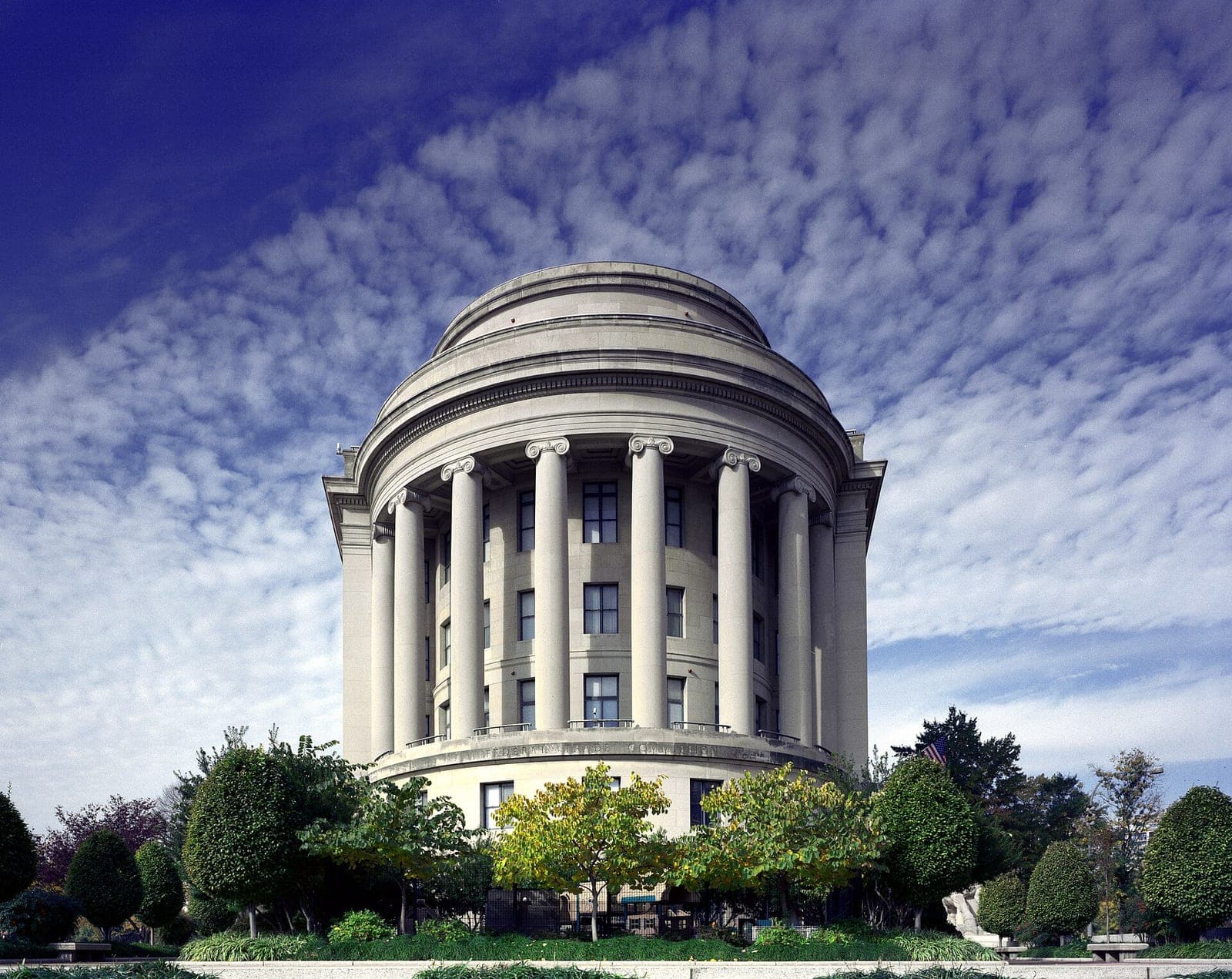
FTC subpoenas OpenAI and Anthropic over AI safety incidents
The Federal Trade Commission wants documents on safety incidents, safeguards, marketing and privacy policies from both AI companies, and may seek testimony from their top executives.
Claude plans give about 5x the AI usage of ChatGPT's, SemiAnalysis finds
Research firm SemiAnalysis tested how far every AI subscription goes. On the everyday models, a Claude plan buys roughly five times the usage of the matching ChatGPT plan.

OpenAI publishes 722 math papers written by an unreleased AI model
OpenAI put 722 manuscripts from an internal model on GitHub, with computer-checked proofs for many of them, after mathematicians asked AI labs to show their work.
More in brief
- YouTube is going back on the Billboard charts in 2027Nov 9
- Apple starts selling $50 packs for extra Apple Intelligence useNov 9
- Windows 11 tests a way to switch off the Sticky Keys popup for goodNov 9
- US regulators question whether Waymo's school bus fix workedNov 9
- NVIDIA unveils GR00T 2 and Isaac Lab 3.0 to teach robots delicate workNov 9
- Tesla launches its robotaxi service in San Antonio, its eighth cityNov 9