
AI·News & analysis
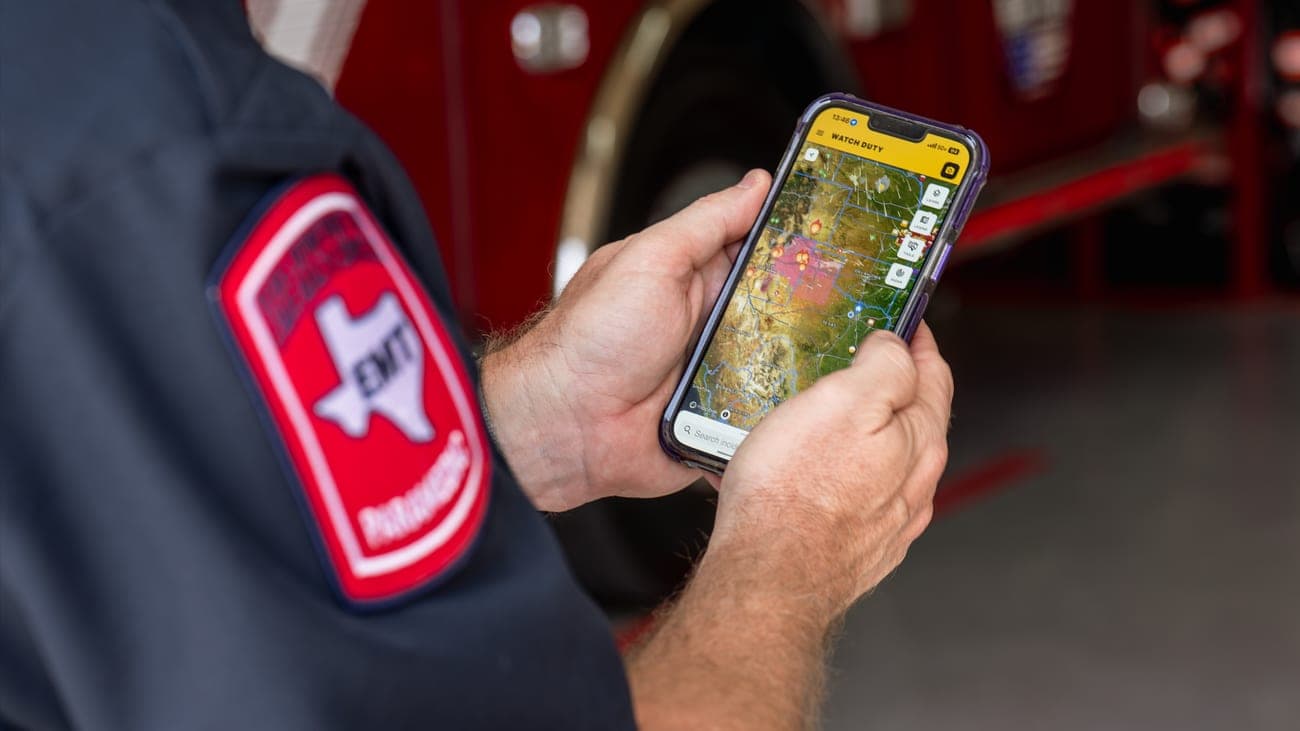
Google's Gemini now turns noisy fire radio into text for Watch Duty
A Gemini-powered tool built with Google.org engineers cleans up static-filled firefighter radio and flags new wildfire dispatches in under 30 seconds.

Tide
Wave
Sci-fi
5/10
Reality
Shipping
An AI that can hear a fire through the static.How we rate
Google and the wildfire alert app Watch Duty built a Gemini tool that turns static-filled fire radio into text and flags new dispatches in under 30 seconds.
Engineers trained it on more than 20,000 hours of past recordings. Watch Duty reaches more than 16 million people, and reporters used to monitor up to 20 feeds by ear. The tool already handles about 400 feeds and was designed for more than 10,000.
What to know
- Google engineers spent six months embedded with the nonprofit Watch Duty to build a Gemini tool that turns noisy fire radio into searchable text.
- The tool flags a new wildfire dispatch in under 30 seconds and cut the word error rate on bad radio audio from 38% to 22.34%.
- It transcribes more than 200 hours of radio a day from about 400 feeds, and was built and tested for more than 10,000 feeds at once.
- In July 2026, during the Railroad Fire in Washington, it caught a 911 dispatch that led to Watch Duty's first nighttime Critical Alert.
Google announced a Gemini tool that turns crackly firefighter radio into clean text, so the wildfire alert app Watch Duty can spot new fires in under 30 seconds. The interesting question is how an AI learns to understand a call that people can barely hear.
What did Google build?
Gemini is Google's family of AI models. For this project, a team of Google engineers and researchers spent six months working full-time inside Watch Duty. The effort ran through the Google.org Fellowship, which sends Google staff to help nonprofits.
They built a tool that does three things:
- Cleans up the sound: it wipes out heavy static from the radio audio.
- Understands the jargon: it translates specialized firefighting terms into plain words.
- Writes it down: the result is clean, searchable text that reporters can scan.
Watch Duty's volunteers no longer have to strain to decode noisy audio. They can spend that time checking facts and getting alerts out.
What is Watch Duty?
Watch Duty is a nonprofit app that sends wildfire and flood alerts. Its own history page says it reaches more than 16 million Americans, with a team of more than 350 people covering all 50 states.
It started with one frightening night. Its co-founder and CEO, John Mills, watched helicopters drop water near his Northern California home, and his phone stayed silent. Months later, he found a network of radio operators posting real-time updates during a 50,000-acre fire that nearly took his home. Watch Duty grew out of bringing those operators together.
The people behind the alerts are real. Active and retired dispatchers, first responders and reporters verify and publish each update, and Watch Duty says the alerts are not crowdsourced or AI generated.
In real life If a fire starts near your town at 2 a.m., the fastest warning is often a voice on a fire radio channel. Watch Duty's job is to hear that voice, check it and ping your phone.
Why is fire radio so hard to follow?
In much of the country, the first word of a new fire still travels over decades-old analog VHF radio. That is an older kind of radio that sends the voice as a wave, not as digital data.
Engine noise, wind and static pile onto the signal. Firefighters also talk fast, in tactical shorthand. All of that makes it hard to hear what is happening.
The bottleneck: Watch Duty reporters monitor up to 20 feeds by hand. The nonprofit says the earliest hints of new fires, evacuation orders and changes in fire behavior often arrive over radio, spread across thousands of analog channels. Its reporters listen live to hundreds of public streams, and a major fire in Los Angeles County alone can mean watching more than 20 frequencies at once.
A person can only listen to so many channels. That means a new fire can be missed simply because nobody was listening at that moment.
How did the tool learn to listen?
Engineers used more than 20,000 hours of past radio recordings from Watch Duty. That taught the model to cope with static and to recognize firefighting terms that are not in a normal dictionary, or in the books and web pages AI models usually learn from.
Think of a new hire who has spent months in the dispatch room. After 20,000 hours of listening, the odd words and the crackle start to sound normal.
What do the numbers say?
Google and Watch Duty measured the results across Watch Duty's network. The tool has:
- Closed coverage gaps: in areas with no other automated dispatch detection, it sends reporters a signal in less than 30 seconds.
- Lowered the error rate: the word error rate on degraded VHF audio fell from 38% to 22.34%.
- Handled a heavy load: it transcribes more than 200 hours of radio speech a day from about 400 active feeds.
- Pleased the volunteers: reporter satisfaction with radio transcription tools rose from 35.3% to 92.3%.
Word error rate is the share of words a speech-to-text system gets wrong. Lower is better, so a drop from 38% to 22.34% means far fewer garbled words on the worst audio.
By the numbers: the tool was designed and tested to handle more than 10,000 feeds at once. That is about 25 times the roughly 400 it listens to today.
What happened in the Railroad Fire?
The best test came in July 2026. The Railroad Fire ignited overnight in Washington state, and the first 911 dispatch went out over local fire radio. The audio was buried in static.
The Gemini tool transcribed it straight from the noisy radio and flagged it in under 30 seconds. That gave the Watch Duty team time to verify the fire and push a Critical Alert, a notification that breaks through do-not-disturb mode when things are urgent.
It was the first nighttime Critical Alert Watch Duty had ever sent. Google says the head start helped residents evacuate before flames reached homes.
Does the AI replace the people?
No, and both sides are clear about it. Google says the tool is not designed to replace human decision-making in life-or-death situations. Stephanie Chew, Google's project team lead, said the tool takes on the demanding work of listening, freeing volunteers to focus on confirming fires and getting warnings to people while they can still act.
Watch Duty's own description of the partnership says the same thing: the AI should support, not replace, human decisions. A volunteer still checks every report before it reaches your phone.
What else does Google do for Watch Duty?
This tool is one piece of a longer relationship. Google's post lists several earlier steps:
- Funding (2024): Google.org gave Watch Duty $2 million and $300,000 in Google Cloud credits to help it combine satellite, camera and radio data to confirm new fires.
- Search: during US fires such as the Palisades, Eaton, Hurst and Auto fires, Google Search showed Watch Duty in its SOS alerts next to official emergency guidance.
- Alerts at scale: Watch Duty sends push alerts through Firebase Cloud Messaging. As its audience passed 16 million people last year, Google Cloud raised its messaging limit from 600,000 to 1 million so alerts arrive without delay.
- A wider group: Watch Duty is part of the AI Collaborative: Wildfires, a cross-sector effort that turns models and data into tools that agencies, communities and responders trust.
Watch Duty also says it uses Gemini for smaller jobs. The tool helps the team parse update emails and PDFs from Public Information Officers, the staff who publish official fire updates. It also filters photos that users send in, putting the ones that show smoke or fire first.
What could it do next?
The tool was built for fires, but radio is how many emergencies get reported. Dave Merritt, Watch Duty's co-founder and chief technology officer, said the tool could also handle flooding reports that come over radio. He added that first responders tell Watch Duty every day that they use it for extra situational awareness, especially in disasters that span several counties.
The design is built to scale. In the future, similar audio-cleaning tools could reach local fire departments, 911 call centers and Coast Guard operations, where clear communication matters under pressure. That is a possibility, not a plan anyone has announced.
What it means for you
- If you use Watch Duty: nothing changes in the app. The change is behind the scenes, in how fast reporters find out about a new fire.
- If you live in fire country: a faster first signal can mean an earlier alert, especially at night when most people are asleep.
- If you volunteer or work in public safety: the tool is designed to take on the listening so people can focus on checking facts.
- If you are curious about AI: this is a case where the AI does one narrow job, hearing through static, while humans keep the decisions.
The bottom line
Gemini now listens to fire radio so Watch Duty's volunteers do not have to catch every crackle. It cut errors on the worst audio from 38% to 22.34% and flagged a real overnight fire in under 30 seconds. People still check every report before it reaches your phone.
Key facts
- Built by
- Google.org Fellowship engineers with Watch Duty
- Time to flag a dispatch
- Under 30 seconds
- Word error rate
- 38% down to 22.34%
- Radio volume
- 200+ hours a day, about 400 feeds
- Training data
- 20,000+ hours of past recordings
Got questions?
Quick answers, plain wordsWhat did Google and Watch Duty build?
A Gemini-powered tool that listens to wildfire radio, removes heavy static and turns the speech, including firefighting jargon, into clean, searchable text. It tells Watch Duty's reporters when a new dispatch comes in.
What is Watch Duty?
Watch Duty is a nonprofit wildfire alert app run by active and retired firefighters, dispatchers and other first responders. It reaches more than 16 million people with wildfire and flood alerts and live maps.
Does the AI send the alerts?
No. Google says the tool is not designed to replace human decision-making. It does the listening, and Watch Duty's people confirm each fire and decide when to send a warning.
How fast is the tool?
It flags a new wildfire dispatch in under 30 seconds. In July 2026 it did that for the first 911 dispatch of the Railroad Fire in Washington, even though the audio was buried in static.
What is word error rate?
It is the share of words a speech-to-text system gets wrong. Lower is better. On badly degraded radio audio, the tool cut it from 38% to 22.34%.
How much radio does it handle?
It transcribes more than 200 hours of radio speech a day from about 400 active feeds. It was designed and tested to handle more than 10,000 feeds at once.
Did this cost Watch Duty anything?
The project was completed at no cost through a Google.org Fellowship, and the resulting Watch Duty app features are free to use.
Could this work for other disasters?
Watch Duty's co-founder and chief technology officer Dave Merritt says the tool could also pick up flooding reports that are communicated over radio. Beyond that, the idea could help local fire departments, 911 call centers and Coast Guard operations.
How many hours of audio trained the tool?
Engineers used more than 20,000 hours of past Watch Duty radio recordings to teach it to handle static and firefighting terms that ordinary dictionaries do not include.
SourcesGoogle, watchduty.org, CNET
Topics and tagsGoogle, gemini, google, watch duty
Related guide
Guide, 8 minHow to use Gemini: Live camera help, Skills and Android scam protectionUse Gemini Live with your camera, prepare for Gems turning into Skills, and switch on the opt-in scam protection in Google Messages.Related stories
Google's Gemini 4 Neon scores 61 and costs $3 per million tokens
Google released Gemini 4 Neon, a model that aims for top-tier reasoning at a faster pace. It costs $3 per million input tokens and is live in the Gemini API and the Gemini app for Pro and Ultra.
Google makes Gemini Tasks free in six countries, with calls and payments
Google's Gemini app can now take on errands for free in the US, Japan, Korea, Canada, Australia and India. In the US it can also phone businesses and pay with Google Pay.
Google's Gemini 4 Hydrogen beats pricier Argon on one key score
Google released Gemini 4 Hydrogen, a fast model for everyday coding and agent work. It costs $1.50 per million input tokens and reaches the Gemini app and Search today.
More in brief
- ASELSAN's EJDERHA electromagnetic weapon disables 51 drones with one commandNov 21
- Microsoft To Do will shut down on June 30, 2027Nov 21
- Medtronic's Hugo surgical robot cleared for general surgery in the USNov 21
- Internet Archive staff move to unionize with CWANov 20
- Etsy sellers are leaving over new terms that allow AI trainingNov 20
- Meta rethinks its 2030 net-zero goal as AI pushes emissions up 45%Nov 20