
AI·News & analysis
ChatGPT will retire Advanced and Standard voice on December 11
OpenAI will remove Advanced and Standard voice from ChatGPT on December 11, 2026, and move everyone to GPT-Live, the voice model it launched in July.


Tide
Wave
Sci-fi
5/10
Reality
In your hands
An AI that can say mhmm while you are still talking.How we rate
OpenAI will retire ChatGPT's Advanced and Standard voice modes on December 11, 2026, and switch everyone to GPT-Live, the voice model it launched in July.
OpenAI says voice use has nearly doubled since then. Live video and screen sharing stay on Advanced voice until GPT-Live supports them, and old chats stay in your history. Some users have asked OpenAI to keep Standard voice.
What to know
- OpenAI will remove Advanced and Standard voice from ChatGPT on December 11, 2026, and switch everyone who still uses them to GPT-Live.
- OpenAI says voice use has nearly doubled since GPT-Live launched in July, and almost everyone who uses voice already uses it.
- Live video and screen sharing keep running on Advanced voice until GPT-Live can do them, and OpenAI has not given a date.
- Old voice chats stay in your history, and you can keep going by typing or by speaking.
OpenAI will remove Advanced and Standard voice from ChatGPT on December 11, 2026. Everyone will talk to one voice model, GPT-Live. The fun question is what you gain, and what a few users say they will miss.
What is OpenAI actually retiring?
ChatGPT has had three ways to talk out loud. Standard voice is the oldest. Advanced voice came next. GPT-Live, introduced in July 2026, is the newest and the default for most people.
On December 11, 2026, OpenAI will take Advanced and Standard voice out of the voice picker under Settings. If you have either one selected, ChatGPT will switch you to Live voice on its own. Both older options stay available until then.
OpenAI announced the change on November 10 from its official newsroom account. There was no long blog post. The post was short and said the company wants to simplify voice.
How were the three modes different?
The old modes worked in a different way, and that explains why they feel different.
- Standard voice: three models in a row. One turned your speech into text. A second wrote the reply. A third read the reply out loud.
- Advanced voice: one model that handled audio directly. It still waited for you to finish speaking before it answered.
- GPT-Live: a model that listens and talks at the same time.
That last one is called full-duplex, which is a technical way of saying both sides can talk at once, like a phone call and unlike a walkie-talkie.
In real life With Advanced voice, you ask a question, wait, and then hear the answer. With GPT-Live, you can cut in with "wait, I meant Tuesday" and it adjusts without starting over.
What makes GPT-Live different?
OpenAI says GPT-Live decides many times a second whether to speak, keep listening, pause, interrupt or use a tool. It can say short phrases like "mhmm" or "got it" to show it is following along. You can interrupt it, take a moment to think or ask it to slow down.
When a question needs a web search or hard thinking, GPT-Live hands the work to a bigger text model in the background. At launch that model was GPT-5.5. The voice keeps the conversation going while that model works.
You can also pick a reasoning level, from Instant for quick answers to Medium and High for harder tasks. And the voice can show visual cards for things like weather, stock prices or sports scores. OpenAI also redesigned the nine voices.
By the numbers: in OpenAI's own tests at launch, people preferred GPT-Live-1 over Advanced voice 75.7 percent of the time. For the smaller GPT-Live-1 mini the figure was 69.2 percent.
Why is OpenAI making the switch now?
OpenAI gives two reasons. First, voice use has nearly doubled since GPT-Live arrived in July, and almost everyone who uses voice in ChatGPT already uses the newer model.
Second, running three systems at once means three sets of voices, limits and behavior to build and maintain. Dropping two lets OpenAI put its effort into one.
OpenAI also says feedback from people who preferred the older modes will shape the next work on GPT-Live. It named response depth and detail, continuity across conversations and personalization.
Why it matters: this is a company choosing one voice path and putting its full effort behind it. If you use ChatGPT by voice, the one you will hear after December 11 is the one that gets all the improvements.
What stays, and what happens to my chats?
Two things keep Advanced voice alive for a while longer:
- Live video and screen sharing: these still run on Advanced voice. GPT-Live did not support them at launch, and OpenAI says they will stay on the older mode until the new one can handle them. No date has been given.
- Custom GPTs: voice chats with custom GPTs use Advanced voice until December 11. That is also the day custom GPTs reach their own scheduled retirement, as OpenAI helps creators move them to plugins. FedRAMP and some Enterprise workspaces have a later date.
Your old chats are safe. Conversations started in Advanced or Standard voice stay in your history. Reopen one and continue by typing or speaking. If you speak, GPT-Live answers.
Who gets GPT-Live?
When GPT-Live launched in July, it came in two sizes. GPT-Live-1 is for people on the Go, Plus and Pro plans. GPT-Live-1 mini is for free accounts. Both work on iOS, Android and ChatGPT.com.
OpenAI also said it would add API access soon, so developers could build voice features into their own apps. An API is a doorway that lets one piece of software talk to another.
What was wrong with earlier live voice models?
Live voice models have had a known weakness. They answered from their own knowledge only. That left them far behind the best text models, so a voice chat could sound smooth and still give a weaker answer than typing the same question.
GPT-Live was built to close that gap. It splits the job in two: one part manages the conversation, and the other part does the thinking. OpenAI says the design keeps GPT-Live connected to the latest top models, so the voice can improve when the model behind it does.
OpenAI is not alone in this idea. Earlier this year, Nvidia released an open-source model called PersonaPlex that also listens and speaks at once. Open-source means anyone can download it and run it.
What should you do before December 11?
You have time, and a few small steps will make the switch easier:
- Try Live voice now: open Settings, find Voice and pick Live. Use it for a week on the things you usually ask by voice.
- Check your custom GPTs: if you talk to any of them by voice, plan for the December 11 date.
- Keep what you need: old chats stay, so there is no need to copy anything out.
Why are some users upset?
Not everyone is cheering. On OpenAI's community forum, paying users have asked the company to keep Standard voice. Some say it is the mode that works best for them, and some say accessibility is the reason, including for neurodivergent users.
These are users' own words, and OpenAI has not said it will change course. What it has said is that it will use what it hears from fans of the older modes to improve GPT-Live.
It is a familiar tension. A newer model is better on average, while a small group of people had found the older one fits how they work.
What it means for you
- If you use Standard or Advanced voice: nothing breaks today. On December 11, you will be moved to Live voice, so try it before then.
- If you use video or screen sharing: these keep working on Advanced voice for now.
- If you rely on a custom GPT by voice: the Advanced voice option ends on December 11 along with those custom GPTs.
- If you miss the old voice: tell OpenAI. It says it is listening to that feedback.
The bottom line
ChatGPT is going from three voice modes to one. The newest, GPT-Live, listens while it talks and borrows a bigger model for hard questions.
You have about a month. Old chats stay, and video and screen sharing remain on Advanced voice for now. The mode you used all year is leaving, and a lot of the future of voice in ChatGPT is on the one that replaces it.
Key facts
- Retirement date
- December 11, 2026
- Replacement
- GPT-Live
- GPT-Live launch
- July 2026
- Exception
- Live video and screen sharing
Got questions?
Quick answers, plain wordsWhat is OpenAI retiring?
Advanced voice and Standard voice, two of the three ways to talk to ChatGPT out loud. They leave the voice picker on December 11, 2026.
What replaces them?
GPT-Live, the voice model OpenAI introduced in ChatGPT in July 2026. Anyone who still has an old mode selected will be moved to Live voice automatically.
Why is OpenAI doing it?
OpenAI says voice use has nearly doubled since GPT-Live arrived and almost everyone who uses voice already uses it. It says dropping the old modes simplifies the experience and lets it focus on improving GPT-Live.
Will I lose my old voice chats?
No. Conversations started in Advanced or Standard voice stay in your ChatGPT history. You can reopen one and continue by typing or speaking, and GPT-Live will handle the spoken replies.
What about video and screen sharing?
Advanced voice keeps powering live video and screen sharing for eligible users until GPT-Live supports them. OpenAI has not named a date for that.
What happens to voice chats with custom GPTs?
They keep using Advanced voice until December 11, the same day custom GPTs reach their own scheduled retirement. FedRAMP and some Enterprise workspaces have a later date for custom GPTs.
What was the difference between the three voice modes?
Standard voice chained three models: one turned speech into text, one wrote the reply and one read it aloud. Advanced voice handled audio directly but waited for you to finish. GPT-Live can listen and speak at the same time.
Is GPT-Live free?
A smaller version, GPT-Live-1 mini, is available on free accounts. The full GPT-Live-1 is for paying Go, Plus and Pro users, based on the July launch.
Are users unhappy about the change?
Some are. Users on OpenAI's community forum have asked to keep Standard voice, and some say it is the one mode that works for them, including for accessibility reasons. OpenAI says it will use that feedback to improve GPT-Live.
How much notice do users get?
The change was announced on November 10, 2026, so there are about 31 days before December 11.
SourcesOpenAI Newsroom
Related guide
Guide, 10 minHow to use ChatGPT in Chrome, try-on shopping and stay safe from fake GPTsSet up the ChatGPT Chrome extension, use its tab, shopping and try-on tools, and avoid the fake custom GPTs that have been used to spread...Related stories
ChatGPT now lets you lock sensitive chats behind a PIN
OpenAI is rolling out Locked Chats in ChatGPT. Protect a conversation with a four-digit PIN or Face ID, but know it is not end-to-end encryption.
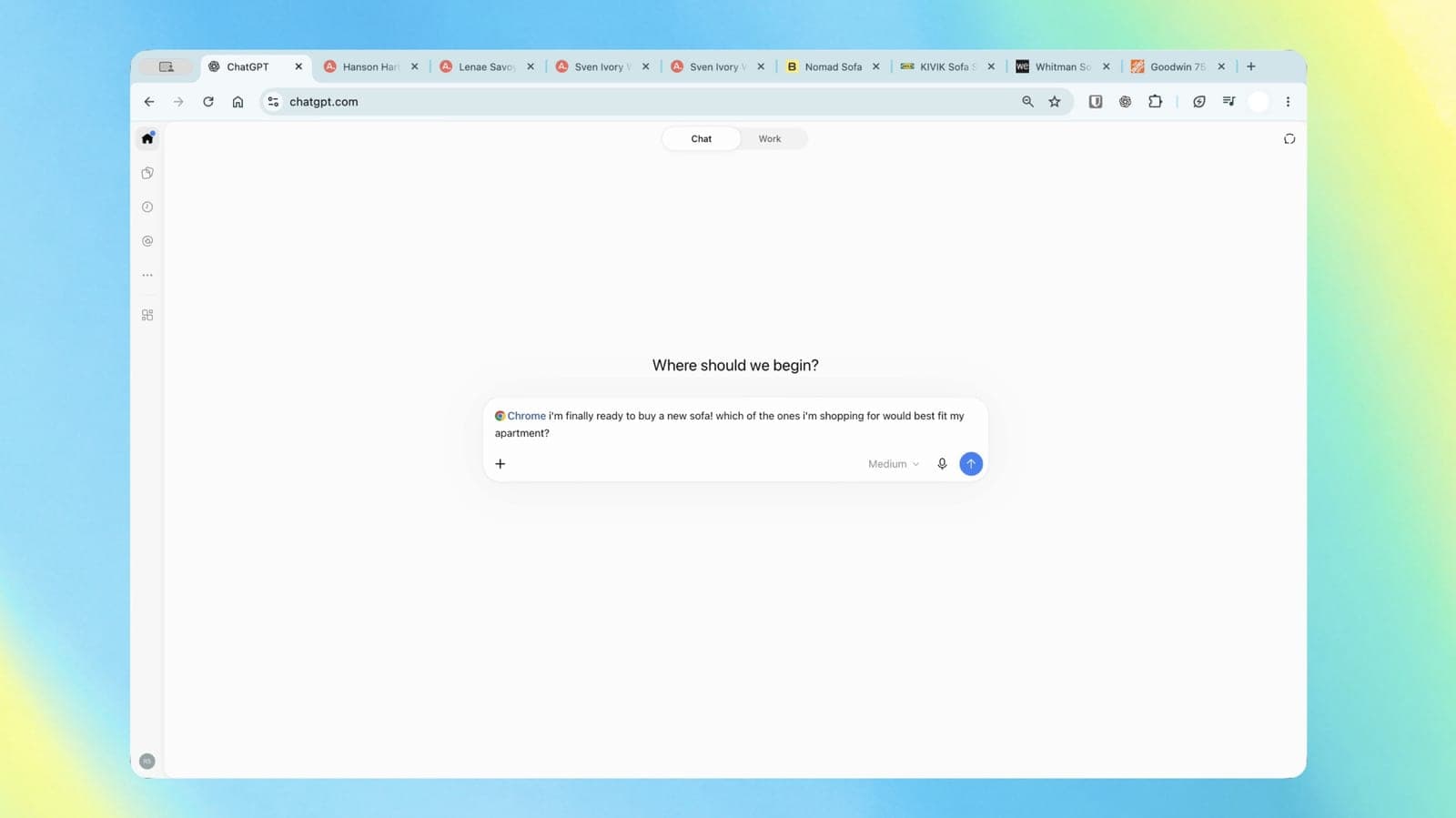
ChatGPT can now read your Chrome tabs and do tasks in them
OpenAI's upgraded Chrome extension lets ChatGPT compare your open tabs, fill out forms and send messages, with the full app now in the sidebar.
Eight US states sue OpenAI over ChatGPT's safety for kids
Iowa, Arizona and six other states filed separate lawsuits saying OpenAI misled families about how safe ChatGPT is for children and vulnerable users.
More in brief
- FAA lifts a nationwide ground stop after a communications outageNov 14
- Tesla opens Cybercab orders at $29,990, plus $299 a month to drive itNov 14
- Apple Sports adds UFC with live stats for every fight on the cardNov 13
- LangChain raises $300 million at a $3 billion valuation for AI agentsNov 13
- SignDrop, a new Windows zero-day, gives attackers full System rightsNov 13
- Microsoft's AI Frontiers research group is over, says co-founder John LangfordNov 13