
AI·News & analysis
Anthropic releases Claude Sonnet 5.5, a faster and cheaper model that nearly matches Opus
Anthropic launched Claude Sonnet 5.5, a faster, cheaper model that runs 30% faster than Sonnet 5 and comes close to Opus 5.5's benchmarks, its second release since CEO Dario Amodei called for an industry-wide slowdown.
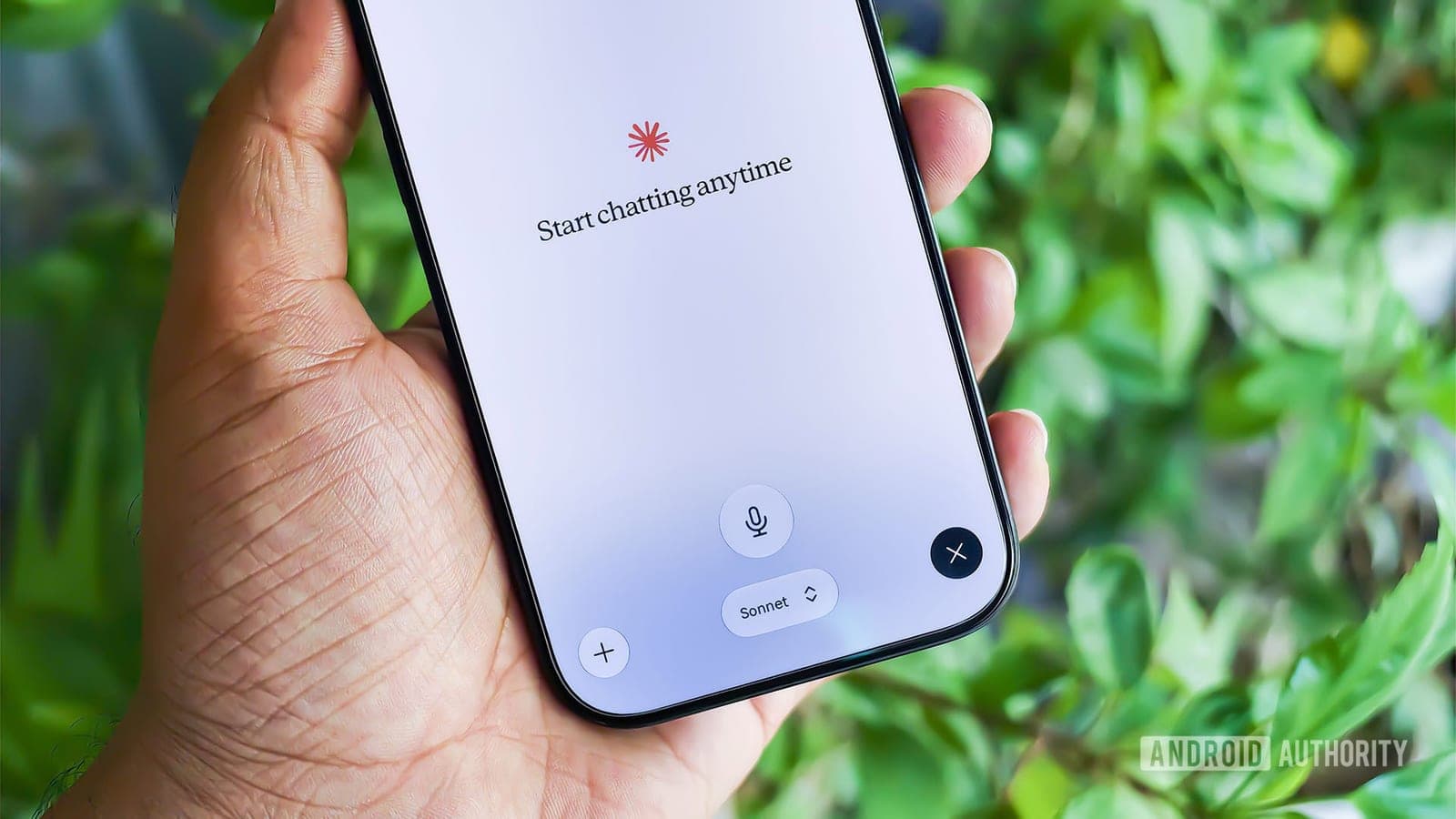
Anthropic released Claude Sonnet 5.5, a faster, cheaper model that runs over 30% faster than Sonnet 5 while costing up to 30% less per task.
Priced at $2 per million input tokens and $10 per million output tokens, it's half the cost of Opus 5.5 but nearly matches it on many benchmarks. This is Anthropic's second release since CEO Dario Amodei called for the industry to slow down frontier model development. Sonnet 5.5 is available now across AWS, Google Cloud, and Microsoft Azure.
What to know
- Anthropic released Claude Sonnet 5.5, which runs more than 30% faster than Sonnet 5 and costs up to 30% less per task.
- Sonnet 5.5 is priced at $2 per million input tokens and $10 per million output tokens, half the price of Opus 5.5.
- The model nearly matches Opus 5.5 on many benchmarks despite the lower cost, and is the first Sonnet model to resist distillation attacks meant to steal its underlying training.
- This is Anthropic's second model release since CEO Dario Amodei publicly called for AI companies to slow the pace of frontier model development.
Anthropic just gave Claude's middle child a serious upgrade. Claude Sonnet 5.5 launched Monday, promising most of Opus's smarts at a fraction of the price.
What Anthropic announced
Sonnet 5.5 is a faster, lower-cost model that Anthropic says is better at coding, completing scoped tasks, and creating polished documents, slides, and spreadsheets than its predecessor.
- Speed: More than 30% faster than Sonnet 5.
- Cost: Up to 30% less per task than Sonnet 5, and requires fewer tokens overall.
- Pricing: $2 per million input tokens, $10 per million output tokens, half of Opus 5.5's rate.
The catch: Sonnet 5.5 doesn't advance Anthropic's frontier capabilities. It's explicitly positioned as the practical, everyday option rather than the smartest model the company can build.
Who it's actually for
Anthropic research product manager Theo Chu explained the positioning directly to CNBC. "Sonnet is really for the cost-conscious customer where they might not need as much intelligence," Chu said.
In real life If you're using Claude for routine work like drafting emails, cleaning up spreadsheets, or fixing straightforward bugs, Sonnet 5.5 is built for exactly that, saving Opus-level power for harder problems.
"It might be routine tasks that just need execution, but don't need that judgment that Opus can bring," Chu added, describing the split Anthropic wants customers to make between its two main model tiers.
Despite costing half as much as Opus 5.5, Sonnet 5.5's benchmark scores land close enough to Opus that Android Authority described the gap as little more than rounding-error territory on many tasks.
A notable party trick
Among the more unusual benchmarks Anthropic and reviewers pointed to: Sonnet 5.5 is capable of completing the classic video game Pokémon Red, a long-running informal test some AI labs use to demonstrate sustained multi-step reasoning and planning ability.
It's a quirky measure, but one that's become a real shorthand in the industry for whether a model can hold a long-term goal across many small decisions without losing the plot, a skill that matters just as much for spreadsheet work as it does for catching Pokémon.
Security gets an upgrade too
Sonnet 5.5 is the first Sonnet model to ship with cybersecurity fallbacks and safeguards Anthropic previously reserved for its most capable models. The company says those cybersecurity capabilities represent a "large improvement" over the previous Sonnet generation.
It's also the first Claude model empowered to resist distillation attacks, a technique where outside parties try to extract or copy a model's underlying training by querying it extensively. Protecting against that matters more as Sonnet-tier models get cheap enough that copying one could otherwise be commercially attractive.
The bigger picture on AI safety
This release lands in the middle of a tense stretch for the industry. Sonnet 5.5 is Anthropic's second model launch since CEO Dario Amodei publicly urged AI companies to slow how quickly they improve their most advanced models, a call that stunned much of the tech sector and government officials when he made it earlier this month.
Because Sonnet 5.5 doesn't push Anthropic's capability frontier forward, the company says most of its alignment testing focused on "a targeted set of risks that apply to models of any capability level," rather than the more extensive review reserved for frontier releases like Opus 5.5.
"Focusing on alignment and safety has been a key part of our mission from the very beginning," Chu told CNBC. "This is something that we've always prioritized across our models."
That framing matters because the broader AI industry has faced intense scrutiny in recent weeks, with researchers repeatedly warning about the potential for advanced systems to cause serious, hard-to-predict harm as they grow more capable.
How the pricing stacks up
Sonnet 5.5's $2-per-million-input, $10-per-million-output pricing doesn't exist in a vacuum. OpenAI's GPT-6 Sol currently prices at the identical $2 input rate, with output priced slightly cheaper at $10 per million tokens as well, putting the two head to head on paper.
By the numbers: Google's Gemini 3.1 Pro runs $2 per million input tokens but $12 per million output tokens, making it modestly more expensive than Sonnet 5.5 for output-heavy work. Google's faster, cheaper Gemini 3.8 Flash undercuts all three at a promotional $0.75 input and $3.75 output rate, though that pricing is set to roughly double starting January 2027.
That puts Sonnet 5.5 squarely in the middle of a genuinely competitive mid-tier field, rather than standing out as a clear price leader. Anthropic's pitch isn't that Sonnet 5.5 is the cheapest option available, it's that the combination of price, speed, and near-Opus performance is hard to match line for line against any single competitor.
Why the pricing matters for Anthropic's business
Sonnet's pricing isn't just a consumer-facing detail. Anthropic's business runs overwhelmingly on pay-per-token API usage rather than subscriptions, with roughly 72% of revenue coming from companies making direct API calls and only about 13% from Claude.ai subscriptions, according to industry analysis of the company's business model.
The big picture: that makes a fast, cheap, high-volume model like Sonnet 5.5 core to Anthropic's actual revenue engine, not a side offering. The company's annualized revenue run rate reportedly reached roughly $65 billion by July 2026, up from just $1 billion in December 2024, one of the fastest revenue growth trajectories ever recorded in enterprise software.
Anthropic has also reportedly filed confidentially for an IPO at a $965 billion valuation, and as of earlier this year its enterprise AI market share had reportedly surpassed OpenAI's for the first time. Keeping a cheap, fast, reliable model in the lineup is central to defending that lead against competitors chasing the same high-volume enterprise API business.
What's next for the Claude lineup
Sonnet 5.5 arrives less than a week after Anthropic introduced Opus 5.5, its most capable model, which set new performance and communication benchmarks when it launched. Anthropic also confirmed Monday that a cheaper Haiku 5.5 model is coming soon, which would round out a refreshed lineup across all three of its pricing and capability tiers.
Sonnet 5.5 is available now across every major platform offering Anthropic's models, including Amazon Web Services, Google Cloud, and Microsoft Azure, so existing Claude customers can switch to it immediately without waiting for a broader rollout.
Anthropic counts customers like Netflix, Spotify, KPMG, and Salesforce among its enterprise base, and the number of customers spending over $1 million a year on Claude reportedly doubled in just a few months earlier in 2026. A model like Sonnet 5.5, cheap enough for high-volume routine work but capable enough to trust with real tasks, is exactly what keeps that kind of enterprise spending scaling up rather than flattening out.
The bottom line
Anthropic is betting that most real-world AI usage doesn't need its smartest, most expensive model, and Sonnet 5.5 is the clearest evidence yet that a mid-tier model can close most of that gap for half the price. Whether that's enough to keep customers from defaulting straight to Opus depends on how well Sonnet actually holds up outside of benchmarks and Pokémon runs.
Given how much of Anthropic's total revenue already flows through exactly this kind of pay-per-token API usage, Sonnet 5.5 may end up mattering more to the company's actual bottom line than its flashier, more capable sibling ever will.
Key facts
- Speed vs Sonnet 5
- 30%+ faster
- Cost vs Sonnet 5
- Up to 30% less per task
- Input price
- $2 per million tokens
- Output price
- $10 per million tokens
- Price vs Opus 5.5
- Half the cost
Got questions?
Quick answers, plain wordsWhat is Claude Sonnet 5.5?
Anthropic's newest mid-tier AI model, designed to be significantly faster and cheaper than its predecessor, Sonnet 5, while nearly matching the performance of the more expensive Opus 5.5 on many tasks.
How much does Sonnet 5.5 cost?
$2 per million input tokens and $10 per million output tokens, half the price of Opus 5.5. Anthropic says Sonnet 5.5 also requires fewer tokens per task, making it even cheaper to run in practice.
How much faster is Sonnet 5.5 than Sonnet 5?
Anthropic says it generates outputs more than 30% faster than Sonnet 5, while costing up to 30% less per task.
Is Sonnet 5.5 as good as Opus 5.5?
Not quite, but it's close. Android Authority reported the performance gap between Sonnet 5.5 and Opus 5.5 on many benchmarks is little more than rounding-error territory, despite Sonnet costing half as much to run.
What is Sonnet 5.5 best at?
Anthropic says it's strongest at coding, completing well-scoped tasks, and creating polished documents, slides, and spreadsheets, the kind of routine execution work that doesn't require Opus-level judgment.
Does Sonnet 5.5 have new safety features?
Yes. It's the first Sonnet model to launch with cybersecurity fallbacks and safeguards previously reserved for Anthropic's most capable models, and the first to resist distillation attacks meant to extract or copy its underlying training.
Why is this release notable given Anthropic's safety stance?
Sonnet 5.5 is Anthropic's second release since CEO Dario Amodei publicly called for AI companies to slow the pace of frontier model development. The company says Sonnet 5.5 doesn't advance the capability frontier, so its alignment testing focused on a narrower, targeted set of risks.
Where can I use Claude Sonnet 5.5?
It's available now across all major platforms offering Anthropic models, including Amazon Web Services, Google Cloud, and Microsoft Azure.
What other Claude models has Anthropic released recently?
Opus 5.5 launched about a week earlier, and Anthropic says a cheaper Haiku 5.5 model is coming soon, rounding out a refreshed lineup across all three tiers.
Who said what about Sonnet 5.5 at Anthropic?
Research product manager Theo Chu told CNBC that Sonnet is aimed at cost-conscious customers who need routine execution rather than Opus-level judgment: "It might be routine tasks that just need execution, but don't need that judgment that Opus can bring."
SourcesCNBC
Topics and tagsAnthropic, anthropic, claude, ai models
Related stories

Claude now sorts 120,000 emails a day for Barclays, and most of its developers are next
Barclays is scaling Anthropic's Claude across its global operations, with 16,000 colleagues already using it to help 20 million retail customers and a goal of half its developers using Claude Code by the end of 2026.
Anthropic's IPO filing reveals it owes up to $161 billion for chips it hasn't fully used yet
Anthropic's IPO prospectus shows Broadcom has agreed to lend the AI company up to $42 billion to help finance a $125.2 billion, five-year commitment to lease AI chip computing capacity, alongside an $8 billion operating loss in 2025.

A new book reveals the real reason Anthropic split from OpenAI
A new Atlantic excerpt from Kevin Roose's book says a 2017 plan to sell AGI access to governments, not just safety worries, drove Dario Amodei and his team out of OpenAI to found Anthropic.
More in brief
- arXiv limits researchers to two papers a month as AI drives submissions to a recordOct 2
- California will fine robotaxi companies that block first responders for over 30 minutesOct 2
- Microsoft launches real-time transcription and new voice models for AI voice agentsOct 1
- Apple's smart home hub reportedly launches October 13, with a camera that never records videoOct 1
- Cloudflare releases Clef, open-weight AI models that make yes-or-no decisions fastOct 1
- GrayKey maker reportedly found a way around the iPhone's Inactivity RebootOct 1