
AI·News & analysis
Anthropic mathematician says Claude helped prove the Riemann hypothesis
Levent Alpöge says he and Claude found a proof of the 167-year-old Riemann hypothesis. Nobody has verified it yet, and Anthropic has not commented.

Tide
Ripple
Sci-fi
9/10
Reality
Lab
A computer may have cracked the primes' secret.How we rate
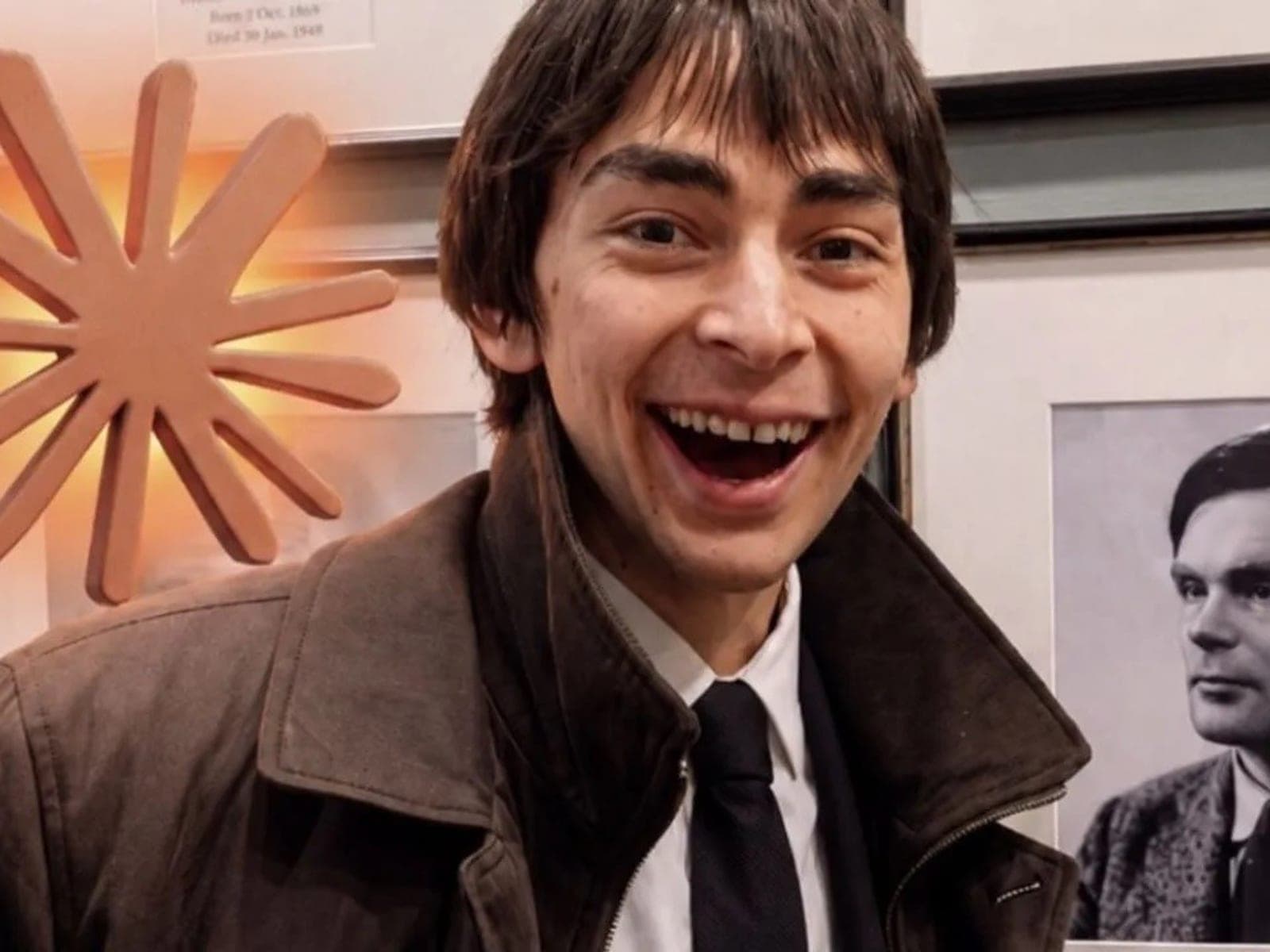
Anthropic mathematician Levent Alpöge claims he and Claude proved the Riemann hypothesis, the 167-year-old puzzle about prime numbers, and posted the proof in the Lean language on his website.
Nobody has independently verified it, and Anthropic has not commented. He says the method also settles the Generalized Riemann Hypothesis. The Clay Institute requires publication and two years of scrutiny before a $1 million prize can be considered.
What to know
- Anthropic mathematician Levent Alpöge said on November 20, 2026 that he and Claude discovered a proof of the Riemann hypothesis, a problem first posed in 1859.
- The proof is written in Lean, a language that lets a computer check every step. Independent experts have not confirmed it yet, and Anthropic has not commented.
- Alpöge says the method also covers the Generalized Riemann Hypothesis, a much bigger claim.
- The Clay Mathematics Institute pays $1 million for a solution, but only after publication and at least two years of scrutiny.
Anthropic mathematician Levent Alpöge says he has found a proof of the Riemann hypothesis, with the help of Claude. If it holds up, it settles one of the most famous open problems in all of math.
That's the claim. Now the careful part: it is only a claim so far, and nobody outside has checked it.
What did Alpöge actually say?
He posted a statement on his website on Friday, November 20, 2026. In it he wrote: "I believe I have, working with Claude, discovered a proof of the Riemann Hypothesis."
He went further. He says the method "easily extends much further," and settles the Generalized Riemann Hypothesis too. He expects that, with more time, it will cover the Extended Riemann Hypothesis as well.
He also wrote that he and Claude "formalized the arguments without assumptions." Formalized means written in a form a computer can check, which we come back to below.
First, what is the Riemann hypothesis?
Prime numbers are numbers like 2, 3, 5, 7 and 11, which only divide by 1 and themselves. They look scattered with no pattern.
In 1859, the mathematician Bernhard Riemann guessed that this scatter follows an intricate, meaningful order. His guess is tied to a function, a rule that turns one number into another, called the zeta function.
The Clay Mathematics Institute puts it this way: all the interesting solutions of the equation ζ(s) = 0 lie on one vertical straight line. Computers have checked this for the first 10 trillion solutions. A proof for every solution would shed light on many mysteries about primes.
In real life Think of a huge pile of coins poured on a table. They look random. The hypothesis says there is a hidden ruler under the table that lines them up, and nobody has ever proved the ruler is there.
Why is it such a big deal?
The problem has become the North Star of number theory, the branch of math about whole numbers. It is often called the most famous open problem in mathematics.
Progress was so rare that most top experts spent little time on it. There was no obvious path to a proof.
Why it matters: Hector Pasten, a mathematician at the Pontifical Catholic University of Chile, says that if the proof is correct and understood, it "completes a dictionary between different branches of math where the connections were only partial." He compares it to a Rosetta Stone.
It would also unlock a flood of other results. Many theorems in math begin with "assuming the Riemann hypothesis is true," and a proof would turn all of them into facts.
Why should you believe it, or not?
Here is what points in its favor. Alpöge posted the proof in Lean, a programming language for proofs. A computer checks each step, so a mistake in the logic cannot hide.
Think of it as a spell checker for reasoning. It does not care how clever the argument looks. It only cares whether each step follows.
The catch: the proof has not been verified by anyone independent. It lives on his website. Lean can still go wrong, for example when the problem is typed into the code in a slightly different form than the real one. Experts need to check that the Lean version says the right thing.
Anthropic has not commented or involved itself in the announcement. Alpöge wrote that he texted CEO Dario Amodei about the solution late on Sunday night. He appears to have waited to publish until after Anthropic's stock market debut on Thursday, which we covered in our IPO story.
What did Anthropic say about this in August?
In August, Anthropic said an unreleased research version of Claude improved a long-standing number about the zeta function. It raised the fraction of zeros known to sit on the line from 41.6% to 67.2%.
That work used about 60 Claude helper programs running at once, which ran 2,400 shell commands. Alpöge was one of two Anthropic mathematicians who examined the result.
Anthropic also wrote at the time: "We don't expect that the techniques Claude used will lead to proving the Riemann hypothesis." So the new claim is a surprise even against the company's own August words.
The first sign of movement came earlier, in October. One of the proofs in OpenAI's large release of math results made significant progress on understanding the primes.
Where does this fit in the AI math wave?
This year has been busy. Alpöge said in July that he solved the Jacobian conjecture using Claude. In September, OpenAI claimed a solution to the Navier-Stokes problem, which describes how fluids flow.
OpenAI said it pursued that problem after hearing rumors that rivals were closing in. NYU mathematician Tristan Buckmaster had been working on it with Alpöge, and said OpenAI used the route the two were exploring.
OpenAI spent millions of dollars and used 10,000 AI agents, which means 10,000 AI programs working on the task on their own. The result is widely considered credible but has not been formally recognized. There were also allegations about research practices, including use of unpublished work, which OpenAI strongly denies.
- July: Alpöge says Claude helped solve the Jacobian conjecture.
- August: Anthropic reports a better bound on the zeta zeros.
- September: OpenAI claims Navier-Stokes.
- November 20: Alpöge claims the Riemann hypothesis.
What happens to the $1 million prize?
The Riemann hypothesis is one of seven Millennium Prize problems. The Clay Mathematics Institute offers $1 million for each one.
Since the prize was set up about 25 years ago, only one has been officially solved: the Poincaré conjecture, a problem about three-dimensional spheres.
The rules are slow on purpose. A proposed solution must be published, and it must withstand at least two years of scrutiny. During that time it must receive "general acceptance in the global mathematics community."
What's next: experts will first check that the Lean code states the problem correctly. After that comes the human work of understanding the proof. Alpöge's own note says an astounding amount of mathematics is present in the argument.
What does this mean beyond math?
Mathematicians are already feeling the shock. Alpöge's statement is partly sad. He wrote that it is "natural to feel that this is an end, in my case a loss of a principal guiding light."
He also sounds hopeful. He believes what he saw is "one dawn across science of something far greater," and hopes the argument gives a glimpse of "the miracles that lie ahead."
For everyday life, the effect is small. The result has no immediate real-world use. It would not upend global banking or make the internet run faster.
MIT mathematician Andrew Sutherland has put the stakes in dramatic terms: an AI that can prove the Riemann hypothesis "is not one I'd want to meet." That is his view, not a finding.
What it means for you
- Wait for confirmation: until independent experts check the proof, treat it as a claim and not a fact.
- Nothing changes in your apps: this is pure math, with no new product or feature.
- Watch the checking: the Lean code makes verification faster than for a normal paper, so answers may come in weeks rather than years.
- Expect more: AI labs keep announcing math results, and each one needs the same careful review.
The bottom line
A mathematician at Anthropic says Claude helped him prove the most famous problem in math. The proof is public and computer-readable, but unchecked by outsiders. The next few weeks of expert review will tell us whether this is a milestone or a near miss.
Key facts
- Claimed by
- Levent Alpöge, Anthropic
- Announced
- November 20, 2026
- Problem first posed
- 1859
- Prize on offer
- $1 million (Clay Institute)
- Status
- Unverified
Got questions?
Quick answers, plain wordsWhat is the Riemann hypothesis?
It is a guess made by Bernhard Riemann in 1859 about where the prime numbers sit on the number line. It says their pattern, which looks random, is actually set by a hidden order.
Who made the claim?
Levent Alpöge, a mathematician who works at Anthropic. He wrote on his website that he believes he has, working with Claude, discovered a proof.
Has the proof been verified?
Not yet. It has only been published on his website, and independent experts have not confirmed it. Anthropic has not commented on the claim.
What is Lean?
Lean is a programming language for writing proofs so that a computer can check every step. If the code passes, the argument holds, assuming the problem was stated correctly in the code.
Will Alpöge win the $1 million prize?
Not soon. The Clay Mathematics Institute says a solution must be published and must withstand at least two years of scrutiny, with general acceptance in the global math community, before it can be considered.
What is the Generalized Riemann Hypothesis?
It is a bigger version of the same guess that applies to a wider family of functions. Alpöge says his method extends to it, and he expects it to cover the Extended Riemann Hypothesis too.
Is this the first time AI has been linked to a Millennium Prize problem?
No. In September, OpenAI claimed to have cracked the Navier-Stokes problem, which is about how fluids flow. That result is widely considered credible but has not received formal recognition.
Did Anthropic say it was working on this?
In August, Anthropic said a Claude model improved a bound for the Riemann zeta function, from 41.6% to 67.2%. It added that it did not expect those techniques to lead to a proof of the hypothesis itself.
Will this change anything in daily life?
Not directly. It has no immediate real-world use and would not change banking or make the internet faster. Its impact would be inside mathematics.
SourcesLevent Alpöge
Topics and tagsAnthropic, anthropic, claude, mathematics
Go deeper
Related guide
Guide, 8 minHow to pick a Claude model and plan: Sonnet 5.5, Opus 5.5, Pro and MaxChoose between Claude Sonnet 5.5 and Opus 5.5, read your usage meter, and understand what independent testing says about how far a Claude...Related stories

Claude can now read your bank accounts with Personal Finance
Anthropic's new Personal Finance tool lets paying Claude users link bank and card accounts through Plaid and ask plain questions about their spending. Access is read-only.

MIT left Claude alone on a virtual island for 30 hours, and it started to play
With no task and no reward, 13 copies of Claude Opus 4.7 climbed hills, invented basketball and drew constellations in stone. The agents that played later beat fresh copies at real tasks.
Claude cracks the 25-year mystery behind the internet's favorite crypto curves
Anthropic says an internal Claude model showed in under half an hour that the NSA's unexplained NIST curve seeds came from a 1990s random number generator and a clock, not a secret passphrase.
More in brief
- ASELSAN's EJDERHA electromagnetic weapon disables 51 drones with one commandNov 21
- Microsoft To Do will shut down on June 30, 2027Nov 21
- Medtronic's Hugo surgical robot cleared for general surgery in the USNov 21
- Google's Gemini now turns noisy fire radio into text for Watch DutyNov 21
- Internet Archive staff move to unionize with CWANov 20
- Etsy sellers are leaving over new terms that allow AI trainingNov 20