
Robots·News & analysis
Tesla ramps Optimus to hundreds a week, but its hands are the bottleneck
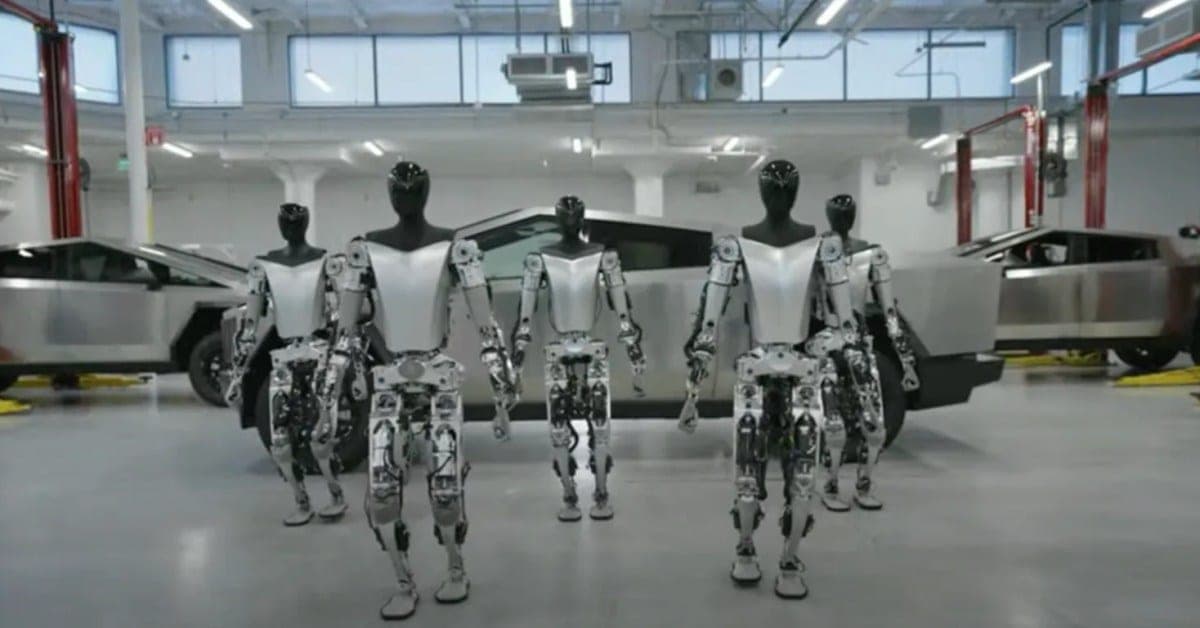
Tesla has scaled Optimus production roughly tenfold since Q2, but the robot's hands still need hand assembly and its touch sensors aren't holding up, The Information reports.
The 30-second version
The details
- Tesla went from a few dozen Optimus units a week in Q2 to several hundred a week in August, The Information reports, citing sources.
- Managers are reportedly targeting over 1,000 robots a week by year end, with an eventual goal of about 20,000 a week.
- The robot's hand and forearm contain over 100 small parts still assembled by hand; some touch sensors have reliability issues.
- Tesla relies on outside suppliers, many in China, for motors and precision gears, and some struggle to hold quality at high volume.
Why it matters
Optimus is central to Tesla's pitch as more than a car company, and this report is a concrete look at how far its manufacturing has actually come, and where it's still stuck, beyond Tesla's own public claims.
The full story
Tesla has scaled up Optimus manufacturing fast this year, but the humanoid robot's hands are holding the line back. Electrek reports on a new account from The Information: Tesla went from a few dozen Optimus units a week in small-batch testing during Q2 to several hundred a week by August, citing people familiar with production.
The ramp, and the target
Managers are reportedly aiming for a continuous automated line producing more than 1,000 robots a week by the end of the year, with an eventual goal of around 20,000 a week. That would be a massive jump from today's output.
Why the hands are the bottleneck
The report says Optimus's hand and forearm contain more than 100 screws and small components that workers still assemble manually. Several assembly stations, including hands, joints and electronics testing, reportedly can't consistently align parts that are smaller and tighter-tolerance than anything on a Tesla car. Some of the hand's touch sensors have also had reliability problems. Tesla's fix, according to the report, is a replaceable "sensing glove" planned for next year, so a failed sensor doesn't mean swapping the entire hand.
Suppliers are a factor too
Tesla depends on outside suppliers, many based in China, for the motors and precision gears that drive Optimus's joints. Some can produce good parts at prototype scale but reportedly struggle to hold quality steady at high volume.
What's still missing
Beyond the hardware, the report notes the robots coming off the line still can't generalize across tasks reliably, a separate problem from manufacturing speed. More: Tesla news.
Key facts
- Q2 output
- A few dozen units a week
- August output
- Several hundred units a week
- Year-end target
- Over 1,000 units a week (reported goal)
- Long-term target
- About 20,000 units a week (reported goal)
- Bottleneck
- Hand and forearm assembly, over 100 small parts per unit
Quick questions
How many Optimus robots is Tesla making per week?
The Information reports Tesla reached several hundred units a week in August 2026, up from a few dozen in Q2, citing sources familiar with production.
What's slowing down Optimus production?
The hand and forearm, which contain over 100 small parts that still need hand assembly, plus touch sensors that haven't proven reliable and supplier quality issues at high volume.
Can Optimus robots do general tasks yet?
Not consistently. The report says units coming off the line still struggle to generalize across different tasks.
What is Tesla's plan to fix the hand problem?
A replaceable 'sensing glove' planned for next year, so a failed touch sensor can be swapped without replacing the whole hand.
Source: Electrek