
AI·News & analysis
Google's new AI chips keep your data locked, even while they work on it
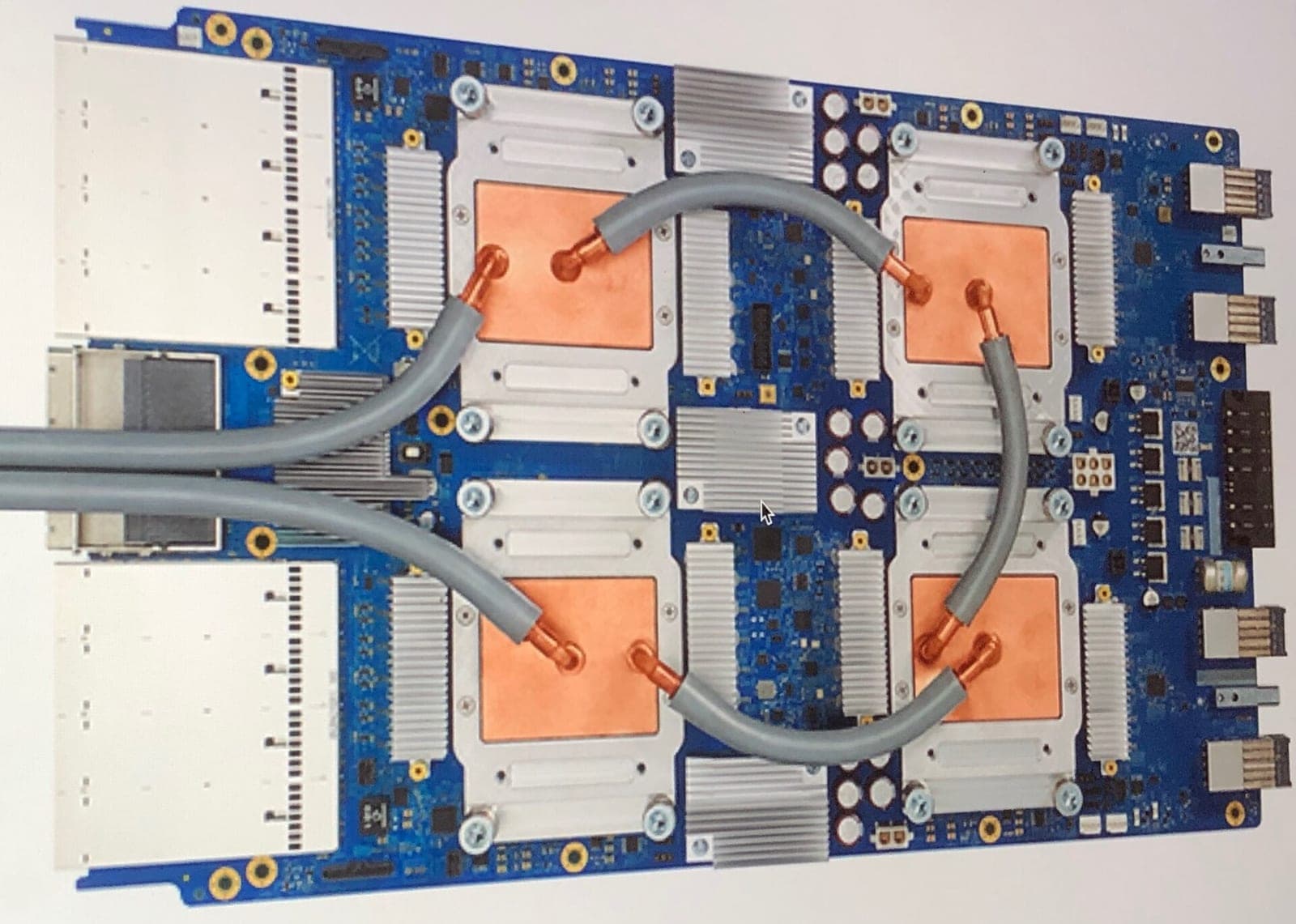
Google added two chips to its eighth-generation TPU family: TPU 8tx, which keeps data encrypted while AI runs on it, and TPU 8i Max, built for huge context windows.

Tide
Ripple
Sci-fi
5/10
Reality
Demo
A vault that stays shut while the AI works inside it.How we rate
Google announced two new eighth-generation TPU systems: TPU 8tx, which protects data and model weights in hardware while AI runs, and TPU 8i Max, which doubles the compute of TPU 8i for huge context windows.
It matters because companies and governments that hold sensitive data have been cautious about running AI in the cloud. Next, watch for pricing and a launch date, which Google has not given yet.
What to know
- Google added TPU 8tx and TPU 8i Max to its eighth-generation TPU family, the first time it has introduced four TPU systems in one year.
- TPU 8tx keeps prompts and model weights protected in hardware while AI runs, using 5th Gen AMD EPYC processors as its host chips.
- TPU 8i Max puts two TPU 8i chips in one package for double the compute, double the SRAM and double the memory bandwidth of TPU 8i.
- Google also opened up its software: PyTorch code now runs natively on TPUs, and tools like TPU Sync are open source.
Google just added two chips to its newest AI hardware family. One keeps your data locked even while the AI works on it, and the other is built to remember a lot at once.
What did Google announce?
Google announced TPU 8tx and TPU 8i Max, two new systems in its eighth-generation family of TPUs. A TPU, or Tensor Processing Unit, is a chip Google designs just for AI work.
This is the first time Google has introduced four TPU systems in a single year. The other two, TPU 8t for training AI models and TPU 8i for fast reasoning, came out in April at Google Cloud Next.
- TPU 8t: built for training huge models.
- TPU 8i: built for quick, real-time reasoning.
- TPU 8tx: built for secure, confidential inference.
- TPU 8i Max: built for massive context windows.
Inference means running a trained AI model to get an answer. A context window is how much text, code or video a model can keep in mind at once.
Why does "confidential" matter?
Data is normally encrypted when it sits on a disk or travels over a network. But while a computer works on it, the data has to be unlocked in memory.
That unlocked moment is the gap TPU 8tx tries to close. Google says it builds security into the hardware layer, so sensitive data and model weights stay protected and isolated even while in active use. Model weights are the numbers that make up a trained AI model.
Who it is for: Google names regulated enterprises and governments that run frontier or proprietary models and AI agents next to their most sensitive data. Some of those customers, Google says, asked for specialized encryption for unique workloads.
In real life think of a bank that wants an AI to read private loan files. With a normal setup, the files are unlocked while the AI reads them. With TPU 8tx, Google says the hardware keeps them shielded during that step too.
How does AMD fit in?
TPU 8tx is built on the same silicon as TPU 8t. It is paired with 5th Gen AMD EPYC processors as the host. A host processor is the main CPU that prepares data and hands jobs to the AI chips.
AMD announced the same day that its EPYC chips power the host side of TPU 8tx. AMD calls it the first cloud TPU system with hardware-enforced confidential computing. Google's Mark Lohmeyer said customers get "silicon-level data protection alongside the low-latency performance needed for modern reasoning models."
AMD says its Secure Encrypted Virtualization (SEV) features extend protection beyond the CPU to the connected accelerators. The system also checks an accelerator's identity and security setup before it gets direct access to protected memory. Prompts, model weights and in-between data stay encrypted in CPU memory and while moving between host and accelerators.
The big picture: the two companies have worked together for years. AMD says EPYC already runs under Google Cloud's confidential virtual machines and its confidential Kubernetes service, so TPU 8tx extends that into AI chips.
Is it fast, or just secure?
Google says speed is part of the pitch. TPU 8tx uses the same low-latency network, called Boardfly, that Google built for real-time reasoning. Google says that gives up to 2x lower latency than TPU 8t, with a near-zero performance penalty. Latency, which means the wait between asking and getting a reply, is what the network is built to cut.
That matters for AI agents, which take many steps in a row. Each step waits for the one before it, so small delays add up.
TPU 8tx is also good for small-scale training, Google says. Teams can fine-tune a model, which means teaching it more using their own private data. They can shrink a big model into a smaller one. Or they can use reinforcement learning, which means training an agent by rewarding good results. All of it runs on one system. Nobody has to move sensitive data between separate clusters.
What is TPU 8i Max?
TPU 8i Max tackles a different problem Google calls the memory wall. When dozens of AI agents work across a whole codebase or hours of video, memory speed becomes the bottleneck.
Google's fix is simple to say. It took two low-latency TPU 8i chips and put them on a single package.
- Compute: double that of TPU 8i.
- SRAM: double. SRAM is the very fast memory sitting right on the chip.
- HBM bandwidth: double. HBM is high-bandwidth memory, the big memory stack beside the chip.
Because it fits twice the silicon in the existing rack footprint, data centers can run more computing power per square foot and per watt, Google says.
What else changed on the software side?
Google says it wants TPUs to be as easy to use as ordinary hardware. A few pieces came with the announcement:
- TorchTPU: open-sourced last month. PyTorch code and Hugging Face models now run natively on TPUs, with no rewrite.
- TPU agent suite (preview): open-source tools that plug into coding assistants such as Claude Code, Cursor and Google Antigravity. They help with TPU setup and speed problems using plain language.
- XLA Serving Engine: train in Python, then serve in a fast C++ runtime across TPUs, GPUs and CPUs.
- Agent Compute Engine: pauses idle agent sessions and moves their working memory off the chip in milliseconds, which cuts costs.
By the numbers: Google says its TPU Sync layer cuts KV transfer delay and time to first token by more than 90%. A KV cache is the short-term memory a model builds while it reads a long prompt. Time to first token is how long you wait for the first word of an answer.
How do big clusters get easier?
Two more tools are now generally available on Google Kubernetes Engine, which is Google's service for running software in containers.
- Cloud Pathways: lets you run large TPU jobs across many slices as if they were one machine. It brings the runtime behind Gemini to every Google Cloud customer.
- GKE dynamic slicing: assembles or splits TPU groups on the fly using optical circuit switching. Google says job start times drop by up to 5x and recovery from faults speeds up by up to 4.5x.
Why is Google building so many chips?
Google says TPUs have a decade of history. It first designed them for internal needs like voice recognition and translation. Today they train and serve its Gemini models, run agent workloads, and power Google Cloud for customers.
Google also lets customers put TPUs in their own data centers. It says TPUs are a growing business with nearly 100 customers, including frontier labs, trading firms, retailers and universities.
Its answer to the pace of AI is modularity. A new chip takes years of work on silicon. A new system, which rearranges packaging, memory, networking and security around a chip, can arrive in months. That is how Google says it shipped four systems in one year.
Google adds that it uses AI to design its chips too. It cites AlphaChip and Gemini producing chip layouts in hours instead of weeks.
What it means for you
- You will not buy these. TPUs are rented through Google Cloud, and the announcement gives no launch date or price.
- Private data may get easier to use with AI. If a company holds sensitive records, hardware protection could be a reason to say yes.
- Developers get an easier path. PyTorch code runs on TPUs without a rewrite, so trying them costs less effort.
- Watch the rollout. Availability and pricing for TPU 8tx and TPU 8i Max are the next facts to look for.
The bottom line
Google now has four TPU systems in one generation, each aimed at a different job. TPU 8tx is about keeping data protected while AI works on it, and TPU 8i Max is about keeping more in memory at once.
Most readers will never touch these chips. But they shape which AI services companies feel safe building, and that decides what shows up in your apps.
Key facts
- New systems
- TPU 8tx and TPU 8i Max
- TPU 8tx host chip
- 5th Gen AMD EPYC
- TPU 8i Max vs 8i
- 2x compute, 2x SRAM, 2x HBM bandwidth
- TPU 8tx latency
- Up to 2x lower than TPU 8t
- TPU customers
- Nearly 100
Got questions?
Quick answers, plain wordsWhat is TPU 8tx?
A Google AI chip system built for secure, confidential inference. It keeps sensitive data and model weights protected in hardware, even while the AI is using them. Google says it is also good for small-scale training.
What is TPU 8i Max?
A system that combines two TPU 8i chips in one package. It has double the compute, double the SRAM and double the high-bandwidth memory speed of TPU 8i, and it is aimed at very large context windows.
What is confidential computing?
A way of protecting data while it is being used. Data is normally encrypted when stored or sent, but it has to be unlocked in memory while a computer works on it. Confidential computing keeps it protected during that step too.
What is a TPU?
A Tensor Processing Unit, a chip Google designs for AI work. Google first built TPUs more than a decade ago for jobs like voice recognition and translation, and now uses them for Gemini and for Google Cloud customers.
Who makes the host processors in TPU 8tx?
AMD. AMD says 5th Gen AMD EPYC processors power the host infrastructure for TPU 8tx, using AMD's Secure Encrypted Virtualization (SEV) features.
How many TPU systems does the eighth generation have now?
Four: TPU 8t for training, TPU 8i for low-latency reasoning, TPU 8tx for confidential computing and TPU 8i Max for massive context windows and compute density.
Do developers have to rewrite their code to use TPUs?
Google says no. It open-sourced TorchTPU last month, so PyTorch code and Hugging Face models run natively on TPUs, and it supports inference tools such as vLLM and SGLang.
Can I buy or rent TPU 8tx today?
Google's announcement does not give a launch date or price for TPU 8tx or TPU 8i Max, so treat them as announced, not yet available to everyone.
Who is TPU 8tx for?
Google names regulated enterprises and governments that run frontier or proprietary models and AI agents next to their most sensitive data.
What does Google say about TPU 8t and 8i from April?
Google says TPU 8t offers up to 2.7 times better training performance and TPU 8i up to 80% better inference price performance than the previous generation of TPUs.
SourcesGoogle
Go deeper
Related guide
Guide, 8 minHow to use Gemini: Live camera help, Skills and Android scam protectionUse Gemini Live with your camera, prepare for Gems turning into Skills, and switch on the opt-in scam protection in Google Messages.Related stories
Google's AI spots signs of high blood pressure from a smartwatch
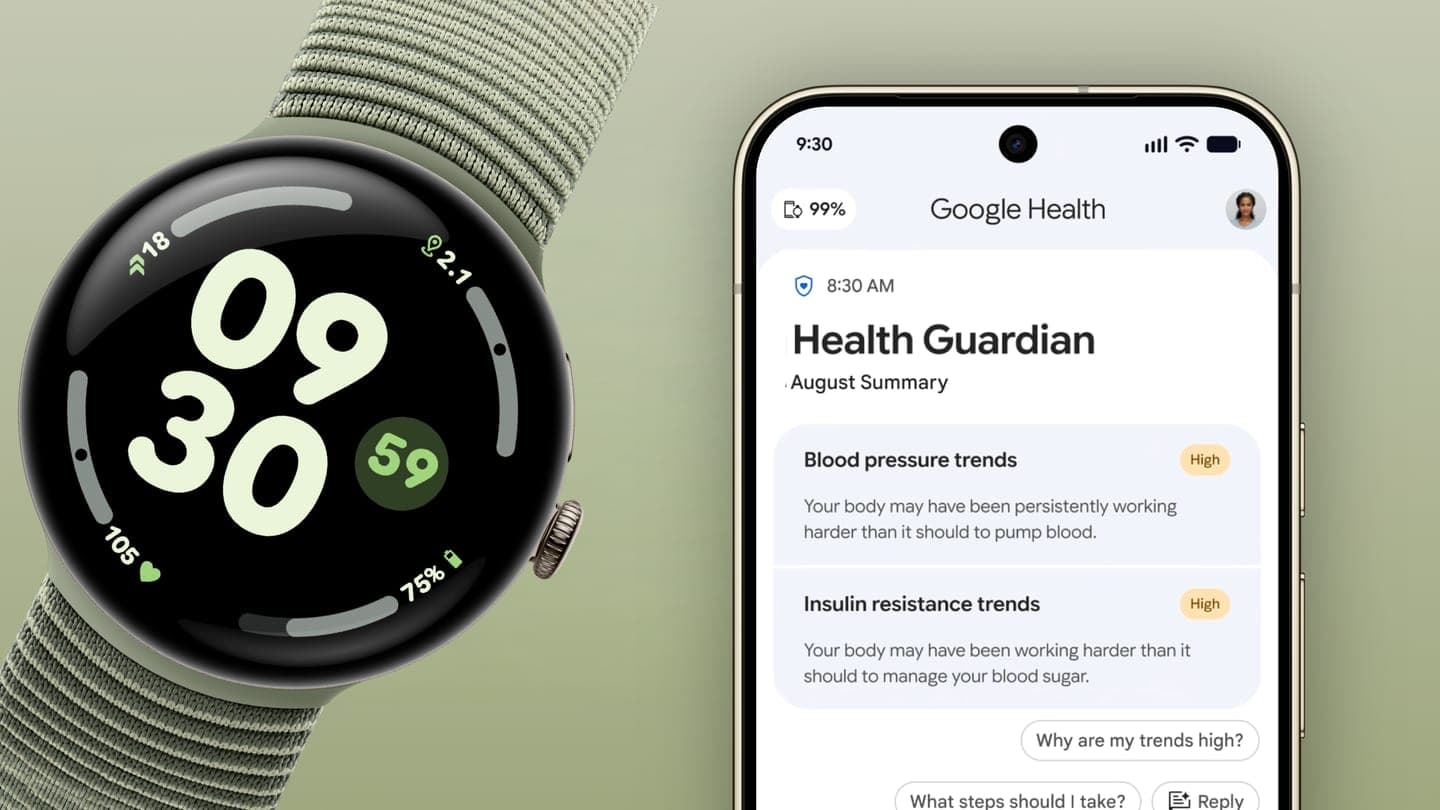
Google Research built an AI that finds signs of high blood pressure using only the pulse and motion sensors in a regular smartwatch. No cuff is needed to set it up.

Google will switch off AI and Search for school accounts until schools opt in
Google says Gemini and Search will be off for K-12 student accounts until administrators turn them on, and a school that wants no AI loses Search too.
Marvell to buy Lumentum in a $115 billion all-stock deal for AI optics
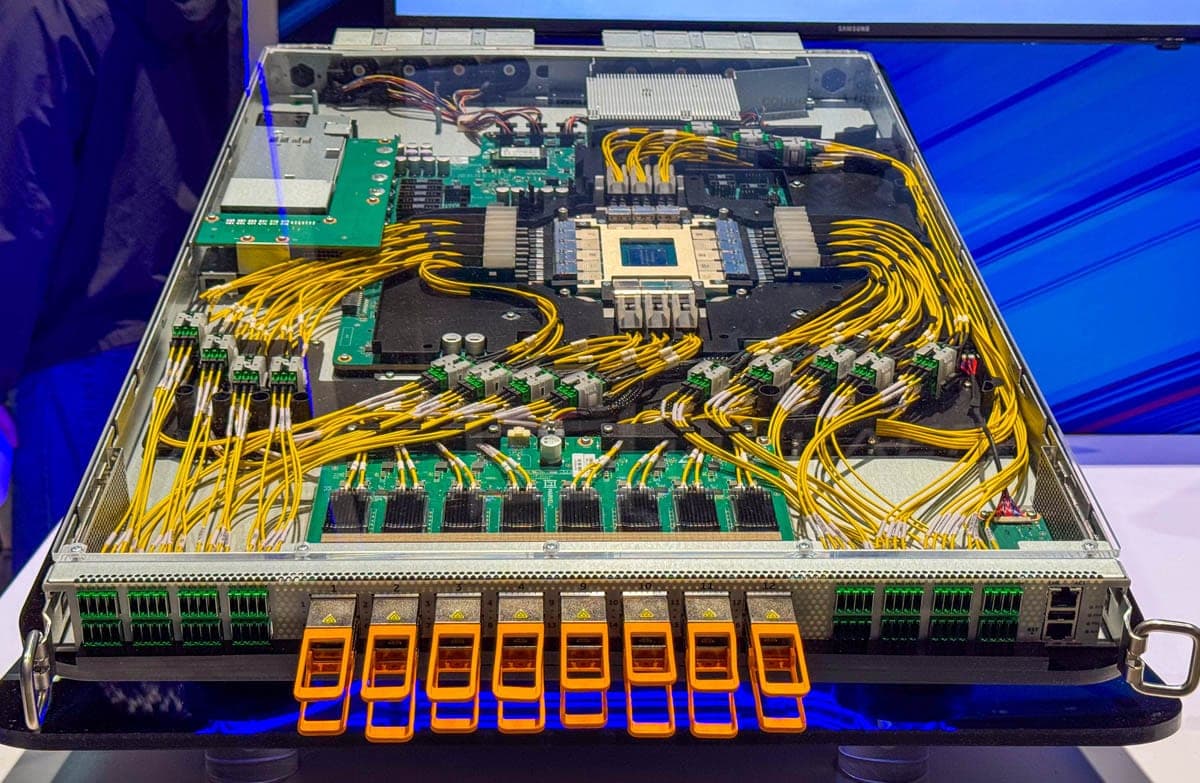
Marvell and Lumentum agreed to combine, betting that AI data centers will soon move data with light instead of copper. The deal should close in the first half of 2028.
More in brief
- YouTube is going back on the Billboard charts in 2027Nov 9
- Apple starts selling $50 packs for extra Apple Intelligence useNov 9
- Windows 11 tests a way to switch off the Sticky Keys popup for goodNov 9
- US regulators question whether Waymo's school bus fix workedNov 9
- NVIDIA unveils GR00T 2 and Isaac Lab 3.0 to teach robots delicate workNov 9
- Tesla launches its robotaxi service in San Antonio, its eighth cityNov 9