
Robots·News & analysis
Embodied AI unveils AIR, a wheeled robot built to work beside people without a cage
The Swiss startup's two-armed robot keeps its heavy parts in the torso, learns each job from a remote operator, and aims for CE marking in 2027.

Tide
Ripple
Sci-fi
7/10
Reality
Demo
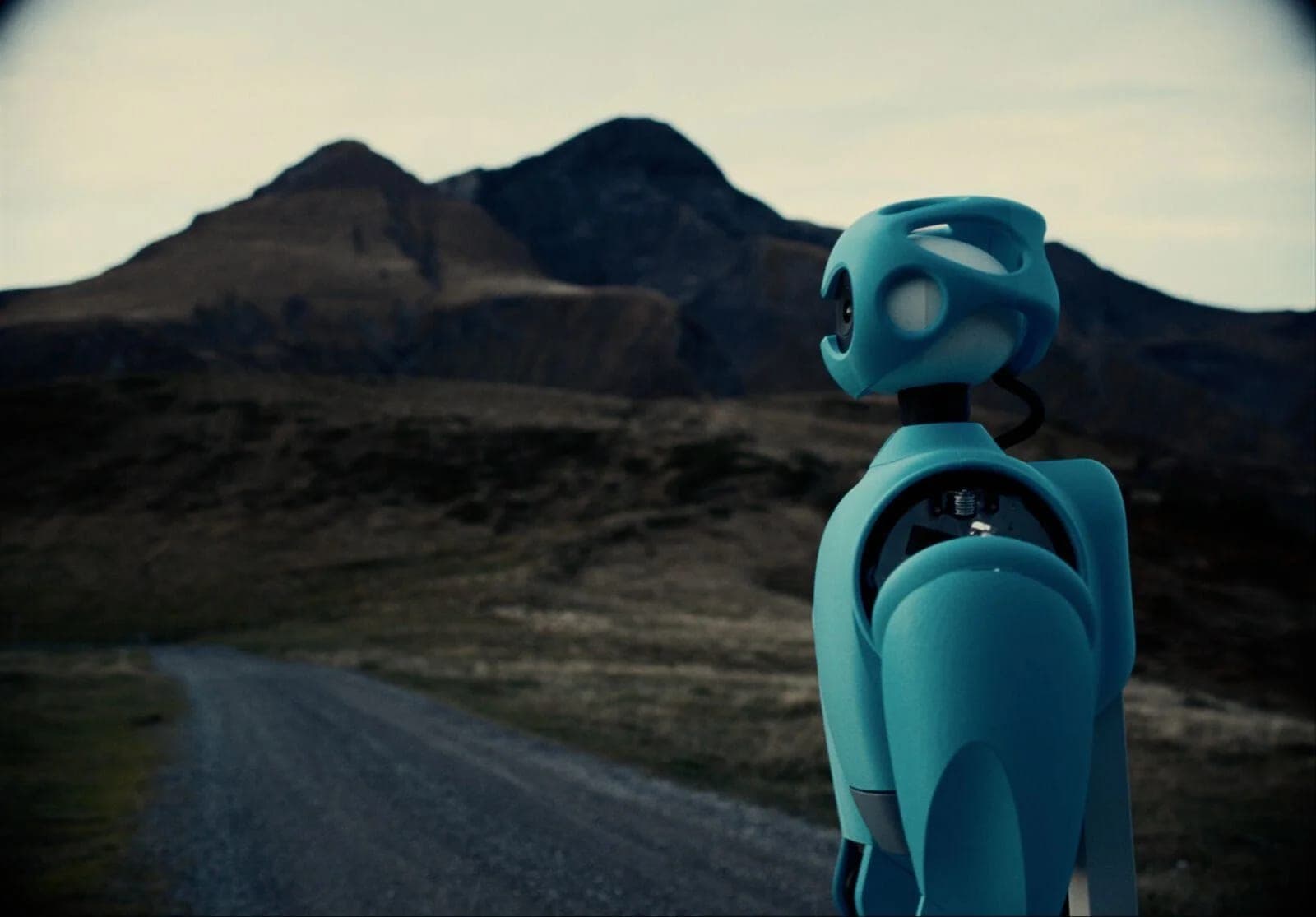
A friendly blue coworker that learns the job by watching a human.How we rate
Swiss startup Embodied AI unveiled AIR, a two-armed robot on a wheeled base that is built to work beside factory staff without a safety cage.
Its arms are light and cable-driven, and a remote operator teaches it each job. The company reports a 95% task success rate in paid pilots with unnamed manufacturers. It plans CE marking in 2027 and has not published a price.
What to know
- Embodied AI, a 25-person Swiss startup, unveiled AIR on November 6 at Humanoid Europe 2026 in Munich.
- AIR is a torso with two light, soft arms on a wheeled base, built to work next to people without a safety cage.
- A remote operator runs each new job first, and the robot's AI learns to do it alone, typically within a month.
- The company reports a 95% average task success rate in paid pilots and plans CE marking in 2027, but has not published a price.
Embodied AI announced AIR, a two-armed robot on a wheeled base that is made to work next to people without a safety cage. Most factory robots live behind fences. This one wants to stand in the line with everyone else.
The company is a 25-person Swiss startup that grew out of the technical university EPFL. Embodied AI showed the robot on November 6 at Humanoid Europe 2026 in Munich. So what is actually new here?
What is AIR?
AIR is a torso with two arms and a head, mounted on a wheeled base. The head is an open lattice shell with a camera on each side. The upper body wears a soft teal cover.
The company calls it a humanoid, but it has no legs. Embodied AI says it chose wheels because factory floors are flat and wheels are more stable.
By the numbers:
- Team: 25 people, based in Lausanne with an office in Rome.
- Time to build: the company says it went from research to an industrial humanoid in 9 months.
- Safety mark: CE marking planned for 2027.
- Price: not published.
Why does it not need a cage?
A normal industrial arm is heavy and stiff. If it hits something, it hurts, so it usually sits behind a fence or a light curtain, which is a sensor beam that stops the arm when you step through.
AIR flips the problem around. The motors, gearboxes and electronics all sit in the torso. The arms are light and move on cables, so they carry almost no weight and give way when they touch something.
The company says safety comes from how the robot is built, not from software holding it back.
That is the idea of a "compliant" arm: one that yields instead of pushing back. Embodied AI says it designed AIR under ISO/TS 15066:2016, an industry standard for robots that work alongside people.
In real life Picture a heavy steel door and a bead curtain. Both can swing into you, but only one leaves a bruise. AIR's arms aim to be the bead curtain.
What are tendon-driven arms?
Think of the tendons in your own arm. The muscle sits up high, and thin cords pull the fingers and wrist. AIR works the same way. The heavy motors stay in the torso, and cables run out to the arm through the shoulder.
An investor in the company, Angelo Burgarello of Look AI Ventures, described the result as a 2 kg arm that lifts 5 kg. The company has not published the robot's height, weight, reach, battery life or full payload.
The design grew out of CEO Francesco Stella's PhD at EPFL. Stella is 28 and also did research at MIT. His co-founders are CTO Kai Junge and COO Max Polzin, who both have robotics PhDs.
The catch: cable arms trade some stiffness for their softness. Stiff arms are more precise. The company has not yet shared measurements of how precisely AIR can place a part, so that question is still open.
How does AIR learn a job?
Every job starts with a person. A remote operator controls AIR from its first shift, so the robot is useful on day one. Every run is recorded.
The company's own AI software then learns from those recordings. In the company's words, AIR can do the task by itself, typically within a month. The operator stays on hand to cover anything the robot has not seen before. What one robot learns, the next one can use.
The software is built from small models, each trained for a specific task, instead of one giant general-purpose robot brain. It is already running on a customer's production line, in a two-armed robot cell that Embodied AI sold before AIR existed. AIR uses the same stack, which is why the company can quote pilot results for a robot it only just showed.
What are the results so far?
Embodied AI reports a 95% average task success rate in paid pilots with manufacturers. It describes two customers: a leading consumer electronics maker and a global automotive and industrial technology supplier. Neither is named.
The company also tells a story about a cable-handling test. A consumer electronics maker tested five funded startups on the task. According to Embodied AI, none met the targets except Embodied AI, which reached 98% reliability against a 90% goal. That was with the two-armed cell, not AIR itself.
Treat these as company figures. It has not said how many tasks the 95% covers, how success is defined or how long the pilots ran. It also says that, depending on the task, one AIR can handle the work of up to three people per shift, without saying which tasks.
Why does the factory floor want this?
The company points to a labor gap. As many as 1.9 million US manufacturing jobs could go unfilled by 2033, according to Deloitte and The Manufacturing Institute.
It also cites a survey from the Manufacturing Leadership Council: 22% of manufacturers plan to use physical AI, which means AI that controls machines in the real world, such as humanoid robots, within two years, more than double today's 9%. Deloitte found that more than 80% of factory task hours are expected to stay human-driven.
That last number is the pitch. The target is not a dark factory with no people. It is the repetitive manual jobs that change too often for a classic robot, such as kitting, packaging, cable handling and assembly support, so the people on the line can do work that needs their skill.
How does it compare with other robots?
Other companies are chasing the same idea from different angles. Agility Robotics, for example, is connecting its Digit 5 robot to a factory's outside safety systems, which we covered in our story on Digit 5's new batteries. Fellow Swiss startup mimic robotics raised $16 million to put dexterous hands on standard industrial arms.
Embodied AI's approach is different from both. Its robot limits the force it can apply through its body, and a remote operator runs it until it has learned the task.
It also joins a growing group of wheeled "humanoids". Carnegie Mellon's Pixel, NYU's MABEL and Feather's $30,000 robot all aim at researchers and developers. AIR is sold to factories as a working machine.
What is the CE marking hurdle?
CE marking is the label that shows a product meets European Union safety rules. Until AIR carries it, it cannot be sold in the EU as a finished machine.
Embodied AI plans to get the mark in 2027. That lines up with the EU's new Machinery Regulation, which replaces the old Machinery Directive from January 20, 2027. It adds requirements for machines that learn and change their behavior, and for machines that work close to people. A robot that learns on the job and shares a line with workers touches both.
Who is backing it?
Faber led the company's first funding round earlier this year, and the amount was not disclosed. Other backers include Look AI Ventures, TechShop, Vento, Plug and Play, Kickfund and Excellis. The company also takes part in startup programs at Google DeepMind and Nvidia Inception.
Orders open after the Munich event. Embodied AI has said the company is starting plans for scaled production, with AIR now being tested at global manufacturers.
What it means for you
- If you work in a factory: this is the kind of robot meant to stand next to you, not replace the whole line. Its pitch is taking over the repetitive tasks.
- If you run a plant: there is no price, payload or delivery date yet. Ask for those before you plan around it.
- If you follow robotics: watch for the CE marking in 2027 and for named customers. Those will show if the 95% holds up outside pilots.
- If you just like robots: this one will not show up at your house. It is a factory worker first.
The bottom line
Embodied AI unveiled AIR, a wheeled two-armed robot with light, cable-driven arms that give way on contact. A remote operator teaches it each job, and the AI takes over within about a month, the company says.
The 95% pilot figure and the safety claims come from the company. The next proof points are named customers, a price and the CE mark.
Key facts
- Unveiled
- November 6, 2026, Humanoid Europe, Munich
- Company
- Embodied AI, Lausanne, Switzerland (25 people)
- Design
- Torso, two cable-driven arms, wheeled base
- Pilot results
- 95% average task success (company figure)
- Safety mark
- CE marking planned for 2027
Got questions?
Quick answers, plain wordsWhat is AIR?
AIR is a wheeled robot from Swiss startup Embodied AI. It has a torso, a head with cameras and two soft arms, and it is built to work next to factory staff without a safety cage.
Does AIR have legs?
No. Embodied AI calls it a humanoid, but it rolls on a wheeled base. The company says factory floors are flat and wheels are more stable than legs.
How does AIR stay safe around people?
Safety comes from the design. The motors and other heavy parts sit in the torso, and the arms are light and move on cables, so they give way on contact. The company says it designed AIR under the ISO/TS 15066 standard for robots that work with people.
How does AIR learn a new job?
A human operator controls the robot from its first shift, and every run is recorded. The company's AI learns from those recordings until AIR can do the task itself, typically within a month. The operator then stays on hand for anything the robot has not seen before.
How well does it work so far?
Embodied AI reports a 95% average task success rate in paid pilots with manufacturers. It has not said how many tasks that covers or how success is measured.
Which companies use it?
The company has not named its customers. It describes them as a leading consumer electronics maker and a global automotive and industrial technology supplier.
How much does AIR cost, and when can I buy one?
There is no published price, payload or delivery date yet. The company says orders open after the unveiling.
What is CE marking?
It is the label that shows a product meets European Union safety rules. Until a robot carries it, the robot cannot be sold in the EU as a finished machine. Embodied AI plans to get it for AIR in 2027.
Who is behind Embodied AI?
CEO Francesco Stella, 28, who did his robotics PhD at EPFL, with CTO Kai Junge and COO Max Polzin. The company is based in Lausanne, Switzerland, has an office in Rome, and was backed by Faber in its first funding round.
What is a tendon-driven arm?
It is an arm moved by cables, like the tendons in your own arm, instead of by a motor in every joint. That keeps the arm light.
SourcesEmbodied AI, embodiedai.ch
Topics and tagsHumanoid robots, Industrial robots, robots, humanoids
Go deeper
Related stories
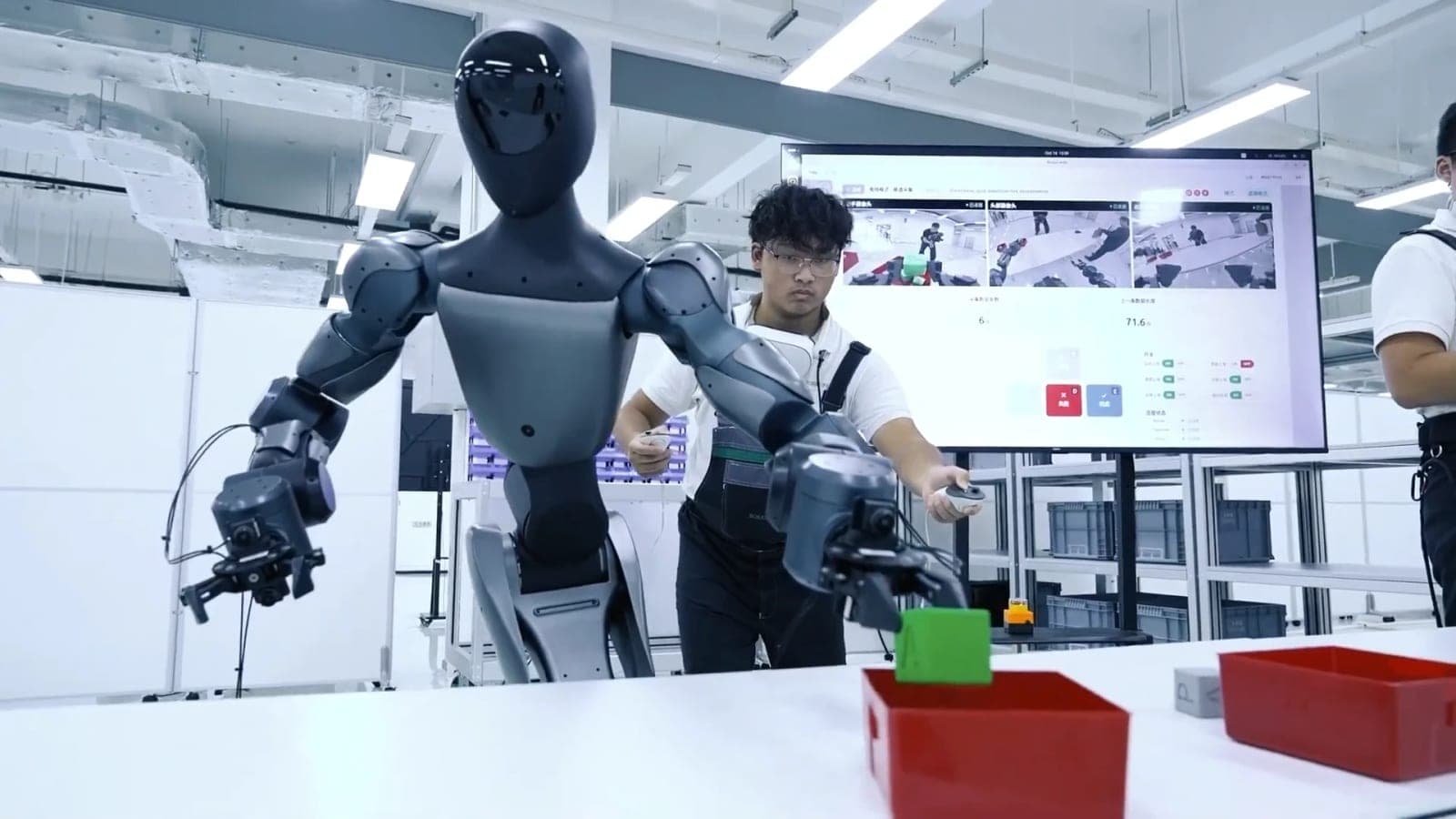
Schaeffler opens a factory where humanoid robots build parts for humanoids
Six humanoid robots work five stations on a joint-module line in Taicang, China, and the same site trains robots for other companies.
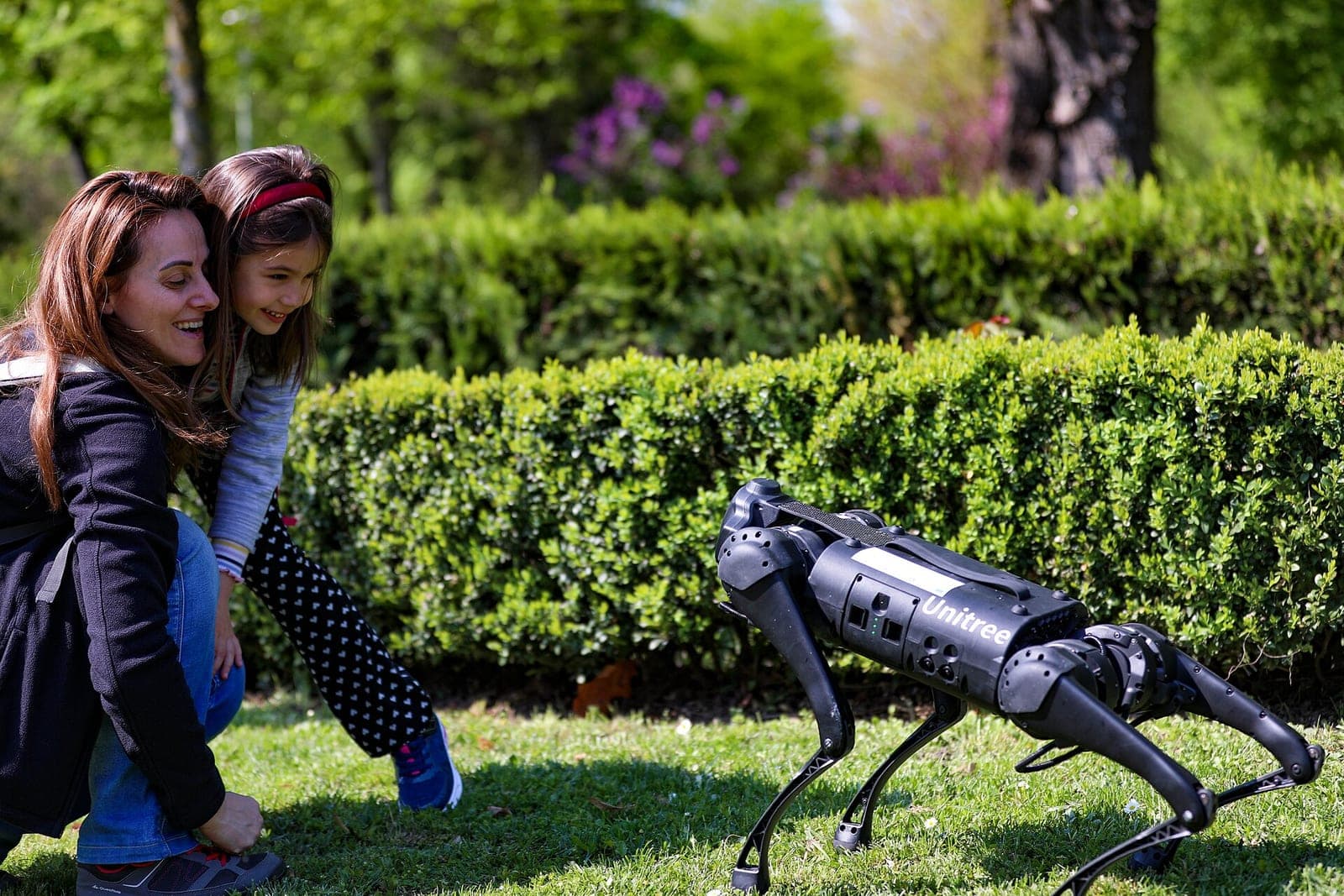
Robots race up Mount Tai's 3,100 stone steps in China's first mountain contest
The inaugural CMG World Robot Mount Tai Competition sent legged and humanoid robots up a real mountain trail. A Unitree robot dog won the legged race in 43 minutes and 41 seconds.
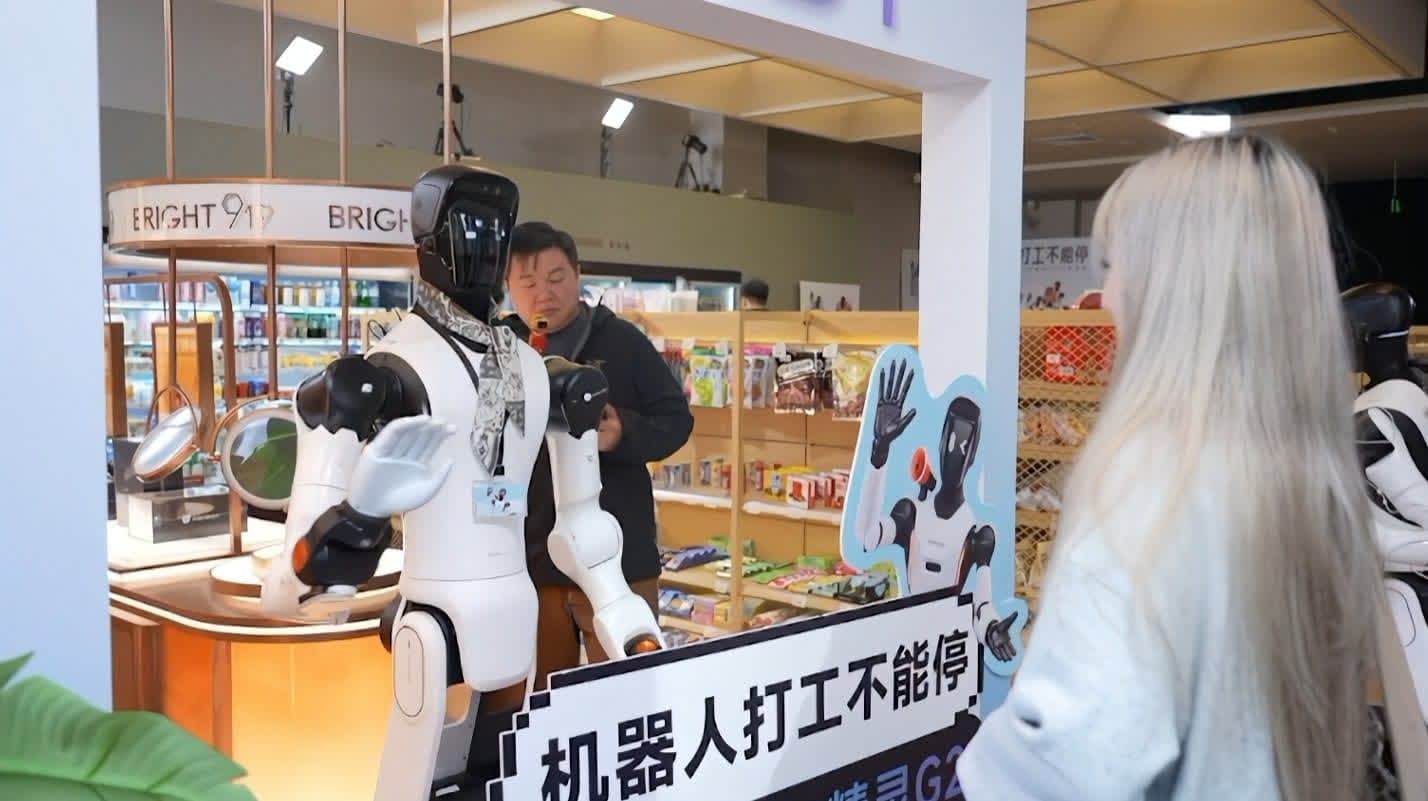
Four of six AGIBOT robots pass a 24-hour convenience store shift
AGIBOT put six G2 humanoid robots to work in a real Shanghai convenience store for a full day. They finished 1,730 tasks, and two of them failed the final review.
More in brief
- YouTube is going back on the Billboard charts in 2027Nov 9
- Apple starts selling $50 packs for extra Apple Intelligence useNov 9
- Windows 11 tests a way to switch off the Sticky Keys popup for goodNov 9
- US regulators question whether Waymo's school bus fix workedNov 9
- NVIDIA unveils GR00T 2 and Isaac Lab 3.0 to teach robots delicate workNov 9
- Tesla launches its robotaxi service in San Antonio, its eighth cityNov 9