
Technology·News & analysis
Rapidus signs up 17 design firms to find customers for its 2nm chips
Japan's state-backed chipmaker launched Rapidus CORE, a partner network including Synopsys, Cadence and Infosys, to help customers design chips it can build.
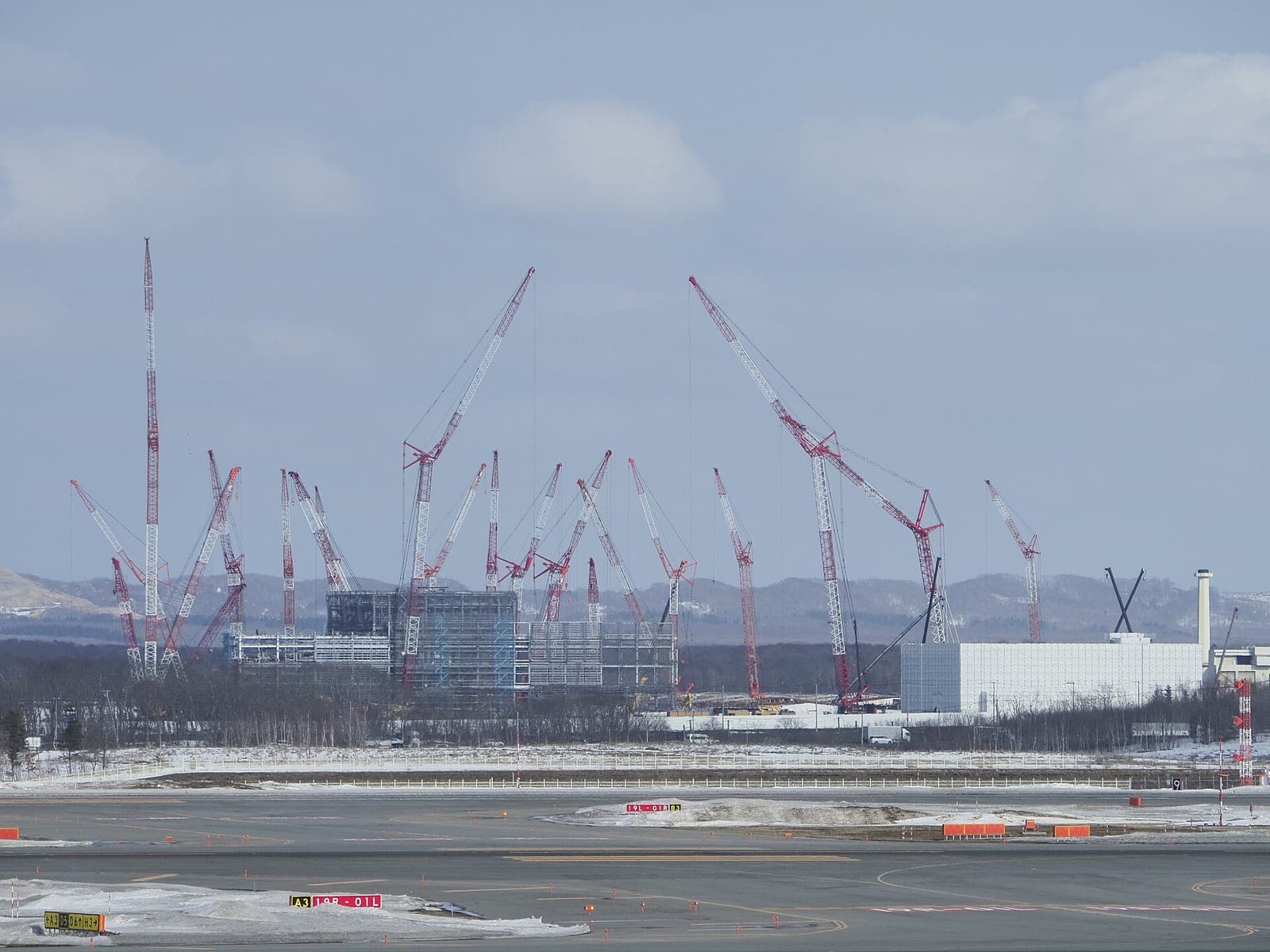
Tide
Ripple
Sci-fi
5/10
Reality
Demo
A chip factory hiring matchmakers before its first big shift.How we rate
Japanese chipmaker Rapidus launched Rapidus CORE, a network of 17 design companies, including Synopsys, Cadence and Infosys, that will help customers design chips for its factory.
The partners act as go-betweens, taking a customer's project from design through to manufacturing at Rapidus. The company has about $15 billion in state support and plans 2-nanometer production in the second half of the next fiscal year. Next, Rapidus wants to add software and design-block partners to the network.
What to know
- Rapidus launched Rapidus CORE on October 5, 2026, a global framework to support the design and mass production of advanced chips.
- Its first group, Design Solution Associates, has 17 members, including Synopsys, Cadence, Infosys, Wipro, HCL, Toppan and Dai Nippon Printing.
- Rapidus plans 2-nanometer contract production in the second half of Japan's next fiscal year and has about $15 billion in state support, Reuters reports.
- Analysts told Reuters the big open question is who will fill the factory, since many customers are cautious about leaving TSMC.
Japan's newest chipmaker just named 17 companies to help bring it customers. Rapidus announced a partner network called Rapidus CORE. So here's the real question: why does a factory that hasn't started mass production need a team of matchmakers?
What did Rapidus announce?
On Monday, October 5, 2026, Rapidus said it is setting up the Rapidus Collaborative Open Rapid Ecosystem, or CORE for short. The company describes it as a global framework to support the development and mass production of cutting-edge chips.
The first piece is a group called Design Solution Associates. It has 17 design companies. Their job is to sit between customers and Rapidus, help with the design work, and carry a project all the way to manufacturing.
Here is the full list, in the order Rapidus published it:
- AION Silicon Limited
- Cadence Design Systems, Inc.
- Dai Nippon Printing Co., Ltd.
- GreatAsic Technology Sdn. Bhd.
- HCL Technologies Limited
- Infinecs Systems Sdn. Bhd.
- Infosys Limited
- MavissDesign Co., Ltd.
- MosChip Technologies Limited
- NSW Inc.
- Oppstar Technology Sdn Bhd
- Quest Global Services Pte. Ltd.
- SkyeChip Berhad
- Synopsys, Inc.
- TOPPAN Inc.
- Toshiba Information Systems (Japan) Corporation
- Wipro Limited
Jiji Press reported the partners cover companies in and outside Japan, and that Rapidus will work with them to help clients design chips, with the goal of winning manufacturing contracts.
Wait, why would a chipmaker need design partners?
Making a modern chip happens in two big steps. First, someone designs it. Then a factory, called a foundry, builds it.
The catch: a design has to match the factory's exact recipe. A chip drawn for one foundry's process doesn't simply drop into another one. That means a new foundry has a chicken-and-egg problem. Customers won't design for it until it's proven, and it can't prove itself without designs to build.
Think of it like a new airport. The runway can be perfect, but nobody flies there until airlines set up routes. The 17 partners are, in a sense, Rapidus's airlines.
Why it matters: many of these companies already design chips for other people for a living. Synopsys and Cadence are US companies that make chip design software. Infosys, Wipro and HCL run large engineering services businesses. If they know how to design for Rapidus, their clients have an easier path in.
In real life Imagine a startup that wants a custom AI chip for its smart cameras. It doesn't have its own chip design team. Under this setup, it could hire one of the 17 partners, which already knows Rapidus's process, and get the design built at Rapidus without starting from zero.
How big is the bet?
Rapidus was founded on August 10, 2022. Backers include Toyota, Sony and NEC, along with Japanese government funding, according to ENGtechnica.
Here are the numbers that frame it:
- State support: about $15 billion, according to Reuters.
- Company capital: 424.95 billion yen as of June 5, 2026, according to Rapidus.
- Target: 2-nanometer contract chip production in the second half of the next fiscal year, Reuters reports.
- IPO goal: around the fiscal year ending March 2032, also per Reuters.
Reuters frames the whole project in one question: who will actually fill the factory? Prime Minister Sanae Takaichi is counting on Rapidus as part of her plan to revive Japan's chip industry, the agency reports.
The big picture: Japan once made about half the world's chips, in the 1980s. Today its share is under 10%, according to Reuters.
Who is Rapidus up against?
The field is small and very experienced. Reuters names three rivals:
- TSMC: the Taiwanese giant that dominates advanced chipmaking after decades of refining its process.
- Samsung Electronics: the South Korean company began making 2-nanometer chips last year.
- Intel: the US chipmaker rounds out the list.
Rapidus CEO Atsuyoshi Koike argues that AI is pushing demand high enough to need another leading-edge maker. "One or two companies are simply not enough," he said, as quoted by Reuters.
Omdia analyst Akira Minamikawa told Reuters that TSMC will keep most of the market. But some customers can't get the capacity they need from it, especially those with small orders or lower priority. Those buyers are the opening.
So will customers actually switch?
That's the part nobody can answer yet. Nori Chiu, chief investment officer at White Oak Capital, told Reuters the partnerships don't yet point to commercial success, but they are a step forward.
The catch: switching foundries is a big commitment. One executive told Reuters, without being named, that their company already buys from TSMC and can't move everything to Rapidus. If the new supplier didn't work out, going back would be hard.
There is also the factory itself. Rapidus has started pilot operations with IBM, and Koike says preparations for mass production are on schedule. IwaiCosmo Securities analyst Kazuyoshi Saito told Reuters that running a factory around the clock with steady yields, meaning the share of chips that come out working, is extremely hard.
A government official told Reuters the results can't be judged quickly. Meanwhile, lawmaker Daishiro Yamagiwa, who leads the ruling party's chip strategy group, said an IPO and manufacturing in the United States are possible options.
How does this fit with Rapidus's AI design tools?
CORE isn't Rapidus's first move on the design side. In July 2026, Rapidus and Cadence announced a partnership to link Cadence's InnoStack AI Super Agent with Rapidus's own AI design platform, called Raads.
The two companies are targeting up to a 2x improvement in design turnaround time over traditional flows. Rapidus also introduced two helper tools, Raads Navigator and Raads Indicator, to help designers catch and fix problems.
AI chip design tools are a busy space right now. We covered how OpenAI built an AI that can run chip design software, with Synopsys, another of the 17 new partners.
What's next: Rapidus says CORE will grow past design. It plans to add partners for EDA (the software used to design chips), IP (ready-made building blocks of a chip) and other areas.
Who stands to gain besides Rapidus?
Minamikawa told Reuters that an advanced chipmaker in Japan could help local suppliers of materials and equipment. Customers could also spread their orders across more than one country, which makes supply chains sturdier.
The partner list leans that way too. It mixes Japanese printing and IT groups like Toppan, Dai Nippon Printing and Toshiba Information Systems with American software makers and Indian engineering firms.
What it means for you
- Nothing changes in your devices yet: Rapidus hasn't started mass production, so no gadget you can buy uses its chips today.
- More chip factories can mean steadier supply: a second source for top chips helps when one maker is fully booked, which Omdia says some buyers can't always get from TSMC.
- Watch for named customers: partners are the warm-up act. The real signal will be the first company that says it is building a product on Rapidus chips.
The bottom line
Rapidus has the money and a pilot line. Now it is building the network that brings in designs, with 17 firms that already know how to make chips for other people. The partnership list is a start, but the test is still the same: real customers, real orders and a factory that runs smoothly.
Key facts
- Announced
- October 5, 2026
- Program
- Rapidus CORE (Collaborative Open Rapid Ecosystem)
- First group
- Design Solution Associates, 17 companies
- Target
- 2nm contract production, second half of next fiscal year
- State support
- About $15 billion (Reuters)
Got questions?
Quick answers, plain wordsWhat is Rapidus?
Rapidus is a Tokyo-based chipmaker founded on August 10, 2022. It is building a factory to make advanced logic chips on a 2-nanometer process, with backing from the Japanese government and companies including Toyota, Sony and NEC.
What is Rapidus CORE?
Rapidus CORE, short for Collaborative Open Rapid Ecosystem, is a global framework Rapidus announced on October 5, 2026 to support the development and mass production of advanced chips for customers in Japan and abroad.
Who are the 17 Rapidus partners?
AION Silicon, Cadence Design Systems, Dai Nippon Printing, GreatAsic Technology, HCL Technologies, Infinecs Systems, Infosys, MavissDesign, MosChip Technologies, NSW, Oppstar Technology, Quest Global Services, SkyeChip, Synopsys, TOPPAN, Toshiba Information Systems (Japan) and Wipro.
What will the partners actually do?
As Design Solution Associates, they connect customers with Rapidus and lend their own design teams, supporting a customer's project from chip design through to manufacturing.
When will Rapidus start making 2nm chips?
Reuters reports Rapidus plans to start 2-nanometer contract production in the second half of the next fiscal year. The company has already started pilot operations with IBM.
How much government money does Rapidus have?
Reuters puts the state funding at about $15 billion. Rapidus lists its own capital at 424.95 billion yen as of June 5, 2026.
Who does Rapidus compete with?
Its main rivals in advanced contract chipmaking are TSMC, Samsung Electronics, which began 2-nanometer production last year, and Intel.
Does Rapidus have customers yet?
The announcement names design partners, not chip buyers. Analysts told Reuters that winning enough customers to fill the factory is the company's biggest challenge.
Will Rapidus go public?
Reuters reports the company is targeting an initial public offering around the fiscal year ending March 2032.
Is this the same as the Rapidus and Cadence deal from July?
No. In July 2026, Rapidus and Cadence announced work on agentic AI design tools. Cadence is now also one of the 17 members of the new design partner group.
SourcesRapidus
Topics and tagsAI chips, rapidus, semiconductors, japan
Related stories
Qualcomm will license Huawei's patents, a reversal 25 years in the making
A new cross-license covers 5G, AI, compute and networking, and Qualcomm is buying some of Huawei's US patents. Bloomberg says it includes patents behind Huawei's LogicFolding chip technique.
Huawei says the memory chip shortage just added $200 to every phone it makes
Huawei's consumer business chief says memory component costs have added about $200 per device, and the company will raise smartphone prices to cope, joining Apple and Xiaomi in passing the squeeze on to buyers.
Micron's CEO says the memory chip shortage squeezing your next laptop won't end until at least 2028
Micron's CEO said memory shortages will persist through 2027 and 2028, with customers paying much higher prices, as AI data centers keep pulling DRAM production away from everyday devices.
More in brief
- Arizona court hack exposed data on 1.3 million people after one phishing clickOct 7
- Man who streamed AI songs with bots for $8 million gets 18 months in prisonOct 7
- Claude plans give about 5x the AI usage of ChatGPT's, SemiAnalysis findsOct 7
- Jaguar reveals the Type 01, its 1,000-hp electric grand tourerOct 7
- OpenAI publishes 722 math papers written by an unreleased AI modelOct 6
- Hackers hijacked three country domains to get fake Google certificatesOct 6