
AI·News & analysis
LA schools switch off Google's AI answers on student devices
Los Angeles Unified, with about half a million students, has quietly turned off Google's AI Overviews on school devices, even though Google says its Search and AI cannot be separated.


Tide
Wave
Sci-fi
3/10
Reality
In your hands
A search box with its AI summaries switched off.How we rate
Los Angeles Unified School District, which enrolls about half a million students, has disabled Google's AI Overviews on school-issued devices without a formal announcement.
The district says the change is temporary and meant to keep students' experience age-appropriate and safe. It undercuts Google's claim that Search and AI cannot be separated, made weeks earlier. Google faces a November 30 deadline to answer a US senator's letter on the policy.
What to know
- Los Angeles Unified School District, which enrolls about half a million students, has disabled Google's AI Overviews on school-issued devices without a formal announcement.
- The district confirmed the change to a parent advocacy group after parents and students noticed the AI summaries had vanished, and it calls the move temporary.
- Google has said that schools which block its AI features will lose access to Search, yet students in the district can still use Search.
- New York City, Los Angeles and Chicago schools are reportedly weighing other search engines, and Google faces a November 30 deadline to answer a US senator's letter.
One of the biggest school districts in the United States has quietly turned off Google's AI answers on student devices. Google said that could not be done without losing Search. So what happened?
What did Los Angeles Unified do?
Los Angeles Unified School District (LAUSD) enrolls about half a million students. It disabled Google's AI Overviews on school-issued devices. AI Overviews are the short, AI-written summaries that sit at the top of many Google search results.
The district made no formal announcement. Parents and students simply noticed that the summaries were gone.
How did the change come to light?
A local advocacy group, Schools Beyond Screens LA, asked parents to send video evidence of the missing summaries. The district then confirmed to the group that AI Overviews were indeed disabled.
The district did not explain how it did it. Outside tools are a likely route. Web-filtering software can hide parts of a search page, and some districts have built their own.
The district describes the change as temporary. It says the goal is keeping students' experience "age-appropriate and safe."
What led up to it?
The timeline is short, so here it is.
- Early in the school year: LAUSD put a moratorium on students using generative AI on district-issued devices. A moratorium is a pause on something until the district decides what to do. Generative AI means tools that write text or make images on request.
- November 3: Google announced that Gemini and Google Search would be turned off by default for K-12 student accounts, until school administrators turn them on. The switch is expected in early 2027.
- November 9: LAUSD said it was reviewing Google's announcement. A spokesperson said students could still search, and that AI Mode, where students chat with Google's Gemini assistant, was already turned off. Some searches still showed an AI summary.
- November 13: LAUSD's committee on generative AI met, and several members of Schools Beyond Screens spoke.
- A few days later: the summaries vanished from school devices.
The district had also asked Google for a way to turn the summaries off. A spokesperson said so on November 9.
Why it matters: the district's move is a real-world test of a claim Google made weeks ago.
What did Google say about separating AI from Search?
Google's vice president for education, Chris Phillips, said that "search and AI are deeply integrated." He added that if a district blocked AI, students would not have access to Search. They would see a message from their school saying it was not available.
That is the "AI or nothing" approach, as one school superintendent in Illinois called it. He said Google should have plainly said "our bad," because the messaging did not land well with schools.
Google has also said its goal is simple: give school leaders the control and confidence to use AI products in classrooms as they see fit. The company also made Gemini opt-in for students earlier this month, after a backlash over switching it on by default for many K-12 students. You can read our earlier coverage of Google's school plan.
In real life Picture a seventh grader in Los Angeles typing "why is the sky blue" into a school laptop. Last month, a short AI paragraph might have appeared on top. Now the usual list of links appears and the student clicks through to read.
Why are parents so upset?
Schools Beyond Screens is a parent-led group that wants limits on technology in classrooms. It pushed for LAUSD's AI moratorium and for the district's screen-time limit.
Its founder, Lila Byock, said earlier this month: "Google forced its AI products into classrooms, and parents fought back. Now Google is refusing to take no for an answer."
Another leader of the group, Jodi Carreon, said parents are angry. She said she was excited at first, when she read that Google was letting schools turn AI features off for students. That changed once the Search condition became clear.
Even advocates who want less tech in schools know that losing the ability to "Google" something is a problem for teachers. Students and teachers use Search to find sources, check facts and look things up.
Who else is pushing back?
The pushback goes well beyond Los Angeles.
- New York City: Mayor Zohran Mamdani wrote on X that Google is trying to use its monopoly power to force AI into public schools. He added that no corporation should have the power to dictate how children are taught. The city's schools are months into a one-year moratorium on student-facing generative AI.
- The US Senate: Senator Ed Markey of Massachusetts wrote to Pichai asking him to reverse the policy. He said it puts schools in an impossible position: give students access to potentially harmful technology or lose a critical research tool. Google faces a November 30 deadline to answer.
- Google's own staff: more than 500 Google employees signed a petition earlier this month asking the company to reconsider its strict requirements.
- Other districts: New York City, Los Angeles and Chicago are reportedly weighing whether to drop Google and use other search engines.
Were districts already blocking AI answers?
Yes. Fairfax County Public Schools in Virginia, the ninth-largest district in the country, built a browser plug-in that hides AI-generated answers in students' search results. A plug-in is a small add-on that changes how a web browser behaves. The district did this months before Google's announcement.
Niles Community Schools in Michigan built a similar tool and posted it publicly earlier this year. Web-filtering companies have also built products that suppress Google's AI summaries.
So the technique is not new. What is new is a district of this size doing it in public view, right after Google said it could not be done.
Is there a deeper reason behind Google's stance?
One former Google employee has a theory. Tracy Pizzo worked at Google for more than a decade on education and ethical AI standards before leaving in 2022. She points to two recent court cases Google won in Washington, D.C.
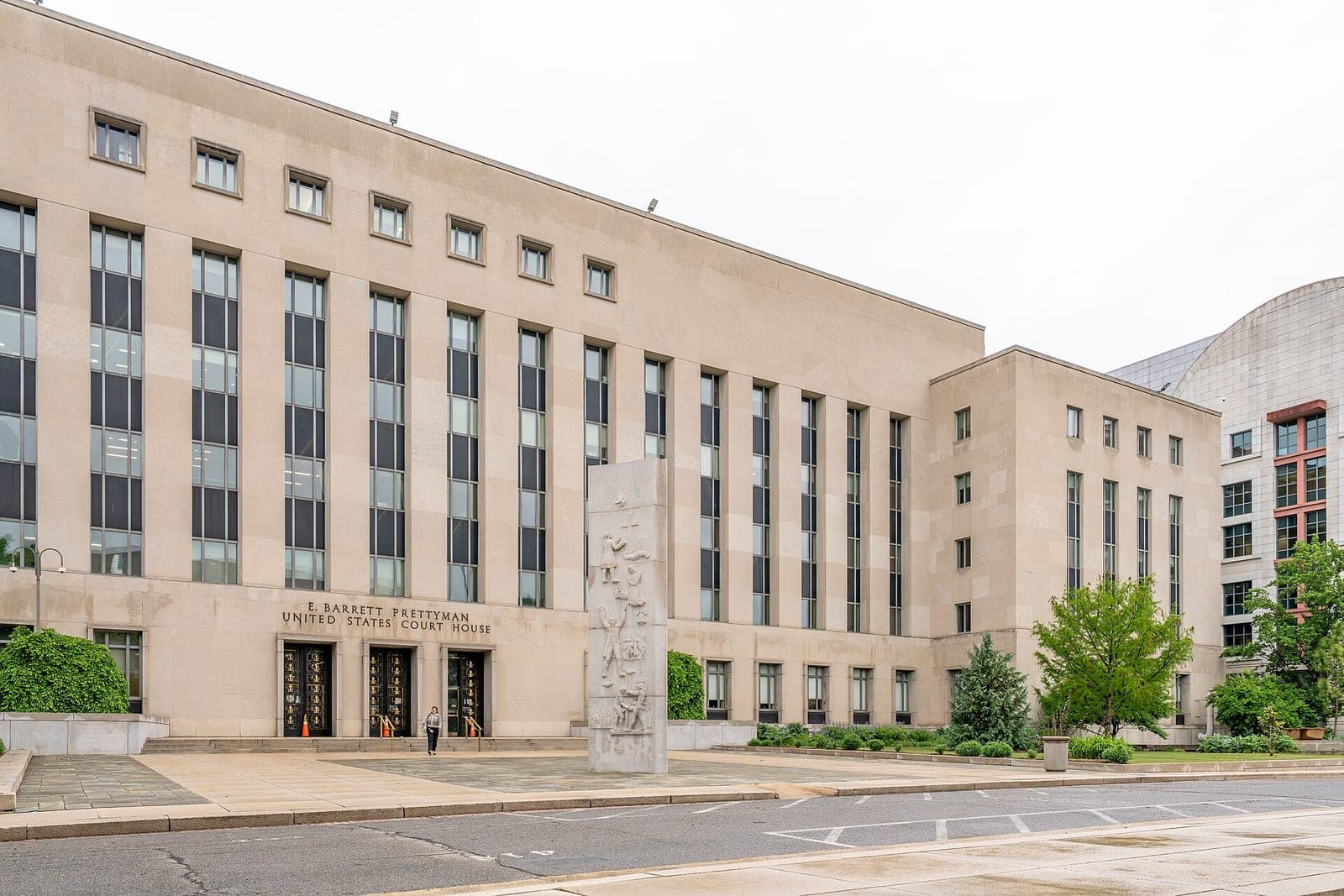
Online publishers had sued, saying AI Overviews hurt their business. They argued under antitrust law, the rules that stop companies from abusing their market power. Their argument depended on showing that AI Overviews is a separate product from Search. The judge decided the two are an integrated product, and dismissed the cases.
Pizzo's view is that an off switch for schools alone would be evidence the two can be separated. That, she says, would undercut the court win. Antitrust experts told NPR they were not fully convinced, but did not dismiss it either.
The catch: Google did not answer questions about any link to the court cases. It pointed to its original announcement instead. This is one person's theory, not a confirmed motive.
How do AI Overviews rate with watchdogs?
Common Sense Media, a nonprofit that evaluates how teens interact with technology, recently gave AI Overviews an "unacceptable risk" rating. It criticized the tool for unsafe content and for citing false information.
The day after Google's announcement, parents in North Carolina sued the company. They say Gemini helped their 13-year-old daughter plan her suicide on a school-issued Chromebook. That case is in court, and Google has not been found responsible for anything.
These stories are part of why many parents want AI out of school devices. They also explain why a district is willing to act first and explain later.
What does it mean for you?
If you are a parent, student or teacher, the picture depends on where you live. Here is what to watch.
- In Los Angeles: students on school devices should see search results without AI summaries for now. Chat-style AI Mode stays off.
- Elsewhere: a district can ask its IT team what it plans to do before Google's early 2027 switch.
- Outside school: nothing changes on your own phone or laptop. The policy covers K-12 student accounts only.
- Parents: Schools Beyond Screens says it is pressing district leaders to reclaim their authority from corporate interests.
What happens next?
Google's answer to Senator Markey is due November 30. LAUSD says it will keep evaluating whether these and other digital tools support student learning. Chicago and New York are weighing their options.
The open question is simple. Can a search engine and its AI be split apart when a school asks? Los Angeles has shown a district can do it on its own. Whether Google offers a built-in way is still up to Google.
The bottom line
A very large district has turned off Google's AI summaries while keeping Search. That sits awkwardly next to Google's statement that the two cannot be separated. The district calls it temporary, and the next move belongs to Google, other districts and lawmakers.
Key facts
- District
- Los Angeles Unified, about 500,000 students
- What was turned off
- AI Overviews on school-issued devices
- District's description
- Temporary, for age-appropriate and safe use
- Google's policy announced
- November 3, 2026
- Senator's reply deadline
- November 30
Got questions?
Quick answers, plain wordsWhat did Los Angeles Unified do?
The district disabled Google's AI Overviews, the AI-written summaries at the top of search results, on school-issued devices. It did not make a formal announcement.
How did people find out?
Parents and students noticed the AI summaries had disappeared. A local advocacy group called Schools Beyond Screens LA asked parents for video evidence, then received confirmation from the district.
How did the district switch it off?
It has not said. Outside tools that hide or filter AI answers are a likely route, because other districts have used them.
Is the change permanent?
The district describes it as temporary. It also says it will keep evaluating whether these and other digital tools support student learning.
Can students still use Google Search?
Yes. A district spokesperson earlier said students can still search, and the chatbot-style AI Mode was already turned off for district accounts.
Did Google say schools cannot do this?
Google's education chief Chris Phillips said Search and AI are deeply integrated, and that a school that blocks AI would not have access to Search. Los Angeles Unified has turned off AI Overviews while students keep Search.
What is Google's policy for schools?
Announced on November 3, it turns Gemini and Google Search off by default for K-12 student accounts starting in early 2027. Administrators can turn them back on.
What are other big districts doing?
New York City, Los Angeles and Chicago are reportedly weighing whether to drop Google and use other search engines.
Who is pushing Google to change course?
New York City Mayor Zohran Mamdani criticized the policy, and Senator Ed Markey wrote to Google CEO Sundar Pichai asking him to reverse it. Google faces a November 30 deadline to answer.
Has Google said anything about the Los Angeles move?
Google's public statements say its goal is to give school leaders control and confidence to use AI products in classrooms as they see fit.
SourcesEdSurge
Topics and tagsGoogle, google, ai overviews, education
Go deeper
Related guide
Guide, 8 minHow to use Gemini: Live camera help, Skills and Android scam protectionUse Gemini Live with your camera, prepare for Gems turning into Skills, and switch on the opt-in scam protection in Google Messages.Related stories

Google will switch off AI and Search for school accounts until schools opt in
Google says Gemini and Search will be off for K-12 student accounts until administrators turn them on, and a school that wants no AI loses Search too.
Judge dismisses Chegg and Penske antitrust suits over Google's AI Overviews
Chegg and Rolling Stone publisher Penske Media said Google forced them to feed AI Overviews for free. Judge Amit Mehta ruled their antitrust claims don't hold up.

Google's Gemini now turns noisy fire radio into text for Watch Duty
A Gemini-powered tool built with Google.org engineers cleans up static-filled firefighter radio and flags new wildfire dispatches in under 30 seconds.
More in brief
- China Post is testing 45 Robotera humanoid robots at a Hangzhou parcel hubNov 27
- Volvo starts training AEON humanoid robots at its Ghent car plantNov 27
- OpenAI fixed a billing bug, so GPT-6.2 Astra limits arrive 40% fasterNov 27
- Nadella says AI-native firms add the next human when the first runs out of tokensNov 27
- Microsoft says state-backed hackers run ARTEX AI agents at machine speedNov 26
- Rockstar workers vote against a formal union deal as GTA VI launchesNov 26