
Robots·News & analysis
Volvo starts training AEON humanoid robots at its Ghent car plant
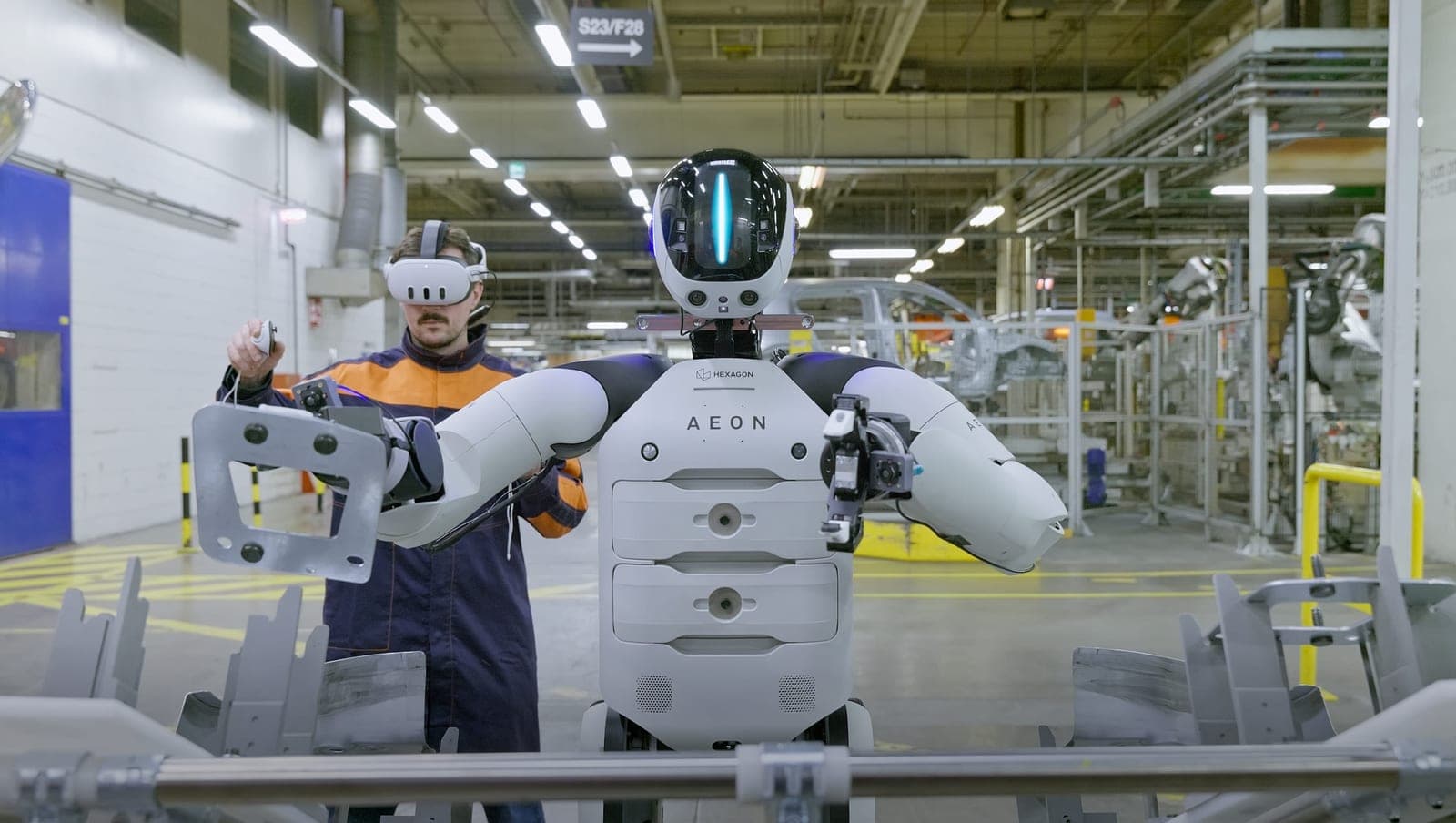
Volvo Cars has brought Hexagon's AEON humanoid robots to its Ghent factory in Belgium. The first lesson is simple: put parts into two fixtures, exactly right, every time.

Tide
Ripple
Sci-fi
8/10
Reality
Demo
A robot on wheels learns the car factory by watching a person.How we rate
Volvo Cars has brought Hexagon Robotics' AEON humanoid robots to its Ghent plant in Belgium, the first Volvo factory to try them.
Volvo's own team is teaching them to place parts into two fixtures by copying how people do it. More units arrive for a factory pilot in the first half of 2027. Volvo wants them in real production from mid-2027 but has not said how many robots.
What to know
- Volvo Cars has brought Hexagon Robotics' AEON humanoid robots to its plant in Ghent, Belgium, the first Volvo factory to try humanoids.
- Volvo's own team teaches the robots by imitation learning. The first task is placing components into two fixtures with high precision.
- More AEON units arrive for a factory pilot in the first half of 2027, and Volvo wants real production use from mid-2027.
- Volvo has not said how many robots are in Ghent, how many will come, or which car models they will work on.
Volvo Cars has brought humanoid robots into one of its car factories. The company [announced](https://news.cision.com/volvo-cars-global/r/volvo-cars-trains-hexagon-robotics, humanoids-for-manufacturing,c4429415) that AEON robots from Hexagon Robotics are now being trained at its plant in Ghent, Belgium.
So what will a robot with arms and wheels actually do in a car factory, and why is its first lesson so small?
What did Volvo announce?
Volvo says AEON humanoid robots are now at its Ghent plant. They are being trained and validated on real industrial tasks. The goal is to help employees with repetitive work and with tasks that are hard on the body.
Ghent is the first Volvo Cars plant to try humanoid robots. The robots are learning alongside employees and the plant's existing automation. A factory pilot follows in 2027.
A humanoid is a robot built roughly like a person, with a torso, two arms and hands. The idea is that it can work in spaces made for people.
Volvo describes the programme as part of its wider investment in advanced manufacturing.
Who is teaching the robots?
Volvo's own team does the training. It works closely with the Robotics division of Hexagon, a Swedish technology group, which built AEON.
The method is called imitation learning. The robot learns a task by copying how a person does it. Think of a new hire shadowing a veteran for a week, except the new hire is white, 60 kilograms and never needs a coffee break.
The first task is small and exact: placing components into two fixtures with high precision. A fixture is a holder that keeps a part in the right spot while it is worked on.
In real life Imagine teaching a friend to load a dishwasher by loading one yourself while they watch. After enough tries, they copy you. Volvo is doing that with metal car parts.
Why start with such a small job?
Because a factory only works if every step is repeatable. A robot that places a part right nine times out of ten is a problem on a line that builds cars.
Volvo plans to raise the difficulty step by step, once each step is proven:
- Multiple parts: handling several components instead of one.
- Moving around: travelling through the production area.
- Talking to machines: interacting with the plant's automated systems.
The big picture: Fixed robot arms have been part of car making for a long time. Volvo says they are excellent at stable, repetitive work in one place. But some physically demanding tasks need more flexibility than a fixed arm can offer.
That gap is where Volvo hopes a humanoid fits.
What is AEON, exactly?
AEON is a wheeled humanoid. Here is what Volvo says about it:
- Height: 1.65 metres.
- Weight: 60 kilograms.
- Movement: wheels instead of feet, up to 2.4 metres per second, about the pace of a light jog.
- Carrying: up to 10 kilograms.
- Senses: cameras and sensors that capture its surroundings so it can handle parts with precision.
Volvo calls it a multi-purpose platform. That means it can be trained for different industrial tasks, so one robot can learn new jobs without being rebuilt.
Hexagon first showed AEON in June 2025. Its launch materials also named a battery-swapping system, so the robot does not have to stop and charge, and partners such as Nvidia and Microsoft for computing and training tools.
Why a humanoid and not another robot arm?
Volvo's Chief Manufacturing Officer, Magnus Nilsson, put it this way: "AEON's humanoid design means it can fit into our production as it is today, alongside our teams and existing automation."
The point is that the plant does not need to be rebuilt around the robot. A machine shaped like a person can reach the same workstations people use.
Nilsson also gave the goal: "Our aim is for humanoid robots to take on some of the most physically demanding tasks and help make work more ergonomic for our people."
Ergonomic means easier on the body. Think of tasks that need heavy lifting, awkward reaching or the same strain all day.
Hexagon Robotics president Arnaud Robert framed it as business: "The purpose of humanoid robotics is to deliver business value to our customers."
What happens next?
The timeline from Volvo is short and clear:
- Now: training and validation in Ghent, starting with the two-fixture task.
- First half of 2027: a factory pilot, when more AEON units arrive in Ghent for a wider range of tasks.
- From mid-2027: the aim is for the robots to be used in real production.
What's next: If the training goes well, the robots move from practice to real work in about seven months. If a step does not go well, the timeline can slip. Volvo calls mid-2027 an aim, not a promise.
Who else is using AEON?
Volvo is not the first carmaker to try this robot. BMW has been piloting AEON at its Leipzig plant in Germany. BMW and Hexagon described that pilot as work on high-voltage battery assembly and other component production.
Schaeffler, a German motion-technology company, has gone further. Under a partnership with Hexagon, it plans to deploy about 1,000 AEON robots across its factories over seven years, after a successful pilot. In return, Schaeffler supplies Hexagon with precision actuators, the motors and gears that move a robot's joints.
So AEON is turning up in several European factories at once. Volvo adds a high-volume car plant to that list.
What did BMW learn with the same robot?
BMW's Leipzig pilot gives a preview of how these projects grow. It began quietly in December 2025, with a broader test planned for April 2026 and a longer pilot from summer 2026. BMW expects two AEON units to work on two separate use cases.
Those jobs include battery and component production, door panel quality inspection and picking parts out of bins. BMW's production head, Michael Nikolaides, said pilot projects help the company test "Physical AI," which means AI that works through robots in the real world, under real industrial conditions.
A few more AEON details came out of that project:
- Sensors: 22 in total, including cameras, time-of-flight depth sensors, infrared and microphones.
- Battery swap: about 23 seconds, so the robot can keep working.
- Brains: two onboard Nvidia Jetson computer modules, one for sensor fusion and one for running tasks.
Imitation learning is one of four training layers in that approach. The others are simulation, perception-based tasks and world models for objects the robot has never seen. A world model is an AI's internal picture of how things behave.
What is still unknown?
Volvo's announcement leaves several practical questions open:
- How many robots are in Ghent today, and how many arrive in 2027.
- Which cars they will help build. Ghent makes Volvo cars, but the company has not tied the robots to a model.
- Speed and cost: no numbers on how fast the robots work, or what they cost.
- Jobs: Volvo talks about taking on hard tasks and making work easier, and has not announced staffing changes.
Those are normal gaps at the training stage. They are also what to watch when the 2027 pilot starts.
What it means for you
- If you buy a Volvo: nothing changes today. The robots are in training, not on the line yet.
- If you work in manufacturing: expect pilots like this at more plants. Robots that learn by watching people are what make them practical.
- If you follow robots: the real test is mid-2027, when AEON either does real shifts or stays a demo.
- If you like clear timelines: Volvo gave dates, which is more than many humanoid projects do.
The bottom line
Volvo's humanoid story starts very small: one robot task, two fixtures, one careful lesson. That is how factory technology usually earns trust. The 2027 pilot will show whether a wheeled humanoid can do real work next to people on a car line.
Key facts
- Where
- Volvo Cars plant, Ghent, Belgium
- Robot
- Hexagon Robotics AEON, 1.65 m, 60 kg
- First task
- Placing parts into two fixtures
- Factory pilot
- First half of 2027
- Real production
- Targeted from mid-2027
Got questions?
Quick answers, plain wordsWhat did Volvo announce?
Volvo Cars said it has brought AEON humanoid robots from Hexagon Robotics to its manufacturing plant in Ghent, Belgium. The robots are being trained and validated on real industrial tasks, with a factory pilot planned for 2027.
What is AEON?
AEON is a humanoid robot made by Hexagon Robotics. It has a human-shaped upper body with arms and hands, and it rolls on wheels instead of walking. It is 1.65 metres tall and weighs 60 kilograms.
What is the robot doing in Ghent right now?
It is learning one task: placing components into two fixtures with high precision. A fixture is a holder that keeps a part in exactly the right spot while it is worked on.
What is imitation learning?
It is a way to teach a robot by showing it. The robot watches how a person does a task and learns to copy it, instead of someone writing step by step code for every move.
When will the robots work on real cars?
Volvo wants them in real production from mid-2027. Before that, more AEON units arrive in Ghent for a factory pilot in the first half of 2027.
How fast and strong is AEON?
It moves at up to 2.4 metres per second, about the pace of a light jog, and can carry 10 kilograms.
Is this the first Volvo plant with humanoid robots?
Ghent is the first Volvo Cars plant to try humanoid robots. Volvo has used fixed robot arms in its factories for a long time.
Will the robots replace workers?
Volvo says the aim is to take on physically demanding, repetitive tasks and make work more ergonomic for its people. The robots are training alongside employees and existing automation. Volvo has not announced any change in staffing.
How many robots does Volvo have in Ghent?
Volvo has not said. It has also not said how many more will arrive for the 2027 pilot.
Who else uses AEON?
BMW is piloting AEON at its Leipzig plant in Germany. Schaeffler has agreed to deploy about 1,000 AEON robots across its factories over seven years, after a successful pilot.
Related data: Humanoid robot prices
SourcesVolvo Cars, hexagon.com
Topics and tagsHumanoid robots, Industrial robots, volvo, hexagon
Go deeper
Related stories
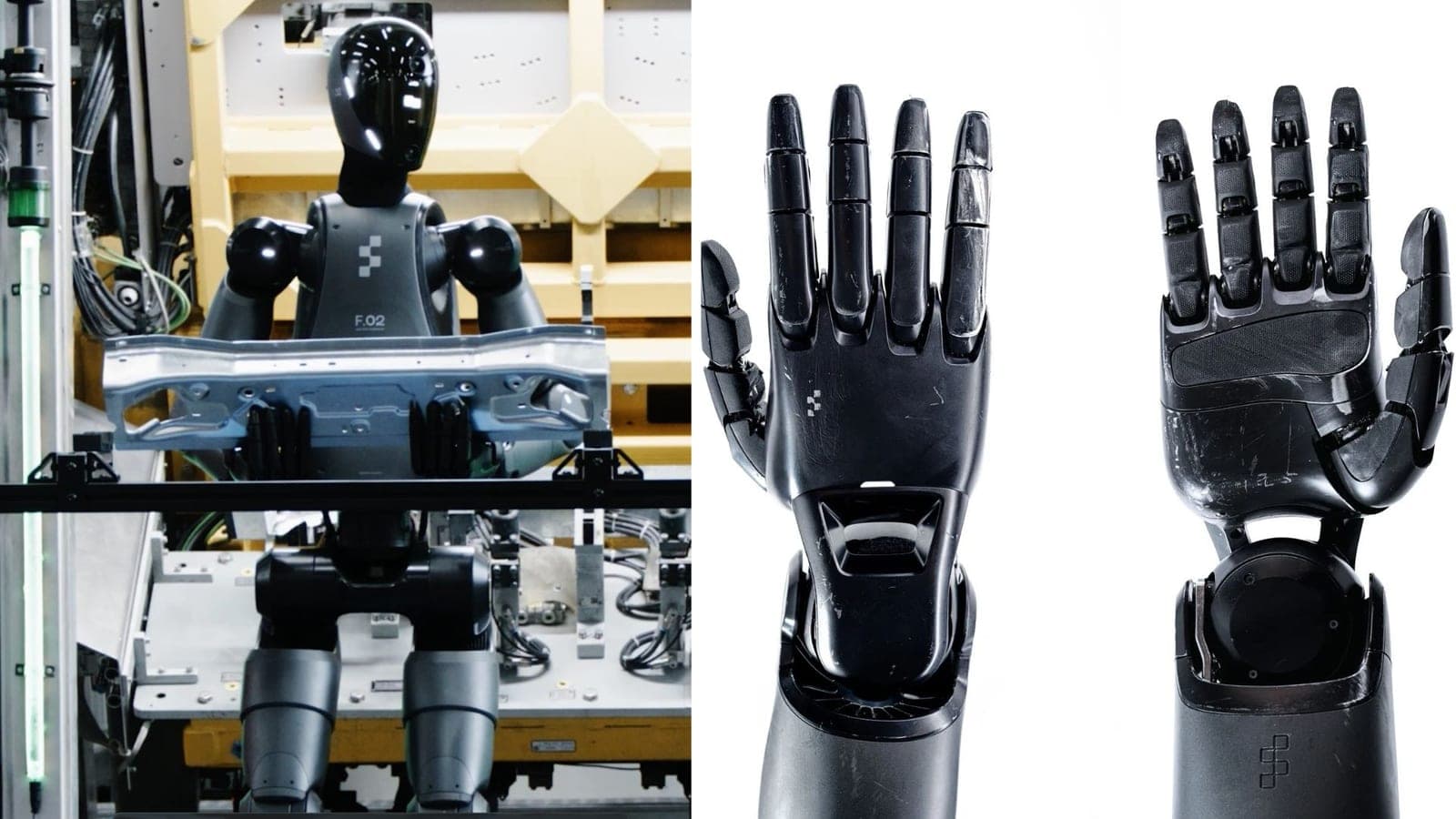
Figure retired its BMW factory robots by having them jump into molten steel
Figure decommissioned its F.02 humanoid robots after 11 months building BMW X3s, sending them off with a Terminator 2-style melt into a foundry furnace, an idea Arnold Schwarzenegger suggested.
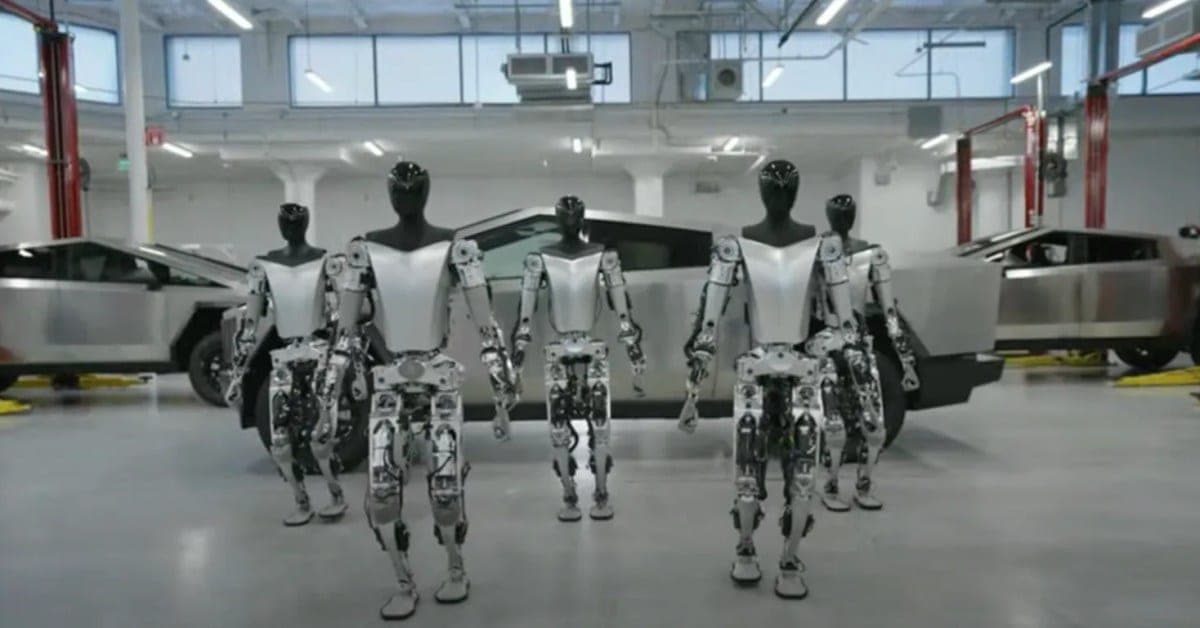
Tesla ramps Optimus to hundreds a week, but its hands are the bottleneck
Tesla has scaled Optimus production roughly tenfold since Q2, but the robot's hands still need hand assembly and its touch sensors aren't holding up, The Information reports.
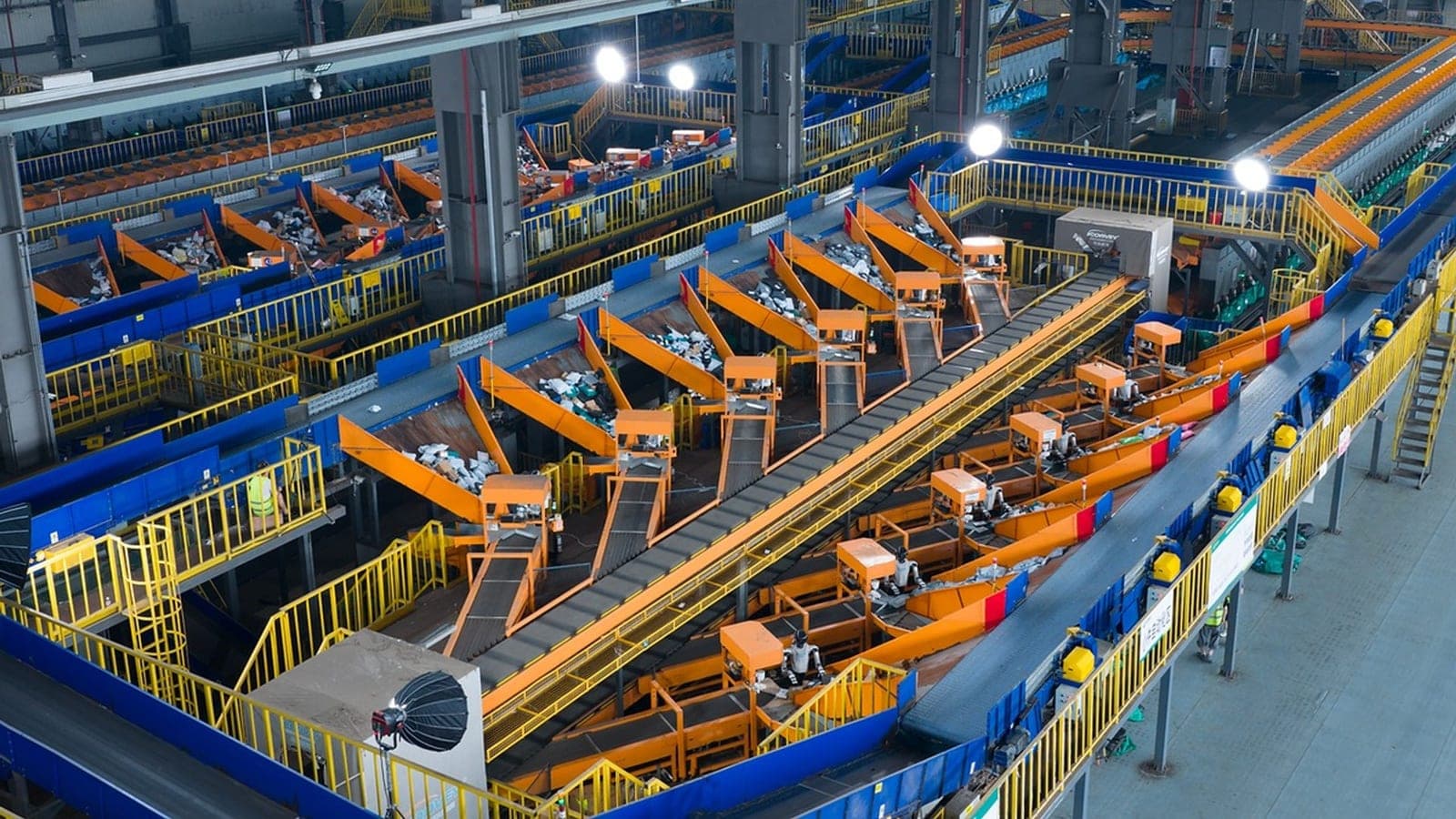
China Post is testing 45 Robotera humanoid robots at a Hangzhou parcel hub
Robotera says 45 of its humanoid robots now feed parcels into the sorting line at China Post's Hangzhou center, at up to 1,200 parcels an hour in some tests.
More in brief
- OpenAI fixed a billing bug, so GPT-6.2 Astra limits arrive 40% fasterNov 27
- Nadella says AI-native firms add the next human when the first runs out of tokensNov 27
- Microsoft says state-backed hackers run ARTEX AI agents at machine speedNov 26
- Rockstar workers vote against a formal union deal as GTA VI launchesNov 26
- Nvidia reportedly pauses AI server shipments to four Southeast Asian countriesNov 26
- S&P puts NVIDIA's AA credit rating on watch for a downgradeNov 26