
AI·News & analysis
Judge dismisses Chegg and Penske antitrust suits over Google's AI Overviews
Chegg and Rolling Stone publisher Penske Media said Google forced them to feed AI Overviews for free. Judge Amit Mehta ruled their antitrust claims don't hold up.
Tide
Ripple
Sci-fi
2/10
Reality
In your hands
A courtroom question: is a search engine a promise of traffic?How we rate
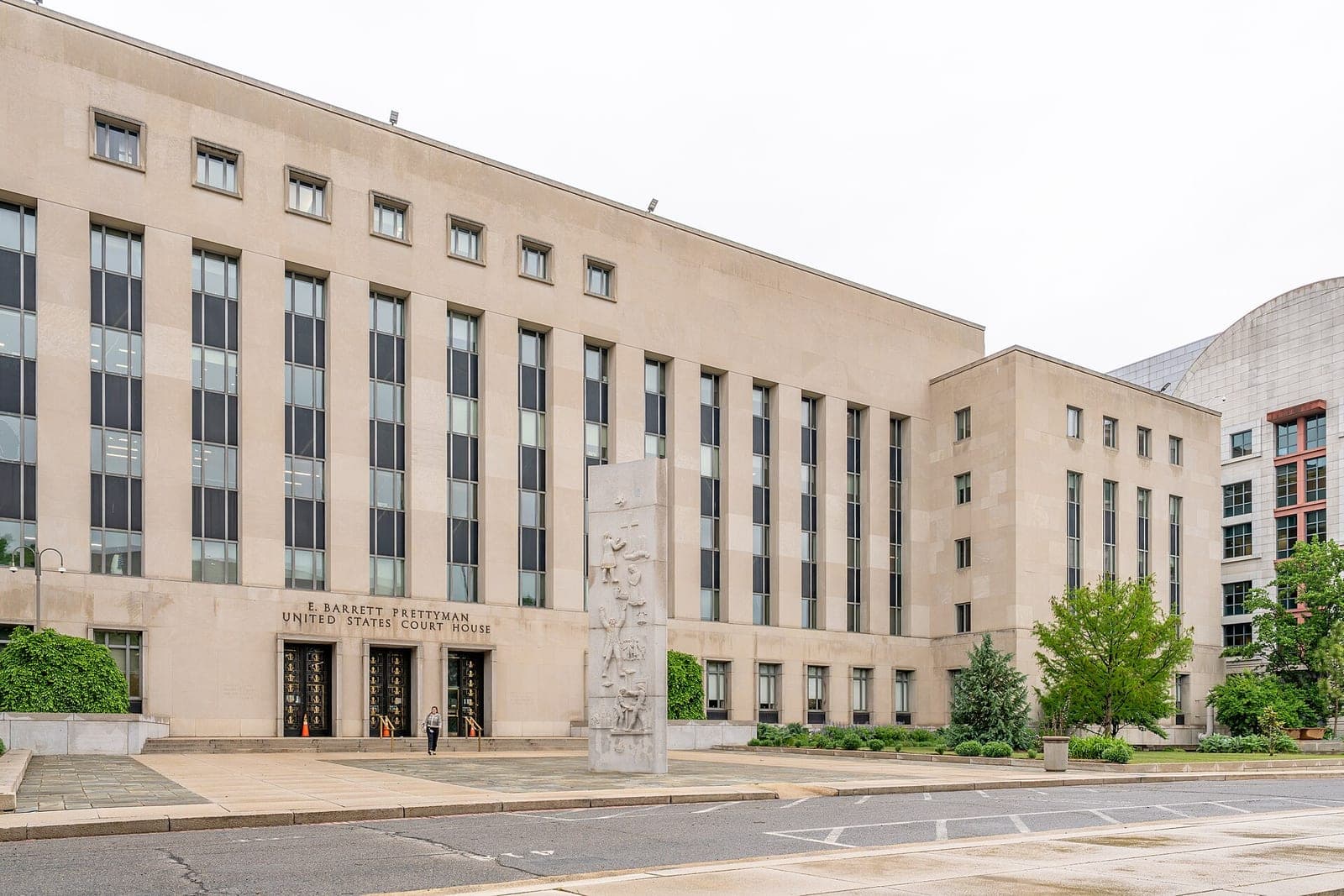
US District Judge Amit Mehta dismissed antitrust lawsuits from Chegg and Rolling Stone publisher Penske Media, which said Google forced them to supply content for AI Overviews for free.
Mehta ruled the publishers never had an agreement with Google, only an expectation of search traffic. It is the second such case he has rejected this year. Publishers' remaining paths are policy changes and Google's own opt-out and payment programs.
What to know
- US District Judge Amit Mehta dismissed antitrust lawsuits from Chegg and Penske Media Corporation over Google's AI Overviews.
- The publishers said Google forced them to supply content to AI Overviews for free or risk vanishing from search, cutting their traffic and revenue.
- Mehta ruled there was no agreement between Google and the publishers, writing that an expectation of traffic 'is simply how a general search engine works.'
- He said he is not unsympathetic to publishers, but that antitrust law can't replace lawmakers in dealing with the economic effects of new technology.
A federal judge has dismissed antitrust lawsuits from Chegg and Rolling Stone's parent company, Penske Media Corporation, over Google's AI Overviews, Press Gazette reports. The real question underneath is a big one: when a search engine answers your question itself, does it owe the websites it learned from?
First, what are AI Overviews?
AI Overviews are the AI-written answers that now sit at the top of many Google searches. Instead of a list of links, you get a short summary built from content on the web.
That's handy if you just want a quick answer. For the sites that wrote the original content, it can mean fewer people click through.
Think of it like a librarian who reads the book for you and tells you the ending. Convenient for you. Less great for the author hoping you'd borrow the book.
What did Chegg and Penske claim?
In lawsuits filed last year, the two companies accused Google of abusing its monopoly power in search, The Verge reports. Their main claims:
- Forced participation: Google made publishers supply content to AI Overviews for free, or risk disappearing from search results.
- Lost traffic: AI search features pulled visitors away from their sites.
- Lost revenue: fewer visits meant less money from ads and other sources.
Penske publishes brands including Variety, The Hollywood Reporter, Rolling Stone and Billboard. Press Gazette reports that Penske said search impressions and referrals to its content dropped after AI Overviews rolled out, hurting advertising, affiliate and subscription revenue.
By the numbers: Penske said search traffic to content with affiliate links had "dropped dramatically," and its organic affiliate revenue fell by more than a third from its peak to the end of 2024, according to Press Gazette.
Penske also said it couldn't block Google from using its content in AI Overviews while still showing up normally in search. Losing search visibility, it said, would be "devastating."
The publishers argued that in a competitive market, Google would pay them for republishing their work or using it to train its AI, Reuters reports via The Globe and Mail. Google said it has no obligation to index publishers' content on their preferred terms, and has denied any wrongdoing.
What did the judge decide?
US District Judge Amit Mehta in Washington dismissed both cases in a ruling on Wednesday. He said the claims "fail to get out of the starting gate," according to Reuters.
The heart of the ruling is about agreements. Antitrust claims like this one, under the Sherman Act, needed some kind of deal between Google and the publishers. Mehta found none.
"Plaintiffs have pleaded only that they have an 'expectation' that Google will send them search traffic if they make their content available for free. But an expectation is not an agreement. It is simply how a general search engine works."
Press Gazette reports he found no communication between Google and the publishers "from which mutual assent to engage in a transaction could plausibly be inferred." He also wrote that Google never "promised to 'sell' Plaintiffs any specific amount of traffic."
Penske argued for an "implied agreement" based on years of dealings with Google. Mehta said publishers keep their content open to Google's crawlers "because doing so serves their own independent interest in search traffic, not because they struck any bargain with Google."
He added that accepting the publishers' theory would mean Google "contracts with every website that it indexes," giving it "agreements with billions of web content publishers."
He also addressed the idea that Google rewards quality. Google may encourage publishers to build better sites, he wrote, but "Google makes no promise that traffic will follow or in what quantity." Higher-quality sites tend to get more visits, but in his words that "is not a function of contract; once more, it is simply how general search engines work."
On the "implied agreement" theory, he was blunt: "Merely incanting the phrase 'historical course of dealing' cannot plausibly convert two parties' independently self-interested conduct into a contract."
Are search and AI Overviews one product or two?
Penske also tried a second argument, Press Gazette reports. It said Google was illegally "tying" two products together: to stay visible in regular search, publishers had to stay opted in to AI features like AI Overviews.
The catch: a tying claim needs two separate products. Mehta found the publishers hadn't plausibly shown that.
His reasoning used the publishers' own complaint. They said people are not scrolling past AI Overviews to reach the regular links. To Mehta, that pointed to "a general demand for information and consumer indifference as to how they obtain it."
In other words, he saw Google Search and AI Overviews as having the same job: answering your search.
Does the judge think publishers are fine?
No, and he said so directly. Mehta, who issued a landmark antitrust ruling against Google in 2024, The Verge notes, wrote:
"The court does not treat Plaintiffs' alleged harms lightly. Nor is it unsympathetic to the situation publishers now find themselves in, and the knock-on consequences to journalists, educators, and other online creators whose content Google takes and repurposes without compensation."
But he said antitrust rules can't stand in for lawmakers when it comes to the economic effects of new technology. That's a job for legislators, not this kind of lawsuit.
This isn't the first time he has reached that view. Reuters reports Mehta rejected similar claims from a publisher in March. Press Gazette describes an earlier dismissed case from local news publishers, including the owner of Arkansas newspaper Helena World and Mississippi-based Emmerich Newspapers.
Jason Kint, chief executive of Digital Content Next, which represents US online publishers, told Press Gazette that "someone with authority has to address what is happening in the real world." Chegg, Penske and Google did not immediately respond to Reuters' requests for comment.
What's next for publishers and Google?
The court route is closing, but other changes are already underway:
- Opt-out: Press Gazette reports Google is rolling out a Search Console option that lets publishers keep their content out of AI Overviews and other AI features. The UK's Competition and Markets Authority ordered Google to offer that choice.
- Payments: The Information reported this week that Google is paying around 100 publishers for content used in AI Overviews, AI Mode and Gemini, as part of a pilot program, The Verge notes.
- Traffic: The Verge reports that traffic to news outlets and small websites has taken a steep dive since Google's AI search overhaul.
One more detail worth knowing: The Verge is owned by Penske Media, one of the plaintiffs, and disclosed that in its report. You can read more Google news on Techlantis.
What it means for you
- When you search: nothing changes. AI Overviews stay at the top of many Google results.
- If you run a website: watch for Google's Search Console opt-out from AI features, and weigh it against your search traffic.
- If you read news online: the fight over who pays for content used in AI answers is moving from courtrooms to regulators and private deals.
The bottom line
A federal judge ruled that publishers had no deal with Google that AI Overviews could have broken, so their antitrust claims failed. He agreed the harm to publishers is real, but said fixing it is up to lawmakers. For now, opt-outs and pilot payments are where the action is.
Key facts
- Judge
- US District Judge Amit Mehta, Washington
- Plaintiffs
- Chegg and Penske Media Corporation
- Claim
- Antitrust (Sherman Act) over AI Overviews
- Ruling
- Dismissed, Wednesday, Sept 30, 2026
- Earlier case
- Similar publisher claims rejected in March
Got questions?
Quick answers, plain wordsWhat are Google AI Overviews?
They are AI-written summaries that appear at the top of some Google search results. They answer the question directly, drawing on content from websites.
Why did Chegg and Penske sue Google?
They said Google abused its search monopoly by making publishers supply content to AI Overviews for free or risk disappearing from search results, which they said cut their traffic and revenue.
Who is Penske Media?
Penske Media Corporation publishes Rolling Stone, Variety, The Hollywood Reporter and Billboard, among other brands. It also owns The Verge.
Who decided the case?
US District Judge Amit Mehta in Washington, the same judge who ruled against Google in a landmark search antitrust case in 2024.
Why did the judge dismiss the lawsuits?
He ruled the publishers never had an agreement with Google to trade content for traffic. In his words, an expectation of traffic is not an agreement, it is simply how a general search engine works.
Did the judge say publishers aren't being hurt?
No. He wrote that the court does not treat the harms lightly and is not unsympathetic to publishers, but said antitrust law can't take the place of lawmakers.
Can publishers keep their content out of AI Overviews?
Press Gazette reports Google is rolling out a Search Console option to opt out of AI Overviews and other AI features, after the UK's competition regulator ordered it.
Does Google pay publishers for AI Overviews?
The Information reported this week that Google is paying around 100 publishers in a pilot program for content used in AI Overviews, AI Mode and Gemini.
Is this the first case like this?
No. Mehta rejected similar claims from a publisher in March, according to Reuters as published by The Globe and Mail, and Press Gazette describes an earlier dismissed case from local news publishers.
SourcesPress Gazette
Topics and tagsGoogle, google, ai overviews, antitrust
Related stories
Google's Guided Vision lets Gemini Live describe the world for blind and low-vision users
Point your Android phone's camera at something and Gemini describes it out loud, then tells you how to move the camera if it can't see well. Google built it with the blind and low-vision community.

Google is quietly funding Hollywood movies to make AI look less scary
Google partnered with talent agency Range Media Partners on 100 Zeros, a fund that co-produces films and TV shows aiming to show technology, especially AI, in a more optimistic light than shows like Black Mirror.

Google's AI just became the best flu forecaster the CDC has ever worked with
Google said its AI model ranked #1 among 39 submissions in the CDC's FluSight program, most accurately predicting flu hospital admissions during the 2025-26 season.
More in brief
- California will fine robotaxi companies that block first responders for over 30 minutesOct 2
- Microsoft launches real-time transcription and new voice models for AI voice agentsOct 1
- Apple's smart home hub reportedly launches October 13, with a camera that never records videoOct 1
- Cloudflare releases Clef, open-weight AI models that make yes-or-no decisions fastOct 1
- GrayKey maker reportedly found a way around the iPhone's Inactivity RebootOct 1
- Fervo's Cape Station becomes the first enhanced geothermal plant to sell power commerciallyOct 1