
AI·News & analysis
Nadella says AI-native firms add the next human when the first runs out of tokens
Microsoft's CEO says new-grad hiring has slowed while teams rebuild around AI. His picture of an AI-native company starts with one person and a token budget.

Tide
Wave
Sci-fi
4/10
Reality
In your hands
A company that starts with one person and a pile of tokens.How we rate
Microsoft CEO Satya Nadella said on The Pragmatic Engineer podcast that new-graduate hiring has slowed while teams rebuild around AI.
He described an AI-native company as one person with a token budget, who is joined by the next hire only after maxing it out. He added that long-term conclusions are premature. A clip of the answer is now spreading online, so expect more debate about entry-level jobs.
What to know
- Satya Nadella said Microsoft's hiring of new graduates has slowed while teams are reorganized around AI.
- He described an AI-native company as one that starts with a token budget and one human, then adds the next person when the first maxes out the budget.
- He also said it is too early to draw long-term conclusions, and pointed to a new mentoring program with Carnegie Mellon called PRAISE.
- Nadella said that when code is cheap to write, the hard part becomes checking that it works.
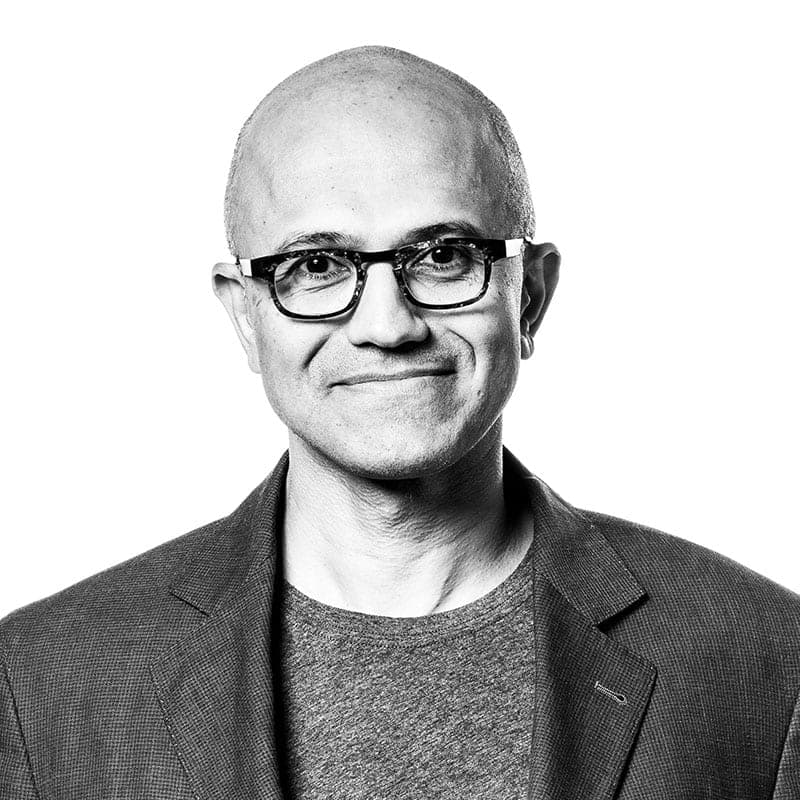
Satya Nadella, the CEO of Microsoft, says the company's hiring of new graduates has slowed. In the same breath, he sketched a company that starts with one person and a pile of AI credits. Here is the fun part: his answer is more careful than the clip that is going around.
What exactly did Nadella say?
Gergely Orosz, a former Microsoft engineer, asked Nadella on The Pragmatic Engineer podcast whether Microsoft still hires juniors. Many companies now prefer experienced engineers who get more out of AI tools.
Nadella said the first job is to make sure people already inside Microsoft are moved to places that make sense. Only after that does it make sense to add an industry hire or a new college hire.
- The pause: he said it "may be a slowdown to get those, quote unquote, new factories" of software engineering built.
- The goal: so that "not just tokens, humans can come in" and have high leverage.
- The caveat: drawing "too many lines as long-term trends" is, in his words, "too early".
The interview was recorded in Redmond, and the hour-long conversation covered much more than hiring. The clip of the hiring answer started spreading more than a week after the recording.
First, what is a token budget?
An AI model does not read words the way you do. It reads and writes small chunks of text called tokens. Companies that use AI pay by the token.
A token budget is the amount of AI work a person or a team is allowed to buy. Think of it like a phone data plan, but for thinking.
In real life Picture a small design studio with one employee and a monthly AI plan. When that employee keeps hitting the limit, the studio has to choose: buy a bigger plan, or hire a second person.
What is an AI-native company?
Nadella gave a short definition. "What is an AI native company? They start with a token budget and a human," he said. "Then they add, that person maxes their token budget and then says, let's add the next human."
He added that "every company is going to start looking like that." Then he walked it back a little with the line about long-term trends being too early to call.
The key idea is that the human comes first and the extra human comes second, once the AI has been used to its limit.
Why it matters: hiring has always been driven by a pile of work that one person cannot finish. In this picture, the pile of work goes to the AI first, and a person is added only when the AI budget is used up.
Is this a change from what he said before?
Yes, in tone. At Davos in January, Nadella was asked on the All-In podcast whether Microsoft would still need new hires as AI takes over work. He said he is "still a big believer in college recruiting".
He described AI as a mentor that helps new hires learn a codebase faster. That would make a college hire's productivity curve steeper than ever.
Microsoft was also testing an apprenticeship at the time. A senior engineer would work with a group of college hires.
What is PRAISE?
That idea has since become a real program. In October, Microsoft and Carnegie Mellon University launched PRAISE, short for Preceptorship for AI-accelerated Software Engineering.
Senior Microsoft engineers mentor early-career engineers in it. The early-career engineers can also take Carnegie Mellon courses.
Azure CTO Mark Russinovich said: "AI changes the work, but it doesn't eliminate the need for junior engineers or for human judgment and accountability." Nadella told Orosz he would love to join one of these preceptorships.
What else did he say in the interview?
Hiring was only one topic. Nadella also covered how Microsoft rebuilds its own teams and how to trust code written by machines.
- Reorganizing: asked whether the voluntary exit offer is a prelude to layoffs, he did not answer directly. He said people stuck in a team that is not changing can "vote with your feet", and added "I don't want you to". He also said: "I wish I could just sit here and say it'll all be the same. I cannot." Our earlier story covers the voluntary exit offer itself.
- Team shapes: team sizes and workflows will change across Microsoft's roughly 200,000 people. One of the fastest-growing jobs is the forward-deployed engineer, an engineer who works directly at customer sites.
- Verification: "In a world where code generation has become cheap, what has become hard is verification," he said.
Why is checking code the hard part?
When a model writes code in seconds, the slow part becomes asking: does it work, and is it safe? Nadella said models that critique code can carry their own alignment problems. So he favors checking one model family with another.
He also wants real production traces, the logs of what software does while people use it, to feed a loop that verifies fixes. He called that his "RSI".
He said companies should treat AI agents, which means AI programs that take actions on their own, as an "insider risk". Models are getting more capable, he said, but not more reliable. He asked for audited logs of how agents reason that cannot be tampered with.
He also told companies to keep their agent software, memory and models separate, so no single vendor locks them in.
Does the data back up the worry?
The slowdown Nadella describes shows up elsewhere. Daniel Shapero, the CEO of LinkedIn, told Fortune: "It is a frozen job market, and that does make it tougher for people that are earlier in their career for sure."
Shapero also said AI could help younger candidates, because employers assume they know the latest tools. LinkedIn gets about 9,000 job applications every minute.
A working paper by researchers from MIT and Microsoft Research studied GitHub Copilot, Microsoft's AI coding helper, across 5,414 multinational firms. Among firms that adopted it when their software contracts came up for review, Copilot cut quarterly technical hiring by 29%. The cut fell mostly on junior roles with the most coding work.
The paper found no change in separations or in overall technical headcount. Existing employees stayed, and fewer new people were hired.
- Bill Gates: in an essay in August, Microsoft's co-founder wrote that "many jobs will disappear forever", with entry-level and mid-level jobs most at risk.
- Brad Smith: Microsoft's president wrote in June, after graduates booed AI at commencement ceremonies, that "Machines don't buy products. People do."
What is the catch?
An obvious question follows the token-budget idea: if one person runs out of tokens, why not just buy that person more tokens? Nadella did not address that in the clip. His answer was about the order of operations, not a rule.
There is also a bigger-picture catch. If every firm hires only when its AI budget runs dry, fewer first jobs exist. A first job is where people learn the work that later makes them valuable.
What it means for you
- If you are job hunting: expect slower entry-level hiring at big tech firms. Programs like PRAISE show some employers still want to train beginners.
- If you are early in your career: learn to use AI tools well. Nadella's own advice to engineers was to spend less time reading about AI and more time using it.
- If you manage a team: budget for checking AI work, not only for producing it.
- If you read the viral clip: remember the full answer includes "too early" to call it a trend.
The bottom line
Nadella did not say junior jobs are over. He said Microsoft is rebuilding its teams first, and that hiring follows. His token-budget picture is a thought experiment about how companies may grow, and he warned against treating it as settled.
The numbers outside Microsoft show a cooler market for beginners. How it plays out depends on whether companies treat AI budgets as a replacement for people or as a reason to train them faster.
Key facts
- Who
- Satya Nadella, Microsoft chairman and CEO
- Where
- The Pragmatic Engineer podcast, hosted by Gergely Orosz
- Main claim
- AI-native companies start with a token budget and a human
- Microsoft's response
- PRAISE, a mentoring program with Carnegie Mellon University
- Caveat
- Nadella called long-term conclusions "too early"
Got questions?
Quick answers, plain wordsWhat did Satya Nadella say about new-grad hiring?
He said Microsoft's junior hiring has slowed. His reasoning was that the company first has to reorganize the people it already has, and build what he called new software factories. Hiring early-career people comes after that.
What is a token budget?
AI models read and write text in small chunks called tokens, and providers charge by the token. A token budget is how much AI work a company or a person is allowed to pay for.
What is an AI-native company, according to Nadella?
He described it as a company that starts with a token budget and one human. When that person maxes out the budget, the company adds the next human.
Is Microsoft still hiring graduates?
Yes, but more slowly. Nadella said new graduates still have a place, and Microsoft has started a mentoring program with Carnegie Mellon University called PRAISE for engineers early in their careers.
What is PRAISE?
PRAISE stands for Preceptorship for AI-accelerated Software Engineering. Senior Microsoft engineers mentor early-career engineers, who can also take courses at Carnegie Mellon University. It launched in October.
Did Nadella say junior jobs are gone for good?
No. He said that drawing too many lines as long-term trends is too early. He described the slowdown as possibly a pause while Microsoft builds its new software factories.
What did Nadella say about checking AI-written code?
He said that in a world where code generation has become cheap, verification has become the hard part. He favors checking one model family with another and feeding real production traces into a loop that verifies fixes.
Did the same interview mention Microsoft's voluntary exit offer?
Yes. Asked whether the offer is a prelude to layoffs, Nadella did not give a direct answer. He said he wished he could say it would all be the same, but he could not.
Where can I hear the full answer?
The full interview is on The Pragmatic Engineer podcast, titled "Software engineering after code becomes cheap with Satya Nadella". Only a short clip of the hiring answer is going viral, and the full answer is more careful.
SourcesThe Pragmatic Engineer
Topics and tagsMicrosoft, microsoft, satya nadella, ai jobs
Go deeper
Related stories

Microsoft says state-backed hackers run ARTEX AI agents at machine speed
Microsoft's threat team named Chinese and North Korean groups that use the ARTEX AI framework, and it explained how the tool works and how defenders can trick it.
Microsoft puts Word, Excel and PowerPoint inside Copilot at Ignite
Microsoft announced at Ignite that Word, Excel and PowerPoint now work inside Copilot, which CEO Satya Nadella calls the new OS for work. Autopilot and Workspaces are still early access.
Microsoft's AI Frontiers research group is over, says co-founder John Langford
John Langford says the roughly 50-person group ended after it was folded into Microsoft AI in September, and that its founding leaders all left.
More in brief
- China Post is testing 45 Robotera humanoid robots at a Hangzhou parcel hubNov 27
- Volvo starts training AEON humanoid robots at its Ghent car plantNov 27
- OpenAI fixed a billing bug, so GPT-6.2 Astra limits arrive 40% fasterNov 27
- Rockstar workers vote against a formal union deal as GTA VI launchesNov 26
- Nvidia reportedly pauses AI server shipments to four Southeast Asian countriesNov 26
- S&P puts NVIDIA's AA credit rating on watch for a downgradeNov 26