
Technology·News & analysis
Huawei found guilty of trade secret theft and bank fraud in US court
A New York jury convicted Huawei on 10 of 12 counts but cleared it of racketeering. The company says it will appeal, and sentencing is set for September 2027.

Tide
Wave
Sci-fi
2/10
Reality
Shipping
A courtroom drama about routers and a testing robot.How we rate
A federal jury in Brooklyn convicted Huawei on 10 of 12 counts, including conspiracy to steal trade secrets, bank fraud and sanctions violations, but cleared it of racketeering and obstruction.
The case began in 2018 and covered about 20 years of alleged conduct. The Justice Department says Huawei may face fines, forfeiture and restitution. Huawei will appeal, and sentencing is set for September 14, 2027.
What to know
- A federal jury in Brooklyn, New York, convicted Huawei on 10 of 12 criminal counts on Tuesday, November 24, 2026.
- The counts include conspiracy to steal trade secrets, bank fraud, wire fraud, money laundering and violating US sanctions.
- Jurors cleared Huawei of racketeering conspiracy and of obstruction of justice.
- Huawei says it will appeal, and sentencing is set for September 14, 2027, with possible fines, forfeiture and restitution.
A US jury has found Huawei guilty of stealing trade secrets and committing bank fraud. The verdict ends a long US case against the Chinese telecom giant. So what exactly did the jury decide, and what happens now?
What did the jury decide?
The verdict came on Tuesday, November 24, 2026, in a federal court in Brooklyn, New York. The jury found Huawei guilty on 10 of 12 criminal counts. Huawei and three of its subsidiaries were the defendants.
The guilty counts include:
- Trade secrets: conspiracy to steal trade secrets.
- Fraud: bank fraud and wire fraud.
- Money: money laundering.
- Sanctions: violating US sanctions, the rules that ban selling certain goods to countries such as Iran.
- Defrauding the US: conspiracy to defraud the United States.
Jurors cleared Huawei on two counts. They did not find it guilty of racketeering conspiracy or of obstruction of justice.
What does racketeering mean here?
Racketeering is a charge usually linked to organized crime. It lets prosecutors treat many separate crimes over many years as one big scheme run by a group.
Prosecutors used it to argue that 20 years of alleged theft and lies were not random events. They said the pattern was the business plan. The jury did not agree on that part.
The jury convicted Huawei on the specific crimes but rejected the claim that they added up to one criminal enterprise.
How did the case start?
The case began in 2018, when the US charged Huawei and its chief financial officer, Meng Wanzhou, with bank fraud and sanctions violations. The government said Huawei misled banks about its business in Iran so it could move millions of dollars through the American financial system.
Meng was detained in Vancouver on a US warrant. Her case was dismissed in 2022 under a deferred prosecution agreement, a deal where charges are dropped if the person meets set conditions. A judge ruled that admissions she made in that deal can still be used as evidence against the company.
Over the years the case grew. It added racketeering and the trade secret charges, and it became a trial about two decades of conduct.
What did prosecutors say Huawei took?
The government said Huawei conspired to steal trade secrets from five US companies. Two examples stood out.
- Cisco: prosecutors pointed to the operating system source code of Cisco routers. Source code is the written instructions that make software run, and a router is the box that moves internet traffic.
- T-Mobile: prosecutors described a robot nicknamed Tappy. It taps a phone screen again and again to see what breaks. They said a Huawei employee took its robotic arm out of a secure T-Mobile lab in a laptop bag, and that video of this exists.
Prosecutors also said Huawei ran a bonus program that paid employees for getting competitors' secrets. They said the stolen material included source code and user manuals for routers, antenna technology and robot testing technology.
In real life Think of a bakery that is allowed to look at a rival's oven for a quick test, then tries to walk out with the oven door. That is the kind of story prosecutors told about Tappy.
What about Iran and North Korea?
The government also said Huawei hid how much business it did in Iran. Prosecutors named a Hong Kong company called Skycom and said it was used to sell banned computer equipment to Iran and North Korea.
They said Huawei told banks, reporters and the US government that it did not help the Iranian government, military or intelligence services. The jury found Huawei guilty of the bank fraud and sanctions counts tied to this story.
Why it matters: banks that handle US dollars must follow US sanctions. Prosecutors said hiding the Iran link kept those dollars flowing through American banks.
How did the trial play out?
The trial opened in September in Brooklyn. Justice Department lawyer Taylor Stout told jurors the story was "theft, lies, cover-up" and said Huawei "victimized American companies" for 20 years.
Stout also promised witnesses "who caught Huawei red-handed trying to steal American tech." Judge Ann Donnelly instructed the jury, and deliberations began on November 18. The verdict came six days later.
Huawei is best known for telecom equipment and phones, and in recent years for AI chips. That is why a criminal trial about its past conduct drew so much attention from the tech industry.
What did Huawei argue?
Huawei's lawyers said the case was "about competition, not conspiracy." Brian Heberlig told jurors: "Innovation, not theft. Ordinary business dealings, not criminal conduct." He said Huawei "earned its success."
The defense said the Cisco and T-Mobile incidents were actions by individual employees, and that managers fixed the problems once they found out. It also told jurors that an employee who took unauthorized photos of a Fujitsu device at a trade show was promptly fired.
On sanctions, the defense said there was no evidence Huawei knew that clearing dollars would break US law. It also said the banks knew about Huawei's work in Iran and still competed for its business.
What do the officials and Huawei say now?
Attorney General Todd Blanche said: "For decades, Huawei and three of its subsidiaries conducted their business in the United States on the basis of lies and theft."
Tysen A. Duva, who leads the Justice Department's criminal division, said Huawei "built its global empire on a foundation of fraud, theft, and deception."
Huawei welcomed the racketeering acquittal. It said the remaining charges "are equally without legal or factual merit." It added that the five trade secret disputes the government cited were civil matters resolved over the past two decades, and that no court ever found it liable for willful theft.
Will this change anything for Huawei?
Not much on the sales side, at least in the US. Huawei is already on the Federal Communications Commission's Covered List, a list of companies whose equipment cannot be sold in the US. US suppliers also need approval from the Commerce Department to send American technology to Huawei.
The bigger risk is money. Sentencing is set for September 14, 2027, and the Justice Department says Huawei may face criminal fines, forfeiture and restitution. Forfeiture means giving up money or assets, and restitution means paying back victims. The penalties could reach billions of dollars.
China's foreign ministry has said it "firmly opposes the U.S. side's suppression and containment of Chinese enterprises." Huawei will appeal, so the legal fight is far from over.
There may be more scrutiny ahead. In 2025 the FCC opened an investigation into whether Huawei, ZTE and China Telecom were getting around the US restrictions.
What it means for you
- Your phone and router: nothing changes today. Huawei gear is already barred from US sales, so you will not see a product recall or a ban.
- Business buyers: companies that work with Huawei abroad may look harder at US export and banking rules.
- Tech companies: the verdict is a reminder that code, test tools and trade shows are protected by criminal law.
- Watch the appeal: the guilty counts are not final until appeals run out, which can take a long time.
The bottom line
A jury has now said Huawei broke US law on trade secrets, bank fraud and sanctions, while rejecting the racketeering charge. Huawei says it did nothing wrong and will appeal.
The next big date is the sentencing on September 14, 2027. Until then, expect more filings, more statements from both governments and a lot of attention on how large the penalty could be.
Key facts
- Verdict
- Guilty on 10 of 12 counts
- Cleared of
- Racketeering conspiracy, obstruction of justice
- Court
- US federal court, Brooklyn, New York
- Sentencing
- September 14, 2027
- Huawei's response
- Will appeal
Got questions?
Quick answers, plain wordsWhat was Huawei found guilty of?
A jury found Huawei guilty on 10 of 12 counts. They include conspiracy to steal trade secrets, bank fraud, wire fraud, money laundering, violating US sanctions and conspiracy to defraud the United States.
What was Huawei cleared of?
Jurors acquitted Huawei of racketeering conspiracy and of obstruction of justice. Racketeering was the headline charge, because it treats years of crimes as one organized scheme.
Will Huawei go to prison or pay a fine?
A company cannot go to prison. The Justice Department says it may face financial penalties, including criminal fines, forfeiture (giving up money or assets) and restitution (paying back victims). Sentencing is set for September 14, 2027.
Will Huawei appeal?
Yes. Huawei says the remaining charges are "without legal or factual merit" and that it will take all necessary legal action. Its lawyer Brian Heberlig said the company plans to appeal.
Which companies did Huawei allegedly steal from?
Prosecutors said five US companies, including Cisco Systems and T-Mobile. They pointed to router source code from Cisco and a robotic phone-testing arm from T-Mobile.
What is a trade secret?
A trade secret is private business information that gives a company an edge, such as software code, designs or testing methods. Stealing one is a crime in the US, even if the company never patented it.
Can you buy Huawei products in the US?
Not in the usual way. Huawei sits on the Federal Communications Commission's Covered List, which bars its gear from US sales, and US suppliers need approval to export American technology to it.
Was Meng Wanzhou convicted?
No. Meng, Huawei's chief financial officer, was not on trial. Her case was dismissed in 2022 under a deferred prosecution agreement, a deal where charges are dropped if the person meets conditions.
What does Huawei say about the trade secret cases?
Huawei says the five trade secret disputes the government cited were civil matters that were settled over the past two decades. It says no court ever found it liable for willful theft or ordered it to pay damages.
SourcesThe Verge
Topics and tagshuawei, trade secrets, sanctions, us china
Related stories
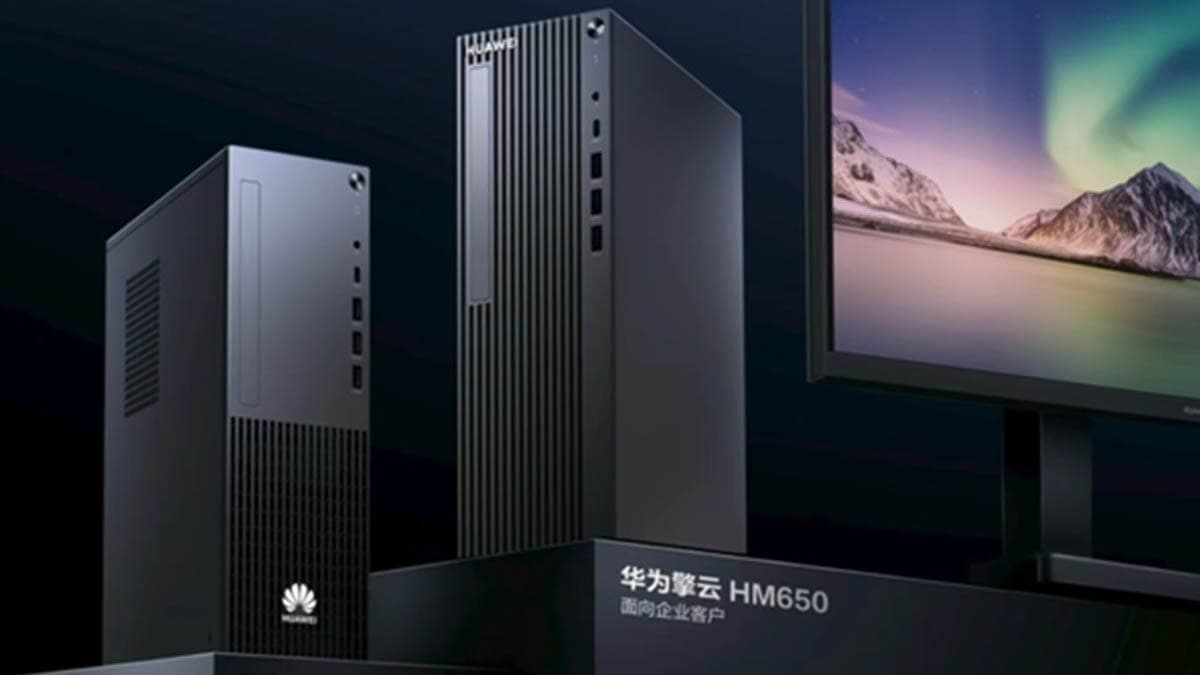
Huawei launches a desktop PC it says is built entirely from Chinese parts
Huawei's Qingyun HM650 runs its own Kirin X90 chip and HarmonyOS, and Huawei says every part is made in China. The claim comes with open questions.
Phone shipments just had their worst third quarter since 2012, and memory chips are why
Counterpoint Research says global smartphone shipments fell 20% in the third quarter as the memory chip shortage squeezed supply, while Samsung and Apple grabbed a bigger slice of a smaller pie.
Qualcomm will license Huawei's patents, a reversal 25 years in the making
A new cross-license covers 5G, AI, compute and networking, and Qualcomm is buying some of Huawei's US patents. Bloomberg says it includes patents behind Huawei's LogicFolding chip technique.
More in brief
- Amodei says handing governance to AI is "a bad idea" and calls the claim absurdNov 26
- 42 state attorneys general move to block Character.AI's auction of user chatsNov 25
- WhatsApp now lets you schedule messages up to 14 days aheadNov 25
- Microsoft declares Code Red after its worst Exchange Online outageNov 25
- Ladybird ships its first downloadable alpha, a browser built from scratchNov 25
- FCC lets SpaceX plan up to 1 million AI data center satellitesNov 25