
Technology·News & analysis
FCC lets SpaceX plan up to 1 million AI data center satellites
The FCC granted SpaceX conditional approval to deploy up to 1 million Starmind satellites that would work as data centers in orbit, with the full fleet due by 2040.

Tide
Wave
Sci-fi
9/10
Reality
Demo
Sunlit computers circling the planet by the hundred thousand.How we rate
The FCC granted SpaceX conditional approval on November 25 to deploy up to 1 million Starmind satellites that would work as AI data centers in orbit.
The fleet would raise the number of satellites in orbit about 50-fold. SpaceX has until 2035 for 100,000 and until 2040 for the full fleet. It must still prove the idea works and win a waiver for how retired satellites are disposed of.
What to know
- The FCC granted SpaceX conditional authorization on November 25 to deploy up to 1 million Starmind satellites built to work as data centers in orbit.
- That would raise the number of satellites in orbit about 50-fold. SpaceX has until November 2035 for 100,000 working satellites and until November 2040 for the full fleet.
- The FCC did not approve SpaceX's request to park retired satellites above 600 km in other orbits, so those need a separate waiver first.
- The FCC set aside concerns about launch emissions and re-entry pollution, saying they are outside its review or not supported in the record.
The Federal Communications Commission, or FCC, granted SpaceX conditional approval on Wednesday to deploy up to 1 million satellites called Starmind. Each one is built to work as a small data center in orbit.
That's the news. Now the fun part: what does it mean to park a million computers above your head, and who has to say yes first?
What did the FCC actually approve?
The FCC regulates radio and satellite use in the United States. On November 25 it gave SpaceX a conditional go-ahead for up to 1 million Starmind satellites. It is the first approval for a full constellation of AI satellites.
"Conditional" matters. The approval does not prove the idea works. It clears a legal hurdle, not an engineering one.
By the numbers: a million satellites would raise the number in orbit about 50-fold. An unofficial tracker counted more than 9,600 Starlink satellites in orbit in January.
FCC Chairman Brendan Carr said in a statement: "The United States is moving decisively to ensure that this breakthrough technology creates opportunity, drives investment, and delivers lasting benefits for the American people."
What is a data center in space?
A data center is a building full of computers that run apps, store files and train or run AI. These buildings use a lot of electricity and a lot of water to stay cool.
SpaceX wants to move that work into orbit. Its filing says satellites get near-constant sunlight, so power is cheap. It also says they can shed heat by radiating it into space instead of using water.
The satellites would run inference. That means running a finished AI model to get an answer, as opposed to training it. The results would travel to Earth over laser links that connect to the Starlink network.
In real life Think of a rooftop solar panel with a laptop bolted on, repeated a million times. The panel never gets cloudy, and the laptop cools off by looking at the night sky.
What is the timeline?
SpaceX has a long runway. The order gives it seven years to launch a single working Starmind satellite. It also sets two later deadlines.
- November 2033: at least one working satellite is due.
- November 2035: 100,000 working satellites are due.
- November 2040: the full constellation of up to 1 million is due.
That is about 14 years from approval to the finish line. The FCC gave SpaceX wide room to work out the hard parts before most of the fleet has to exist.
Where would the satellites fly?
SpaceX proposed six orbits, from 550 km to about 1,000 km above Earth. That region is called low Earth orbit, the same neighborhood where Starlink flies.
The January filing was broader. It asked for altitudes of 500 km to 2,000 km in narrow shells of up to 50 km each.
SpaceX filed its application on January 30. The FCC's Space Bureau accepted it for filing on February 4, and Carr said then that the system could be a first step toward a "Kardashev II-level civilization," meaning one that uses a star's full output.
A SpaceX vice president, Michael Nicolls, said the satellites will not work alone. The company needs "to operate clusters of satellites in tight formation to get enough coherent compute to run AI models efficiently."
How big is each satellite?
Big. In a September filing, SpaceX described satellites of up to 4,000 kilograms each. A Starlink V2 Mini weighs 575 kilograms, so a Starmind unit is nearly seven times heavier.
Launching that much metal takes a very strong rocket. SpaceX's January filing leans on its Starship rocket, which is built to be reused, to bring launch costs down.
It also plans to build the chips for these satellites at an upcoming facility called Terafab.
What is the catch?
The approval has conditions. The biggest one is about what happens when a satellite retires.
SpaceX asked for a waiver, an exception to the rules, so satellites above 600 km could move to "Earth disposal orbits or heliocentric orbits." That means other orbits around Earth, or even around the Sun, instead of burning up in the atmosphere.
The FCC said no for now. It said SpaceX "has not provided sufficient information" to show these methods meet the rules. SpaceX must win that waiver before launching any satellite that will not burn up on re-entry.
The catch: the order also does not establish that orbital data centers work technically or make economic sense. That is still up to SpaceX to show.
What did critics say?
Half a dozen groups objected, including the Secure World Foundation and the American Astronomical Society. They cited collision risk, debris, pollution from satellites burning up, and harm to astronomy. The FCC also received about 1,500 public comments.
The FCC said some issues are outside its review. On rocket emissions it wrote that concerns "are outside of the Commission's purview."
It called worries about re-entry pollution, including aluminum oxides and the ozone layer, "speculative and not supported in the record."
It also pointed to an October policy change. The FCC now says space activities generally fall outside its duties under the National Environmental Policy Act, a US law that requires environmental reviews. So it did not run one for Starmind.
Are the debris numbers reassuring?
SpaceX's September filing calculated that pieces surviving re-entry would hit Earth with under 15 joules of energy, about like a 1.7-inch hailstone. It reported zero aggregate risk to people, well under the FCC's limit of 1 in 10,000.
Outside experts questioned the math. Hugh Lewis, a professor of astronautics at the University of Birmingham, said SpaceX "tried to minimize the collision probabilities" and that some satellites may not meet the FCC's large-debris rule.
Aaron Boley, of the University of British Columbia, said dense computing hardware can shield parts during re-entry, so larger fragments may survive than the models predict.
How does this compare with Starlink?
Starlink is SpaceX's internet service, and it is the closest yardstick. In January the FCC approved 7,500 more Gen2 Starlink satellites, which brought the total allowed to 15,000.
Starlink has launched more than 11,000 satellites so far. Some have failed or come down, so fewer are working at any time.
The FCC has trimmed SpaceX's requests before. In 2020 SpaceX asked for nearly 30,000 Gen2 satellites and later got 15,000. This time the FCC approved the full headline number, though only under conditions.
Why it matters: Starmind satellites are meant to link to Starlink by laser. So the new fleet would sit on top of a network that already exists, instead of starting from zero.
Who else is racing to space?
SpaceX is not alone. Google launched a first Project Suncatcher AI server satellite last month. Jeff Bezos' Blue Origin will fly the first dedicated heavy-lift launch for that project in 2029.
Starmind is far bigger than either plan, and it is the first full constellation with a regulatory approval.
What it means for you
- Nothing changes this week. No Starmind satellite is working yet, and the first is not due until 2033.
- AI services could get more computing power later, if orbital data centers turn out to be practical.
- The night sky may get busier. Astronomers raised concerns, and the FCC has not changed its mind on that.
- More decisions are coming. The disposal waiver and the technical proof are still open.
The bottom line
The FCC cleared the legal path for SpaceX to build the biggest satellite fleet ever approved. It did not clear the engineering questions.
The next test is whether one Starmind satellite works, and whether regulators accept how the fleet will retire.
Key facts
- Approval
- Conditional, granted November 25, 2026
- Maximum fleet
- Up to 1 million Starmind satellites
- First milestone
- 100,000 working satellites by November 2035
- Full deadline
- November 2040
- Orbits
- Six, from 550 km to about 1,000 km up
Got questions?
Quick answers, plain wordsWhat did the FCC approve?
It gave SpaceX conditional authorization to deploy up to 1 million Starmind satellites that act as data centers in orbit. It is the first approval the agency has granted for a full constellation of AI satellites.
What is Starmind?
Starmind is SpaceX's name for its planned fleet of satellites carrying AI chips. They would run AI programs in space and send the results to Earth by laser links through Starlink.
Will SpaceX launch a million satellites tomorrow?
No. The order gives SpaceX seven years to put up a single working Starmind satellite, until November 2035 to reach 100,000 and until November 2040 for the full fleet.
What is the catch?
The approval is conditional. It does not show that data centers in space can work technically or pay for themselves, and the FCC did not grant SpaceX's request to move retired satellites above 600 km into other orbits.
Why put data centers in space?
SpaceX says satellites get near-constant sunlight for power and can shed heat into space without water cooling. It argues this cuts the cost and environmental impact of the electricity and water that big AI data centers use on the ground.
How big is each satellite?
In a September filing, SpaceX described satellites of up to 4,000 kilograms each. That is nearly seven times the mass of a 575-kilogram Starlink V2 Mini.
Who objected?
Half a dozen organizations, including the Secure World Foundation and the American Astronomical Society, raised concerns about collisions, debris, pollution from re-entry and effects on astronomy. The FCC also received about 1,500 public comments.
Why did the FCC skip an environmental review?
In October it adopted a policy that space-based activities generally fall outside its duties under the National Environmental Policy Act, because they happen beyond US territory. It also said launch emissions are outside its purview.
Is anyone else building data centers in space?
Yes. Google launched a first Project Suncatcher AI server satellite last month, and Blue Origin is set to fly the first dedicated heavy-lift launch for the project in 2029.
Will this change anything I use?
Not soon. If it works, it could add computing power for AI services without more land-based data centers, but no Starmind satellite is working yet.
SourcesArs Technica, The Verge, Engadget, comsoc.org, satnews.com, fcc.gov
Topics and tagsData centers, Space tech, spacex, starmind
Go deeper
Earlier on this story
Related stories

SpaceX wants a 6-gigawatt AI data center in the Arizona desert
SpaceX has confirmed it is behind a 747-acre, nine-building supercomputer campus in Cochise County. It promises dry cooling and no new well, and a vote is set for December 9.
Google will buy 50 MW of superhot geothermal power from Quaise in Oregon
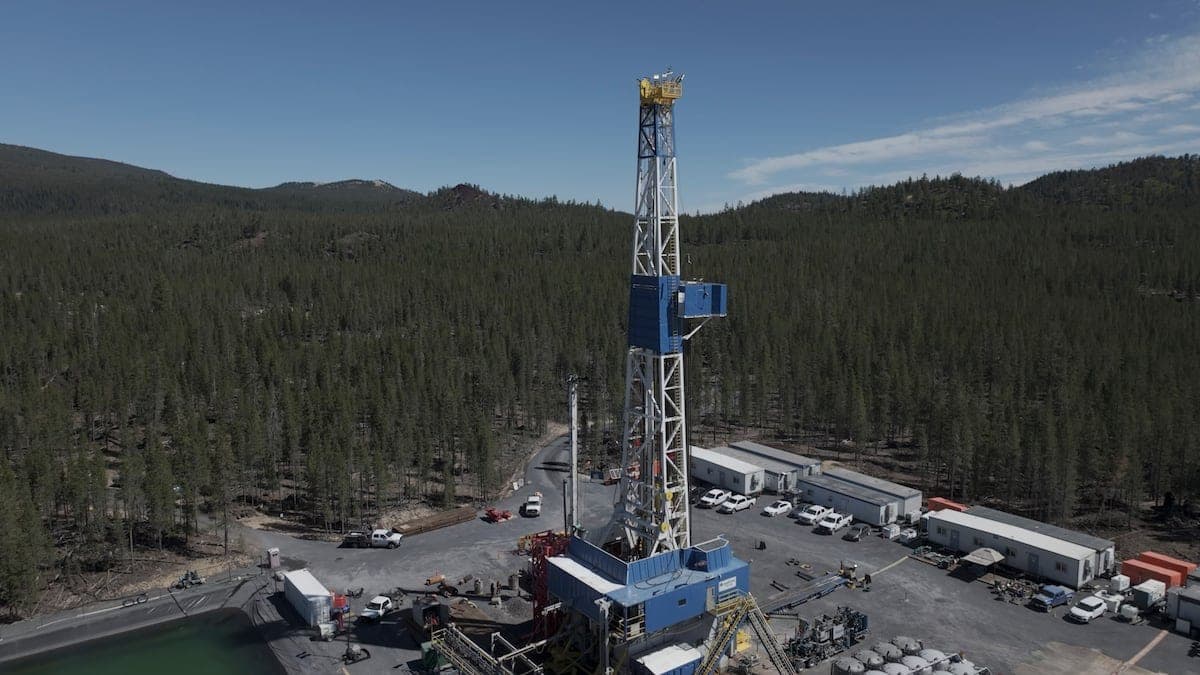
Quaise Energy says Google agreed to buy 50 megawatts from Project Obsidian at Newberry Volcano from as early as 2030, the first commercial deal for superhot rock power.
SpaceX's $40B chip deal is built to stay off its books
Apollo is lining up about $40 billion so SpaceX can lease Nvidia Vera Rubin chips. People familiar with the deal say a separate company will hold the debt.
More in brief
- Amodei says handing governance to AI is "a bad idea" and calls the claim absurdNov 26
- 42 state attorneys general move to block Character.AI's auction of user chatsNov 25
- WhatsApp now lets you schedule messages up to 14 days aheadNov 25
- Microsoft declares Code Red after its worst Exchange Online outageNov 25
- Ladybird ships its first downloadable alpha, a browser built from scratchNov 25
- Amazon Autos is coming to the UK, with £99 car reservationsNov 25