
Technology·News & analysis
Huawei launches a desktop PC it says is built entirely from Chinese parts
Huawei's Qingyun HM650 runs its own Kirin X90 chip and HarmonyOS, and Huawei says every part is made in China. The claim comes with open questions.

Tide
Ripple
Sci-fi
3/10
Reality
Shipping
A whole computer, with no foreign parts on the list.How we rate
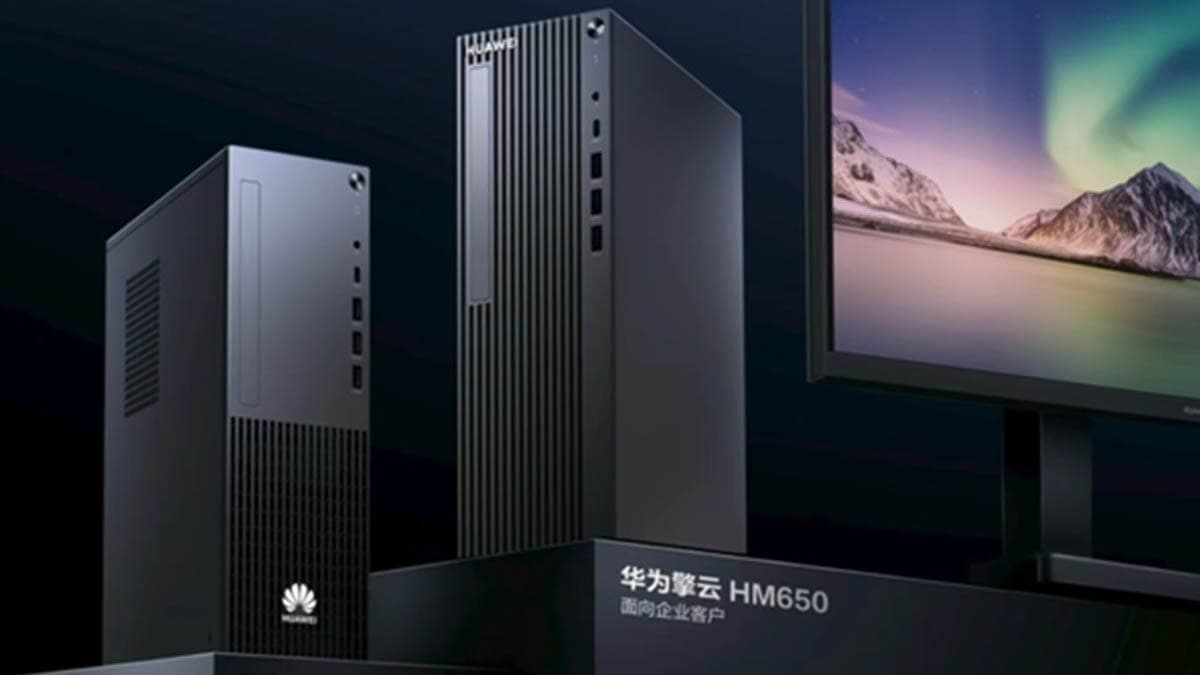
Huawei launched the Qingyun HM650, a desktop for government and business buyers that runs its own Kirin X90 chip and HarmonyOS.
Huawei says every component is made in China, though the scope of that certification is unclear. Huawei says it has sold over 1 million HarmonyOS PCs so far, and one Chinese agency reportedly ordered 600 of these desktops. Huawei has not yet published a retail price.
What to know
- Huawei unveiled the Qingyun HM650 desktop on Thursday 5 November 2026, for government and enterprise buyers, with its own Kirin X90 chip and HarmonyOS.
- Huawei says the machine received the first certification of a 100% domestic component rate, from the processor to the memory, though the exact scope is unclear.
- Huawei says it has sold over 1 million HarmonyOS PCs as of October and expects 1.2 million by the end of 2026.
- One Chinese government agency has reportedly signed up for 600 of the machines, and Beijing has told government bodies to move off Windows-and-Intel computers.
Huawei has launched a desktop computer and says every part inside it was made in China. The question everyone is asking is simple: how much of that is true?
What did Huawei actually launch?
Huawei unveiled the Qingyun HM650 on Thursday 5 November 2026, at a HarmonyOS office industry summit in Wuhan. It is a business desktop, sold to companies and government offices, not to people shopping for a home PC.
There are two versions: the HM650 for enterprises and the HM650G for government buyers. It is Huawei's first desktop that runs HarmonyOS, the operating system Huawei built so it would not depend on Android or Windows.
Why it matters: until now, HarmonyOS lived on phones, tablets and laptops. A desktop tower is the machine that sits on thousands of office desks, so this is where a Windows alternative has to prove itself.
What's inside the box?
The brain is the Kirin X90, a processor designed by Huawei's chip arm HiSilicon. A processor is the chip that runs every program. Huawei first used the X90 in its consumer laptops and tablets last year.
- Cores and threads: 10 cores and 20 threads. A core is one worker inside the chip, and a thread lets that worker juggle two tasks.
- Clock speed: 2.3 GHz, which is how fast each worker moves.
- Power budget: 40 watts. Huawei Central notes that ordinary desktop processors usually sit between 65 and 125 watts.
- Graphics: Huawei's own Maleoon 910.
- Cooling: a two-layer heat dissipation system.
Huawei also says the machine opens files as large as 1GB within seconds and unpacks a 2.5GB compressed archive in about three seconds. Those are the company's own claims, not independent test results.
Is it really 100% Chinese?
Huawei says the desktop line received the first certification of a "100% domestic" component rate, covering everything from the processor to the memory modules. The certification appears on Huawei's own website.
Nobody outside Huawei has explained what that certification covers. The exact scope is unclear, and it is not known whether all the parts also use Chinese designs. Many foreign companies run factories in China, so "made in China" and "designed in China" are not the same thing.
Huawei executive Zhu Dongdong described how the company got there. Huawei develops the core technology itself, builds key parts together with partners, and relies on large-scale production of general-purpose hardware.
The catch: a made-in-China label tells you where a part was assembled. It does not always tell you who designed it, and that difference is the whole debate.
Why would Huawei build this?
The short answer is American export rules. In 2024, Washington revoked special licences that had let Qualcomm and Intel sell older-generation chips for Huawei's laptops and phones.
Before that, most Huawei consumer laptops used Intel Core processors, and some used Qualcomm's Snapdragon chips. After the licences ended, Huawei sped up its effort to replace American technology in its PC business.
In real life imagine a restaurant whose main supplier suddenly stops delivering. After a while, the restaurant starts growing its own vegetables, then raising its own chickens. The HM650 is that, for computers.
The Kirin X90 earned a Level 2 national certification for security and reliability last year. That clears the way for wider use in government agencies and big businesses.
Who is buying?
At least one customer has already stepped forward. A single Chinese government agency has reportedly signed up for 600 of the machines.
That is not a small signal, because Beijing has ordered government bodies to shift from Windows-and-Intel computers to local alternatives. Government offices are huge buyers of desktops, so one policy can decide a whole market.
The big picture: a market that foreign chipmakers once counted on is turning into a market they may not be allowed to bid for. That arrives while PC sales are already shrinking because memory has become more expensive, a problem we covered in our story on Huawei's phone price rises.
Will anyone find software for it?
A computer is only useful if it runs what you need. Huawei says its app store now carries more than 21,000 HarmonyOS computer apps. The list includes WPS Office, WeChat Work and DingTalk for office life, plus ZWCAD, GstarCAD and ZW3D for engineering and 3D design.
Huawei's own numbers show some momentum. The company says it has sold over 1 million HarmonyOS PCs as of October, and expects 1.2 million by the end of 2026. That is about 200,000 more in roughly two months.
Most of those sales are laptops. The MateBook Fold, an 18-inch folding-screen laptop, accounts for 70% of HarmonyOS PC sales, and traditional form factors hold 12%.
The big picture: desktop buyers in offices depend on a long list of specialist programs. Reaching 21,000 apps is a start, but every missing program is a reason for a department to stay on Windows.
What about AI and security?
The HM650 has a dedicated Celia AI key on the keyboard. One press links to Huawei's Celia assistant, which can run tasks or send files to another device. The built-in Xiaoyi assistant can organise information, process documents, make presentations and analyse data.
Security gets a lot of space in the launch, because the buyers are governments. Huawei calls the package Star Shield 2.0, and it works at the hardware, operating-system and app levels.
- Disk encryption: full-disk encryption built into the processor, so stored files are scrambled.
- Privacy controls: rules about which app can reach which file.
- AI agent limits: an AI agent is a program that takes actions for you. On the HM650 it runs in a sandbox, a fenced-off area, and must ask before it does something sensitive, such as deleting a file.
- Fraud detection: the second-generation framework adds AI detection for face-swapped video and changed voices.
The machine also has two modes, Personal Space and Enterprise Space. That lets a company manage its devices while keeping staff's own files separate.
What's next: Huawei has not listed the HM650 on its commercial website with a price yet. It says it will, with the specs and cost, soon.
What else does the launch tell us?
Huawei is not alone in this. Other countries are also working on home-grown chips. Vietnam, for example, announced its first domestically designed security chip last week, a 28-nanometer chip that already protects government USB drives. That means its tiny parts are about 28 billionths of a metre wide, and a smaller number usually means a more advanced chip.
China's push is bigger, and it has a paying customer in its own government. That is why the HM650 matters more than its spec sheet suggests.
For Intel, AMD and Qualcomm, the loss of that business is bad news. They are already facing a shrinking PC market, and a very large buyer is now closed to them.
What it means for you
- If you buy PCs in the West: nothing changes today. The HM650 is sold only to Chinese government and business buyers.
- If you follow chips: the debate to watch is what "100% domestic" really covers, since Huawei has not explained it publicly.
- If you use Windows at work: this is a slow signal, not a sudden one. Big offices can switch, but only when the software they depend on switches with them.
- If you care about prices: a smaller foreign share of a huge buyer's orders is one more pressure on a PC market already squeezed by memory costs.
The bottom line
Huawei built a desktop on its own chip and its own operating system, and says every component is made in China. The claim is bold, but nobody has yet explained the certification behind it.
The sales numbers and the government orders show this is a real product with real buyers. Whether it becomes a true Windows alternative depends on software, and on whether the "100%" survives a closer look.
Key facts
- Launched
- 5 November 2026
- Processor
- Kirin X90, 10 cores, 20 threads
- Power budget
- 40 watts
- HarmonyOS PCs sold
- Over 1 million (October)
- Apps available
- 21,000+
Got questions?
Quick answers, plain wordsWhat is the Huawei Qingyun HM650?
It is Huawei's first desktop computer that runs HarmonyOS, the operating system Huawei built itself. It is aimed at government agencies and businesses, and it uses Huawei's own Kirin X90 processor.
Is the Huawei HM650 really 100% Chinese?
Huawei says it is, and says the machine holds the first certification of a 100% domestic component rate. But the exact scope of that certification is unclear, and it is not known whether every part also uses a Chinese design.
What chip does the HM650 use?
The Kirin X90, designed by Huawei's chip arm HiSilicon. It has 10 cores and 20 threads, a power budget of 40 watts and Huawei's Maleoon graphics.
Can you run Windows apps on it?
Not Windows itself. The machine runs HarmonyOS, and Huawei says more than 21,000 apps are available for HarmonyOS PCs, including WPS Office, WeChat Work, DingTalk and several CAD (design drawing) programs.
How much does the HM650 cost?
Huawei has not published a retail price. The first buyers are government and business customers, not shoppers.
Who is the HM650 for?
Enterprise and government customers. There are two models: the HM650 for businesses and the HM650G for government buyers.
Why is Huawei making its own PC chips and software?
Washington revoked special licences in 2024 that let Intel and Qualcomm sell older chips for Huawei laptops and phones. Huawei has since pushed to replace American technology in its PCs.
How many HarmonyOS PCs has Huawei sold?
Huawei says more than 1 million as of October 2026, and it expects 1.2 million by the end of the year.
What are the HM650's AI features?
It has a dedicated Celia AI key on the keyboard, a built-in Xiaoyi assistant that can draft documents and slides, and rules that make an AI agent ask permission before deleting a file.
SourcesSouth China Morning Post
Topics and tagsAI chips, huawei, harmonyos, pcs
Go deeper
Related stories
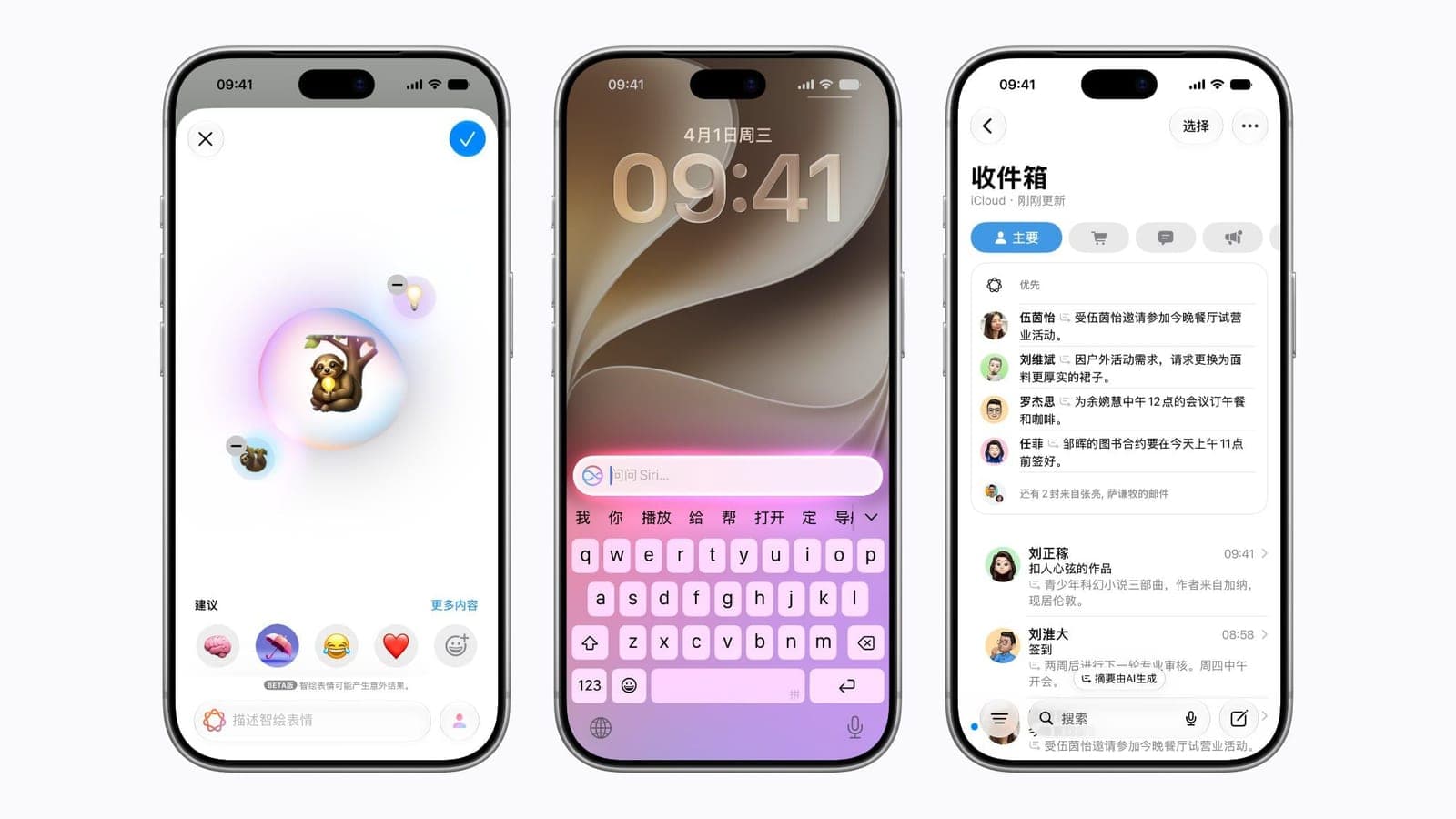
Apple Intelligence is coming to China in December with iOS 27.3
Apple says testing starts November 4 and the public release follows in December, with Alibaba's Qwen chatbot built in and without the new Siri AI.
Intel stock falls about 28% after a weak PC outlook and rising memory prices
Intel shares had one of their worst days ever after the company warned that pricey memory is slowing PC sales, even as its data center business grew 78%.
Phone shipments just had their worst third quarter since 2012, and memory chips are why
Counterpoint Research says global smartphone shipments fell 20% in the third quarter as the memory chip shortage squeezed supply, while Samsung and Apple grabbed a bigger slice of a smaller pie.
More in brief
- YouTube is going back on the Billboard charts in 2027Nov 9
- Apple starts selling $50 packs for extra Apple Intelligence useNov 9
- Windows 11 tests a way to switch off the Sticky Keys popup for goodNov 9
- US regulators question whether Waymo's school bus fix workedNov 9
- NVIDIA unveils GR00T 2 and Isaac Lab 3.0 to teach robots delicate workNov 9
- Tesla launches its robotaxi service in San Antonio, its eighth cityNov 9