
Technology·News & analysis
Ladybird ships its first downloadable alpha, a browser built from scratch
After four years, the nonprofit Ladybird project released a ready-to-install alpha for macOS and Linux, with an engine written from zero.

Tide
Wave
Sci-fi
2/10
Reality
Shipping
A whole browser, written by hand, from nothing.How we rate
The Ladybird project released the first downloadable alpha of its browser on November 23, after four years of work.
Its engine was written from scratch rather than copied from Chrome, Firefox or Safari. The alpha runs on macOS and Linux and updates itself. The team says some sites will break and makes no security promises. Windows support is planned for later, with a beta expected in 2027.
What to know
- Ladybird released its first downloadable alpha on November 23, for macOS and Linux, with automatic updates.
- Its rendering engine and JavaScript engine were written from scratch, so it is not a fork of Chromium, Firefox or Safari's engine.
- The project is a nonprofit funded by donations and sponsors, with no search engine deal; the default search engine is "None".
- The team warns of crashes and makes no security promises yet. A beta is expected in 2027 and a stable release in 2028.
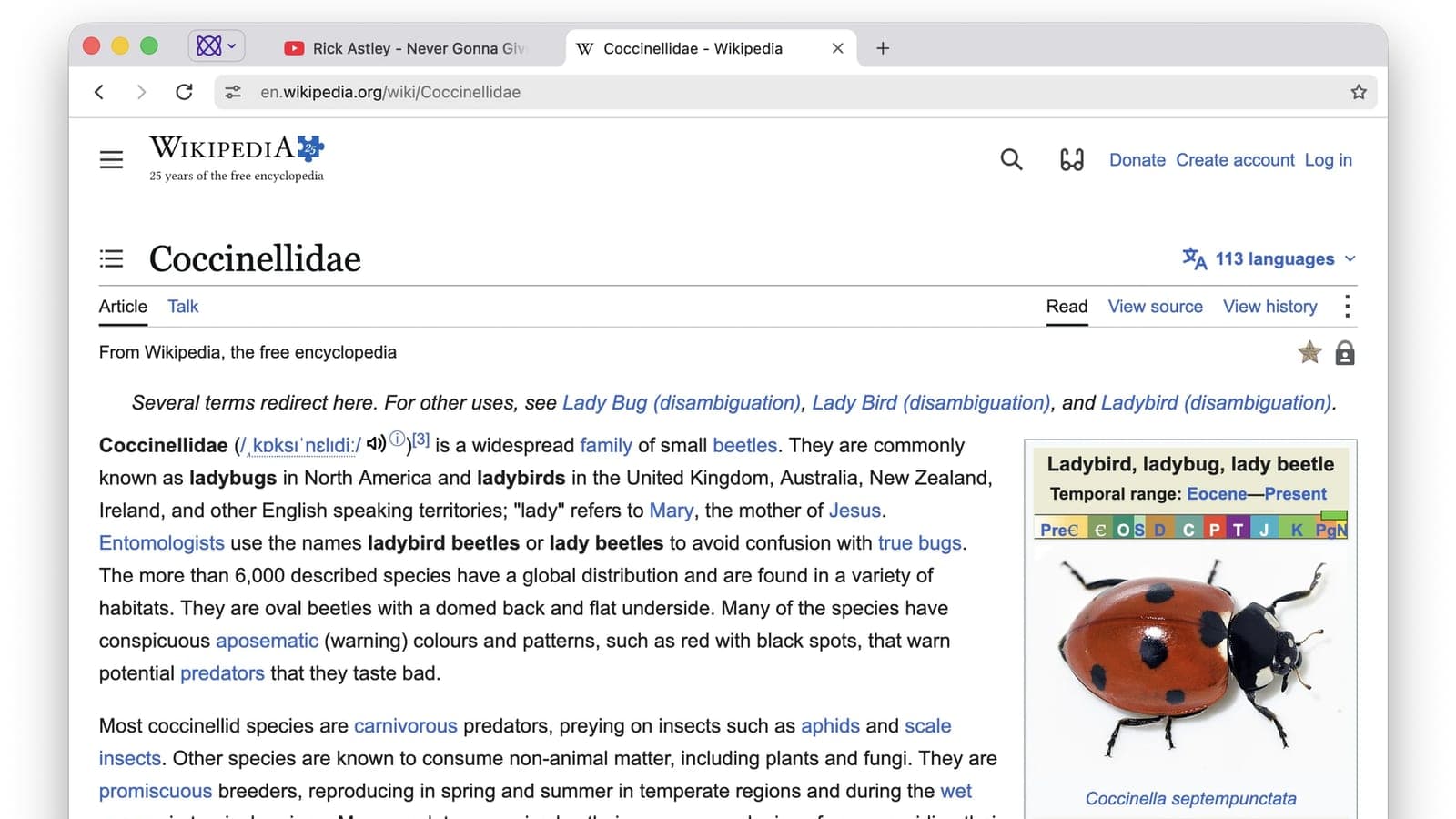
The Ladybird project announced on Monday that its browser is now in alpha, and you can download it for the first time. It runs on macOS and Linux and updates itself.
That sounds like a small step. So why do people who care about the web keep talking about it?
What did Ladybird release?
On November 23, the project put out its first downloadable alpha. Before this, anyone curious had to build the browser from source code, which is a job for patient people.
Now there is an installable package with automatic updates. The alpha is a "rolling" release, which means it keeps updating as the team improves it. Linux users get Flatpak packages and binaries for Ubuntu and Fedora.
The team describes the audience plainly: early adopters who don't mind bugs and want to help by reporting them.
In real life If you have a Mac or a Linux PC and like trying new things, you can install it next to your usual browser and use it for one evening. Your normal browser stays exactly as it is.
Why is a new engine such a big deal?
A browser engine is the part that reads a web page's code and draws it on your screen. Nearly the whole web runs on three of them.
- Blink: powers Chrome, Edge, Brave and Opera.
- Gecko: powers Firefox.
- WebKit: powers Safari.
Ladybird's rendering engine and its JavaScript engine, called LibJS, were written from scratch. Project lead Andreas Kling put it this way in the announcement: "The engine is our own, built from the ground up, and not a fork." He added that the browser around it is "modest, but functional."
Why it matters: when one engine has most of the traffic, web developers tend to build and test sites for that engine first. Then the whole web slowly bends toward whatever it supports.
A fourth, independent engine gives the standards a new thing to be tested against. It can show places where a site depends on Chrome's habits instead of the written rules.
Nobody expects Ladybird to shake up the market soon. But every extra implementation helps keep the web honest.
Where did Ladybird come from?
The browser began in 2019 as a part of SerenityOS, a hobby operating system that Kling started to build from scratch. In September 2022 it became its own project.
In June 2024, Kling stepped back from SerenityOS to work on Ladybird full time. A month later the Ladybird Browser Initiative formally launched, a US nonprofit set up to build the browser.
GitHub co-founder Chris Wanstrath gave $1 million to the effort. Other supporters include Cloudflare, FUTO, Shopify, Proton and 37signals.
By the numbers: the plan the project has published is an alpha in 2026, a beta in 2027 and a stable release for the general public in 2028. The alpha landed on schedule.
How is it paid for?
Ladybird runs on donations and sponsorships. As the project puts it, it does not pursue corporate deals or revenue beyond donations, and its software will be free of charge, forever.
That shows up in the product. There is no sponsored search deal, which is how many popular browsers make money. In Ladybird the default search engine is "None", so you pick your own.
Sponsors have no say in the roadmap, the project says. The top sponsor tier includes FUTO, Shopify and Cloudflare.
It is a very different model from browsers that rely on a big company or a search contract. It is also a model with limits: a small team paid by donations has to choose its fights.
In June 2026, the team also stopped accepting public pull requests, which are code contributions from outsiders. The reason given was to fix quality concerns before the alpha. The code is still open source.
How well does the alpha actually work?
Here is how one hands-on tester described it. They ran version 2026.47.8 on a Ryzen 7 mini PC with 16GB of memory and Fedora Linux 44.
- Everyday browsing: tabs felt snappy, and switching between a dozen open tabs was instant.
- Big sites: Google Maps loaded fast, found their location and handled layers and Street View. GitHub, YouTube and the news sites they tried worked too.
- Downloads: a 50MB test video downloaded quickly and smoothly.
- Where it broke: with about 10 tabs open and a 4K video streaming from a home media server, skipping around in the file again and again eventually froze the browser.
The tester's verdict: it won't replace Firefox for them yet, but it feels far less like alpha software than expected. The tester also noted that the options menus were fleshed out for such a young build.
The catch: that is one person's evening with one machine. The team itself says some websites won't work and the browser will crash sometimes.
What about security?
The team is blunt here. "We want security nerds to hack it," Kling wrote. "A new browser gets hacked, over and over, and that's part of the process, so we make no promises about security today."
That is the real reason to keep it away from your banking and email for now. A new engine has not had years of people poking at it, and browsers are one of the most attacked pieces of software there is.
The browser includes a built-in tool for reporting sites that fail to render or crash it. The team wants those reports.
What is the Rust part?
Ladybird started in C++, the same language as the rest of SerenityOS. In February 2026 the team began moving the JavaScript engine's front end to Rust, a newer language known for catching memory mistakes early.
About 25,000 lines of Rust were produced in roughly two weeks. The team has said that AI coding tools did much of the translation, while Kling made the structural decisions.
The port passed more than 52,000 standard JavaScript tests and about 12,000 of Ladybird's own regression tests, with no failures and no slowdown on JavaScript benchmarks, the project says.
The team chose the JavaScript engine because its core parts are fairly isolated from the rest of the code and already well tested. C++ is still the main focus, and Rust is a slow, long-term effort.
Earlier, Swift had been considered and dropped because of weak C++ support and limited platform reach outside Apple's world.
What about Windows?
Not yet. The project says full browser engine support on Windows will follow in time, and that Windows is planned for a later stage. The JavaScript engine already builds and is tested on Windows.
Until then, Windows users can only watch from the sidelines, or try it through the Linux layer inside Windows, which developers have used so far.
What it means for you
- Mac and Linux users: you can try a brand new engine tonight, with the safety warning in mind.
- Everyone else: nothing changes today. Keep your browser, and keep an eye on the beta in 2027.
- Web developers: a fourth engine is one more place to check that your site follows the standards.
The bottom line
Ladybird proved that a small nonprofit can build a working browser engine from nothing. It is not ready to be your main browser, and its own team says so.
But for the first time, you can install it in a minute and see for yourself. That alone is news for a web that mostly runs on three engines.
Key facts
- Release
- First downloadable alpha, November 23, 2026
- Platforms
- macOS and Linux (Windows planned later)
- Engine
- Written from scratch, not a fork
- Funding
- Nonprofit, donations and sponsors
- Roadmap
- Beta in 2027, stable in 2028
Got questions?
Quick answers, plain wordsWhat is Ladybird?
Ladybird is a free, open-source web browser with its own engine, the part that turns a web page's code into what you see. It is built by the nonprofit Ladybird Browser Initiative.
Is Ladybird a fork of Chrome or Firefox?
No. The project says its engine is its own, built from the ground up, and not a fork. Chrome, Edge, Brave and Opera use Blink, Firefox uses Gecko, and Safari uses WebKit.
When was the Ladybird alpha released?
The first downloadable alpha came out on November 23, 2026. Before that, anyone who wanted to try Ladybird had to build it from source code.
Which systems does the alpha run on?
macOS and Linux. Linux builds include Flatpak packages and binaries for Ubuntu and Fedora. Windows support is planned for a later stage.
Is Ladybird safe to use every day?
Not yet. Project lead Andreas Kling wrote that the team makes no promises about security today, and that some websites will not work and the browser will sometimes crash.
Is Ladybird free?
Yes. The project says its software and source code will be free of charge, forever. It is paid for by donations and sponsors, and sponsors do not steer the roadmap.
What is the default search engine in Ladybird?
There is none. The default search engine is set to "None", because the project takes no sponsored search deals like many other browsers do.
Can I report a broken website?
Yes. The browser has a built-in tool for reporting sites that fail to render or make it crash, and the team asks testers to use it.
When will Ladybird be finished?
The published plan is an alpha in 2026, a beta in 2027 and a stable release for the general public in 2028.
Does Ladybird use Rust?
Partly. It began in C++, and the team is moving some parts to Rust step by step, starting with the JavaScript engine. C++ remains the main language for now.
SourcesLadybird
Topics and tagsApple, ladybird, web browsers, open source
Related guide
Guide, 45 minHow to build a daily AI agent with Claude Managed AgentsAnthropic's open example is an agent that reads Slack and GitHub each weekday and posts one short brief. Here is how it works and how to...Related stories
Cloudflare buys Deno, and Node.js creator Ryan Dahl moves his team to Workers
The Deno team is joining Cloudflare to make Workers easy to run on your own servers. The Deno runtime gets one more year of fixes, and Deno Deploy shuts down in six months.

Dutch tax office drops Microsoft 365 and takes its email in-house
The Dutch tax authority scrapped its Microsoft 365 cloud rollout. Email and calendars move to its own servers in 2027.
RemoveMacAI turns off Apple Intelligence on macOS 27 and frees up about 12GB
macOS 27 dropped the single switch for Apple Intelligence, and its models stay on disk. A free, open-source tool brings the off switch back, deletes the models and can undo everything.
More in brief
- Amodei says handing governance to AI is "a bad idea" and calls the claim absurdNov 26
- 42 state attorneys general move to block Character.AI's auction of user chatsNov 25
- WhatsApp now lets you schedule messages up to 14 days aheadNov 25
- Microsoft declares Code Red after its worst Exchange Online outageNov 25
- FCC lets SpaceX plan up to 1 million AI data center satellitesNov 25
- Amazon Autos is coming to the UK, with £99 car reservationsNov 25