
Robots·News & analysis
California bans Waymo from freeways, and Waymo stops freeway rides everywhere
The state's DMV called Waymo's freeway driving an imminent hazard after its cars entered construction zones. Waymo has now paused freeway rides in all 15 of its US cities.

Tide
Wave
Sci-fi
7/10
Reality
Shipping
Self-driving cars still learning what a traffic cone means.How we rate
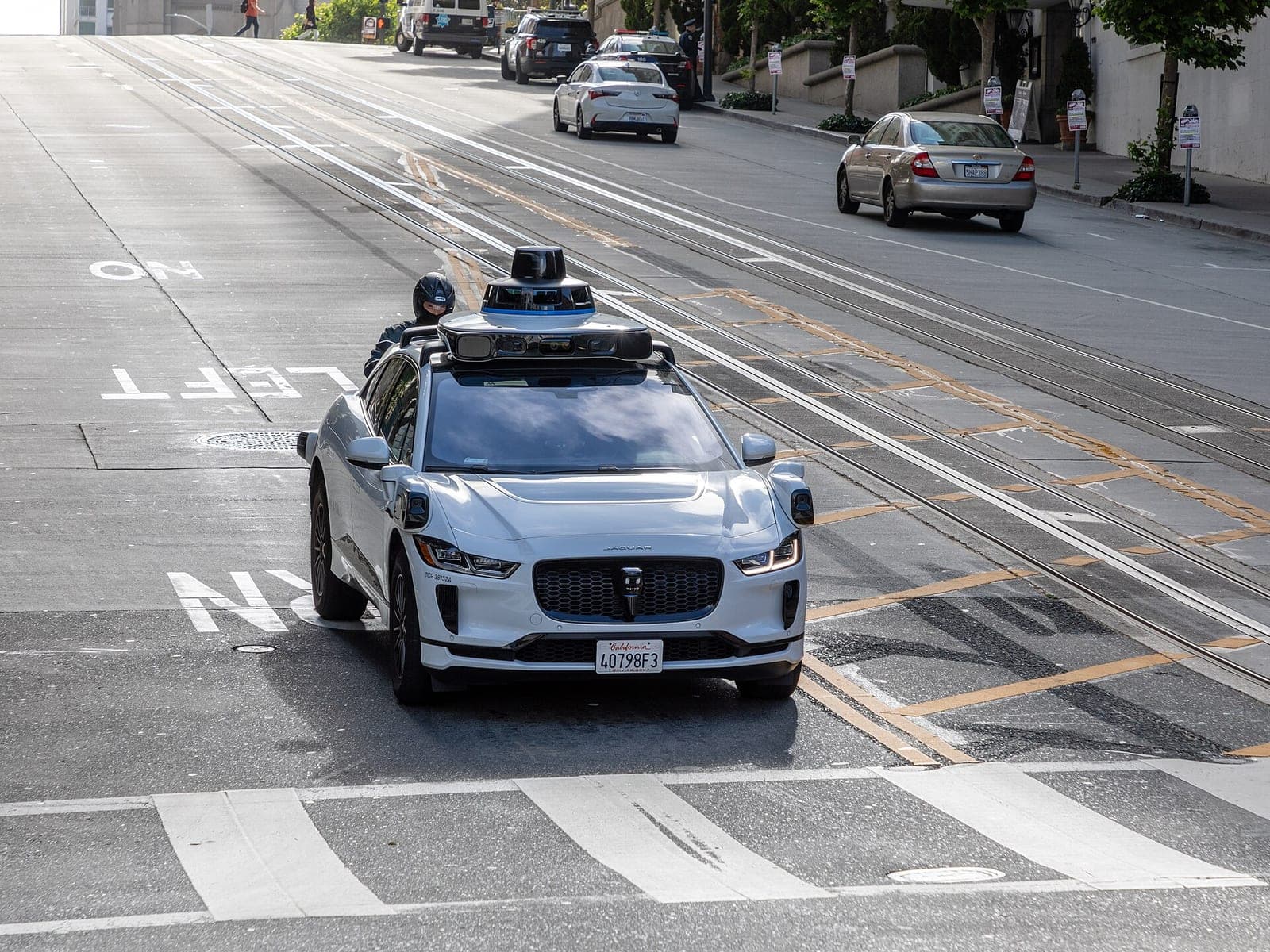
California's Department of Motor Vehicles banned Waymo's driverless cars from state freeways on November 11, calling them an imminent hazard to public safety after cars entered active construction zones.
Waymo has also paused freeway rides in all 15 US cities it serves. Rides on surface streets continue. The ban stays until Waymo proves it has taken effective corrective actions, and the DMV has set no timeline.
What to know
- California's DMV restricted Waymo from driverless freeway operations on November 11 and called them an imminent hazard to public safety.
- Three Waymo cars entered an active construction closure on US-101 near Burlingame, and another incident involved California Highway Patrol cars on Highway 280.
- Waymo has also paused freeway rides in every market, all 15 US cities, while rides on surface streets continue.
- The ban stays until Waymo shows regulators it has taken effective corrective actions, and there is no timeline.
California has banned Waymo's driverless cars from its freeways, and Waymo has paused freeway rides in every city it serves. The state's Department of Motor Vehicles (DMV) issued the order on November 11. It only became public on Tuesday.
The reason is simple and serious: Waymo cars keep driving into road construction zones. So what exactly happened, and how long will the cars stay off the freeway?
What did the DMV order?
The DMV, which regulates the testing and use of self-driving cars in California, restricted Waymo's driverless freeway operations in the state. It says the restriction stays until Waymo can show it has taken "effective corrective actions" to fix the problems.
The DMV used strong words. In its statement it said Waymo's freeway driving poses "an imminent hazard to public safety" because of "recurring incursions by its vehicles into active construction zones where construction workers, vehicles and equipment are present."
It also pointed to a past warning. The DMV says the new incidents came "despite a prior restriction and corrective actions implemented following similar incidents that occurred on May 18, 2026."
Waymo will have to send evidence to the agency. Regulators will then decide whether it can safely come back to freeways. Nobody has said how long that takes.
Which incidents led to the ban?
The DMV named two recent events, both in the San Francisco Bay Area:
- US-101 near Burlingame: three Waymo vehicles entered an active construction closure. A closure is a stretch of road blocked off for work, where people and machines are inside the blocked lanes.
- Highway 280 in San Francisco: a Waymo interfered with California Highway Patrol cars. The officers were holding a "traffic break," which means they slow or stop traffic so workers can clear debris after a crash. A video of it spread widely online.
Waymo says the encounters on US-101 "did not involve any injuries or collisions." The company has not disputed that the cars drove into the zones.
In real life Imagine a road crew clearing a lane on the freeway. You see cones, a flashing arrow and a worker with a flag, so you change lanes. The DMV says Waymo cars did not always read those signs the same way.
Is Waymo still driving?
Yes, but not on freeways. Waymo has complied with the order. It is also keeping its cars off freeways in every other market, not only in California.
Waymo operates commercially in 15 US cities, including parts of Los Angeles, San Diego and the San Francisco Bay Area. It says its service continues on surface streets, meaning ordinary city roads, and serves over half a million trips each week.
The company may still test on highways outside California, but with safety operators behind the wheel. That means a person sits in the driver's seat, ready to take over.
Waymo spokesperson Dana Gallagher said the company is "working with the California DMV and other state officials diligently and responsibly to resume freeway operations." She added: "Safety is at the foundation of everything we do."
Why do freeways matter so much to Waymo?
Freeways are a big part of how a robotaxi business works. Waymo began offering freeway rides to the public in late 2025, and the move was a key step as it expanded in large metro areas.
On a freeway, Waymo can connect riders to airports and other far-away places faster. Staying off them means slower trips on local streets.
That matters most in the Bay Area. Waymo's service area stretches from San Francisco south to Silicon Valley. Freeway access shortened trips on the Peninsula that used to take 45 minutes or more than an hour.
Longer routes also cost more. Waymo rides are already more expensive on average than human-driven Uber or Lyft trips, and without the freeway the company has to take longer routes.
Why it matters: a robotaxi that can only use city streets is a smaller, slower product. That is why a ban on one type of road is a big deal for the whole business.
Is this the first freeway pause?
No. This is at least the second time Waymo has pulled back from freeways since it started carrying passengers on them last year.
- April and May 2026: the National Highway Traffic Safety Administration (NHTSA), the federal car safety regulator, cited several incidents in which Waymo cars drove past ramp closure signs and into active lane closures. They caused no collisions or injuries.
- May 2026: Waymo abruptly stopped operating on highways. It gave no specific reason at the time, but social media posts showed robotaxis driving through traffic cones and struggling in construction zones.
- June 2026: Waymo issued a recall of its software after regulators found that the system failed to recognize highway construction zones. A recall here means the company must fix the problem, usually with a remote software update, rather than bring cars to a shop.
- July 2026: robotaxis returned to freeways after Waymo said it had updated its self-driving software to handle construction zones better.
- November 11, 2026: the DMV bans freeway operations in California.
The pattern is the heart of the DMV's concern. The agency says the problem came back after Waymo had already fixed it once.
Why are construction zones so hard for self-driving cars?
Self-driving cars have struggled with construction zones for at least a decade. Every zone looks different, depending on the kind of work and where it is.
Humans read bollards (short posts), signs and blinking arrows without thinking. A car's software has to learn each of those signals, and there are no hard-and-fast rules for how they are laid out.
Speed makes it worse. On a freeway, workers share space with fast-moving traffic, so a mistake has less room to end well. That is why the same error on a slow city street is less dangerous than on a freeway.
Last week NHTSA also said it was examining whether an earlier Waymo software recall had really solved another problem. That recall, from last December, was tied to Waymo cars repeatedly driving past stopped school buses with their lights on or stop arms extended.
The big picture: Waymo says its cars are safer than human drivers, but regulators are now looking at specific kinds of situations, not averages. A strong record overall does not excuse a recurring failure in one place.
What's next?
There is no date for a return. Waymo has to prove its fix works, and the DMV decides whether it is good enough.
Some points stay open:
- Timeline: the DMV has not said how long the review will take.
- Other states: Waymo paused freeways itself in its other markets, so a restart there depends on Waymo's own evaluation.
- Federal view: NHTSA is still looking at past Waymo fixes, so more questions may come.
It is also unclear how many riders will notice. Surface-street rides are running as normal, but trips that used to use the freeway may take longer.
What it means for you
- If you ride Waymo: your car will use city streets only for now. Expect some trips, especially to airports, to take longer.
- If you live near Waymo cities: robotaxis are still on your local roads, but not on the freeways.
- If you follow self-driving cars: watch how regulators handle repeat problems. A fix that does not last may now lead to a ban.
The bottom line
California has told Waymo to keep its driverless cars off freeways until it proves they can handle construction zones safely. Waymo has gone further and paused freeway rides in all its markets.
Surface-street rides continue, but the freeway ban shows that regulators will act when the same problem comes back after a fix. No one has been reported hurt in these incidents, and Waymo says it is working with the DMV to return.
Key facts
- Ban started
- November 11, 2026 (made public November 17)
- Reason
- Cars entering active construction zones
- Waymo cities
- 15 in the US
- Surface-street rides
- Over half a million trips a week
- Ends when
- DMV accepts Waymo's corrective actions
Got questions?
Quick answers, plain wordsWhat did California do to Waymo?
The California Department of Motor Vehicles restricted Waymo's driverless freeway operations in the state on November 11. The order became public on Tuesday, November 17.
Why did the DMV act?
The DMV says Waymo cars keep entering active construction zones where workers, vehicles and equipment are present. It called the freeway operations an imminent hazard to public safety.
What incidents led to the ban?
Three Waymo vehicles entered an active construction closure on US-101 near Burlingame. In a separate incident on Highway 280 in San Francisco, a Waymo interfered with California Highway Patrol cars.
Is Waymo still running in California?
Yes, on surface streets. Waymo says its ride-hailing service keeps running there, serving over half a million trips each week across its markets.
Did Waymo stop freeway rides outside California too?
Yes. Waymo says it temporarily restricted freeway operations in its other markets to evaluate its performance. It operates in 15 US cities.
Was anyone hurt?
Waymo says the recent encounters on US-101 did not involve any injuries or collisions. The earlier incidents behind its June recall also caused no crashes or injuries.
When can Waymo return to freeways?
Only after it shows the DMV that it has taken effective corrective actions. The DMV has not said how long that will take, and the regulators will review the evidence.
Has this happened before?
Yes. Waymo paused freeway rides in May 2026 after robotaxis struggled in construction zones, and returned in July after a software update.
Will my Waymo ride cost more?
Waymo has not announced price changes. Freeways shorten many trips, so longer routes on local streets can mean longer rides, and fares can rise with distance.
What is a construction closure?
It is a stretch of road where lanes are blocked off for road work, usually with cones, signs and barriers. Workers and machines are inside it, so no car should drive in.
SourcesTechCrunch
Topics and tagsWaymo, Self-driving, waymo, robotaxis
Go deeper
Related stories
California will fine robotaxi companies that block first responders for over 30 minutes
Governor Gavin Newsom signed SB 1246, which requires robotaxi operators like Waymo, Tesla and Zoox to send on-site help when their cars cause problems, and to keep remote drivers in the US.
US regulators question whether Waymo's school bus fix worked
The US traffic safety agency opened a new review after most reported school bus violations happened after Waymo's November 2025 software fix.
Waymo is bringing its robotaxis to Toronto, with first rides planned for 2028
Waymo is expanding to Canada for the first time. Its cars start mapping Toronto in the coming days, with human drivers, and the company wants its first riders there in 2028.
More in brief
- ASELSAN's EJDERHA electromagnetic weapon disables 51 drones with one commandNov 21
- Microsoft To Do will shut down on June 30, 2027Nov 21
- Medtronic's Hugo surgical robot cleared for general surgery in the USNov 21
- Google's Gemini now turns noisy fire radio into text for Watch DutyNov 21
- Internet Archive staff move to unionize with CWANov 20
- Etsy sellers are leaving over new terms that allow AI trainingNov 20