
AI·News & analysis
OpenAI countersues Apple over trade secrets and supplier pressure
OpenAI filed its own lawsuit against Apple on Friday. It says Apple stole its trade secrets and threatens suppliers that work with both companies. Apple calls it a distraction.

Tide
Ripple
Sci-fi
3/10
Reality
Lab
A courtroom fight over gadgets that few people have seen.How we rate
OpenAI sued Apple in a California court on Friday, accusing it of stealing OpenAI's trade secrets and of coercing and threatening suppliers that work with both companies.
OpenAI also says Apple's July lawsuit is really about stopping staff from leaving. Apple calls the claims a transparent attempt to distract from its own case. That case is set for trial on July 19, 2027.
What to know
- OpenAI filed a new lawsuit against Apple in a California court on Friday, November 27, 2026, accusing it of stealing trade secrets and of unfair competition.
- OpenAI says Apple is "coercing and threatening" suppliers that work with both companies, so OpenAI cannot build its own devices.
- OpenAI also says Apple told staff to keep work files on personal devices and cloud accounts, then used that against people who wanted to leave.
- Apple says the claims are a "transparent attempt to distract" from its own case, which goes to trial on July 19, 2027.
OpenAI has sued Apple. The lawsuit, filed in a California court on Friday, says Apple stole OpenAI's trade secrets and is threatening suppliers that work with both companies. OpenAI's complaint says Apple is trying to "compete unfairly by any means available."
That's the news. Now the backstory: this is a reply. Apple sued OpenAI first, in July, and the two companies have been trading accusations ever since.
What does OpenAI say Apple did?
OpenAI makes three main claims. Everything below is an allegation, which means a claim that a court has not yet decided.
- Stolen secrets: OpenAI says Apple took its trade secrets. A trade secret is private business information, such as a design or a supplier list, that gives a company an edge.
- Supplier pressure: OpenAI says Apple is "coercing and threatening" suppliers that work with both companies.
- The file trap: OpenAI says Apple encouraged employees to store company files on personal devices and cloud accounts, then used that against staff who wanted to leave.
The complaint also has some colorful writing. It says "Apple set quite a trap for employees." It adds: "Bright young minds thought they would work in Cupertino. Instead they were joining Hotel California: you can check out any time you like, but you can never leave."
Why are suppliers in the middle of this?
A supplier is a company that makes parts for a product. A phone or a gadget can have hundreds of parts, and only so many factories can make them well.
OpenAI is preparing its own devices. To build them, it needs the same kind of factories that Apple uses. OpenAI says Apple uses its size and resources to "forestall competition" by threatening suppliers, both existing and potential ones.
The filing describes this as a "wide variety of unlawful, unfair, and tortious conduct." A tort is a civil wrong, the kind you can be sued over without anyone going to prison.
Apple, like most big hardware makers, often locks in a lot of factory capacity ahead of time so that production runs smoothly. OpenAI says Apple goes beyond that and pressures suppliers who also work with OpenAI.
In real life Picture two restaurants that buy bread from the same bakery. One is huge. The big one tells the baker, "Sell to the new place and we stop ordering." The new place is stuck with no bread. That is the kind of pressure OpenAI says is happening.
How did Apple's lawsuit start?
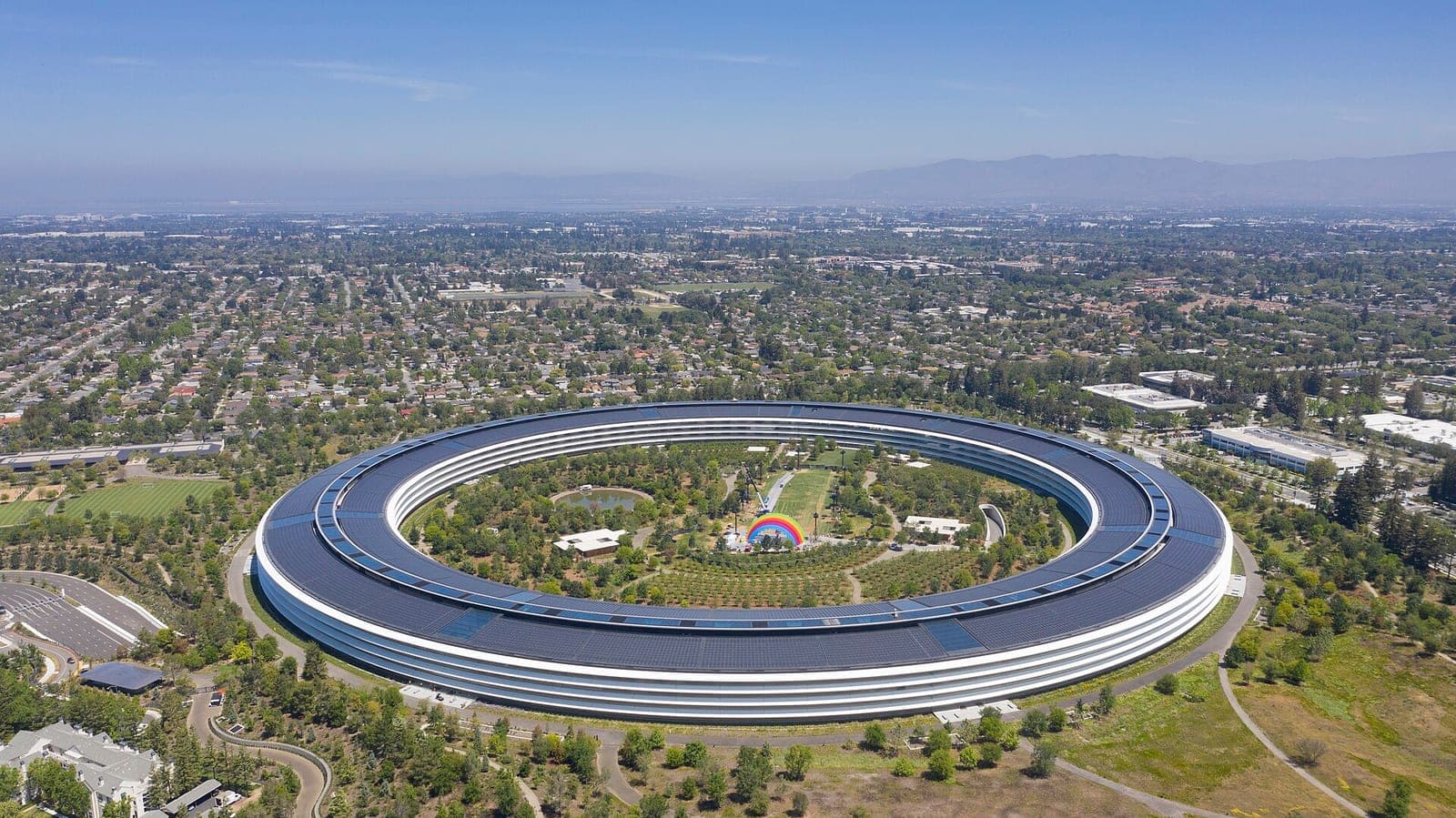
Apple filed its lawsuit on July 10, 2026, in the Northern District of California. It names OpenAI, OpenAI's hardware company io Products, and two former Apple employees: Chang Liu and Tang Tan.
Tan spent 24 years at Apple and led product design for the iPhone and Apple Watch. He then co-founded io Products with Jony Ive, Apple's former design chief. OpenAI bought io in a deal reported at $6.4 billion, and Tan is now OpenAI's chief hardware officer.
Apple's complaint says OpenAI ran a months-long scheme to pull confidential information out of Apple. Here is what Apple alleged:
- Interviews: Tan asked Apple employees who were interviewing at OpenAI to bring parts they had worked on, so OpenAI could see them.
- Leaving quietly: new hires were told not to tell Apple where they were going, so they could stay at Apple as long as possible.
- Old access: Liu kept an Apple laptop after he left and used a bug in the login system to download dozens of confidential files.
- Suppliers: OpenAI tricked one supplier into using a trade secret metal-finishing technique by claiming it had Apple's permission.
- A big move of people: Apple says more than 400 former Apple employees now work at OpenAI.
Apple called OpenAI's hardware business "rotten to its core" in the complaint. It asked for a jury trial, damages and court orders that stop OpenAI from using its secrets.
How has OpenAI answered so far?
OpenAI has fought back on several fronts. In August, it asked the judge to dismiss the case and called the claims meritless. It said Tan followed normal recruiting practice and that Liu was helping a former colleague find information.
OpenAI also argued that Apple never clearly said which information counts as a protected trade secret. It pointed to Apple's own habits, such as letting staff use personal iCloud accounts for work, as the reason former employees kept leftover access.
California law lets employees move freely between competing companies, OpenAI has said. It also posted emails and text messages that it says contradict Apple's account.
In October, OpenAI went on the attack inside the same case. It said a person who had worked at OpenAI for six months, then returned to Apple, had sent more than 100 confidential files about an unreleased OpenAI device to personal accounts. The details are in our earlier story.
What has the court done?
Judge Edward Davila is handling Apple's case. On October 13, he granted most of Apple's requests for early access to evidence. That step is called discovery, the stage where each side has to hand over documents and answer questions under oath.
The judge ordered OpenAI and the other defendants to turn over several kinds of material. That included forensic images, which are exact copies of the contents of computers and phones, and documents used in interviews with Apple candidates. He also let Apple question Liu, Tan, an Apple employee named Yu-Ting Peng, and company representatives.
Apple has also asked for a preliminary injunction. That is a court order that stops someone from doing something while the case is still running. In this case, it would stop the defendants from using the alleged trade secrets.
Apple's case is set for trial on July 19, 2027. The new OpenAI claims will likely be handled alongside it, though the court has not said how.
What does Apple say about the new lawsuit?
Apple replied the same day. Its statement says the case is "about OpenAI employees deliberately stealing, accessing, and using Apple's secret and confidential information regarding our unreleased technologies, processes, and products, not about inadvertent retention of Apple information."
Apple called OpenAI's counterclaims "a transparent attempt to distract from the substance of Apple's lawsuit." It added that OpenAI "has already been ordered to stop using Apple's confidential information."
The catch: Apple's statement describes an order from the court. OpenAI told the court in October that it would not use Apple's trade secrets at the heart of the case. Neither company's account has been tested at trial.
Why are two partners suing each other?
Two years ago, Apple and OpenAI made a splashy announcement. ChatGPT would come to the iPhone and work inside Siri, Apple's voice assistant.
Since then, the relationship has changed. OpenAI is now building hardware of its own, and that puts it in direct competition with Apple. Reports have said its first product may be a screenless AI speaker.
In May, people familiar with OpenAI's thinking said it was weighing legal action against Apple. They said OpenAI had expected deeper integration and more users from the ChatGPT features built into iOS. Neither company has confirmed that.
Two companies that once announced a partnership on stage are now arguing in court about who took whose secrets.
What it means for you
This is a business fight, and nothing changes in your apps today. Still, a few points are worth knowing.
- ChatGPT on iPhone: nothing in the filings changes how it works now.
- New gadgets: the fight shows how serious both companies are about AI hardware. Supplier access could decide how fast new devices reach stores.
- Slow motion: courts move slowly. The trial is more than seven months away, so expect more filings, not quick answers.
- Allegations only: no court has decided who took what. Treat each side's claims as claims.
The bottom line
OpenAI has turned a lawsuit against it into a two-way fight. It accuses Apple of stealing secrets, pressuring suppliers and trapping employees, and Apple says OpenAI is trying to distract.
For now, both sides are making accusations and a judge has not ruled on them. The next real test comes in the evidence stage and at the July 2027 trial.
Key facts
- New lawsuit filed
- Friday, November 27, 2026
- Where
- A California court
- Apple's original suit
- July 10, 2026
- Former Apple staff at OpenAI, per Apple
- More than 400
- Trial date for Apple's case
- July 19, 2027
Got questions?
Quick answers, plain wordsWhat did OpenAI do on Friday?
OpenAI filed its own lawsuit against Apple in a California court. It accuses Apple of stealing OpenAI's trade secrets, of coercing and threatening suppliers that work with both companies, and of trying to compete unfairly by any means available.
What is a trade secret?
A trade secret is private business information that gives a company an edge, such as a design, a method for making a part or a list of suppliers. The company has to keep it secret. Taking or using it without permission can be illegal.
What is a countersuit?
A countersuit is a lawsuit one side files in answer to a lawsuit from the other. Here, Apple sued OpenAI first, in July. OpenAI is now making its own accusations against Apple.
What does OpenAI say about suppliers?
OpenAI says Apple uses its size and money to scare off suppliers, both current and future ones, that also work with OpenAI on hardware. It calls this a wide variety of unlawful, unfair and tortious conduct. A tort is a civil wrong that can be sued over.
What does Apple say?
Apple says its case is about OpenAI employees deliberately stealing and using its secret information, not about inadvertent retention of Apple files. It calls OpenAI's counterclaims a transparent attempt to distract, and says OpenAI has already been ordered to stop using Apple's confidential information.
Who is being sued in Apple's original case?
Apple sued OpenAI, its hardware company io Products, and two former Apple employees, Chang Liu and Tang Tan. Tan used to lead iPhone and Apple Watch product design at Apple.
When is the trial?
Apple's original case is scheduled to go to trial on July 19, 2027. A court has not yet ruled on whether either company took trade secrets.
Has anyone been found guilty?
No. Everything in both companies' filings is an allegation. The court has made some orders along the way, but it has not decided who is right.
What is OpenAI building?
OpenAI has not shown a finished device. It bought the design studio io, led by Jony Ive, for $6.4 billion and is preparing its own hardware. Reports have pointed to a screenless AI speaker.
Does this change ChatGPT on my iPhone?
Nothing in the filings changes how ChatGPT works on iPhones today. The fight is about hardware plans, employees and suppliers, not about the software link between the two companies.
Sources9to5Mac
Topics and tagsOpenAI, Apple, AI policy, openai
Related guide
Guide, 10 minHow to use ChatGPT in Chrome, try-on shopping and stay safe from fake GPTsSet up the ChatGPT Chrome extension, use its tab, shopping and try-on tools, and avoid the fake custom GPTs that have been used to spread...Related stories
OpenAI says an ex-employee took its device files to Apple
In a new court filing, OpenAI claims a hardware worker sent over 100 confidential files about an unreleased device to his personal accounts, then presented OpenAI's plans to Apple. Apple says it found no evidence of that.
Eight US states sue OpenAI over ChatGPT's safety for kids
Iowa, Arizona and six other states filed separate lawsuits saying OpenAI misled families about how safe ChatGPT is for children and vulnerable users.

OpenAI fixed a billing bug, so GPT-6.2 Astra limits arrive 40% faster
OpenAI says a billing mistake gave most users the wrong discounts on GPT-6.2 Astra and Sol. The fix means the same work now uses more of your plan.
More in brief
- LA schools switch off Google's AI answers on student devicesNov 27
- China Post is testing 45 Robotera humanoid robots at a Hangzhou parcel hubNov 27
- Volvo starts training AEON humanoid robots at its Ghent car plantNov 27
- Nadella says AI-native firms add the next human when the first runs out of tokensNov 27
- Microsoft says state-backed hackers run ARTEX AI agents at machine speedNov 26
- Rockstar workers vote against a formal union deal as GTA VI launchesNov 26