
AI·News & analysis
Google's AI spots signs of high blood pressure from a smartwatch
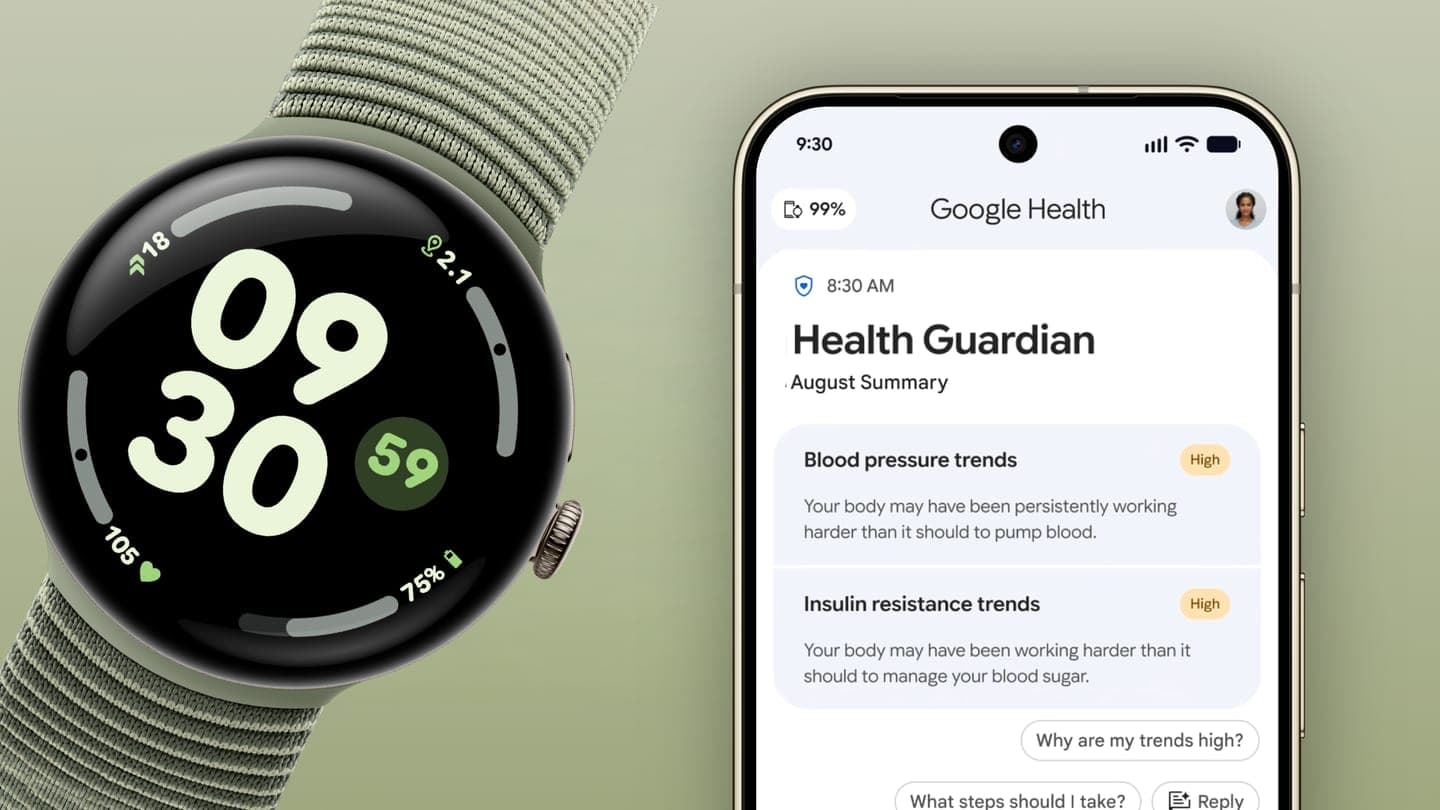
Google Research built an AI that finds signs of high blood pressure using only the pulse and motion sensors in a regular smartwatch. No cuff is needed to set it up.

Tide
Wave
Sci-fi
5/10
Reality
Shipping
A watch that reads your pulse like a doctor reads a chart.How we rate
Google Research built an AI that detects signs of high blood pressure from a regular smartwatch's pulse and motion sensors, with no cuff calibration.
In a study of 196 people it found 65.8% of those with high blood pressure, against 55.3% for one office check. The method is already inside the Google Health app on Pixel Watches. It gives a High or Not high trend and does not replace a diagnosis.
What to know
- Google Research trained an AI on nearly 500,000 hours of smartwatch data so it can spot signs of high blood pressure with no cuff calibration.
- In a study of 196 people, the watch found 65.8% of those with high blood pressure, against 55.3% for a single office check.
- The method already feeds the blood pressure trends tool in the Google Health app, free on Pixel Watch 3, 4 and 5.
- It gives a High or Not high trend, not numbers, and it does not replace a cuff or a doctor.
Google Research says it has built an AI that can spot signs of high blood pressure using nothing but the sensors in a regular smartwatch. The twist is what is missing: no cuff, and no setup session with one.
So how does a watch on your wrist say anything about the pressure inside your arteries? Let's walk through it.
First, why does this matter?
High blood pressure, also called hypertension, is the top risk you can change for heart disease. Most people who have it feel nothing.
That is the problem. The research paper says globally around half of adults with hypertension do not know they have it. It cites a US study where 57.8% of adults were unaware their blood pressure was uncontrolled, even among people who had seen a doctor twice or more in the past year.
Why it matters: if a watch you already wear can nudge you to get checked, a lot more people might find out early.
How does the AI work without a cuff?
Earlier cuffless watches had a catch. They needed to be calibrated with a real cuff from time to time. In plain words, you had to teach the watch what your normal looked like by squeezing your arm first.
Google skips that step. The AI uses two sensors that modern watches already have:
- A pulse sensor: it shines light into your skin and tracks how blood flows with each heartbeat. The technical name is photoplethysmography, or PPG.
- A motion sensor: it tracks how you move, so the AI can tell a racing pulse from a walk upstairs from a quiet pulse at night.
The AI is a neural network, a program that learns patterns from examples. It first studied nearly 500,000 hours of watch data. It learned by comparing short slices and working out which ones came from the same person. Nobody told it who had high blood pressure at that stage.
Later, it was tuned with data from people who also wore a gold-standard 24-hour blood pressure monitor. The AI then averages what it sees over several days and gives a probability that you have high blood pressure.
In real life Think of a doctor who never takes your blood pressure but watches how you walk, breathe and rest for a week. They could still say, "Something looks off, let's measure it properly." That is the job of this watch.
What did the study find?
Google tested the system on 196 adults at five research sites across the US. None had known heart disease or took blood pressure medicine. Each wore a watch for seven days and also wore the 24-hour monitor as the reference.
Two numbers matter. Sensitivity is how many people with the condition the test catches. Specificity is how many healthy people it correctly clears.
| Test | Catches high blood pressure | Clears healthy people |
|---|---|---|
| Google's watch AI | 65.8% | 90.0% |
| One office blood pressure check | 55.3% | 90.0% |
So the watch caught more people than a single check at the doctor's office, and it was just as good at clearing healthy people. When it said someone had high blood pressure, it was right 80.6% of the time. For the office check, that figure was 77.8%.
The watch found about two in three people who had high blood pressure, which is more than one office visit did.
The catch: that also means it misses roughly a third. It is a nudge, not a verdict.
What about a second round of testing?
Doctors do not stop at one reading. If a first check looks high, they confirm it with more tests. Google looked at that step too, using the 48 people whose first office check came back elevated.
Here is how the confirmation methods compared:
- Watch AI: found 78.4% of people with high blood pressure, with 90.9% specificity.
- A repeat office check: found 67.6%, with 63.6% specificity.
- Several days of home monitoring with a cuff: found 89.2%, with 81.8% specificity.
The group is small, so the numbers come with wide margins. Still, the pattern is clear. The watch beat a repeat office visit. A week of careful cuff readings at home was still the strongest.
Can I use it today?
Yes, a version of it. Google says the findings have been folded into the blood pressure trends feature in the Google Health app. That tool went live in September as part of Health Guardian, a set of background health tools.
- Who gets it: Pixel Watch 3, 4 and 5 owners, at no extra cost. Fitbit Air users get it later this year with a Google Health Premium subscription.
- What you need to do: wear the watch at least 5 days a month, with at least 8 hours a day of good signal. Google recommends wearing it while you sleep.
- What you get: a monthly summary that reads High, Not high, or Not enough data.
- What you do not get: blood pressure numbers. Google's help page says the tool does not measure your blood pressure.
The research itself was first posted as a preprint in December 2025. A preprint is a study shared publicly before other scientists have formally reviewed it. Google funded the work, and the paper says so.
What should I do if it says High?
Google's advice is simple and practical. Take your blood pressure with a cuff at home twice a day, once in the morning and once in the evening, for a week. Then share the readings with your doctor.
If you feel severe symptoms such as chest pain or shortness of breath, Google says to get medical care right away. Do not wait for a week of readings.
Google is also careful about what "Not high" means. It only says your pulse patterns did not look high. It does not promise that your blood pressure is normal. The company says plainly that a cuff reading always matters more than a trend.
The research team says the point is to nudge people toward getting checked. It is not meant to stand in for a diagnosis.
What's next?
The study had a clear limit. It included adults without known heart disease or blood pressure medicine. How well the method works for people already being treated is a separate question, and this study did not answer it.
The researchers also note that the idea of screening for high blood pressure with a watch is not new. An FDA-cleared smartwatch feature based on pulse sensing already exists. Google's contribution is showing that an AI trained on a huge pile of data can match the usual clinic steps without any cuff calibration.
Wearables are quietly moving from counting steps to flagging things worth asking a doctor about. Blood pressure, insulin resistance and sleep breathing are all in Google's new tool set. Expect rivals to keep pushing in the same direction.
What it means for you
- If you own a Pixel Watch 3, 4 or 5: turn on blood pressure trends in the Google Health app and wear the watch overnight.
- If you get a High trend: do the week of cuff readings, then call your doctor. Do not panic, and do not ignore it.
- If you get Not high: keep your regular checkups. It is not a clean bill of health.
- If you use another watch brand: nothing changes for now, because Google does not support third-party devices.
The bottom line
Google has shown that a regular smartwatch can flag signs of high blood pressure about as well as the usual clinic checks, without a cuff. It catches about two in three cases, so it works as an early nudge, not a diagnosis.
The cuff still wins on accuracy, and your doctor still makes the call. But a watch that gets more people to ask the question is a small win for a condition that stays quiet for years.
Key facts
- Study size
- 196 adults at five US research sites
- Detection rate
- 65.8% for the watch, 55.3% for one office check
- Training data
- Almost 500,000 hours of smartwatch sensor data
- Where to get it
- Google Health app, Pixel Watch 3, 4 and 5, free
Got questions?
Quick answers, plain wordsCan a smartwatch measure my blood pressure now?
Not in the way a cuff does. Google's feature does not show numbers. It looks at your pulse over about a month and tells you whether your trend looks High or Not high.
What sensors does the watch use?
Two that are already inside modern watches: a pulse sensor, which shines light into your skin to track blood flow, and a motion sensor that tracks how you move.
Do I need a cuff to set it up?
No. Older cuffless watches needed regular calibration with a cuff. Google's AI works without that step, which is the main point of the research.
How accurate is it?
In the 196-person study, it found 65.8% of people with high blood pressure and correctly cleared 90.0% of people without it. It misses about a third of people who have the condition.
Is it better than a doctor's office check?
As a first screen, yes in this study. A single office check found 55.3%. But repeated home monitoring with a cuff did better still, at 89.2%, in the follow-up test.
Which watches get it?
Google says Pixel Watch 3, 4 and 5 owners get blood pressure trends free in the Google Health app. Fitbit Air users get it later this year with a Google Health Premium subscription.
How long do I need to wear the watch?
Google's help page says at least 5 days a month, with at least 8 hours a day of good signal. Wearing it during sleep is recommended.
What should I do if my trend says High?
Check your blood pressure with a cuff at home twice a day, morning and evening, for a week. Then share the readings with your doctor.
Does Not high mean my blood pressure is fine?
No. Google says Not high only means your pulse patterns did not look high. It does not promise that your blood pressure is normal.
Do other smartwatch brands work with it?
Not at the moment. Google's help page says third-party wearable devices are not supported.
SourcesGoogle, google.com, medrxiv.org
Topics and tagsGoogle, google, pixel watch, health ai
Go deeper
Related stories
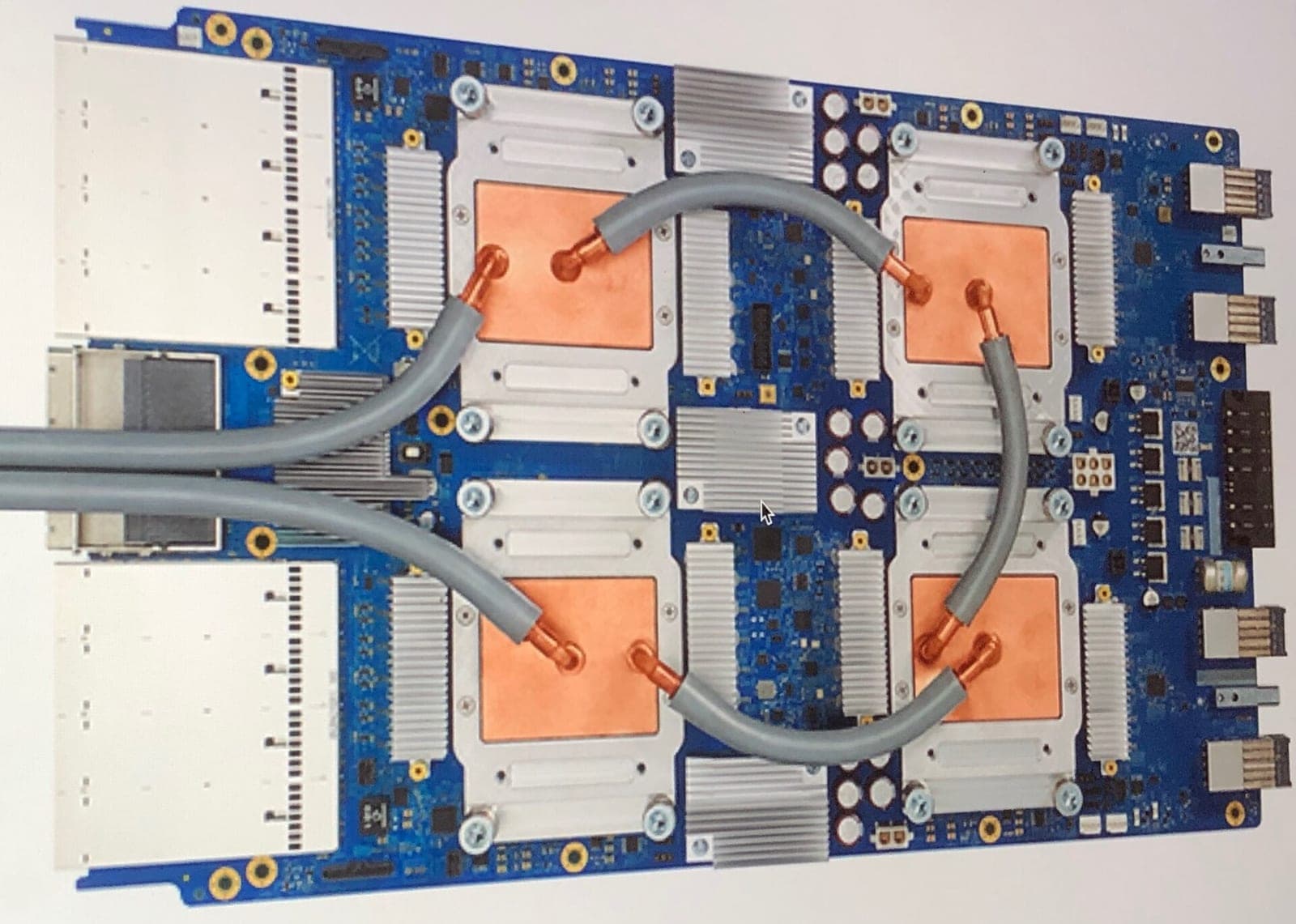
Google's new AI chips keep your data locked, even while they work on it
Google added two chips to its eighth-generation TPU family: TPU 8tx, which keeps data encrypted while AI runs on it, and TPU 8i Max, built for huge context windows.

Google will switch off AI and Search for school accounts until schools opt in
Google says Gemini and Search will be off for K-12 student accounts until administrators turn them on, and a school that wants no AI loses Search too.

Four Gemini 4 Argon agents beat Minecraft with no human help
Google DeepMind researchers gave four AI agents one goal, defeat the Ender Dragon, and no game tools. Twenty-seven hours and 605 deaths later, the dragon fell.
More in brief
- YouTube is going back on the Billboard charts in 2027Nov 9
- Apple starts selling $50 packs for extra Apple Intelligence useNov 9
- Windows 11 tests a way to switch off the Sticky Keys popup for goodNov 9
- US regulators question whether Waymo's school bus fix workedNov 9
- NVIDIA unveils GR00T 2 and Isaac Lab 3.0 to teach robots delicate workNov 9
- Tesla launches its robotaxi service in San Antonio, its eighth cityNov 9