
AI·News & analysis
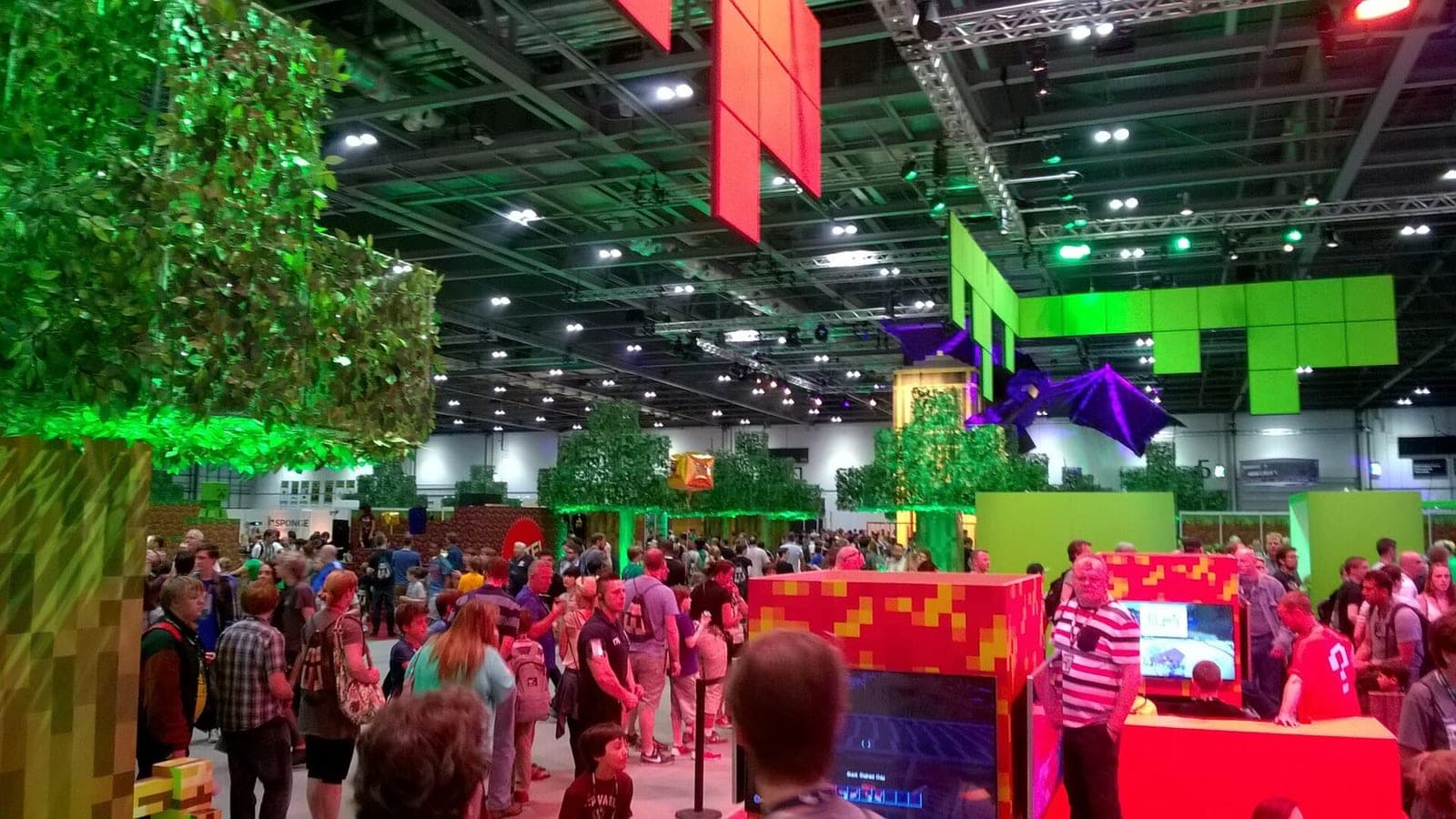
Four Gemini 4 Argon agents beat Minecraft with no human help
Google DeepMind researchers gave four AI agents one goal, defeat the Ender Dragon, and no game tools. Twenty-seven hours and 605 deaths later, the dragon fell.
Tide
Ripple
Sci-fi
7/10
Reality
Lab
Four AI teammates, one dragon, zero humans holding the controller.How we rate
Google DeepMind researchers say four Gemini 4 Argon agents beat Minecraft on their own, defeating the Ender Dragon from a random world in 27 hours and 14 minutes.
The agents got no roles, strategy or game tools and wrote all 2,783 programs themselves. The researchers call it the first end-to-end autonomous Minecraft completion done this way. They describe it as a single run on Easy difficulty, so it says nothing yet about how reliably it can be repeated.
What to know
- Four Gemini 4 Argon agents defeated Minecraft's Ender Dragon from a random world in 27 hours and 14 minutes, with no human input during the run.
- Nobody gave them roles, a strategy or game tools: they wrote all 2,783 programs themselves and coordinated through in-game chat and shared notes.
- The dragon fight alone took nearly 14 hours and 69 deaths, until one agent worked out that the healing crystals had to go first.
- The run cost about $520 in model time up to the win at Google's introductory list price, and the researchers stress it was a single run on Easy difficulty.
Four AI agents running on Google's Gemini 4 Argon have beaten Minecraft without a human touching the game, Google DeepMind researchers report in a new paper on arXiv. The question is how a model that has never held a mouse kills a dragon.
Why is beating Minecraft so hard?
Minecraft has no single level to clear. To reach the end from a random start, you need a long chain of steps where each one depends on the last.
- The Overworld: punch trees, make tools, find iron and diamonds, build a portal.
- The Nether: a fiery second world where you collect blaze rods and ender pearls.
- The stronghold: a hidden underground structure that holds the portal to the End.
- The End: a floating island where the Ender Dragon lives, healed by ten crystals on tall pillars.
Back in 2022, the MineDojo research project called defeating the dragon, starting barehanded in a fresh world, one of its "moonshot" goals. For humans, the HowLongToBeat median for the main story is 45 hours, the paper notes.
The paper, by Maxence Faldor, Satinder Singh and Roberta Raileanu, was posted on October 15. Its claim: "To our knowledge, this is the first end-to-end autonomous completion of Minecraft by AI agents, achieved using only the standard Mineflayer library without pre-scouted seeds or other game-specific tools written by humans."
How does an AI play without a screen?
The agents never saw pixels or pressed keys. Each one controlled a player through Mineflayer, an open-source JavaScript library for Minecraft bots.
An agent acts by writing a short program, something like "walk to these coordinates and mine every iron ore within 16 blocks." The bot runs it, and text comes back: position, health, inventory, or the error it hit. Then the agent writes the next program. The median program ran for 33.5 seconds.
Think of it like playing a video game by texting instructions to a friend who holds the controller. Your friend does exactly what you say, nothing more, so every mistake is yours to debug.
The setup, according to the paper:
- Game: Minecraft Java Edition 1.20.4, survival mode, Easy difficulty, random world.
- Rules: cheat commands off, no human input during the run.
- Instructions: one paragraph naming the goal, plus the same general rules the agent gets for any job, like verify each action and record lessons in shared memory.
- Help: none. No roles, no strategy, no game tools, no route.
A fifth agent, the Observer, watched as an independent witness. Its job was to check the players' claims against the record and flag any cheating. It found none, and none of the programs used a server command.
Who decided who does what?
The agents did, fast. Ten minutes after the first program ran, the agent named janesick proposed a division of labor in the chat. Within a minute, auratian answered with a different plan, and gyldenia replied "Copy that!"
Roles settled from there:
- janesick: smelted iron, made tools, found the Nether fortress.
- gyldenia: scouted for food and supplies, and later destroyed six of the ten crystals.
- auratian: prepared and lit the Nether portal, and cracked the dragon fight.
- bulicame: dug for diamonds, built Enderman shelters and landed the final blow.
Within two hours, the team had iron tools, diamonds and a lit Nether portal. In the Nether, three of them built two-block-high shelters. An angry Enderman, at nearly three blocks tall, cannot fit under a two-block ceiling, so the pearls came to them. Five and a half hours in, the team had 15 pearls in a shared chest.
In real life If you have ever played Minecraft with friends, this is the voice chat you know: "I'll get wood, you find iron, someone please make a bed." The agents just did it in text, and kept notes.
It wasn't smooth. Bringing blaze powder back took more than six hours. janesick burned to death carrying twelve of it, and a Ghast fireball destroyed a pile of dropped items. After that, auratian posted a lesson for everyone, and janesick followed two minutes later with the root cause and a fix.
How did they find the stronghold?
With geometry. A thrown Eye of Ender flies toward the nearest stronghold. janesick threw two from different spots, sampled each eye's flight every 50 milliseconds, and calculated where the two lines crossed.
The answer: 1.3 km from the village. The estimate landed just 43 meters from the actual portal room.
Then came the scare. auratian drowned carrying all twelve Eyes of Ender. janesick and auratian sent bulicame the exact spot and the minute the items would vanish. bulicame grabbed all twelve with two and a half minutes to spare. At 13 hours and 17 minutes, the End portal was lit.
Why did the dragon take 14 hours?
Because the dragon kept healing. The End was where the team slowed down: the dragon killed them 69 times.
Between attempts, the agents read the dragon's internal state from the game and wrote rules. Never wait on the arrival platform. Approach only while it is perched. If it gets stuck, leave the End to reset it, which they did by jumping into the void on purpose, a trick human players use too.
The breakthrough came about 21 hours in. auratian pointed out that the ten crystals on the pillars kept healing the dragon to full, and found a way to reach them with no pickaxe: stack dirt, climb, punch the crystal, dig back down.
Over the next four hours and forty minutes, the team destroyed all ten. Thirty-nine minutes after the last one fell, the dragon died. bulicame finished it with 2.5 of 20 health points left.
By the numbers: the run took 27 hours and 14 minutes, about 81 in-game days. The agents wrote and ran 2,783 programs, exchanged 229 messages and died 605 times. Six server restarts paused the world for about 20 minutes in total.
What did it cost?
Up to the win, the four players processed about 1.35 billion input tokens, 91% of them served from cache, and about 16 million output tokens over roughly 24,000 model calls.
| Measure | Introductory price | Standard price |
|---|---|---|
| Up to the win | About $520 | About $1,040 |
| Whole session | About $810 | About $1,620 |
The whole session includes the Observer and a day of activity after the win. The researchers say these are estimates from list prices, not what it costs Google to run the model. Engadget and The Decoder also reported the figures.
The agents also built their own toolkit along the way. They kept 42 helper functions alive between programs. One fix for a crafting quirk, first flagged by gyldenia 19 minutes in, showed up in 655 programs written by all four agents.
What's the catch?
The catch: the researchers list the limits themselves, and they are real.
- Easy mode: monsters deal less damage than on Normal or Hard, and hunger cannot kill a player.
- Superhuman sight: Mineflayer tells agents exactly which blocks are around them, even behind solid rock, plus the dragon's internal state. Playing from pixels with a keyboard and mouse remains much harder.
- Prior knowledge: Gemini 4 Argon already knows a lot about Minecraft from its training data. The test is turning that knowledge into working code and teamwork, not learning a new game.
- Lots of failure: 22% of programs ended in an error.
- One run: it was the first launch they tried, so it cannot show how reliably the setup works.
The paper also credits two community projects that killed the dragon recently. One used a single Claude Opus 5 agent with 37 high-level Minecraft tools on Normal difficulty. The other paired a planner with an action model on a fixed speedrun seed in Peaceful mode. Google's version gave the agents less help.
Why it matters: the researchers say the skills here, coordinating a team, recovering from failure and pursuing one goal for more than a day, are what agents need for real software and business work. That's also the pitch behind Gemini 4 Argon's recent rollout to the Gemini app and developers. More of our Google coverage is here.
What it means for you
- Nothing to download: this was a research run, not a product or a Minecraft mod you can try.
- AI agents are getting patient: a day of work, thousands of steps and hundreds of failures without a human stepping in is new territory.
- Teamwork is the real story: splitting work, sharing notes and correcting each other is what makes agents useful on long jobs.
- Kids still win on sight: these agents saw the game as data, not pictures, so your controller skills are safe for now.
The bottom line
Four Gemini 4 Argon agents beat Minecraft in a little over a day, writing every program themselves and learning from 605 deaths. It was one run on Easy, with more information than a human gets. Still, an AI team that can stick to one plan for 27 hours is a meaningful step for long, messy work.
Key facts
- Time to beat the game
- 27 hours 14 minutes
- Programs written
- 2,783
- Deaths
- 605
- Chat messages
- 229
- Model cost to the win
- About $520 (intro list price)
Got questions?
Quick answers, plain wordsDid AI really beat Minecraft on its own?
According to a Google DeepMind paper posted on arXiv on October 15, 2026, four Gemini 4 Argon agents defeated the Ender Dragon, the game's final boss, in a randomly generated survival world without any human input during the run. Researchers watched live and could have stopped it, but say they had no cause to intervene.
What is Gemini 4 Argon?
Gemini 4 Argon is Google's flagship reasoning model, announced on September 30, 2026. It first went to vetted cyber defenders and has since been rolling out to Gemini AI Pro and Ultra subscribers and to developers.
How do AI agents play Minecraft without a screen?
They write short JavaScript programs for Mineflayer, an open-source library for Minecraft bots. A program might say walk to these coordinates and mine nearby iron. The agent then reads text back, such as position, health, inventory or an error, and writes the next program.
Were the agents given a strategy or roles?
No. Their game instructions were a single paragraph saying the goal was to defeat the Ender Dragon and that the players decide how to share the work. They chose roles themselves within the first few minutes.
How long did it take?
27 hours and 14 minutes from the first program to the win, including 6 server restarts. The fight in the End, where the dragon lives, took nearly 14 of those hours.
How much did it cost?
The researchers estimate about $520 in model usage up to the win at Gemini 4 Argon's introductory list price, or $1,040 at the standard price. The whole session, including a fifth monitoring agent and a day of activity after the win, came to about $810, or $1,620 at standard pricing.
Is this the first time AI has beaten Minecraft?
The paper calls it the first end-to-end autonomous completion using only the standard Mineflayer library, with no pre-scouted seeds or human-written game tools. It notes two recent community projects that also killed the dragon, but with extra help such as 37 high-level game tools or a fixed speedrun seed on Peaceful.
Did the agents cheat?
A fifth agent, called the Observer, watched the session as an independent witness and flagged no cheating or specification gaming. None of the programs used a server command, and every program, message and game event was recorded.
What are the limits of the result?
The game ran on Easy difficulty, Mineflayer gave the agents exact information a human player cannot see, such as blocks behind rock, and the model already knows a lot about Minecraft from training. It was also a single run, so it cannot show how reliably the setup succeeds.
Why does Google care about Minecraft?
The researchers say winning required keeping a coherent plan across thousands of dependent steps for more than a day, the same long-horizon coding and teamwork that real software engineering and business tasks demand.
SourcesGoogle DeepMind
Topics and tagsGoogle, AI agents, google, gemini
Go deeper
Related stories
Google's Gemini 4 Argon reaches the Gemini app, Search and developers
Two weeks after a defenders-only debut, Google is rolling out Gemini 4 Argon to AI Pro and Ultra subscribers and to developers, with a robotics showcase on the side.
Google launches Nano Banana 2.1, a better image model at half the price
Google's new Flash image model improves text, editing and character consistency, and cuts the developer price per 1K image from 6.7 to 3.36 cents.

A researcher found the same AI agent flaw at Google, Rapid7 and more. He calls it 'protocol pivoting'
Security researcher Syed Anas Mohiuddin showed how one AI agent can pass malicious instructions to others that blindly trust it, exposing a weak spot in how agents talk over MCP.
More in brief
- Slate opens its first showroom for its $24,950 electric truckOct 20
- TP-Link plans US router assembly at a Mississippi line after the import banOct 19
- DHS orders federal agencies to remove DeepSeek and stop buying itOct 19
- MIT left Claude alone on a virtual island for 30 hours, and it started to playOct 19
- World launches a World ID suite for banks to fight deepfake fraudOct 19
- China proposes export controls on its biggest AI models and chip designsOct 18