
Technology·News & analysis
Google Home's November update adds door keys, sound alerts and energy savings
Google Home now unlocks doors from Google Wallet, hears barking dogs and breaking glass on camera alerts, and will show what your Nest thermostat saved. Gemini for Home gets 20% faster.

Tide
Wave
Sci-fi
3/10
Reality
Shipping
Your house now listens for the dog and the glass.How we rate
Google announced a November Google Home update on November 17 with four changes.
Android users can unlock doors with Wallet home keys, and Premium Advanced camera alerts now notice sounds like barking or breaking glass. Nest thermostat owners in the U.S. and Canada get estimated savings in December, and Gemini for Home answers everyday requests up to 20% faster while reaching six new countries.
What to know
- Google announced a November update for Google Home on November 17, 2026, covering keys, camera alerts, thermostats and Gemini.
- Android users can unlock compatible front doors with a tap or hands-free, using digital home keys in Google Wallet.
- Google Home Premium Advanced now detects sounds such as barking dogs and breaking glass in camera and doorbell event descriptions.
- From December, Nest thermostat owners in the U.S. and Canada can see estimated cumulative savings, and Gemini for Home is up to 20% faster.
Google announced a batch of Google Home changes on November 17. Your phone can open your front door, your camera can hear a dog bark, and your thermostat will report how much it saved.
That is four updates in one post. Here is what each one does and when you will see it.
How does the keyless entry work?
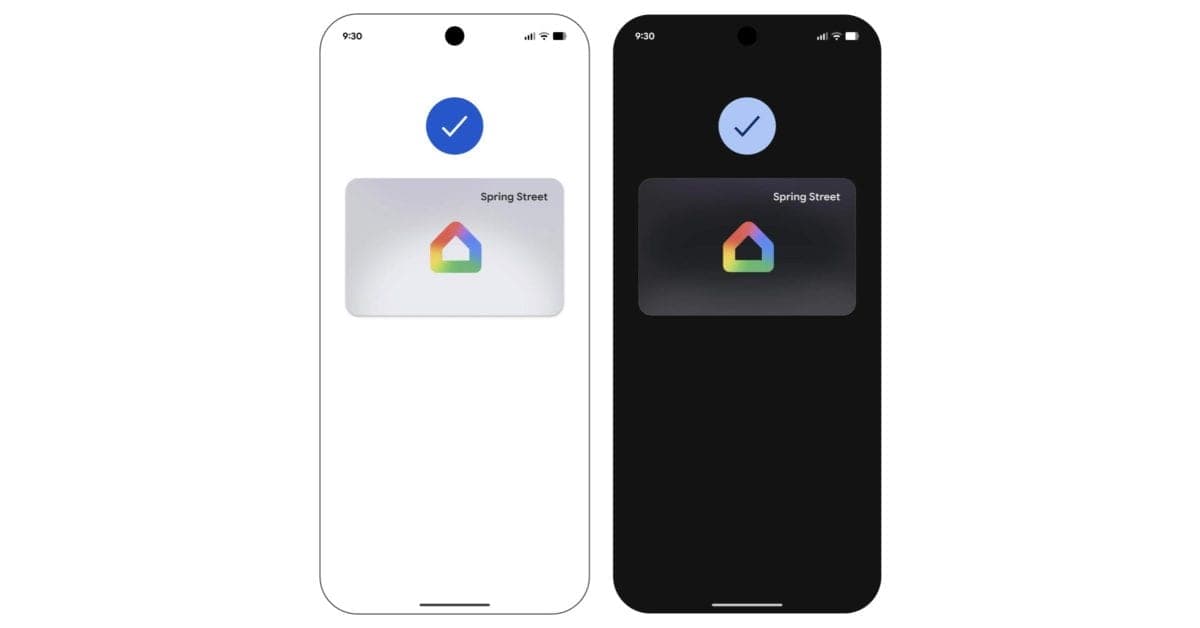
Android users can now unlock compatible front doors with a quick tap or by walking up hands-free. The key lives in Google Wallet as a digital home key.
We covered the setup in detail in our story on Google Wallet home keys. The short version: you add a compatible smart lock in the Google Home app, and Home offers to save the key to Wallet.
In real life You come home with both hands full of groceries. Instead of fishing for keys, you hold your phone near the lock, or just walk up if your phone and lock support the hands-free kind.
The catch: only compatible locks work, so check your lock before you plan to retire your keys.
What can the cameras hear now?
Google Home Premium Advanced now detects audio in the descriptions of motion-triggered camera and doorbell events. Google's examples are barking dogs and breaking glass.
Premium Advanced is the paid tier of Google Home. It uses AI to write a short description of what a camera saw, so you can read an alert instead of opening a video clip.
Before, those descriptions came from pictures alone. Now they can mention what the camera heard, too. A clip of someone at the gate sounds different from a clip of glass breaking.
Why it matters: an alert that says what happened is easier to act on than "motion detected." Fewer pointless taps, fewer missed events.
What changes for Nest thermostats?
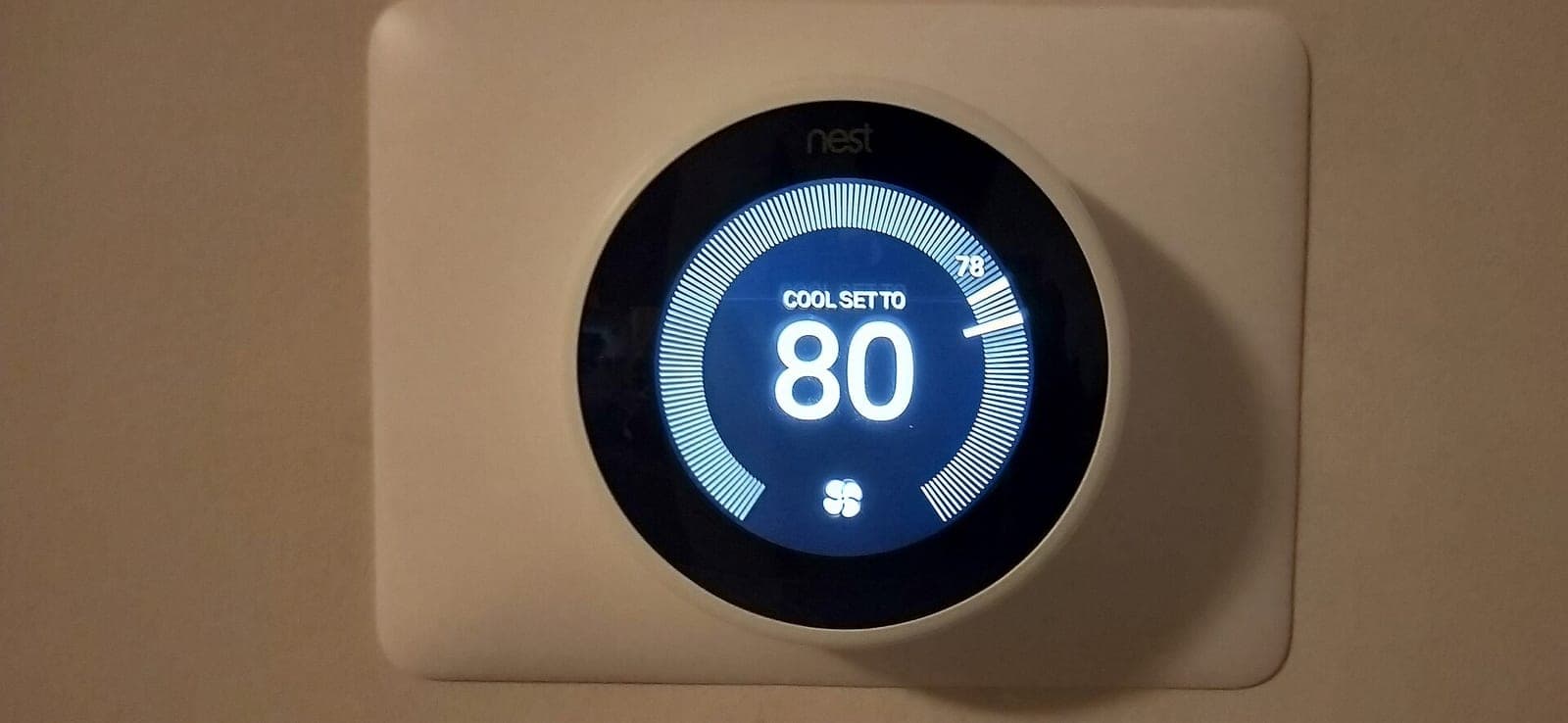
Starting in December, Nest thermostat owners in the U.S. and Canada can check the Google Home app for estimated cumulative savings. It is an estimate of how much energy and money the thermostat has saved over time.
There is a second upgrade for the 4th-gen Nest Learning Thermostat. It can now balance hot and cold spots in a home by using compatible third-party room sensors.
Those sensors measure the temperature in other rooms, so the thermostat does not decide only from the hallway where it hangs. Compatible sensors include models from IKEA, Eve and Aqara, plus Google's own room sensor at $40.
Earlier this month the Google Home app also added an Eco Mode Everywhere toggle. If you own more than one Nest thermostat, it switches all of them to Eco mode in one press, according to the November 11 release notes.
How much faster is Gemini for Home?
Google says Gemini for Home now handles everyday requests up to 20% faster. Gemini for Home is the AI voice assistant that is replacing Google Assistant on Nest speakers and displays.
It is also expanding to six new countries, including India and Brazil. The other four are Taiwan, Singapore, Colombia and South Korea.
The November 11 notes add smaller voice changes in early access: faster timers, more conversational voice feedback, faster broadcasts and smart displays that show relevant images when they help an answer.
What else shipped this month?
The headline items sit on top of a long list of fixes. Google has pushed several Google Home updates in a few weeks, and most are about making things less annoying.
On October 29, Google's update list included these:
- Music: better transfer between rooms, such as "move Mozart to the living room."
- Timers: a better line between media sleep timers and regular timers, and a fix for zero-volume alarms.
- Energy: real-time power and total energy use for Matter devices on Android. Matter is a shared smart home standard, so devices from different brands work together.
- Cameras: better face and person detection on Nest Doorbell, faster night vision switching and steadier Wi-Fi reconnection.
The November 11 notes added more camera repairs:
- Live View: fixed on older Nest Cam devices, including Nest Hello.
- Connections: live streaming fixed on certain network types, such as fiber and mobile hotspots.
- Thumbnails: restored on Nest Cam IQ models.
- Clocks: improved camera clock accuracy.
Unmigrated Nest Hello devices that are offline can now be removed from the Home app, too.
What is MCP doing in Google Home?
The November 11 notes say Google Home MCP connections can now control automations. They also reach more device types: thermostats, fans, air purifiers, robot vacuums, lighting, kitchen appliances, EV chargers and alarms.
MCP stands for Model Context Protocol. Think of it as a universal plug that lets an AI agent, which means a program that does tasks for you, talk to an app or a device without custom wiring for each one.
For most people, this is background plumbing. For anyone who builds with AI agents, it means a program can ask your home to do more things than before.
What's next: the thermostat savings view arrives in December. Google has not published dates for every item in this update.
Where does Premium fit in?
Google Home Premium is the paid layer on top of the free app, and this month's updates keep making it easier to find. The October 29 update added a way to reach Premium features from your profile. The November 11 notes added a dedicated Google Home Premium page in the app's settings.
Premium Advanced, the higher tier, is the one that gets the new sound detection. The AI descriptions it writes now sit directly in alerts and video history, so you read what happened before you open a clip.
That is worth knowing before you buy anything. The free app still handles locks, thermostats and the Wallet key. The camera intelligence is where the subscription comes in.
How often does Google ship these?
Quickly. Google published a Home update on October 29, another on November 11 and this announcement on November 17. That is three rounds in under three weeks.
- October 29: more than nine improvements, plus software updates for five Nest camera models.
- November 11: Gemini early access changes, Eco Mode Everywhere, Wallet home keys support and a long list of camera fixes.
- November 17: the four headline changes in Google's own post.
The pattern is a steady drip instead of one big yearly release. For owners, that means features arrive in the app without new hardware, and old Nest cameras keep getting fixes.
By the numbers: three updates, five camera models in the October list, six new Gemini countries and up to 20% faster answers.
Who gets what?
Not every feature is for every household. Here is a quick map.
| Feature | Who needs what |
|---|---|
| Home keys | Android phone and a compatible lock |
| Sound in camera alerts | Google Home Premium Advanced |
| Savings view | Nest thermostat, U.S. or Canada, from December |
| Room sensors | 4th-gen Nest Learning Thermostat |
| Faster Gemini | Gemini for Home, up to 20% faster |
What it means for you
- Check your lock: keyless entry only works with compatible smart locks and Android phones.
- Think about the tier: the sound detection sits behind Google Home Premium Advanced, so a free setup will not get it.
- Plan for December: if you own a Nest thermostat in the U.S. or Canada, look for the savings view in the app.
- Add sensors if rooms feel off: a 4th-gen Nest Learning Thermostat can now use third-party room sensors.
The bottom line
This is a practical update, not a flashy one. A door key in your wallet, an alert that knows a bark from a break-in, and a thermostat that shows its savings are all things you can use right away.
Google also keeps trimming the small annoyances in the background, which is how a smart home earns trust.
Key facts
- Announced
- November 17, 2026
- Gemini for Home speed
- Up to 20% faster
- New Gemini countries
- Six, incl. India and Brazil
- Thermostat savings view
- December, U.S. and Canada
Got questions?
Quick answers, plain wordsWhat is new in Google Home in November 2026?
Google lists four changes: keyless entry with Google Wallet home keys, audio detection in camera alerts, Nest thermostat upgrades and a faster Gemini for Home.
How does keyless entry work?
Android users can unlock compatible front doors with a quick tap or a hands-free approach, using a digital home key stored in Google Wallet.
What sounds can Google Home cameras detect now?
Google gives barking dogs and breaking glass as examples. The sounds are added to the descriptions of motion-triggered camera and doorbell events.
Do I need a subscription for the sound alerts?
Yes. Google says the audio detection is part of Google Home Premium Advanced, the paid tier that writes AI descriptions of camera events.
When do Nest thermostat savings appear?
Starting in December. Nest thermostat owners in the U.S. and Canada can check the Google Home app for estimated cumulative savings.
Which thermostat works with third-party room sensors?
The 4th-gen Nest Learning Thermostat. Google says it can balance hot and cold spots using compatible third-party room sensors.
How much faster is Gemini for Home?
Google says everyday requests are handled up to 20% faster. It is also expanding to six new countries, including India and Brazil.
What is Eco Mode Everywhere?
It is a toggle in the Google Home app for homes with more than one Nest thermostat. It turns on Eco mode on all of them at once.
What is MCP in Google Home?
MCP is a standard way for an AI agent, which means a program that does tasks for you, to plug into other software. Google Home MCP connections can now control automations and more device types.
Is the update available to everyone today?
Not all of it. The thermostat savings view starts in December, and Google has not given a date for every country or feature.
SourcesGoogle, 9to5google.com, droid-life.com
Topics and tagsGoogle, google home, nest, gemini
Go deeper
- ExplainerWhat are AI agents?An AI agent is an AI system that decides its own next steps and uses tools to get a task done, instead of just...
- ExplainerWhat is MCP (Model Context Protocol)?MCP, the Model Context Protocol, is an open standard that lets AI apps like Claude, ChatGPT and Gemini connect to...
Related guide
Guide, 8 minHow to use Gemini: Live camera help, Skills and Android scam protectionUse Gemini Live with your camera, prepare for Gems turning into Skills, and switch on the opt-in scam protection in Google Messages.Related stories
Google Wallet can now unlock your front door with a tap
Google Wallet on Android now holds digital home keys for compatible smart locks in Google Home. Tap your phone to open the door, or let it unlock as you walk up.
Roku is leaving the smart home to focus on streaming
Days after Fox closed its purchase of Roku, the company said it will stop selling cameras, doorbells, bulbs and plugs. Support for devices you already own continues.

Google opens pre-orders for Gemini glasses from Warby Parker and Gentle Monster
Google's first intelligent eyewear starts at $395 from Warby Parker and $449 from Gentle Monster, and arrives in stores and online on December 10.
More in brief
- ASELSAN's EJDERHA electromagnetic weapon disables 51 drones with one commandNov 21
- Microsoft To Do will shut down on June 30, 2027Nov 21
- Medtronic's Hugo surgical robot cleared for general surgery in the USNov 21
- Google's Gemini now turns noisy fire radio into text for Watch DutyNov 21
- Internet Archive staff move to unionize with CWANov 20
- Etsy sellers are leaving over new terms that allow AI trainingNov 20