
Robots·News & analysis
Robots race up Mount Tai's 3,100 stone steps in China's first mountain contest
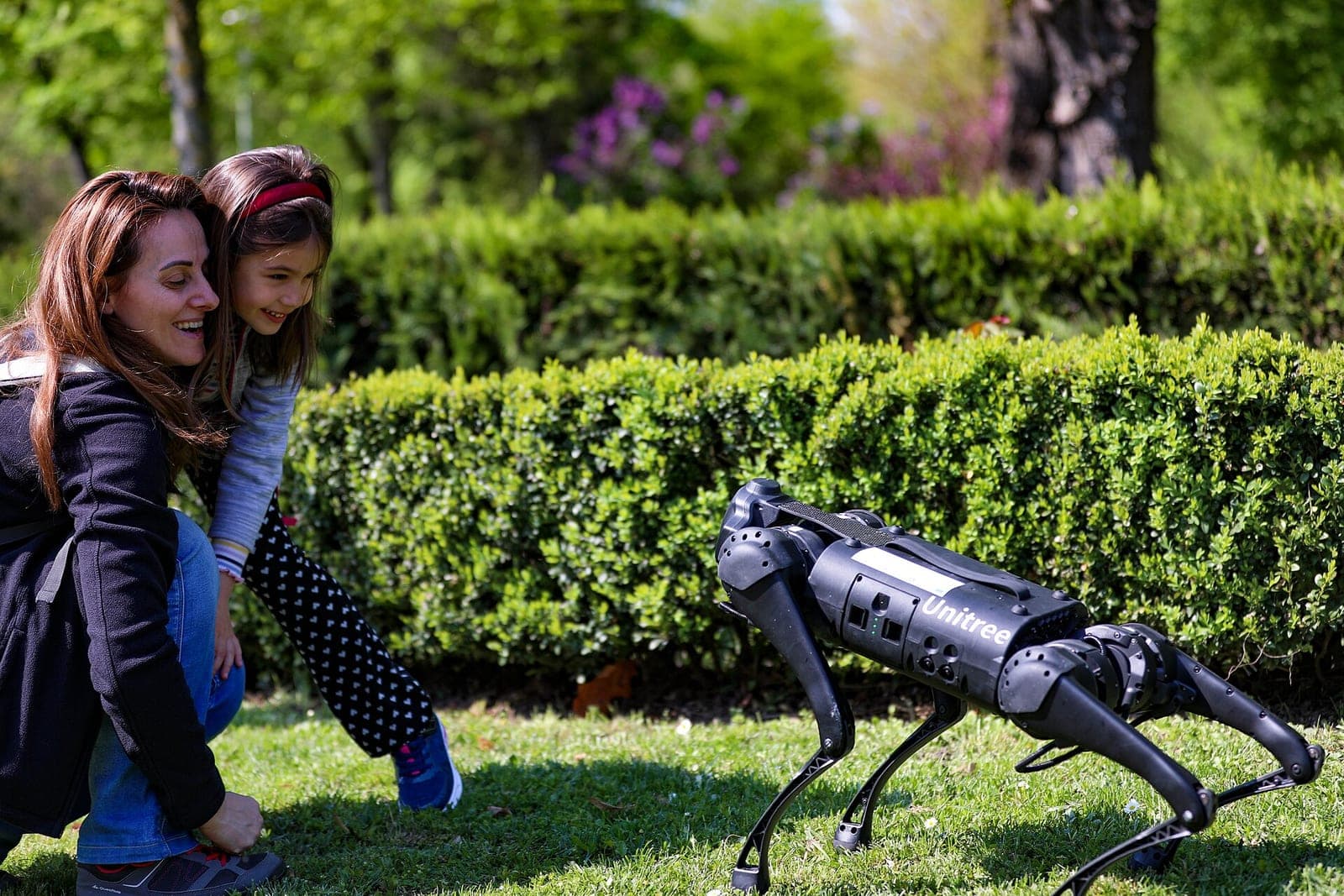
The inaugural CMG World Robot Mount Tai Competition sent legged and humanoid robots up a real mountain trail. A Unitree robot dog won the legged race in 43 minutes and 41 seconds.
Tide
Ripple
Sci-fi
8/10
Reality
Demo
Robot dogs racing pilgrims' stairs up a sacred mountain.How we rate
Dozens of Chinese teams raced legged and humanoid robots up more than 3,100 stone steps on Mount Tai in the first contest of its kind on a UNESCO World Heritage mountain.
A Unitree robot dog won the legged race in 43 minutes and 41 seconds, and a humanoid team won its shortened race in 27 minutes and 26 seconds. Robots wobbled, overheated and drained batteries on real stairs. Organizers say the data will guide robots for inspection and rescue.
What to know
- The first CMG World Robot Mount Tai Competition ended on Monday, November 2, in Tai'an, Shandong province, on a course of more than 3,100 stone steps.
- A Unitree robot dog, run by Beijing Lingyi Technology, won the legged race in 43 minutes and 41 seconds.
- The humanoid race was shortened to the stretch from Hongmen Square to Doumu Palace, and the Zhishen Lingyue team won it in 27 minutes and 26 seconds.
- Robots slipped sideways, lost their gait after cargo swaps and strained their batteries and motor cooling, which shows how far outdoor work still is.
On Monday, dozens of robots finished the first robot race up China's Mount Tai, a sacred mountain with more than 3,100 stone steps. Now the fun part: how does a machine that aces a flat lab floor handle a staircase pilgrims have used for thousands of years?
What actually happened on Mount Tai?
The inaugural CMG World Robot Mount Tai Competition wrapped up in Tai'an, in China's Shandong province. CMG stands for China Media Group, the state broadcaster that organized it and streamed the whole thing on its platforms.
Robots from companies, universities and research teams took on a real trail instead of a test track. Reports count the field differently: one says more than 50 groups took part, another says 90 domestic teams.
The event was billed as the world's first professional robot contest held on a mountain that is a UNESCO World Heritage Site. Mount Tai has been a place of worship for at least 3,000 years.
Why Mount Tai, of all places?
Mount Tai is one of China's Sacred Mountains. Visitors climb its steep stone steps to reach Buddhist, Confucian and Taoist temples, cliffside stone inscriptions and wide views.
Hongmen, where the course began, is a traditional starting point for walkers, and that list includes emperors. So the robots were following a path with a very long guest book.
The contest did not start on race day. A qualifying phase opened on October 26 in Tai'an, and the main event followed on November 2.
How hard was the course?
The route ran from a gate called Hongmen to a landmark called Zhongtianmen. That is roughly 3.8 to 3.9 kilometers of trail.
- Steps: more than 3,100 stone steps.
- Climb: nearly 600 meters of total height gained.
- Surface: steps of different heights and widths, bumps in the stone, sharp bends and roadside obstacles.
- Landmarks: Wanxian Tower, Doumu Palace and the Stone Sutra Valley along the way.
In real life Picture carrying a full backpack up 3,100 stairs without a single handrail pause. Now picture doing it on four metal legs, with a battery that gets hotter with every step.
Which events did the robots enter?
There were four main events. A fifth, separate challenge tested all-terrain exploration and pathfinding.
- Humanoid race: robots shaped like people ran the course.
- Legged race: four-legged robots, like robot dogs, raced to the top section.
- Legged load-carrying: robot dogs hauled cargo, including eggs and watermelons.
- Exoskeleton assistance: powered suits that help a human body climb.
A humanoid is a robot built in a human shape, with two legs and two arms. "Legged" simply means it walks on legs instead of rolling on wheels.
Who won?
A Unitree robot dog won the legged race. The team from Beijing Lingyi Technology, which is a subsidiary of Unitree Robotics, finished first in 43 minutes and 41 seconds with a Unitree A2.
Shanghai Gaoyi Technology, another team using Unitree robots, took second. The Lingju team from Linxai Intelligent came third.
The load-carrying event was about stamina. The Lingshi team from Linxai Intelligence won in 1 hour, 51 minutes and 29 seconds, ahead of teams from Shanghai Gaoyi Technology and Shenzhen Technology University.
The humanoid race had to be shortened because the terrain was so demanding. It ran from Hongmen Square to Doumu Palace, and the Zhishen Lingyue team won in 27 minutes and 26 seconds.
What went wrong on the way up?
This is the most useful part of the day. Some robots drifted sideways off their line, which engineers call posture deviation. Several load-carrying robots also walked unsteadily after their cargo was changed at supply points.
Long climbs strain the hardware too. Motors need cooling, batteries drain faster under load, and the whole machine has to keep its balance for an hour or more.
Walking well on a flat floor does not mean a robot is ready for outdoor work.
The catch: a gait is the pattern of steps a robot uses to walk. Stone stairs of uneven size force it to re-plan every single step, and that is hard to do reliably for a long time.
What technology did the robots use?
Judge Sung Qingwei said the biggest challenge was adapting to the mountain's terrain. The robots used a mix of cameras and LiDAR, a sensor that fires laser pulses and measures how long they take to bounce back, which builds a 3D map of the stairs ahead.
An expert quoted before the race put it simply: climbing a mountain takes far more than lifting a foot and stepping forward. A robot has to detect each step in real time and work out exactly where its foot will land.
Teams also had to manage balance and the movement of their joints. Dynamic balance means staying upright while the body is moving, not just standing still. Before race day, robots trained on a replica of the route built by Shandong CCRC Technology Group, with 11 test tracks that copy the real course.
One robot that drew attention was Walker Taishan, a Yobotics E1 humanoid that stands 1.4 meters tall and weighs 39 kilograms. It was reported as the first robot in its industry to attempt the climb.
Why does China want robots on mountains?
The label for this field is embodied AI, which means artificial intelligence that lives inside a robot body and has to deal with the physical world. Organizers described the mountain as a natural extreme testing ground.
The stated goal is to push humanoid robots and similar products into factories and everyday life. Reported uses include forest fire prevention, geological monitoring, mountain rescue and delivering emergency supplies.
By the numbers: Chinese vendors made up 95% of humanoid robots shipped worldwide in the first half of the year, according to IDC data from September. For a closer look at how that supply chain is growing, see our story on Schaeffler's humanoid parts push.
China has become a major player in robotics, with companies building machines for healthcare, logistics, factories and homes. Robot makers often test their machines in tough real places, but a sacred mountain is an unusual choice.
Reports also say the organizers wanted to test balance and motion control, plus how well a robot senses and adapts to changing ground. Those same skills matter for working safely near people, and for search missions after earthquakes, floods or forest fires.
The event also included a Mount Tai Embodied Intelligence Industry Summit, a robotics supply-chain exhibition and an investment matchmaking session, so companies and investors could meet.
What it means for you
- Do not expect a robot hiking guide soon: the winners were fast, but they also stumbled, and no one has set a date for any outdoor job.
- Real-world tests are the new proof: demos on smooth floors say little, so contests like this show which machines hold up.
- Rescue and inspection come first: the uses people talk about are fire watch, ground monitoring and supply runs, not home help.
- Watch the boring parts: battery life and motor cooling decide whether a robot can work a full shift.
The bottom line
Robots climbed a real mountain, and the best of them did it faster than most people would want to try. They also showed the weak spots that keep them from outdoor jobs today: balance on rough steps, steady carrying and stamina.
The result is a useful data set for the companies building them, and a reminder that the hard part of robotics is the world itself.
Key facts
- Event
- CMG World Robot Mount Tai Competition (first edition)
- Finished
- Monday, November 2, 2026, in Tai'an, Shandong
- Course
- Hongmen to Zhongtianmen, more than 3,100 steps, about 600 m of climbing
- Legged race winner
- Beijing Lingyi Technology (Unitree robot dog), 43:41
- Humanoid race winner
- Zhishen Lingyue team, 27:26
Got questions?
Quick answers, plain wordsWhat was the Mount Tai robot competition?
It was the first CMG World Robot Mount Tai Competition, organized by China Media Group. Robots raced and carried loads up the stone steps of Mount Tai in Tai'an, Shandong province, and it ended on Monday, November 2, 2026.
How long was the course?
Reports put it at about 3.8 to 3.9 kilometers, from Hongmen to Zhongtianmen. It had more than 3,100 stone steps and nearly 600 meters of total climbing.
Who won the legged robot race?
A robot from Beijing Lingyi Technology, a subsidiary of Unitree Robotics, crossed the line first in 43 minutes and 41 seconds. The team used a Unitree A2 robot dog. Shanghai Gaoyi Technology, also using Unitree robots, took second.
Who won the humanoid robot race?
The Zhishen Lingyue team won in 27 minutes and 26 seconds. Because the terrain was so hard, the humanoid race covered only the stretch from Hongmen Square to Doumu Palace.
What events were in the competition?
There were humanoid robot racing, legged robot racing, legged robot load-carrying and powered exoskeleton assistance. A separate all-terrain exploration and pathfinding challenge was also held.
What is a legged robot?
It is a robot that walks on legs instead of wheels. The robot dogs in this contest have four legs, while humanoids have two and a human-like shape.
Why test robots on a real mountain?
Lab floors are flat and predictable. Stone steps of different heights, bumps and bends force a robot to sense the ground and keep its balance, which is closer to real outdoor work.
What did the robots carry?
In the load-carrying event, robot dogs hauled cargo up the steps, and the cargo included eggs and watermelons. Some robots also developed unstable walking after their loads were changed at supply points.
How many teams took part?
Reports differ. One count says robots from more than 50 companies, universities and research teams, and another says 90 domestic teams entered.
What could this lead to?
Organizers and experts point to jobs such as forest fire prevention, geological monitoring, mountain rescue and delivering emergency supplies. Nobody has promised a date for any of them.
SourcesTechNode
Topics and tagsHumanoid robots, robots, china, unitree
Go deeper
Related stories
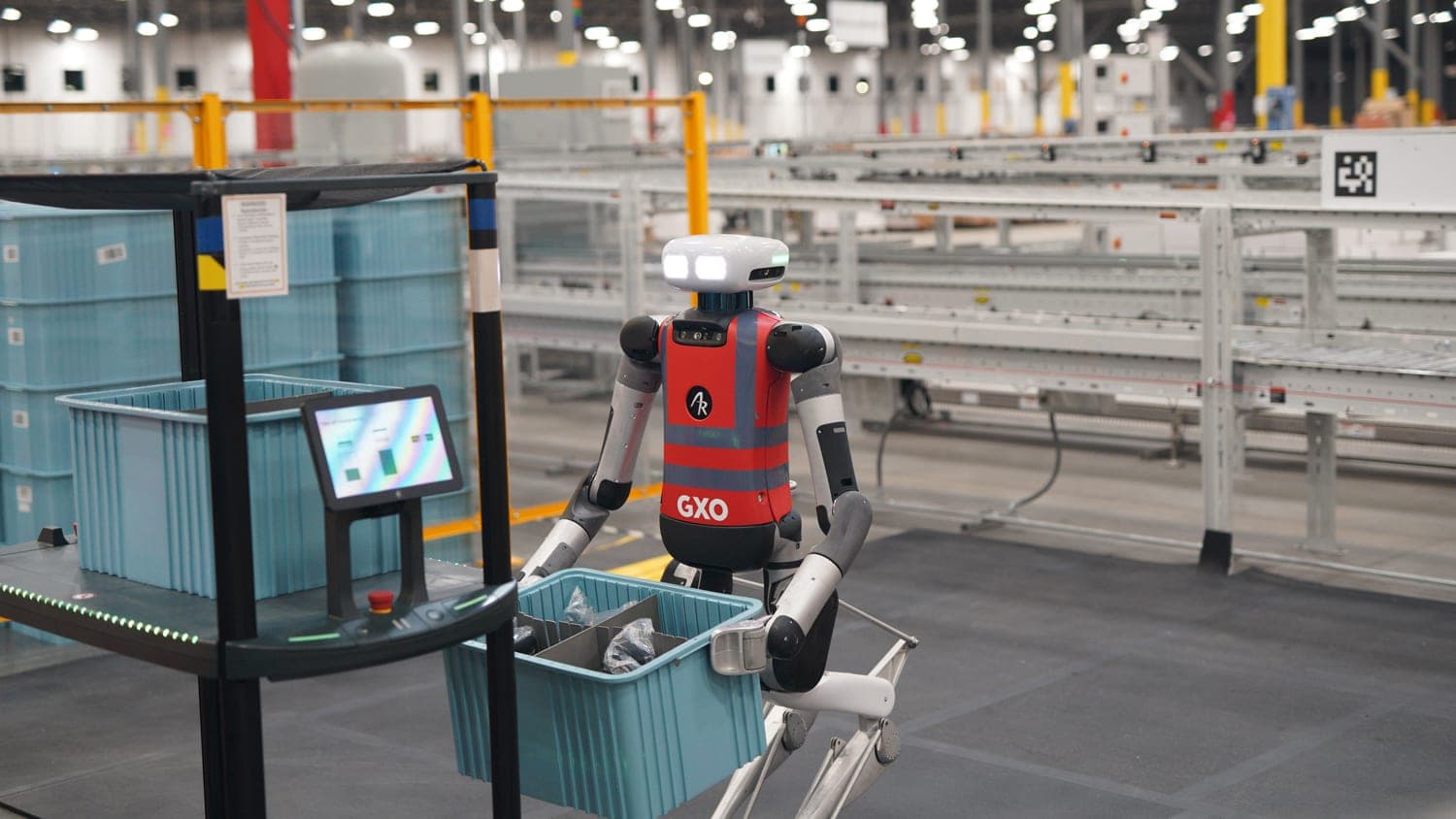
Agility Robotics clears its SPAC vote and heads to Nasdaq this week
Churchill Capital XI shareholders approved the merger with Agility Robotics. The humanoid maker expects about $465 million and a Nasdaq listing as AGLT on November 5.
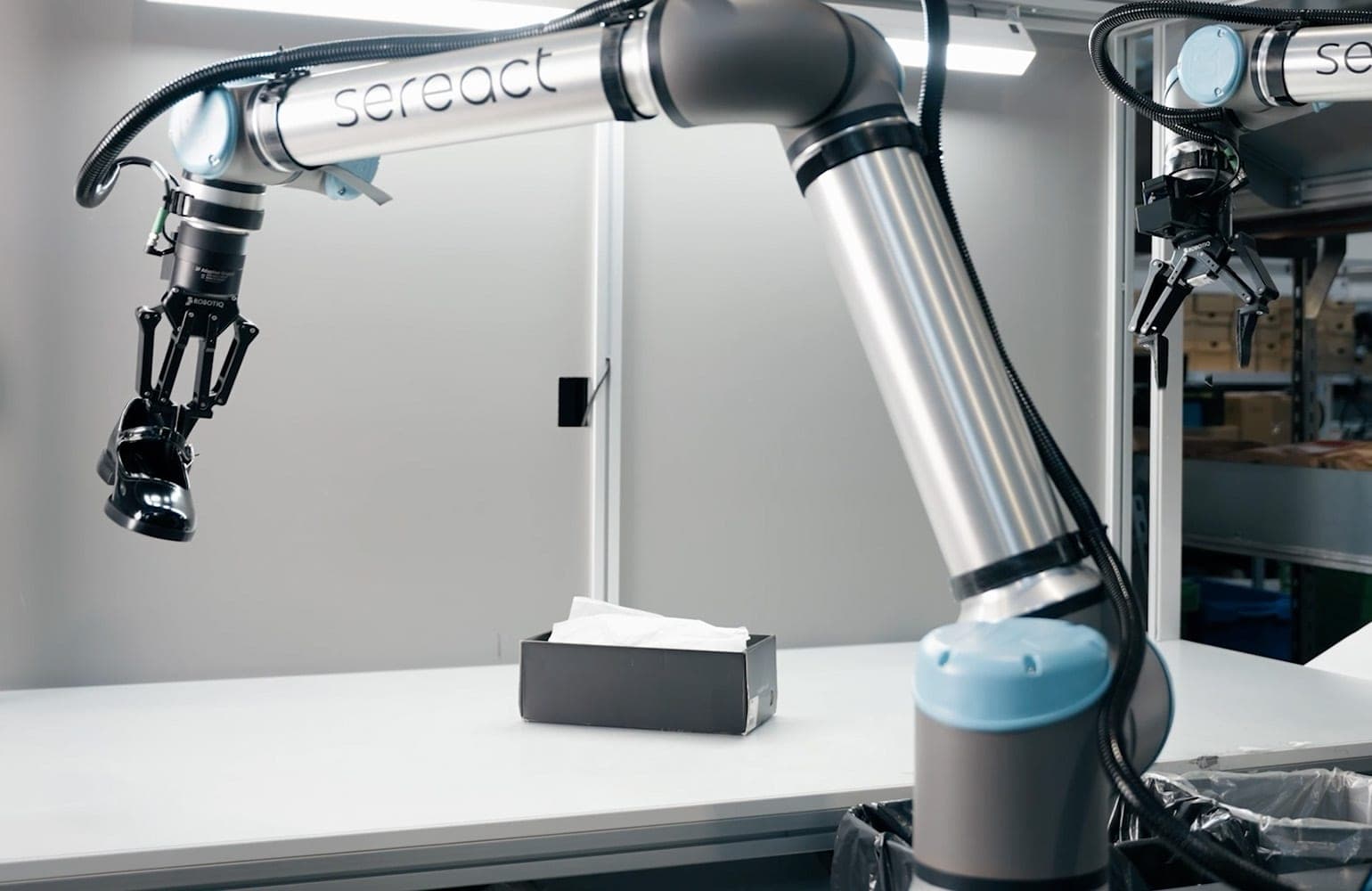
Teradyne Robotics and Sereact team up to put AI-driven robot arms in warehouses
Sereact's Cortex AI will run on Universal Robots arms, and hundreds of dual-arm systems already sort returned fashion at Zalando sites in Germany and Poland.
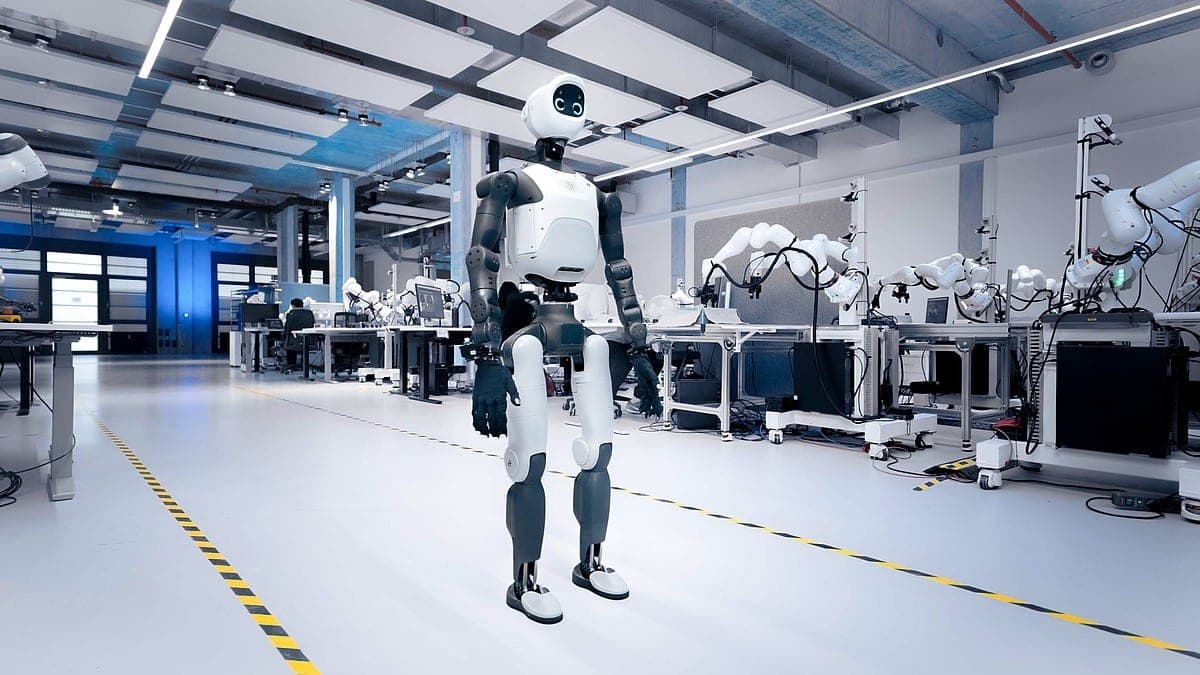
Agile Robots launches Agile ONE SN, a small humanoid for research labs
Agile Robots and NVIDIA unveiled Agile ONE SN at GTC Berlin, a 1.4 meter humanoid with 71 degrees of freedom, due in early 2027 for researchers.
More in brief
- Apple posts record $114.5 billion quarter, then warns of slower growthNov 3
- Marvell to buy Lumentum in a $115 billion all-stock deal for AI opticsNov 2
- Google cuts off a botnet of 1.3 million Android TV boxes built in at the factoryNov 2
- Anthropic confirms Claude Code now steers away from cloning existing gamesNov 2
- The 16GB Raspberry Pi 5 now costs $385, triple its launch priceNov 2
- Canada stopped changing clocks, and Microsoft's calendars are catching upNov 2