
Robots·News & analysis
Four of six AGIBOT robots pass a 24-hour convenience store shift
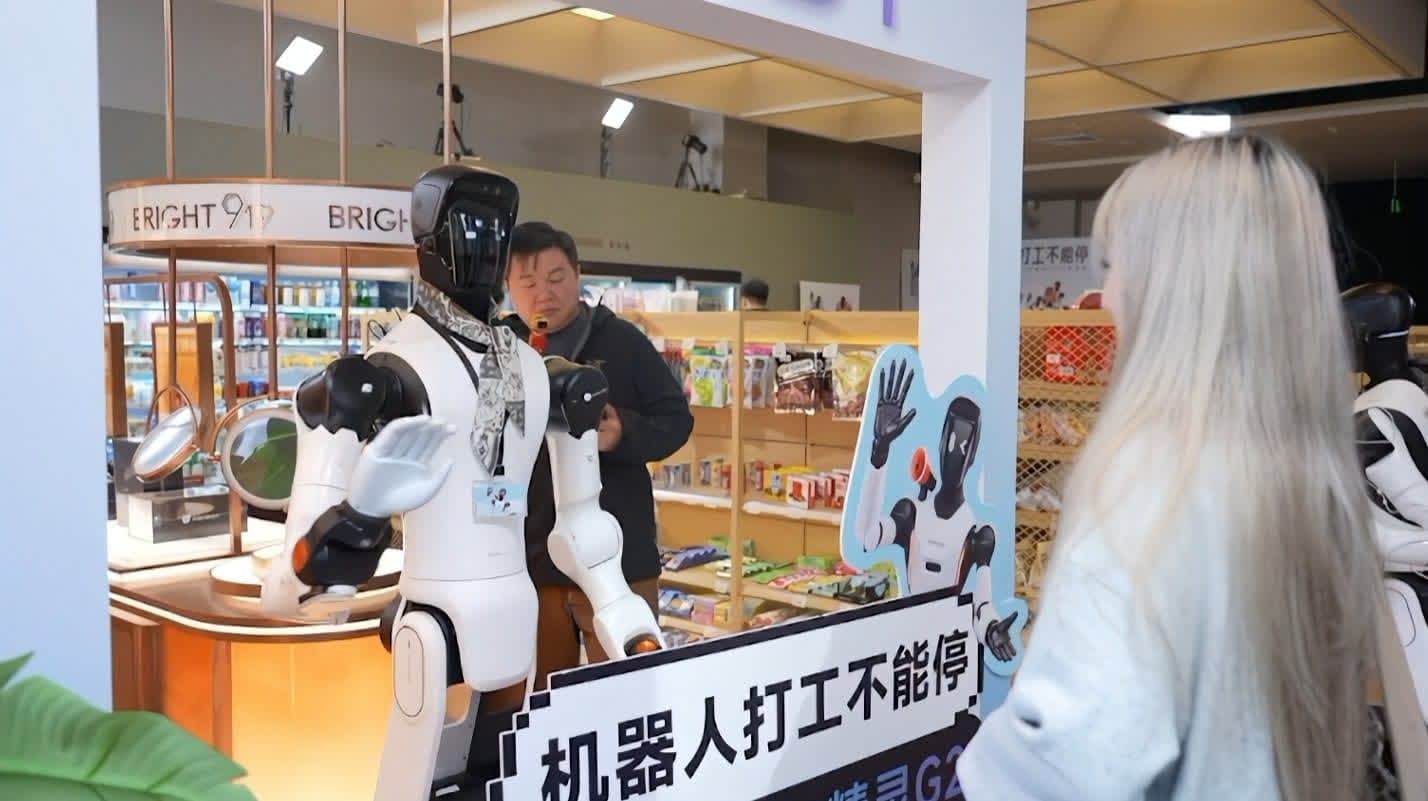
AGIBOT put six G2 humanoid robots to work in a real Shanghai convenience store for a full day. They finished 1,730 tasks, and two of them failed the final review.

Tide
Ripple
Sci-fi
8/10
Reality
Demo
Robots clocking in for the night shift at the corner store.How we rate
AGIBOT ran six G2 humanoid robots through a 24-hour livestreamed shift in a working Shanghai convenience store, and they logged 1,730 tasks.
Four of the six passed the company's own final assessment, while the cleaning robot and the shelf inspection robot fell short. More than two million people watched online. AGIBOT plans to keep testing the robots in more real-world jobs, but it has not published how often humans had to help.
What to know
- Six AGIBOT G2 robots worked a real Shanghai convenience store from 10 a.m. on November 2 to 10 a.m. on November 3, 2026.
- They completed 1,730 tasks, including 683 customer service interactions and 147 coffee orders.
- Four robots passed the final assessment. The cleaning robot and the shelf inspection robot did not.
- The company has not said how often staff stepped in, or how the robots compare with human workers on speed and cost.
AGIBOT sent six humanoid robots to work a full day in a real convenience store, and two of them failed the review. That's the news. Now the fun part: what does a robot get wrong when the job is just selling coffee and snacks?
AGIBOT is a Shanghai robotics company. It ran the test in a working store in the city's Xuhui District. The robots were its G2 model, a wheeled humanoid. That means a human-shaped upper body with two arms and a head, sitting on a rolling base instead of legs.
What happened in the store?
The shift ran from 10 a.m. on November 2 to 10 a.m. on November 3, 2026. It was livestreamed under the name "Robots Never Clock Out." More than two million people watched online.
Each robot had its own job. The duties were:
- Customer help: greeting and assisting shoppers.
- Shelves: inspecting them and restocking products.
- Food and drink: making coffee, handling checkout and serving hot food.
- Cleaning: wiping tables and tidying the store.
The shift covered four periods: the lunchtime rush, the evening peak, the overnight hours and the next morning's breakfast rush. A store feels very different at 2 p.m. and at 3 a.m. That is why a full day is a harder test than a short demo.
What do the numbers say?
AGIBOT reported 1,730 completed tasks in total. Here is how they split up:
- Customer service interactions: 683
- Product pickups and deliveries: 369
- Shelf inspections and restocking: 277
- Coffee orders: 147
- Table cleaning tasks: 128
- Breakfast servings: 126
By the numbers: these are counts of tasks the robots completed. The pass or fail result is a separate thing. It is the company's own judgment of how each robot did its assigned duty.
Who passed and who did not?
Four of the six robots passed the final assessment. The two that did not were the cleaning robot and the one assigned to shelf inspection and restocking.
AGIBOT judged each robot on five things: time on duty, task completion, customer feedback, response times and how it handled unexpected situations. Two of the robots did not meet all of those criteria.
Reports from Chinese media add some detail, and we can't confirm it independently. The shelf robot was said to lack initiative when checking and refilling goods, and it did not keep up with how fast the store sold things. The cleaning robot was said to have met a full trash can during the night shift. It then left its planned route and wandered out of the store, away from its post.
In real life Imagine a new hire who is great at greeting people but never notices the empty chip shelf unless someone points at it. Skilled hands are not the same as noticing what needs doing.
How did the robots get tested?
Two evaluators ran practical tests, built around situations a robot could meet while serving customers.
- Look-alike products: they ordered regular and sugar-free Coca-Cola to see if the robots could tell similar-looking cans apart.
- Messy shelves: they rearranged packs of chewing gum and asked the robots to put them back in the right spots.
- Blocked aisle: they blocked a walkway with a person and a box to see if a robot could spot the obstacle and go around it.
Some of this sounds easy to a human. It is not easy for a machine. A bag of candy that hangs at a slightly odd angle is hard to grab without knocking its neighbors. A slice of cake needs a gentle grip, or it ends up on the floor.
Why it matters: a store changes all the time. Customers walk around, products move, and the same task looks a little different every time. A robot that only repeats a fixed motion will struggle here.
What was the robot brain doing?
AGIBOT says the robots relied on live camera views rather than only fixed coordinates. In its account, one robot spotted misplaced items and put them back in their right shelf positions. Another noticed gaps on a shelf and refilled them without being told to. A cleaning robot told spills apart from the pattern on a countertop and picked a suitable tool.
The robots were coordinated by Genie Master, AGIBOT's software framework for embodied AI. Embodied AI just means AI that lives in a body and acts in the physical world, not only on a screen. Think of Genie Master as a shift manager for the whole team.
AGIBOT describes how it works this way:
- Planning: it assigns work based on what each robot can do and what is happening in the store.
- Doing: each robot acts using action policies, which are learned rules for how to move and grab, plus what it sees in real time.
- Reporting: results go back to Genie Master for analysis and troubleshooting.
- Learning: it keeps useful lessons from past successes and failures in a long-term memory. Good fixes can become training data, which is the example material used to teach the robots' action policies.
The linking system is called the Embodied Execution Protocol, or EEP. The company also said it used quieter overnight hours as extra practice time for tasks that need precise handling.
Where does this fit in AGIBOT's story?
The store shift was the finale of AGIBOT's "AI WAVE" showcase, which started on October 22. That series covered robot data, simulation, AI models, hardware and operating software. The store trial was meant to show those parts working together in one place.
The G2 itself was launched in October 2025. It is a wheeled design with arms that have seven joints each, which gives them a wide range of motion. It uses an NVIDIA chip platform called Jetson Thor for its onboard AI. The G2 has also already been tried on a factory line, where it inspected tablets in a livestream.
Livestreaming has become a habit for the company. A live feed is harder to polish than a highlight reel, because viewers can see the pauses and the retries too.
What are the caveats?
Be careful with the headline numbers. The trial was a 24-hour event, but that does not prove every robot worked nonstop without help.
- Help: the company has not published how often staff stepped in.
- Charging: it is unclear whether any robot needed a charging break or maintenance.
- Speed and cost: there are no public comparisons with human workers on either one.
- Scoring: the pass marks come from AGIBOT's own assessment, not an outside audit.
The catch: a store trial is a long way from a store that runs on robots. It does show where the weak spots are. The two failures were about initiative and sticking to a post, not about missing hands.
What's next?
AGIBOT plans to keep testing its robots in more real-world roles. The company says the goal is to learn how robots handle long shifts, surprises and lessons from earlier tasks.
Other robot makers are running their own pilots too, mostly in factories and warehouses. A shop open to the public is a different kind of test. Customers do not follow a script.
What it means for you
- Do not expect a robot cashier tomorrow. This was one store for one day, with a company-run assessment.
- Small tasks come first. Coffee, shelf checks and table cleaning are the kind of jobs these robots are being tried on.
- Watch for the boring numbers. Speed, cost and how often a human must help will decide whether stores adopt them.
- Failures are useful. Two failed reviews show what still needs work, and that is more honest than a perfect demo.
The bottom line
Four of six robots made it through a full day in a live store, and that is a real step past a rehearsed demo. The other two show that noticing what needs doing is still hard for a machine.
The next thing to look for is independent data on speed, cost and human help. Until then, this is a promising shift, not a job takeover.
Key facts
- Robots
- Six AGIBOT G2 wheeled humanoids
- Shift
- 24 hours, November 2 to 3, 2026
- Tasks completed
- 1,730
- Passed the assessment
- 4 of 6
- Livestream viewers
- More than 2 million
Got questions?
Quick answers, plain wordsWhat did AGIBOT test in Shanghai?
It put six G2 humanoid robots to work in an operating convenience store in Shanghai's Xuhui District for 24 hours, from 10 a.m. on November 2 to 10 a.m. on November 3, 2026.
How many tasks did the robots finish?
AGIBOT counted 1,730 tasks, including 683 customer service interactions, 369 product pickups and deliveries, 147 coffee orders, 126 breakfast servings, 277 shelf inspections and restocking tasks, and 128 table cleaning tasks.
How many robots passed?
Four of the six passed the final assessment. The robots assigned to cleaning and to shelf inspection and restocking did not meet all the criteria.
What is the AGIBOT G2?
It is a wheeled humanoid robot. It has a human-like upper body with two arms and a head, and it rolls on a wheeled base instead of walking on legs.
How were the robots judged?
AGIBOT assessed time on duty, task completion, customer feedback, response times and the ability to handle unexpected situations.
What were the surprise tests?
Evaluators ordered regular and sugar-free Coca-Cola to see if the robots could tell similar cans apart. They also rearranged packs of chewing gum and blocked an aisle with a person and a box.
Was the trial really autonomous?
That is not fully clear. The company has not said whether any robot needed charging breaks, maintenance or human help during the 24 hours.
Can robots replace store workers now?
Not from this test alone. The trial shows that robots can handle many store tasks for a day, but there is no public data on their speed or cost compared with people.
What is Genie Master?
It is AGIBOT's software framework for coordinating the robots. It plans tasks, collects the results, helps find errors and stores lessons from earlier attempts.
SourcesAGIBOT press release, agibot.com
Topics and tagsHumanoid robots, agibot, humanoid robots, retail
Go deeper
Related stories
Robots race up Mount Tai's 3,100 stone steps in China's first mountain contest
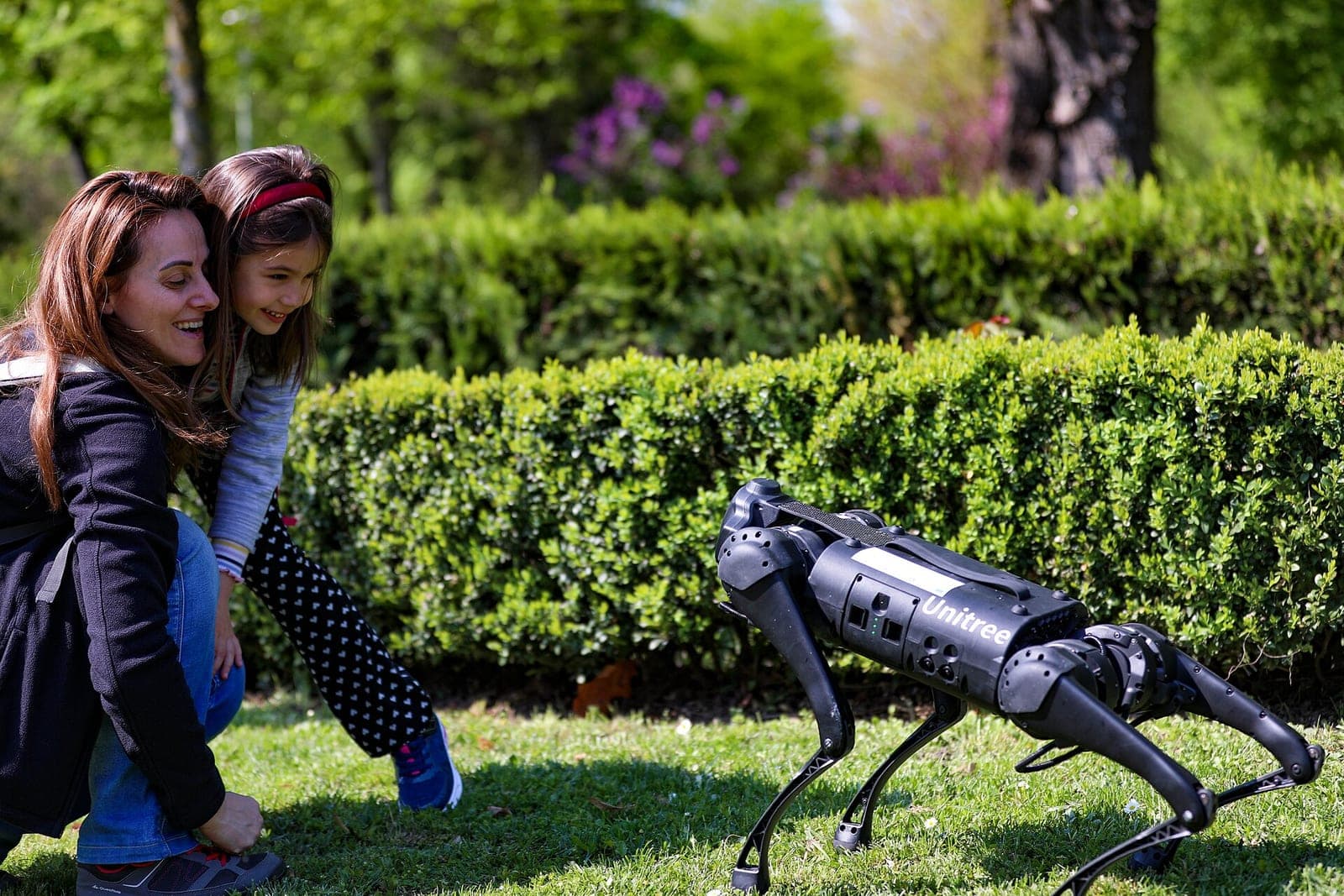
The inaugural CMG World Robot Mount Tai Competition sent legged and humanoid robots up a real mountain trail. A Unitree robot dog won the legged race in 43 minutes and 41 seconds.
Embodied AI unveils AIR, a wheeled robot built to work beside people without a cage
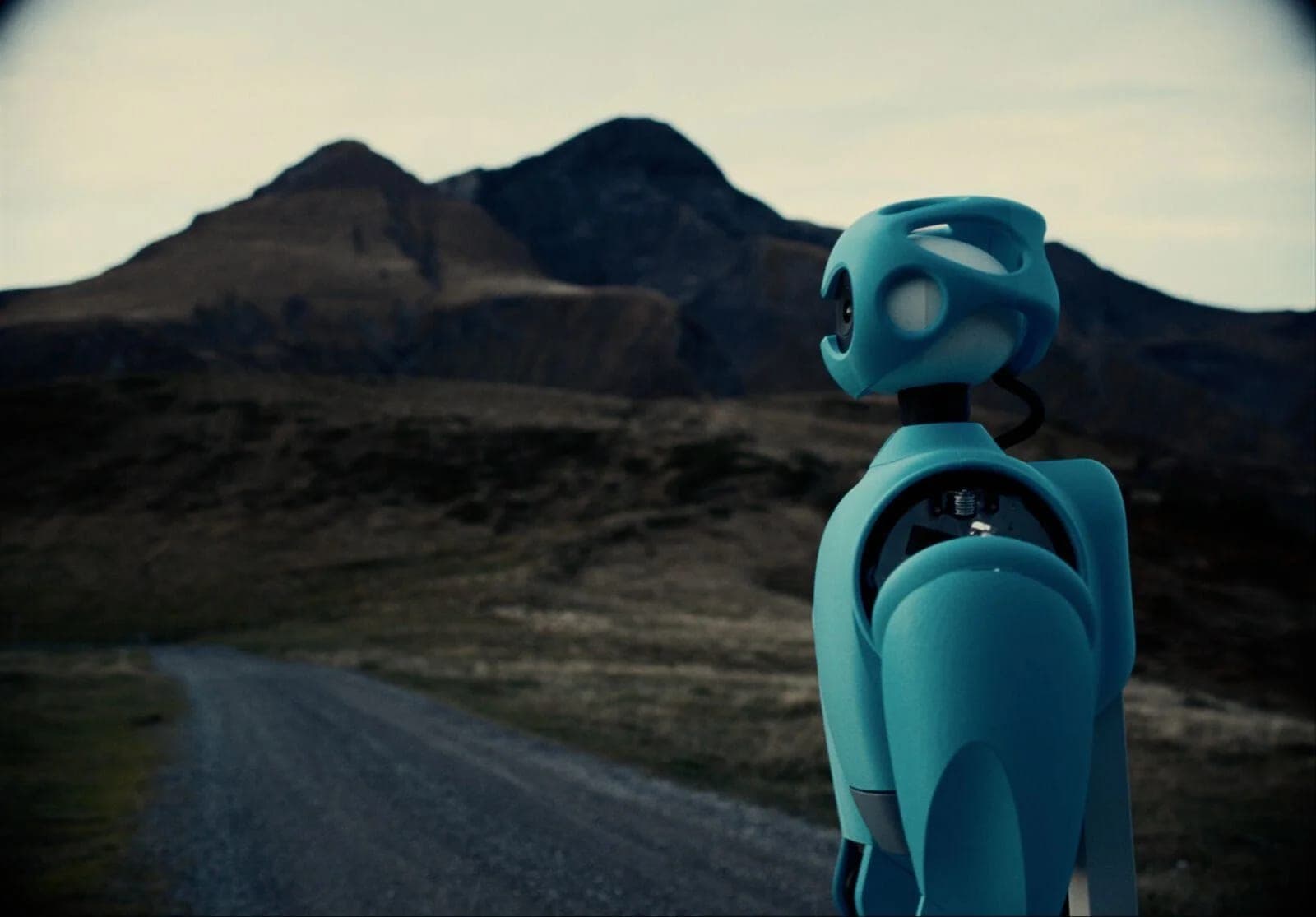
The Swiss startup's two-armed robot keeps its heavy parts in the torso, learns each job from a remote operator, and aims for CE marking in 2027.
Agility Robotics clears its SPAC vote and heads to Nasdaq this week
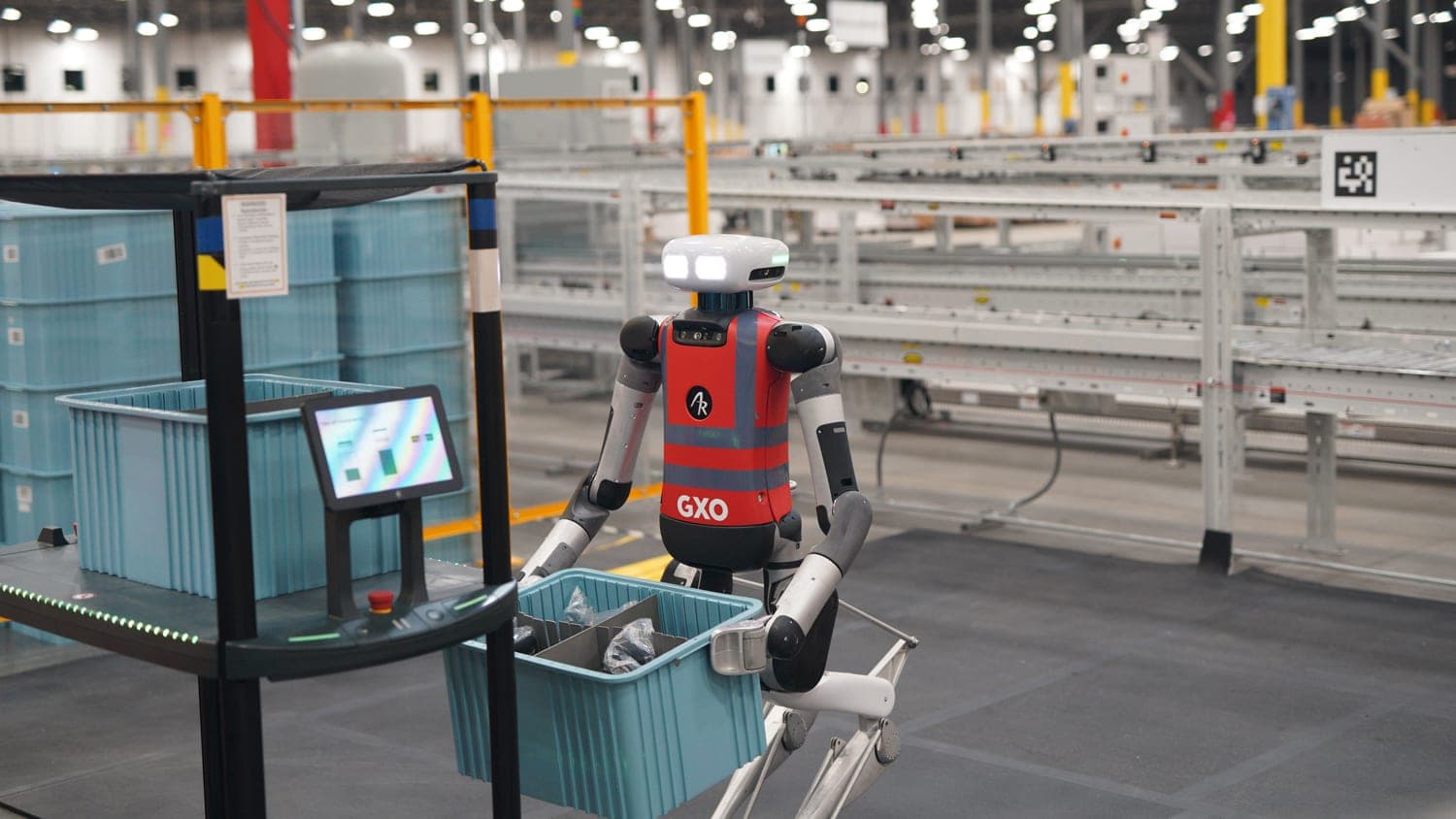
Churchill Capital XI shareholders approved the merger with Agility Robotics. The humanoid maker expects about $465 million and a Nasdaq listing as AGLT on November 5.
More in brief
- YouTube is going back on the Billboard charts in 2027Nov 9
- Apple starts selling $50 packs for extra Apple Intelligence useNov 9
- Windows 11 tests a way to switch off the Sticky Keys popup for goodNov 9
- US regulators question whether Waymo's school bus fix workedNov 9
- NVIDIA unveils GR00T 2 and Isaac Lab 3.0 to teach robots delicate workNov 9
- Tesla launches its robotaxi service in San Antonio, its eighth cityNov 9