
Technology·News & analysis
SpaceX's Starship reaches orbit for the first time, despite losing an engine
SpaceX's Starship reached Earth orbit for the first time on its 14th test flight, deploying 26 Starlink satellites despite one of its engines shutting down early.

SpaceX's Starship reached Earth orbit for the first time on its 14th test flight, launching from Starbase in Texas.
One of its engines shut down early, cutting the planned 10-hour mission to about three hours, but SpaceX still deployed 26 new Starlink V3 satellites into orbit. At 407 feet tall, Starship is the largest launch vehicle ever built, taller than NASA's Saturn V. SpaceX wants it certified for NASA's Artemis III moon mission as soon as next summer.
What to know
- SpaceX's Starship reached Earth orbit for the first time on its 14th test flight, after 13 previous flights fell short.
- One of Starship's engines shut down early, cutting the planned 10-hour, six-orbit mission down to about three hours and three hours in orbit.
- The mission deployed 26 of SpaceX's newest Starlink V3 satellites, which offer a 10-fold increase in downlink speed over the previous generation.
- Starship splashed down in the Pacific Ocean after reentry, and the Super Heavy booster landed in the Gulf of Mexico instead of being caught by launch tower arms.
Thirteen tries, and on the fourteenth, it finally worked. SpaceX's Starship reached Earth orbit for the first time, even after one of its engines gave out mid-flight.
What happened
Starship launched Monday morning from SpaceX's Starbase facility in Boca Chica Beach, Texas, on its 14th test flight. The mission successfully reached orbit, something none of the previous 13 flights had managed.
- Altitude: About 170 miles.
- Speed: Roughly 17,500 mph.
- Payload: 26 new Starlink V3 satellites.
The catch: one of Starship's more than three dozen engines shut down earlier than planned. SpaceX engineers conferred for several minutes before deciding to press on with the mission rather than abort.
A shortened trip around Earth
The original plan called for Starship to orbit Earth six times over nearly 10 hours. After the engine issue, SpaceX cut that down to roughly three hours in orbit instead.
In real life Think of it like a road trip where the car develops an engine problem right as you're merging onto the highway. You don't turn around, but you do shorten the trip and head home early instead of taking the scenic route.
Despite the shortened flight, Starship still deployed all 26 of its Starlink V3 satellites, and SpaceX confirmed contact with every one of them once in orbit.
After completing its orbital pass, Starship reentered Earth's atmosphere and splashed down in the Pacific Ocean north of Hawaii, tipping over and catching fire on impact, an expected outcome for this stage of testing rather than a failure.
The satellites it delivered
The 26 Starlink V3 satellites represent SpaceX's newest generation, and this flight marked the first time V3 satellites reached a genuine orbital, rather than suborbital, deployment. Earlier Starship missions carried V3 satellites only as test cargo in suborbital space.
By the numbers: SpaceX says V3 satellites offer a 10-fold increase in downlink speed over the previous V2 generation, reaching 1 terabit per second, along with 22 times greater uplink capacity. The company says the new satellites will also improve direct-to-cell connectivity, letting phones connect straight to satellites without a separate receiver.
Starlink already has more than 11,000 satellites in orbit, and SpaceX's stated long-term goal is a constellation of more than 100,000. Reaching that scale depends heavily on Starship, since a single flight can carry far more satellites than Falcon 9's smaller payload bay ever could.
What happened to the booster
Reaching orbit wasn't the only test on Monday's flight. The mission also checked whether Starship's Super Heavy booster, which provides the initial lift-off thrust, could be recovered for reuse.
This time, Super Heavy landed in the Gulf of Mexico rather than being caught by the launch tower's mechanical arms, a "chopsticks" catch method SpaceX has previously demonstrated. SpaceX hasn't detailed whether the change was planned or a response to the engine issue earlier in the flight.
A rocky road to orbit
Monday's success followed a long string of setbacks. SpaceX launched Starship's first test flight back in April 2023, when the Super Heavy booster's 33 Raptor engines blasted a crater into the launch pad's concrete, scattering debris across the surrounding area during liftoff.
The second flight came about seven months later, in November 2023, and testing continued in fits and starts from there. More recently, flights 12 and 13 tested the current generation of hardware, but flight 13's booster was lost during its landing attempt, traced to an oxygen and fuel leak that caused a fire near the vehicle's six Raptor engines.
That history makes flight 14's result more than just an incremental step. It's the first time the vehicle has strung together a working ascent, a stable orbit, satellite deployment, and a survivable reentry all in the same mission.
The competition: Blue Origin's New Glenn
SpaceX isn't the only company racing to build a reusable heavy-lift rocket. Jeff Bezos' Blue Origin has been developing its own New Glenn rocket, which only reached its first flight in January 2025 after more than a decade in development.
New Glenn has had a rougher recent stretch than Starship. During an April 2026 mission, the rocket's first-stage booster landed successfully on a sea-based barge, but its second stage failed to deliver a customer satellite to the correct orbit. The following month, a New Glenn rocket exploded during a ground hotfire test in Cape Canaveral, Florida, a fireball visible for more than a hundred miles that destroyed the vehicle and damaged the surrounding launch complex.
Both companies are competing for the same prize: a role in NASA's Artemis lunar missions. Then-acting NASA administrator Sean Duffy warned both companies that the agency could turn to Blue Origin's lander to return astronauts to the moon as soon as 2028 if SpaceX's own lander program falls too far behind schedule.
Why this flight matters for NASA
Reaching orbit isn't just a milestone for its own sake. SpaceX wants Starship certified by NASA in time for the Artemis III mission, which could launch as soon as next summer.
In that mission, a NASA Orion capsule carrying astronauts would dock first with Jeff Bezos' Blue Moon lander, then later with SpaceX's Starship, according to CNET's reporting. A follow-up mission, Artemis IV, slated for 2028 at the earliest, would have astronauts actually land on the moon using either spacecraft, with moon landings expected to alternate between the two vehicles on future trips.
SpaceX is also expanding where it can launch Starship from, with two additional launch sites planned: one at Florida's Kennedy Space Center and another in Vermilion Parish along Louisiana's Gulf Coast.
Starship's bigger picture
At 407 feet tall, Starship is the largest launch vehicle ever built, standing 44 feet taller than NASA's retired Saturn V rocket that once carried astronauts to the moon. Of the 13 flights before Monday's success, several ended in crashes over the Indian Ocean, some intentional tests and some accidents, though no one has ever been hurt in a Starship crash.
Elon Musk originally pitched Starship as a vehicle that could eventually carry human colonists to Mars. For now, though, its primary job is far more immediate: putting Starlink satellites into orbit faster and in greater numbers than SpaceX's older Falcon 9 rocket ever could.
Falcon 9 remains SpaceX's workhorse for most of its launches today, but it can't match Starship's payload capacity or its ambitions for full reusability of both stages. Starship is designed to eventually replace Falcon 9 for SpaceX's heaviest and highest-volume missions, including the bulk of future Starlink deployments.
Why it matters: the Falcon 9 vs. New Glenn vs. Starship comparison isn't just academic anymore. With one company having just reached orbit despite an engine failure and the other having just lost a rocket to an explosion, the practical gap between the two heavy-lift programs looks wider today than it did a few months ago, even though both are still technically in active testing.
The bottom line
SpaceX finally cleared the bar it had missed 13 times in a row, and it did so even with an engine down, which says as much about the vehicle's tolerance for failure as it does about the milestone itself. The bigger test now is turning a single successful orbital flight into the kind of reliable, reusable launch cadence NASA needs before astronauts are willing to ride on top of it.
Key facts
- Flight number
- 14th Starship test flight
- Height
- 407 feet (taller than Saturn V)
- Orbit altitude
- 170 miles
- Speed
- 17,500 mph
- Satellites deployed
- 26 Starlink V3
Got questions?
Quick answers, plain wordsDid SpaceX's Starship reach orbit?
Yes, on its 14th test flight, Starship reached Earth orbit for the first time, after 13 previous flights fell short.
What went wrong during the flight?
One of Starship's more than three dozen engines shut down earlier than planned. SpaceX engineers decided to continue the mission anyway, but cut the planned 10-hour, six-orbit flight down to about three hours.
What did Starship carry into orbit?
26 of SpaceX's newest Starlink V3 satellites, which the company says offer a 10-fold increase in downlink speed and 22 times greater uplink capacity than the previous V2 satellites.
How big is Starship?
At 407 feet tall, Starship is the largest launch vehicle ever built, 44 feet taller than NASA's retired Saturn V rocket.
What happened to Starship after reaching orbit?
It reentered Earth's atmosphere and splashed down in the Pacific Ocean north of Hawaii, tipping over and catching fire on impact, a planned outcome for this test flight.
Did SpaceX catch the booster this time?
No. The Super Heavy booster landed in the Gulf of Mexico instead of being caught by the launch tower's mechanical arms, a method SpaceX has demonstrated on previous flights.
Why does Starship matter for NASA?
SpaceX wants Starship certified by NASA in time for the Artemis III mission, which could launch as soon as next summer, where it would eventually help ferry astronauts to the moon.
How fast and how high did Starship go?
Starship reached an altitude of about 170 miles and traveled at roughly 17,500 mph during its orbital flight.
Where did Starship launch from?
SpaceX's Starbase facility in Boca Chica Beach, Texas.
What is SpaceX's long-term goal for Starship?
SpaceX wants Starship to be fully reusable, with both the booster and the spacecraft returning to Earth intact to cut launch costs. Elon Musk has also floated Starship as a future vehicle for Mars missions, though deploying Starlink satellites is currently its primary job.
SourcesCNET
Topics and tagsSpace tech, spacex, starship, starlink
Related stories

Apple's smart home hub reportedly launches October 13, with a camera that never records video
Bloomberg's Mark Gurman says Apple will announce its long-rumored smart home display on October 13. He also describes a companion home camera that sends text descriptions instead of video.

GrayKey maker reportedly found a way around the iPhone's Inactivity Reboot
A leaked training video seen by 404 Media says Magnet Forensics' new tools keep a seized iPhone in an easier-to-search state, even after the reboot Apple added in iOS 18.1.
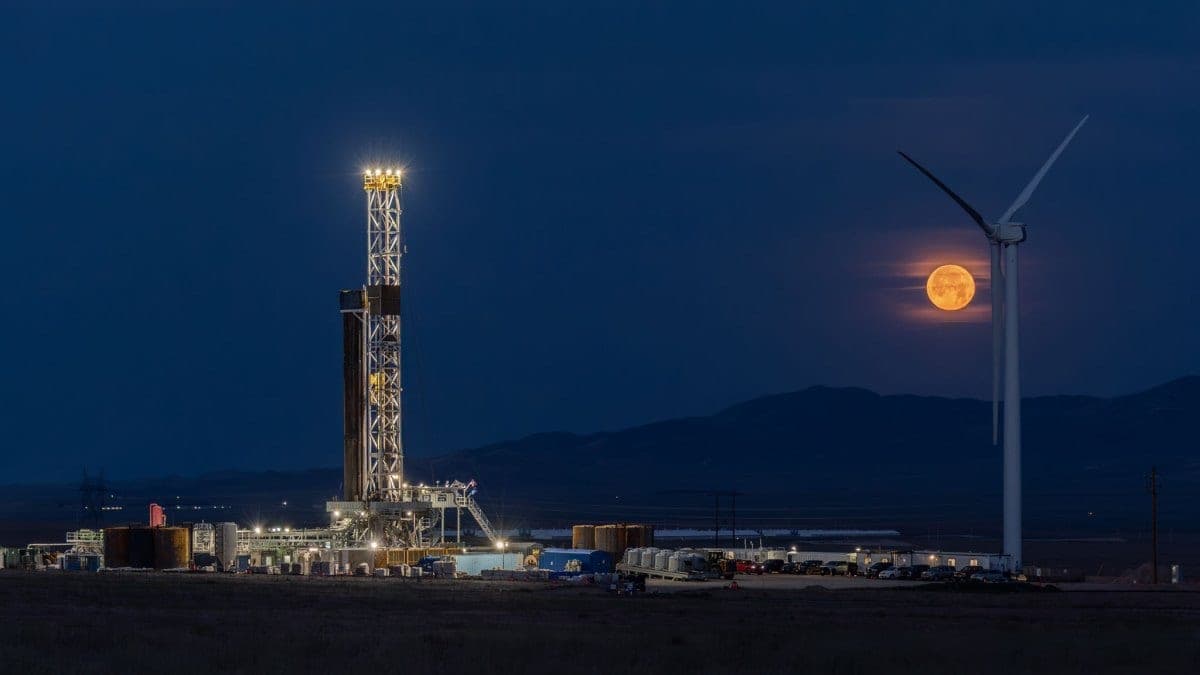
Fervo's Cape Station becomes the first enhanced geothermal plant to sell power commercially
Fervo Energy's first 33-megawatt block at Cape Station in Utah reached commercial operation a day ahead of schedule, after 23 months of construction. Two more blocks follow by January 2027.
More in brief
- arXiv limits researchers to two papers a month as AI drives submissions to a recordOct 2
- California will fine robotaxi companies that block first responders for over 30 minutesOct 2
- Microsoft launches real-time transcription and new voice models for AI voice agentsOct 1
- Cloudflare releases Clef, open-weight AI models that make yes-or-no decisions fastOct 1
- Cloudflare renames its data platform Basin and makes it generally availableOct 1
- ChatGPT can now show you wearing clothes before you buy themOct 1