
AI·News & analysis
Apple opens a 200,000-person study on how people use AI for health
Apple and OpenEvidence are asking up to 200,000 US iPhone owners to ask health questions in a study app and rate the answers.

Tide
Ripple
Sci-fi
4/10
Reality
Shipping
A pocket-sized health librarian that cites its sources.How we rate
Apple launched the Apple Health AI Usage Study in the US, a research app built with OpenEvidence that lets people ask health questions and rate the answers.
Up to 200,000 adults aged 21 and older can join, and sharing Health data is optional. Apple says it wants to learn what makes people trust health AI. It has not said whether the work will lead to a feature in its own apps.
What to know
- Apple launched the Apple Health AI Usage Study in the US, a research study with its own iPhone app, built with the clinical AI company OpenEvidence.
- Up to 200,000 people aged 21 and older can join, on an iPhone 15 Pro or later running iOS 26 or later.
- Participants ask everyday health questions, get answers with links to peer-reviewed sources, and can choose to share HealthKit data such as sleep or resting heart rate.
- Apple says study data will not be used to train AI models, and sharing any health data is optional.
Apple announced a new research study called the Apple Health AI Usage Study. Up to 200,000 people in the US can join. Now the interesting question: why is Apple asking people about health chatbots instead of just building one?
What is the Apple Health AI Usage Study?
It is a virtual research study with its own iPhone app. "Virtual" means you take part from home, on your phone, with no clinic visit.
Apple says the goal is to understand how people use conversational health AI tools. A conversational tool is a chatbot you talk to in plain sentences, like typing a question to a friend.
The study looks at four things:
- Trust: what makes people believe, or doubt, an answer.
- Quality: how good the responses actually are.
- Comprehension: whether people understand what they read.
- Everyday actions: what people do with the information afterward.
Why it matters: Apple says the findings are meant to inform the responsible design of health AI experiences, for Apple and for the wider industry.
Who is helping Apple?
Apple built the study with OpenEvidence. This is a clinical AI platform that healthcare professionals widely use. It writes its answers using medical information from established sources such as The New England Journal of Medicine, the Journal of the American Medical Association and Nature.
Apple designed the research experience. OpenEvidence supplies the medically grounded AI behind the answers.
OpenEvidence is not a small name in medicine. In January 2026 it announced a $250 million funding round that valued the company at about $12 billion. The company says more than 40% of US doctors now use its tool, and that doctors held about 18 million clinical consultations on it in December 2025 alone. It is free for doctors.
So the pairing makes sense. Apple brings the phone and the study design. OpenEvidence brings an AI tool that many doctors already know.
What do participants actually do?
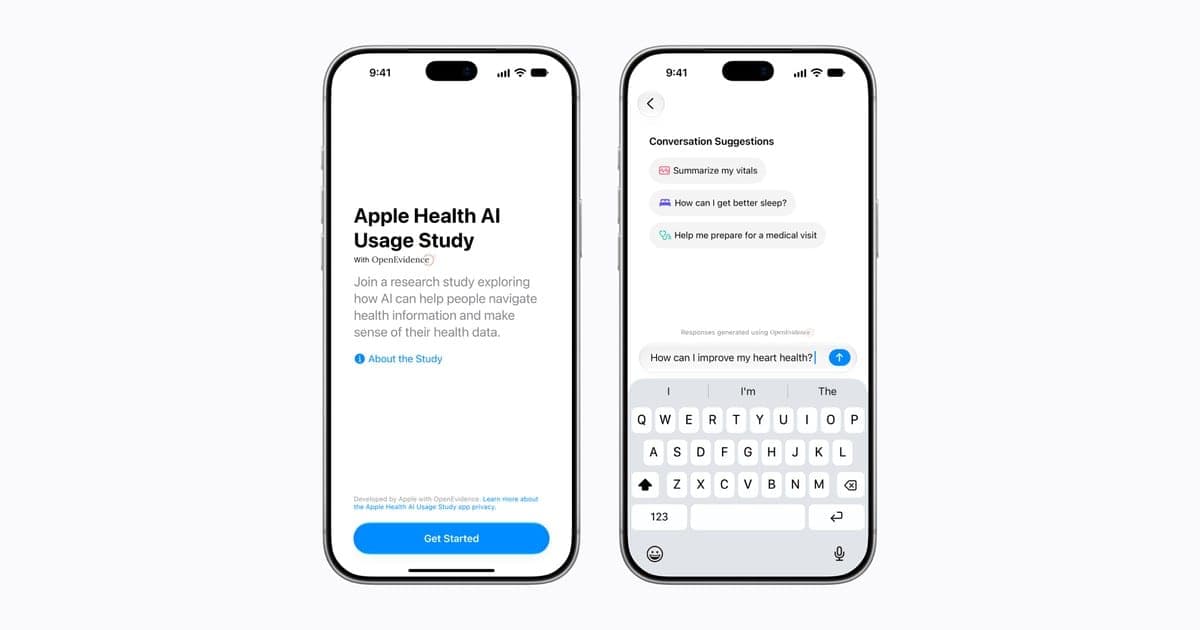
Participants ask the app everyday health questions. They can also ask it to explain complex medical information in approachable language.
Each answer comes with linked citations to peer-reviewed clinical research. A citation is a pointer to the paper a claim came from. Peer-reviewed means other experts checked the paper before it was published.
Participants then rate the answers. They rate things like accuracy, detail and relevance. The study also explores whether health AI can help people get ready for a visit with their own doctor.
In real life Say you wake up with a stiff shoulder. You open the study app and ask, "What could cause this?" You read a plain-language answer, tap a link to the research behind it, and rate how clear it was. Then you write down questions to take to your doctor.
The app's screens show suggestions such as "Summarize my vitals," "How can I get better sleep?" and "Help me prepare for a medical visit."
What about my health data?
Participants can choose to share HealthKit data. HealthKit is the part of iPhone that stores health numbers, such as steps, sleep and heart rate. The study lists resting heart rate, activity, sleep and lab results as examples.
Sharing is a choice. Apple says participants keep control over whether they share any HealthKit metrics or survey responses.
The point of sharing is to test something specific. Apple wants to see how personal data changes how relevant and understandable an answer feels. An answer about sleep means more if the app can see your sleep.
Apple lists these protections:
- No AI training: study data will not be used to train AI models.
- Security: Apple says it has security measures to protect the study data it keeps and the confidentiality of participants.
- Safety guardrails: the app is meant to detect certain concerning questions and suggest following up with a provider or other resources.
The catch: the guardrails are described as intended to detect certain concerning questions. That is a careful wording, and it is a good reminder that this is a research tool, not a doctor.
Who can join, and how?
The study is open to people in the United States who are 21 or older. You need an iPhone 15 Pro or later, running iOS 26 or later. Apple's announcement also describes the phone as Apple Intelligence-enabled, which is the name for Apple's built-in AI features.
To join, you download the study app, read about the study, and choose whether to enroll. Apple is enrolling up to 200,000 participants.
That is a large group. Most medical studies are far smaller, so a number like 200,000 gives researchers a wide mix of people, questions and habits to compare.
Why would Apple study this first?
Apple's own explanation is about quality. It says tools powered by large language models, or LLMs, can sometimes give answers that are incomplete or unclear. An LLM is the kind of AI behind most chatbots: it learns patterns from huge amounts of text, then predicts useful words in reply.
Because those answers can be shaky on health topics, Apple says research is critical for presenting health information with greater clarity.
Sumbul Desai, Apple's vice president of Health and Fitness, said, "Health is deeply personal, and conducting a dedicated research study is the most thoughtful way to understand how people engage with, comprehend, and evaluate health AI in everyday life."
Robert Wachter, chair of the Department of Medicine at UCSF, also gave a quote in Apple's announcement. He said patients and clinicians are both turning to AI, but the tools they use are built and tested in separate worlds. When both sides draw on versions of the same trustworthy tools, he said, patients arrive prepared and conversations improve.
Where does this fit in the bigger AI health race?
People already ask chatbots about health, in huge numbers. In January 2026, OpenAI said more than 230 million people ask health questions on ChatGPT every week. It launched ChatGPT Health on January 7, a dedicated space that can connect medical records and wellness apps, including Apple Health.
Apple is taking a slower path. It is running a study before it announces a product.
Apple has also had health AI plans before. Earlier reports said Apple was building an AI health coach, code-named Mulberry, and that it scaled back that plan in early 2026 and would release some features one at a time inside the Health app. Apple has not confirmed those details.
Apple has not said whether this study will lead to a feature in the Health app or in Siri. Today's announcement only covers the research.
What's next: the study is open now, so results and any product decisions will come later. Apple has not given a date for either.
What it means for you
- If you have an iPhone 15 Pro or later: and you are in the US and 21 or older, you can join the study from the app.
- If you do not join: nothing changes on your phone. This is not a new feature in Health or Siri.
- If you ask AI health questions already: treat the answers as a starting point. Check the cited sources and talk to your doctor before you act.
- If privacy matters to you: sharing HealthKit data is optional, and Apple says study data will not train AI models.
The bottom line
Apple is not launching a health chatbot. It is asking 200,000 people how they use one, and what makes them trust it.
The answers could shape how health AI gets built, at Apple and beyond. For now, it is research, and it is open to anyone who fits the rules.
Key facts
- Study name
- Apple Health AI Usage Study
- Partner
- OpenEvidence
- Participants
- Up to 200,000, age 21 and older
- Where
- United States
- Device
- iPhone 15 Pro or later, iOS 26 or later
Got questions?
Quick answers, plain wordsWhat is the Apple Health AI Usage Study?
It is a virtual research study, with its own iPhone app, that looks at how people use conversational health AI tools. It measures trust, how well people understand the answers, and what they do with the information.
Who is Apple working with?
Apple works with OpenEvidence, a clinical AI platform widely used by healthcare professionals. Apple designed the research experience, and OpenEvidence supplies the medically grounded AI.
Who can join the study?
People in the United States who are 21 or older and have an iPhone 15 Pro or later running iOS 26 or later. Apple is enrolling up to 200,000 people.
Is the study free to join?
Apple describes it as a research study you download an app for and choose to enroll in. Its announcement mentions no fee.
Do I have to share my health data?
No. Participants choose whether to share HealthKit data types, such as resting heart rate, activity, sleep or lab results, and whether to share survey responses.
Will my answers be used to train AI?
Apple says study data will not be used to train AI models. It also says it has built privacy protections, transparency and clinical guardrails into the study.
Is this a new Apple health chatbot for everyone?
No. It is a research study app for enrolled participants. Apple has not announced any plan to add this kind of answer feature to the Health app or Siri.
Can the app replace my doctor?
No. The study app is built to help people understand medical information and prepare for visits with their own doctors. It is designed to suggest following up with a provider when a question sounds concerning.
Why does Apple need a study at all?
Apple says AI tools built on large language models can give answers that are incomplete or unclear. Research on what builds trust and understanding is meant to help design better health AI for Apple and the industry.
SourcesApple Newsroom, businesswire.com
Topics and tagsApple, Smartphones, apple, health ai
Go deeper
Related guide
Guide, 10 minHow to use ChatGPT in Chrome, try-on shopping and stay safe from fake GPTsSet up the ChatGPT Chrome extension, use its tab, shopping and try-on tools, and avoid the fake custom GPTs that have been used to spread...Related stories
Google brings Gemini Live to Apple CarPlay for hands-free chats
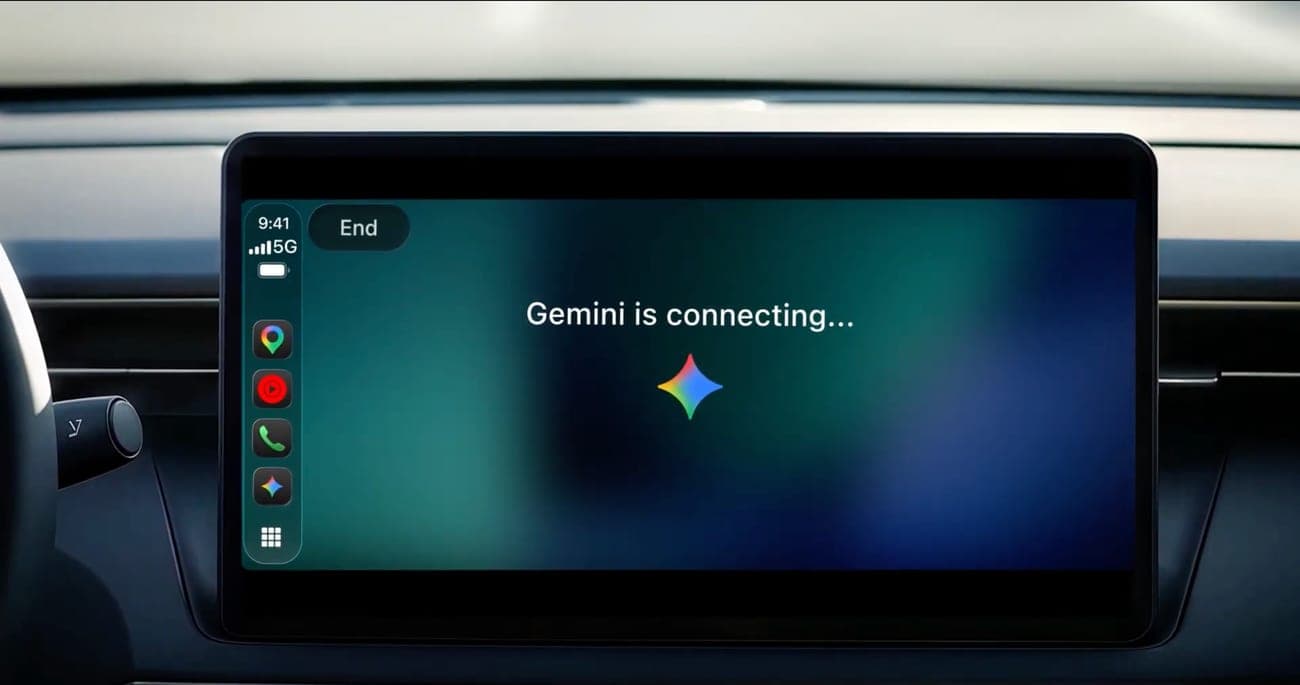
Google's Gemini app is now rolling out on Apple CarPlay, so iPhone drivers can talk to Gemini Live about email, calendar and plans without touching the phone.

Apple starts selling $50 packs for extra Apple Intelligence use
Apple's first paid add-on for its AI features is a one-time $49.99 pack in Logic Pro. It gives Creator Studio subscribers more room once they hit their monthly limit.
Google's AI spots signs of high blood pressure from a smartwatch
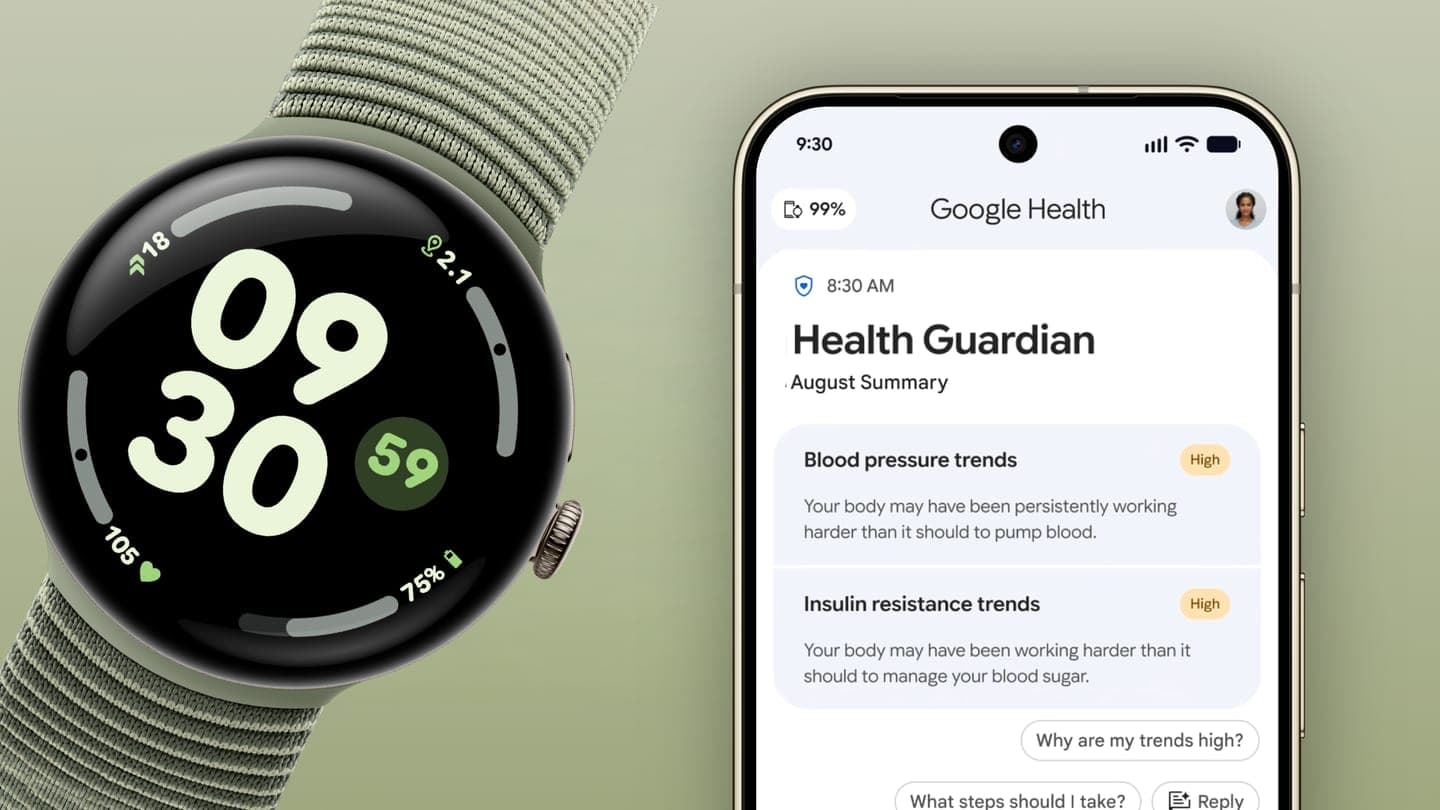
Google Research built an AI that finds signs of high blood pressure using only the pulse and motion sensors in a regular smartwatch. No cuff is needed to set it up.
More in brief
- Blue J raises $176 million to put AI agents to work on tax returns and IRS lettersNov 16
- FBI warns hackers are using the ARTEX AI tool to attack organizations worldwideNov 16
- Anthropic's IPO is reportedly oversubscribed as it aims to raise up to $90.4 billionNov 16
- Pentagon tests robot vehicles that hunt targets as a pack, with a human to approve fireNov 15
- Judge lets DRAM price-fixing lawsuit against Micron, Samsung and SK hynix go onNov 15
- Why AI chess engines keep the board tense longer than grandmastersNov 15