
Technology·News & analysis
Judge lets DRAM price-fixing lawsuit against Micron, Samsung and SK hynix go on
A federal judge refused to throw out a class action that says Micron, Samsung and SK hynix worked together to squeeze memory supply.

Tide
Wave
Sci-fi
2/10
Reality
In your hands
A courtroom fight over the memory inside every gadget.How we rate
A federal judge in California refused to dismiss a proposed class action accusing Micron, Samsung and SK hynix of colluding to limit DRAM supply while prices surged.
The plaintiffs, 17 consumers and small businesses, cite production cuts and the shift to AI memory. The ruling is not a verdict, only a finding that the claim is plausible. The companies must answer by December 7.
What to know
- Judge Noël Wise denied a request from Micron, Samsung and SK hynix to dismiss a proposed class action that accuses them of colluding to limit DRAM supply.
- The plaintiffs are 17 consumers and small businesses. They point to production cuts, the switch to AI memory, the end of DDR4 and no new capacity despite record prices.
- The judge wrote that the companies' behavior looked like "hawks flying in formation," which hawks ordinarily do not do.
- This is not a verdict. The companies must answer the complaint by December 7, and a case management conference is set for January 2027.
A federal judge has refused to dismiss a lawsuit that accuses Micron, Samsung and SK hynix of teaming up to keep memory scarce. Memory prices have jumped so far that most people have noticed. The question now is whether that was bad luck or a plan.
First, what is DRAM?
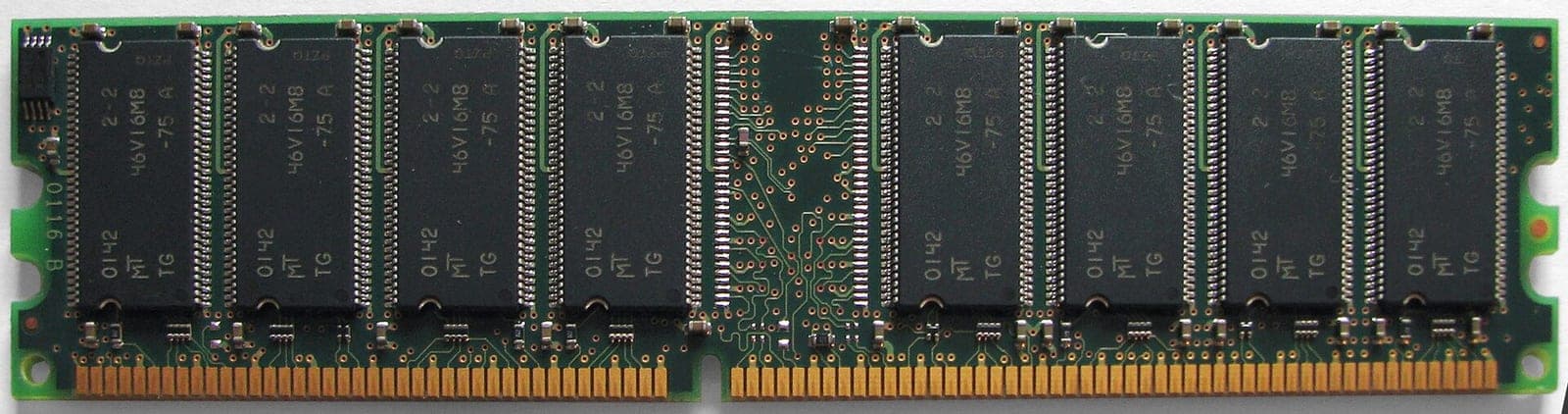
DRAM is the working memory inside nearly every device you own. It is what lets your phone keep ten apps open and your laptop juggle a hundred browser tabs.
Three companies make almost all of it: Micron, Samsung and SK hynix. The complaint says they held more than 91% of global DRAM revenue in the third quarter of 2025.
That is a very small club. When a few firms control a market, any choice they make can move the price for everyone.
What did the judge decide?
Judge Noël Wise of the US District Court in Northern California denied the companies' motion to dismiss. A motion to dismiss asks a judge to end a case early, before any evidence is shown.
She ruled the plaintiffs gave enough reasons to believe the three companies may have coordinated. This is not a judgment: it only means the case can move forward.
The companies must answer the complaint by December 7. An early hearing, called a case management conference, is set for January 2027.
Who is suing, and why?
The plaintiffs are 17 consumers and small businesses from five states. They filed in June 2026 as a proposed class action, which means they hope to represent all buyers in a similar position.
They say the three makers broke the Sherman Act, the main US antitrust law. In plain words, the law bans competitors from agreeing to limit supply or fix prices.
The complaint says the plan started in late 2022 and ran through 2023. Its core claim is that the companies cut supply of regular DRAM and moved their factories toward a more profitable product.
What are the four moves they point to?
The plaintiffs say the companies made four parallel moves that squeezed supply. Parallel means they all did the same thing at about the same time.
- Production cuts: All three cut DRAM output at once from October 2022 to April 2023.
- The AI pivot: A coordinated shift followed to HBM, high-bandwidth memory, the stacked chips used inside AI accelerators.
- The end of DDR4: The three announced they were winding down DDR4, an older memory type, within about three months of each other.
- No new capacity: They have not built much new capacity even at record prices, which the plaintiffs call the strongest supply signal the industry has ever produced.
The complaint adds other points. The makers began strict customer vetting in response to the shortage, and they refuse to sign long-term contracts for regular DRAM.
Why does AI memory matter here?
HBM is the heart of the story. It is memory stacked in layers and placed right next to an AI chip so data moves very fast.
HBM takes roughly three to four times as much silicon per gigabyte as regular DDR5 memory. So every factory line that makes HBM is a line that no longer makes regular DRAM.
Think of a bakery that switches half its ovens from bread to fancy wedding cakes. Cakes pay better, but the shelves of bread get emptier.
The plaintiffs also say the makers locked in long-term HBM contracts while refusing similar deals for regular DRAM. The companies say all of this is simply smart business during a time of huge demand.
What do the memory makers say?
The three companies call every move on the list a logical business decision that fits their own independent self-interest. They say they act alike because the market has only a few big players, and all of them react to the same pressures.
They also argued the case is just a rerun of an earlier suit. They said they watch each other like hawks because competition is so tight.
The judge did not accept that last picture. She wrote that their claims are "more akin to hawks flying in formation, an activity that hawks ordinarily do not do."
In real life Imagine three gas stations on one corner raising prices on the same day. That alone proves nothing. A judge asks for something more: a pattern of choices that only makes sense if the stations talked.
Why did an earlier case fail?
This is not the first time the memory makers have faced this kind of claim. A class action filed on April 27, 2018 accused them of fixing DRAM prices between June 2016 and at least February 2018.
That case was thrown out. On March 7, 2022, the Ninth Circuit appeals court upheld the dismissal. It said the facts were not enough to show a prior agreement, as opposed to conscious parallel behavior, which means companies copying each other without any deal.
That legal line is exactly what this case has to clear. The judge found new evidence in this complaint, so the new suit is not a copy of the old one. She pointed in particular to near-identical customer vetting rules that appeared in January 2026.
Has this happened before?
Yes, and it ended differently. Years ago, five makers pleaded guilty in the United States to an international DRAM price-fixing conspiracy that ran from July 1, 1998 to June 15, 2002.
Samsung paid a $300 million criminal fine. Hynix, the company now called SK hynix, paid $185 million. Micron escaped a fine because it came forward first and received immunity.
Those cases are why the memory business gets a second look whenever prices spike. They are not proof of anything today.
The companies and the plaintiffs agree on one thing: the market is very concentrated. They disagree on what that concentration explains.
What happens next?
The first date is December 7, when the companies must answer the original complaint. After that comes the January 2027 case management conference, where the court sets the schedule.
Then both sides must show their evidence. That can take a long time, and the companies can still win.
- If the plaintiffs win: Buyers in the class could receive money.
- If the companies win: The case ends, and the market is judged to have acted on its own.
- In the middle: Many cases like this settle before a verdict.
What it means for you
- Prices will not drop because of this ruling. Nothing in it changes how much memory is made or sold.
- Watch the dates. December 7 and January 2027 are the next moments when new details may come out.
- Check your own purchases. If you bought RAM, a phone, a laptop or a console, you may fit the group the plaintiffs want to represent. Class actions usually publish how to join.
- Expect AI to keep competing with you for chips. Memory built for AI servers and memory built for gadgets come from the same factories.
The bottom line
The judge did not say the memory makers did anything wrong. She said the claim is believable enough to be tested in court.
For now, the case is a reminder of how few companies make the memory in your devices. The facts will come out slowly, one court date at a time.
Key facts
- Judge
- Noël Wise, US District Court, Northern California
- Defendants
- Micron, Samsung, SK hynix
- Plaintiffs
- 17 consumers and small businesses
- Answers due
- December 7, 2026
- Next hearing
- Case management conference, January 2027
Got questions?
Quick answers, plain wordsWhat is DRAM?
DRAM is the fast, short-term memory inside phones, laptops, game consoles and servers. It holds the data a device is working on right now.
Who is suing the memory makers?
The plaintiffs are 17 individuals and small businesses from five states. They filed a proposed class action, which means they want to speak for everyone who bought DRAM products in the same situation.
What does the lawsuit claim?
It says Micron, Samsung and SK hynix, the three biggest DRAM makers, agreed to hold back supply of regular DRAM and shift to AI memory. The plaintiffs say that helped drive prices up.
Did the judge decide the companies are guilty?
No. The judge only decided the claim is plausible enough to continue. Both sides still have to present evidence before any decision on the merits.
Why did the companies want the case dismissed?
They said it repeats an earlier case that was thrown out, that the timing of their moves does not match, and that they act alike because the market has only a few big players reacting to the same demand.
What is the "hawks flying in formation" line?
The companies said they watch each other closely like hawks. The judge replied that the accusations go further: hawks flying in formation is something hawks ordinarily do not do.
What happens next in the case?
The companies have until December 7, 2026 to answer the original complaint. A case management conference, which settles administrative matters, is set for January 2027.
Will this lower the price of RAM?
Not by itself. The case is at an early stage and no ruling has changed how much memory costs or how much the companies produce.
Why did Micron close Crucial?
Micron shut down Crucial, its consumer memory brand, in December 2025. The plaintiffs list it among the moves that cut supply to everyday buyers, while the companies call their choices ordinary business decisions.
SourcesTom's Hardware
Topics and tagsAI policy, dram, micron, samsung
Related stories
Samsung just made the Galaxy S26 the third big phone line to get more expensive over memory costs this week
Samsung quietly raised US prices on most of the Galaxy S26 lineup by $100, and by $200 on the 1TB Ultra, citing the same memory chip shortage that's already pushed up prices from Huawei and PC makers.
Micron's CEO says the memory chip shortage squeezing your next laptop won't end until at least 2028
Micron's CEO said memory shortages will persist through 2027 and 2028, with customers paying much higher prices, as AI data centers keep pulling DRAM production away from everyday devices.

Samsung Gallery can now back up your photos to Google storage
Samsung's Gallery app can now sync photos and videos to your Google account on select Galaxy devices running One UI 9, after the OneDrive option ended in September.
More in brief
- Blue J raises $176 million to put AI agents to work on tax returns and IRS lettersNov 16
- FBI warns hackers are using the ARTEX AI tool to attack organizations worldwideNov 16
- Apple opens a 200,000-person study on how people use AI for healthNov 16
- Anthropic's IPO is reportedly oversubscribed as it aims to raise up to $90.4 billionNov 16
- Pentagon tests robot vehicles that hunt targets as a pack, with a human to approve fireNov 15
- Why AI chess engines keep the board tense longer than grandmastersNov 15