
Technology·News & analysis
Pentagon lends Rocket Lab and Stoke Space $300M as launch tightens
The Pentagon's Office of Strategic Capital has offered $150 million each to Rocket Lab and Stoke Space, as SpaceX stops booking new Falcon 9 launches after 2028.

Tide
Ripple
Sci-fi
5/10
Reality
Demo
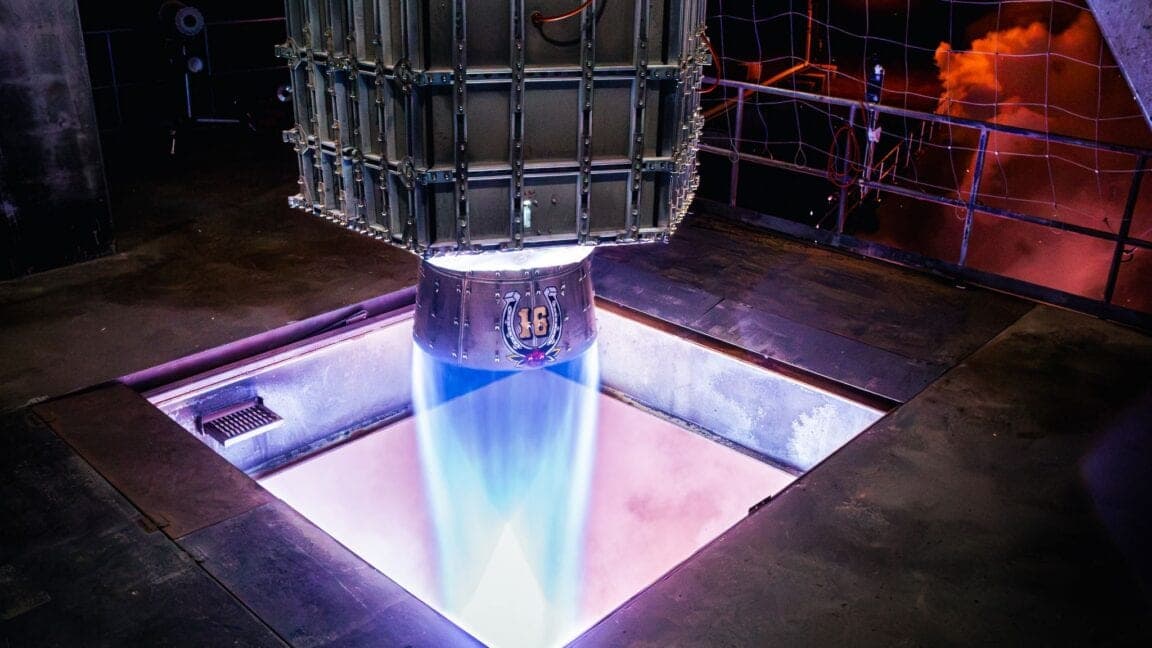
A rocket line so long the Pentagon is building more doors.How we rate
The Pentagon's Office of Strategic Capital offered $150 million conditional loans to Stoke Space on October 26 and to Rocket Lab on November 9.
The money helps both firms build rockets that could carry national security satellites. It comes as SpaceX stops taking commercial Falcon 9 orders for after 2028. The Space Force now expects up to 249 launches through the early 2030s, and both loans still need to clear due diligence before they close.
What to know
- The Pentagon's Office of Strategic Capital offered Stoke Space $150 million on October 26 and Rocket Lab $150 million on November 9.
- SpaceX has stopped taking commercial Falcon 9 orders for launches after 2028, as it shifts to Starship.
- The Space Force expects to need up to 249 medium-to-heavy launches through the early 2030s, more than double its forecast two years ago.
- Rocket Lab raised the price of its Neutron rocket from $55 million to $70 million per launch and holds a backlog of 117 launches.
The Pentagon's Office of Strategic Capital offered Rocket Lab a $150 million loan on November 9. Two weeks earlier it made the same offer to Stoke Space. Why is the military suddenly lending money to rocket companies?
What did the Pentagon actually offer?
The Office of Strategic Capital, or OSC, is a Pentagon group created in 2022. Its job is to put money into companies that make technology the military calls vital. Think of it as a bank with a defense mission.
Both offers are conditional loan commitments. That means the Pentagon has promised to lend, but only if the company passes a list of checks first. OSC says each loan is subject to "various financial, legal, technical, investment, due diligence, and other requirements."
- October 26: a $150 million commitment to Stoke Space.
- November 9: a $150 million commitment to Rocket Lab.
- Earlier: a $150 million loan to LeoLabs, a company that tracks satellites, to build radar units.
Stoke Space and Rocket Lab are the first launch companies to get serious support from OSC. The office has been on a lending spree lately, with hundreds of millions of dollars going to battery, drone and chip makers.
Why does launch suddenly look tight?
The answer starts with SpaceX. It has stopped taking commercial orders for Falcon 9 launches for after 2028. The company wants to focus on Starship, its much bigger rocket. We covered Starship's first trip to orbit earlier.
SpaceX is winding down Falcon 9 for commercial customers, and the Pentagon is paying for backup.
Government launches on Falcon 9 and Falcon Heavy will go on for a while. The Space Force contract lets the military place orders through 2029. Launches under it can run through 2033. After that, if Starship delivers, SpaceX plans to retire Falcon for good.
Starship may one day carry national security satellites too. But SpaceX's first priority for it is launching its own Starlink internet satellites and its Starmind orbital data centers.
In real life Imagine the biggest delivery company in town tells shops it will stop booking new regular routes in two years. Any business that depends on it starts calling other couriers today. That is roughly what is happening across the launch market.
What does "assured access to space" mean?
Since the 1990s, military space officials have followed a policy called assured access to space. In plain words: the US should always have at least two rockets that can carry its most sensitive satellites. One rocket grounded must not mean the whole program grounded.
For years the Pentagon paid for this with direct subsidies, development money and launch contracts at premium prices. Those deals gave the government a close look at its providers. They also gave it a place near the front of their launch schedules. Sometimes they simply kept a company in business.
Today the Space Force's mix of providers is SpaceX's Falcon family and United Launch Alliance's Vulcan rocket. Vulcan has been grounded twice in the last two years by problems with its solid rocket boosters. Those problems forced the Space Force to move several national security missions over to SpaceX.
How big is the demand?
By the numbers: Space Systems Command, the part of the Space Force that buys launches, now expects to need up to 249 medium-to-heavy launches through the early 2030s. That is more than double what it forecast just two years ago.
Several companies have been cleared to compete for pieces of that work:
- Blue Origin: the only one that has flown a rocket meeting the Space Force's requirements. Its expansion plans are in our story on New Glenn's Florida build-out.
- Rocket Lab, Stoke Space and Relativity Space: each is building its own medium or heavy rocket.
- Impulse Space: works on propulsion that moves satellites around once they are in space.
- SpaceX and United Launch Alliance: the two providers flying today.
The OSC loans aim to get new medium-class rockets from Stoke Space and Rocket Lab ready for military use.
What will Stoke Space build?
Stoke Space's loan pays for a second launch pad at Cape Canaveral Space Force Station in Florida. A launch pad is the ground structure a rocket stands on and lifts off from. Without more pads, even a perfect rocket can only fly so often.
The new pad would support the Nova Block 2 rocket. That is an upgraded version of Nova Pathfinder, the company's fully reusable rocket, which is set to debut sometime next year. Fully reusable means both stages are meant to come back and fly again, not just the booster.
"By supporting the construction of additional launch infrastructure, this commitment would enhance the overall capacity and resilience of the commercial space industrial base," said Jordan Sebold, a senior managing director of investments at OSC.
What will Rocket Lab do with its loan?
The money is for Neutron, Rocket Lab's partially reusable rocket, built to carry up to 13 metric tons to low Earth orbit. That is the zone a few hundred miles up where most satellites fly. Neutron has seven methane-fueled Archimedes engines on its booster and a carbon-composite body. Rocket Lab says it is scheduled to make its first launch next year.
OSC says the loan would support faster vehicle delivery and processing. It would also pay for more ships to recover and move Neutron, and for factory upgrades that raise output of composite parts and engines. A further goal is less time between launches once the rocket is flying.
Rocket Lab's chief financial officer, Adam Spice, called the terms "very attractive" on the company's earnings call. "We always take it when we can get it," he said. "It gives us additional capital to scale key parts of our business, Neutron in particular."
On that call, Rocket Lab also said the loan carries an interest rate of SOFR plus 100 basis points. SOFR is a standard benchmark rate for lending in US dollars. One hundred basis points is one percentage point on top of it.
What did Rocket Lab say about prices?
The big picture: Rocket Lab raised the listed price of a Neutron launch from $55 million to $70 million. It says bookings surged. The company now has a backlog of 117 launches on contract, counting Neutron missions and its smaller Electron rocket. A backlog is the list of work already sold but not yet done.
It also signed eight commercial Neutron contracts in the third quarter. Its launch backlog now stretches into the early 2030s. Neutron is set to fly from the Mid-Atlantic Regional Spaceport in Virginia.
Founder and CEO Peter Beck summed up the moment: "Launch is extremely constrained, and that is exactly the situation we predicted."
The catch: Neutron has not flown yet. Both loans are conditional, and both rockets still have to reach orbit for the first time. A higher price on a rocket that does not exist yet is a bet on demand, not proof of it.
What it means for you
- Satellite services: if you use satellite internet, mapping or weather data, more rocket choices should mean fewer launch delays over time.
- Prices: a tight launch market pushes prices up, as Neutron's jump from $55 million to $70 million shows.
- Government role: the Pentagon is using loans, not only contracts, to shape which US rockets exist.
- Wait and see: neither Neutron nor Nova has flown, so the real test comes next year.
The bottom line
SpaceX is moving on from Falcon 9, and the military does not want to depend on one provider. So it is lending $300 million in total to two rival rocket builders. Whether that closes the gap depends on whether Neutron and Nova actually reach orbit.
Key facts
- Stoke Space loan
- $150 million, announced October 26
- Rocket Lab loan
- $150 million, announced November 9
- Neutron price
- Up from $55 million to $70 million a launch
- Rocket Lab backlog
- 117 launches on contract
- Space Force forecast
- Up to 249 launches through the early 2030s
Got questions?
Quick answers, plain wordsWhat did the Pentagon announce?
Its Office of Strategic Capital signed two conditional loan commitments of $150 million each: one with Stoke Space on October 26 and one with Rocket Lab on November 9.
What is a conditional loan commitment?
It is a promise to lend money if the borrower meets certain requirements. The Office of Strategic Capital says both loans are subject to financial, legal, technical, investment and due diligence requirements, so neither is final yet.
What is the Office of Strategic Capital?
A Pentagon group set up in 2022 to put money into technologies the military sees as vital to national security. It has recently committed hundreds of millions of dollars to battery, drone and chip companies.
What will Rocket Lab do with the money?
Build more Neutron rockets faster, add ships for recovering and moving them, upgrade factories that make composite parts and engines, and cut the time between launches.
What will Stoke Space do with the money?
Build a second launch pad at Cape Canaveral Space Force Station in Florida, to fly its Nova Block 2 rocket.
Why is the military worried about launch?
SpaceX has stopped taking commercial Falcon 9 orders for after 2028, and the other main US provider, United Launch Alliance, has seen its Vulcan rocket grounded twice in two years. The military wants at least two working options.
How much will a Neutron launch cost?
Rocket Lab now lists $70 million per launch, up from $55 million, after a surge in bookings. Neutron has not flown yet.
When will Neutron and Nova fly?
Rocket Lab says Neutron is scheduled to make its first launch next year. Stoke Space's Nova Pathfinder is also set to debut sometime next year.
Is SpaceX leaving the military launch business?
No. Falcon 9 and Falcon Heavy launches for government customers are expected to continue for a while. The Space Force contract lets it order through 2029, with launches running through 2033.
SourcesOffice of Strategic Capital
Topics and tagsSpace tech, rocket lab, stoke space, pentagon
Related stories

A Pentagon records system was breached for 9 months before anyone noticed
The Defense Manpower Data Center disclosed that unauthorized users accessed unencrypted personal data on 2.76 million living and 294,000 deceased people between October 2025 and July 2026.
FAA lifts a nationwide ground stop after a communications outage
A failure in the network linking air traffic controllers and pilots stopped takeoffs across the US for hours on Friday. Officials blame old equipment and a patch.
Apple Sports adds UFC with live stats for every fight on the card
Apple's free Sports app now covers UFC, starting with UFC 334 this Saturday. You get fight-by-fight numbers, a strike map and lock screen updates.
More in brief
- Tesla opens Cybercab orders at $29,990, plus $299 a month to drive itNov 14
- LangChain raises $300 million at a $3 billion valuation for AI agentsNov 13
- SignDrop, a new Windows zero-day, gives attackers full System rightsNov 13
- Microsoft's AI Frontiers research group is over, says co-founder John LangfordNov 13
- BYD apologizes after wrong wheels ship on its Great Tang SUVNov 13
- Microsoft 365 outage cuts off Outlook, Teams and Copilot for hoursNov 13