
AI·News & analysis
Utah lets an AI write first-time acne prescriptions, a US first
Nolla Health's app scans your face, grades your acne and can issue an initial prescription for a topical treatment, under a Utah regulatory pilot with physician oversight that steps down over time.
Tide
Ripple
Sci-fi
5/10
Reality
Shipping
A selfie, a quick quiz, and an AI writes your prescription.How we rate
Utah is letting Nolla Health's AI write first-time prescriptions for acne, which the company calls a US first.
Patients scan their face, answer questions and can get a topical treatment in minutes for $4.99 a month. The scope is narrow and doctors oversee it, but it's a real test of AI making medical decisions without a doctor signing off on every one.
What to know
- Nolla Health says it's the first organization in the US with regulatory approval for AI to issue initial prescriptions, not just refills.
- Utah adults with mild-to-moderate acne can use the Nolla Derm app: a questionnaire and face scan lead to an AI-chosen topical prescription.
- The AI can only pick from a fixed list of creams and gels. Pills, isotretinoin and severe acne are excluded.
- Physician oversight starts with review of every prescription and steps down as the pilot grows.
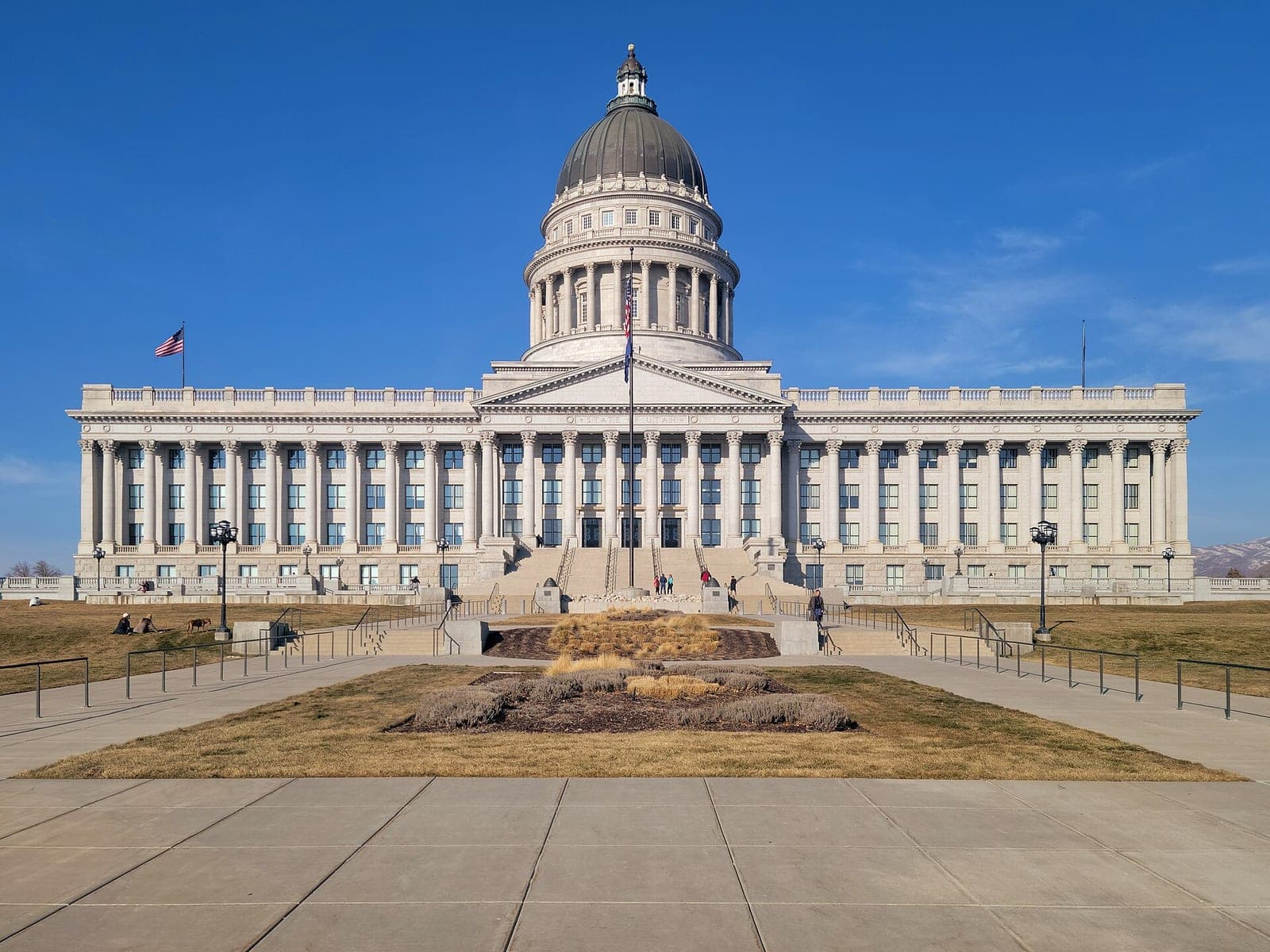
In Utah, an AI can now write you a prescription. Nolla Health announced on Monday that its Nolla Derm app is issuing AI-generated acne prescriptions, and says it's the first organization in the US with regulatory approval for AI to issue initial prescriptions, not just refills.
"AI will matter most in healthcare when it helps people get care they otherwise would not receive," said Luis Wenus, Nolla Health's co-founder and CEO.
How does it work?
The process takes about 10 to 15 minutes, according to Nolla.
- Sign up: eligible Utah adults download the Nolla Derm app and opt into the pilot.
- Verify and consent: you confirm your identity and complete an informed-consent process.
- Answer questions: a short intake questionnaire.
- Scan your face: a five-angle face scan, Unite.AI reports. The AI scores acne severity from the images, not from what you report.
- Get a plan: if appropriate, you receive a personalized treatment plan and prescription in the app.
Prescriptions arrive by home delivery or pharmacy pickup. Daily skin scans track progress, and treatment plans are updated monthly, Nolla says.
If the AI isn't sure: the patient is sent to a licensed physician rather than getting an uncertain recommendation, according to Nolla.
What can it prescribe?
Not much, by design. The AI can only choose from pre-approved treatment pathways, and can't improvise, Nolla says.
The state agreement lists a set of topical creams and gels, Unite.AI reports:
- Tretinoin
- Adapalene
- Clindamycin with benzoyl peroxide
- Benzoyl peroxide
- Azelaic acid
- Some compounded versions with niacinamide and, in two formulations, topical spironolactone
Off the table: pills, hormone therapies, isotretinoin and severe acne are all outside the pilot.
Hard stops: pregnancy, plans to become pregnant, breastfeeding, immunosuppression, severe kidney or liver disease, a prior reaction to a listed drug, being under 18 or a non-Utah address all end the process. Higher severity scores are sent to a physician or to in-person care, according to Unite.AI.
Who checks the AI's work?
Physicians do, but less over time.
Nolla's description of its three stages:
- Stage one, first 100 patients: a licensed physician reviews and approves every AI prescription before it goes to the patient.
- Stage two, first 500 patients: the AI issues prescriptions on its own, and a physician reviews them daily after the fact.
- Stage three: a physician reviews a sample of prescriptions once a week.
The signed agreement is somewhat different, Unite.AI reports. It requires two Utah-licensed physicians to approve each prescription in stage one, weekly retrospective review in stage two, and from 750 patients on, a monthly review of at least 10% of prescriptions plus every case involving an escalation or side effect. The Verge also describes two physicians approving each early prescription.
Labeled as AI: every prescription goes out under the overseeing physician's provider number, is marked as AI-initiated, and pharmacies are told an AI generated it, Unite.AI reports.
Human support: patients can message a licensed physician at any time, and Nolla says they're never talking to AI when they do.
How accurate is it?
According to Nolla, licensed clinicians agree with its AI's treatment recommendations in over 96% of real-world cases. The rest reflected minor adjustments, like changing a cream's strength, not fundamental disagreements, the company says. That figure comes from Nolla and hasn't been independently verified.
"People are right to worry about AI in medicine that nobody can control. This program was built to be the opposite," said Dr. Zaid Fadul, Nolla Health's chief medical adviser. "The real test for AI in healthcare isn't how smart it is. It's whether someone other than the company can shut it off," he added. "In Utah, the state can, and physicians can."
The model behind it: in its proposal to the state, Nolla said its severity-scoring model was trained on more than 100,000 labeled acne cases, Unite.AI reports.
What would stop the pilot?
The agreement sets clear tripwires, according to Unite.AI.
- To move up a stage: Nolla needs written approval from the state, at least 95% agreement between the AI and reviewing physicians, zero missed hard stops and zero serious adverse events.
- If something goes wrong: any serious adverse event triggers an immediate review and pause.
- Reporting: Nolla must report adverse events within 24 hours and file monthly reports on case counts, prescriptions by drug, clinician agreement rates and escalation reasons. The state publishes quarterly reports.
Why acne, and why Utah?
The access problem: about 100,000 people in Utah have active acne at any given time, but only 10% ever see a dermatologist, Nolla says. The average wait in Utah is 61 days, nearly double the national median, and 11 counties have no dermatologists at all. A visit can cost up to $300.
A low-risk start: acne is a well-understood condition with decades of clinical evidence, and the treatments in the pilot mainly risk localized skin irritation or dryness, Nolla and Unite.AI note.
Utah's sandbox: Utah already lets AI systems renew certain medications, a program that started earlier this year, The Verge reports. Several other healthcare companies are experimenting with AI prescriptions there. Utah's earlier prescribing pilots only allowed renewals. One, run by Doctronic since October 2025, still has a licensed practitioner authorize every request, Unite.AI reports.
Who is Nolla? The New York-based company launched its app in the US in summer 2025. It says the app has been downloaded by more than 175,000 people across 44 states, and its state proposal discloses seed funding from General Catalyst, according to Unite.AI.
"Our Office facilitates innovative AI solutions while ensuring that public health and patient safety remain paramount," said Zach Boyd, director of Utah's Office of Artificial Intelligence Policy.
What did Utah actually agree to?
The pilot runs under an agreement between Utah's Office of Artificial Intelligence Policy, its Division of Professional Licensing and Nolla's operating companies, Unite.AI reports.
- What it does: the licensing division agreed not to take enforcement action for unlicensed practice or under telehealth rules when Nolla's AI issues these prescriptions.
- What it isn't: the agreement says it's regulatory mitigation only, not an endorsement or approval by the state.
- How long: 12 months, with at most two 12-month extensions under state law. The office can end it at any time.
- Checks: participants report monthly, and the state has hired independent evaluators to audit health AI pilots by stress-testing guardrails, checking decision logs and evaluating patient outcomes.
What does it cost?
- The app: $4.99 a month during the pilot, down from the standard $9.99, according to Unite.AI.
- The medicine: home-delivered compounded treatment costs $49.99, or generic equivalents typically run $10 to $40 at a local pharmacy.
What it means for you
- In Utah with acne: you can get a prescription in minutes without a dermatologist visit, if you qualify.
- Everywhere else: this is a test case. How it goes could shape whether other states let AI make first-time prescribing decisions.
- Know the limits: severe acne, pills and many health conditions still need a human doctor.
The bottom line
Nolla Health's AI can now issue first-time acne prescriptions in Utah, which it calls a US first. The scope is tight, the drug list is short and doctors watch closely at the start. If it works, AI prescribing for simple conditions could spread well beyond acne and Utah.
Key facts
- Company
- Nolla Health, app Nolla Derm
- Where
- Utah, adults 18 and older
- What
- AI-issued initial prescriptions for mild-to-moderate acne
- Price
- $4.99 a month during the pilot, normally $9.99
- Scope
- Topical creams and gels only; no pills or isotretinoin
Got questions?
Quick answers, plain wordsWhat is Nolla Derm?
An app from Nolla Health that uses AI to analyze a face scan and questionnaire, grade acne severity and issue a prescription for a topical treatment.
Is this really a first?
Nolla Health says it's the first organization in the US to receive regulatory approval for AI to issue initial prescriptions. Other companies in Utah use AI to renew certain medications, The Verge notes.
Who can use it?
Utah residents 18 and older with mild-to-moderate acne. Identity is verified with a photo ID and selfie, and prescriptions only go to Utah addresses, according to Unite.AI's reading of the state agreement.
What can the AI prescribe?
Only topical acne treatments from a fixed list, including tretinoin, adapalene, clindamycin with benzoyl peroxide, benzoyl peroxide and azelaic acid, plus some compounded versions. It can't prescribe pills or isotretinoin.
Do doctors check the prescriptions?
Yes, in stages. For the first 100 patients, physicians approve every AI prescription before it reaches the patient. After that, the AI issues prescriptions directly and doctors review them afterward, eventually reviewing a sample.
What happens if the AI isn't sure?
Nolla says the patient is sent to a licensed physician rather than getting an uncertain recommendation. Severe acne, pregnancy and several health conditions also stop the process.
How much does it cost?
$4.99 a month during the pilot, discounted from $9.99. Medication is extra: compounded treatment delivered at home costs $49.99, or generics typically cost $10 to $40 at a pharmacy, Unite.AI reports.
Can I talk to a real doctor?
Yes. Nolla says patients can message a licensed physician through the app at any time, and they're never speaking with AI when they reach out for support.
Is Utah endorsing the AI?
No. The agreement is a grant of regulatory mitigation only, not an endorsement or approval by the state, according to Unite.AI. It runs for 12 months.
SourcesNolla Health via PR Newswire
Topics and tagsAI policy, ai healthcare, utah, nolla health
Related stories
California just made it illegal for an AI alone to fire you
Governor Newsom signed California's No Robo Bosses Act, requiring a human to review any AI-driven decision to fire or discipline a worker, part of a 13-bill AI worker protection package.
Meet the ex-judge who helped write California's AI law, then joined Anthropic
Mariano-Florentino Cuéllar co-led the study behind California's landmark AI safety law. Now he's Anthropic's first chief global affairs officer, doing diplomacy for the company that law regulates.

Reflection unveils Beam, an open-weight AI model it pitches as the West's answer to Chinese labs
The $25 billion startup says Beam rivals China's GLM-5.2 on reasoning while using three to four times less compute. Its weights are due later this month.
More in brief
- Wikimedia says 'rogue' OpenAI agents edited its wikis and may have helped cause a May outageOct 5
- TikTok launches an AI shopping assistant and one-click checkout in the For You feedOct 5
- OpenAI will start invisibly watermarking ChatGPT text in the EUOct 5
- Wing and Walmart will fly drone deliveries to Denver and Seattle in 2027Oct 5
- Trump launches a 'Super Intelligence Force' led by spy chief Jay ClaytonOct 5
- Denmark's national ID register breached, exposing 8.8 million people's CPR numbersOct 5