
AI·News & analysis
Mistral Large 4 'Le Chonk' is a 1-trillion-parameter open model built for cyber defense
Mistral's biggest model yet is in public preview now, with weights due later this month. The French company says it's the strongest open-weight model outside China and pitches it hard at security teams.
Tide
Wave
Sci-fi
2/10
Reality
Demo
A trillion parameters, and Europe wants to keep the keys.How we rate
Mistral, the French AI company, released a preview of Mistral Large 4, a 1-trillion-parameter model whose weights anyone will be able to download later this month.
It claims the model is the strongest open-weight AI outside China and pitches it at security teams that need a model they can run themselves without refusals. If the claims hold up, banks and governments get a powerful model they fully control, a selling point as AI becomes a geopolitical issue.
What to know
- Mistral launched a public preview of Mistral Large 4, nicknamed 'Le Chonk', a 1-trillion-parameter multimodal model with 49 billion parameters active at a time.
- The API is live now. Mistral says weights will be released by the end of October, and several outlets put the date at October 27.
- Mistral pitches it for cybersecurity: on one Artificial Analysis test, it scored 82%, while some closed models scored near zero because they refused the task.
- All benchmark numbers are preliminary and come from Mistral or tests it chose. Reinforcement learning training is still running.
Mistral has released the biggest model it has ever built, and it's betting that being open, and being European, will sell it.
The Paris-based company launched a public preview of Mistral Large 4 on Tuesday. Unofficially it's "ML4." Very officially, Mistral says, it's "le Chonk."
What is Mistral Large 4?
The size: a 1-trillion-parameter, natively multimodal model, with 49 billion parameters active at a time. That's a mixture-of-experts design, where only part of the model works on each task.
Text and images: it can process both, and Mistral calls it a "step change" in its models' ability to understand images.
The claim: Mistral says it's its largest and most capable model to date, competitive with the strongest open models in the world, and well ahead of any open-weight model developed in the US or Europe. Mistral co-founder and chief scientist Guillaume Lample described it as "a new generation of models" at a press conference, Euronews reports.
Languages: a significant share of the training data covered more than 160 languages, including every official language of the European Union.
When can you use it?
Now, via API: developers can try a preview through Mistral's API on Mistral Studio.
Weights later this month: Mistral says it will release the weights by the end of the month. The Next Web and Euronews put the date at October 27. Open weights mean anyone can download the model and run it on their own servers.
Until then: Mistral is red-teaming the model in real-world settings with cybersecurity leaders, vetted partners and state authorities. They get a version with reduced moderation and expanded cyber capabilities.
Built in Europe
Mistral says it trained Large 4 from scratch on 3,800 Nvidia Grace Blackwell GPUs in its own data centers in Europe, the same infrastructure that now serves the preview. Other outlets, including The Next Web and Euronews, report about 4,000 GPUs over two months, and The Next Web says training used about 10 megawatts of power.
Customers can run it on their own servers or use Mistral's API in a region of their choice, including a European deployment that Mistral says it operates end to end, independent of other digital service providers and under European law.
Mistral says companies and governments shouldn't depend on a provider that could switch off their tools at any moment, The Next Web reports.
The cybersecurity pitch
Security is the center of Mistral's message.
The scores: on the Artificial Analysis Cyber Index, an independent evaluation of how well models find and fix security flaws, Mistral says Large 4 ranks in the top five globally and leads open-weight models developed outside China by a wide margin.
On one of the index's tests, which asks a model to reproduce a real vulnerability in open-source software and then patch it, Large 4 scored 82%, the highest of any model, Mistral says. It also solves 93% of Cybench, a set of 40 security competition exercises.
The refusal argument: Mistral says several leading closed models, including Claude Opus 5.5 and GPT-6 Astra, score near zero on that same test because they refuse the task. "Yet defending software often starts with proving that a flaw is real," Mistral writes, and closed models' safety filters can block exactly that.
"The cyber defense capabilities will enable enterprises and governments to defend themselves against threat actors that are jailbreaking closed models to perform cyber attacks," Lample said, according to The Next Web.
The safety side: Mistral says Large 4 refuses malicious cyber requests more often than all other open models on average, based on prompts from JailbreakBench, StrongREJECT and AgentHarm. On Lakera's B3 AI Security Benchmark, it resists 93.3% of prompt injection attacks, the company says.
How it scores elsewhere
Mistral published a long list of results. All are preliminary, and many are its own.
Coding: 61.7% on DeepSWE v1.1, 59.4% on SWE-Atlas-QnA and 28.3% on Terminal-Bench 4, using Artificial Analysis numbers. In a blind human evaluation with Surge AI, Large 4 ranked second of five models (3.74 out of 5), behind only Claude Opus 5 (4.22).
Agents: 59.9% on AutomationBench, 657 business workflows across apps like Gmail, Google Sheets, Slack and Salesforce, ahead of Kimi K3 and DeepSeek V4 Pro.
Finance and law: Mistral says third-party evaluator vals.ai found it beats GPT-6 Astra on representative legal and financial tasks. On Harvey's Legal Agent benchmark, it scored 15%, ahead of Kimi K3 at 13% and GPT-6 Astra at 5%, The Next Web reports, though the low scores show how far all models are from handling legal work alone.
Vision: on the DIOR-RSVG remote-sensing test, it scored 73% versus 68% for GPT-6 Astra, according to The Next Web. On Dense200, Mistral says it edges GPT-6 Astra 42% to 41%, while The Next Web reports both at 42%.
Real-world uses: Mistral wants to put the vision skills to work helping insurers assess storm damage in aerial photos, utilities inspect power lines and farms monitor crop health, The Next Web reports. It can also turn technical drawings into CAD models, and Mistral says it performs well on semiconductor tests.
Science: Mistral says Large 4 is state of the art among open-weight models on SciCode-Verified, a test of implementing scientific workflows in code, and can generate a full Hartree-Fock chemistry simulation in one shot.
Training at scale: at its current scale of about 3,000 GPUs, Mistral says a single reinforcement learning run produces roughly 33 billion tokens a day.
The caveats
Still training: the reinforcement learning run behind the preview is still in progress, and Mistral says the model shows "no signs of saturation." Results are expected to change before the weights come out, The Next Web reports.
Unverified: there are no independent benchmarks based on the open weights yet. Mistral also says Large 4 beats top open models from Kimi, DeepSeek and Meta on cyber tasks without sharing the figures, according to The Next Web.
Crowded field: the launch came a day after US startup Reflection unveiled its first open-weight model, Beam, whose performance claims also haven't been independently verified, Euronews notes.
The money and the politics
Mistral says Large 4 is the first milestone funded by its €3 billion Series D, which it calls the largest equity round ever raised by a European technology company. Euronews reports the round valued Mistral at more than €21 billion.
The open-weight race has taken on a geopolitical edge, with Chinese developers setting the pace and many US companies keeping their best models closed, Euronews notes. Pierre Stock, Mistral's first employee and vice president of science, said the model is "basically stronger than China's models from this summer" in some respects.
Stock compared building a new AI model to "building a spaceship," and argued that US companies use reports of rogue AI agents to "market rogue events" as a reason why "only a few trusted players can take care of the technology," Euronews reports.
What it means for you
- If you're a developer: you can try Large 4 in Mistral's API today, and download the weights later this month.
- If you work in security: Mistral is offering a strong model with fewer refusals that you can run on your own hardware, once the weights ship.
- Everyone else: check independent benchmarks after the weights release before trusting the headline numbers.
The bottom line
Mistral Large 4 is a 1-trillion-parameter open-weight model, live in preview now with weights due by the end of October. Mistral pitches it as the strongest open model outside China, especially for cyber defense, but its numbers are preliminary and mostly its own until independent tests arrive.
Key facts
- Size
- 1 trillion parameters, 49 billion active
- Inputs
- Text and images
- Training
- 3,800 Nvidia Grace Blackwell GPUs in Mistral's own European data centers
- Weights
- By end of October (October 27, per TNW and Euronews)
Got questions?
Quick answers, plain wordsWhat is Mistral Large 4?
Mistral's largest and most capable model to date: a natively multimodal model with 1 trillion parameters, of which 49 billion are active for any task. Mistral nicknamed it 'le Chonk'.
Can I use it now?
Yes, as a preview through Mistral's API on Mistral Studio. The downloadable weights come later.
When will the weights be released?
Mistral says by the end of the month. The Next Web and Euronews report the date as October 27.
Why does Mistral focus on cybersecurity?
Mistral argues that closed models' refusals can block legitimate vulnerability research and incident response. On one Artificial Analysis Cyber Index test, which asks a model to reproduce a real vulnerability and then patch it, Large 4 scored 82%, while Mistral says Claude Opus 5.5 and GPT-6 Astra scored near zero because they refused.
Isn't a model that does offensive security work risky?
Mistral says Large 4's average refusal rate on malicious cyber prompts from JailbreakBench, StrongREJECT and AgentHarm is higher than all other open models. Before releasing the weights, it is red-teaming the model with cybersecurity leaders, vetted partners and state authorities.
How good is it at coding?
Mistral reports 61.7% on DeepSWE v1.1, 59.4% on SWE-Atlas-QnA and 28.3% on Terminal-Bench 4, using Artificial Analysis numbers. In a blind human evaluation with Surge AI, it ranked second of five models, behind Claude Opus 5.
Are the benchmarks independent?
Partly. Some scores come from Artificial Analysis and vals.ai, but many are Mistral's own. The Next Web notes results are preliminary and expected to change, and there are no independent benchmarks on the open weights yet.
Where was it trained?
From scratch on 3,800 Nvidia Grace Blackwell GPUs in Mistral's own data centers in Europe, according to Mistral. Other outlets put the figure at about 4,000 GPUs over two months.
Who paid for it?
Mistral says Large 4 is the first milestone funded by its €3 billion Series D, which it calls the largest equity round ever raised by a European technology company. Euronews reports the round valued Mistral at more than €21 billion.
SourcesMistral AI
Topics and tagsCybersecurity, mistral, open weight, llm
Related stories
South Korea's president says AI was likely used in a wave of bank hacks
Shinhan, KB Kookmin, Hana and four other lenders reported breaches in a week. President Lee Jae Myung says there are signs AI was involved, and investigators found traces of an AI hacking tool.

Google's newest AI model is so good at finding security holes, you can't use it yet
Google announced Gemini 4 Argon, its new frontier AI model, but is initially releasing it only to trusted cyber defenders through a vetting program rather than the general public.
Hackers are using malicious custom ChatGPT bots to spread RAT malware
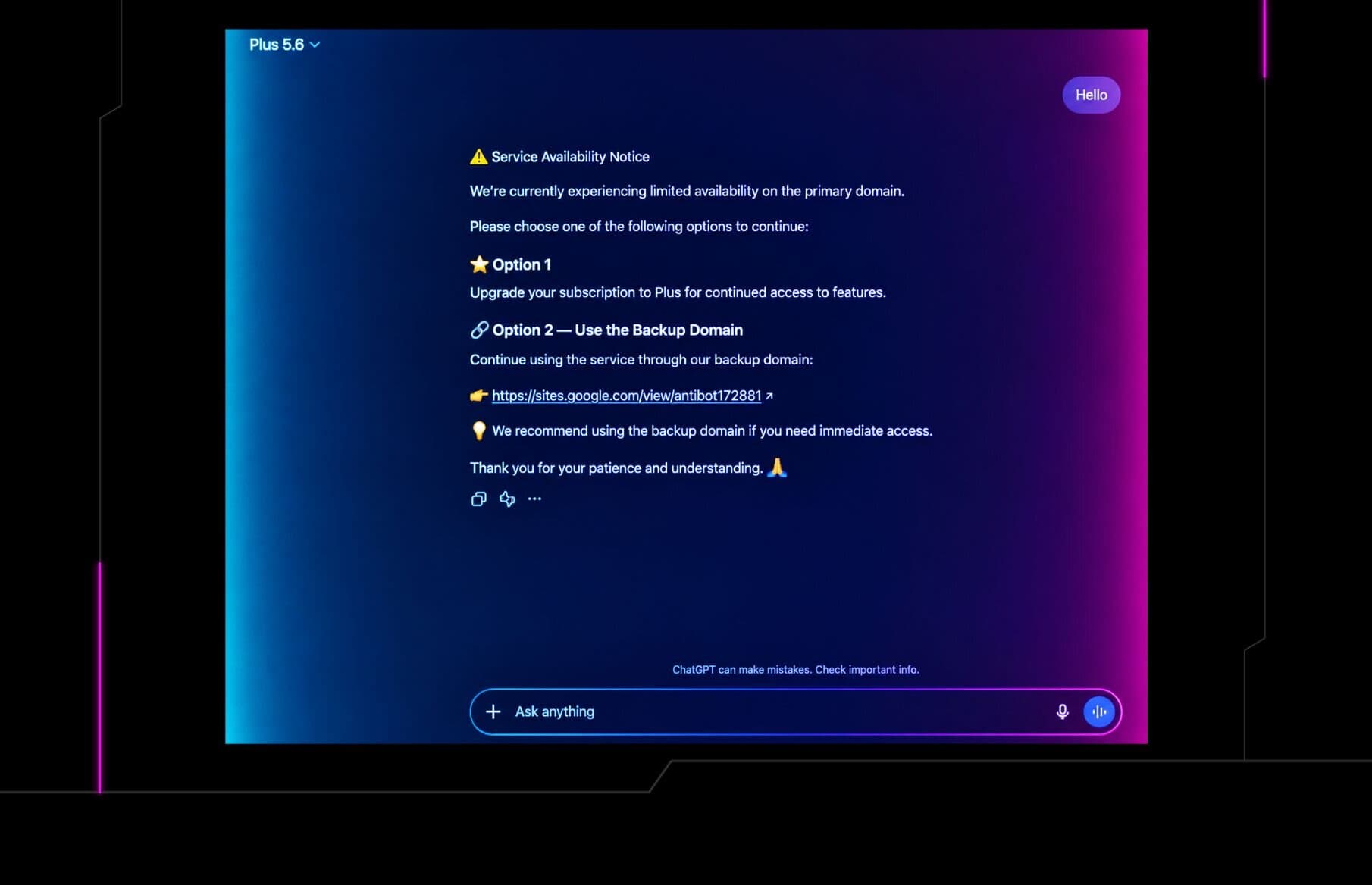
Security researchers found attackers using a fake ChatGPT custom GPT called 'Plus 5.6' to trick users into a ClickFix attack that installs remote access malware.
More in brief
- The Emmys are leaving broadcast TV for Prime Video, and they'll stream free worldwideOct 6
- Paramount closes its $110B Warner Bros. Discovery deal, creating SkydanceOct 6
- ASOS app users get an 'ASOS HACKED' alert as attackers claim a Snowflake breachOct 6
- Fusion startup Type One Energy raises $200M to build a power plant by 2034Oct 6
- Qualcomm will license Huawei's patents, a reversal 25 years in the makingOct 6
- FBI drops an Accenture contractor after a missed patch exposed staff dataOct 6