
Technology·News & analysis
Apple says the $400 extra for the new MacBook Pro screen buys a pro monitor
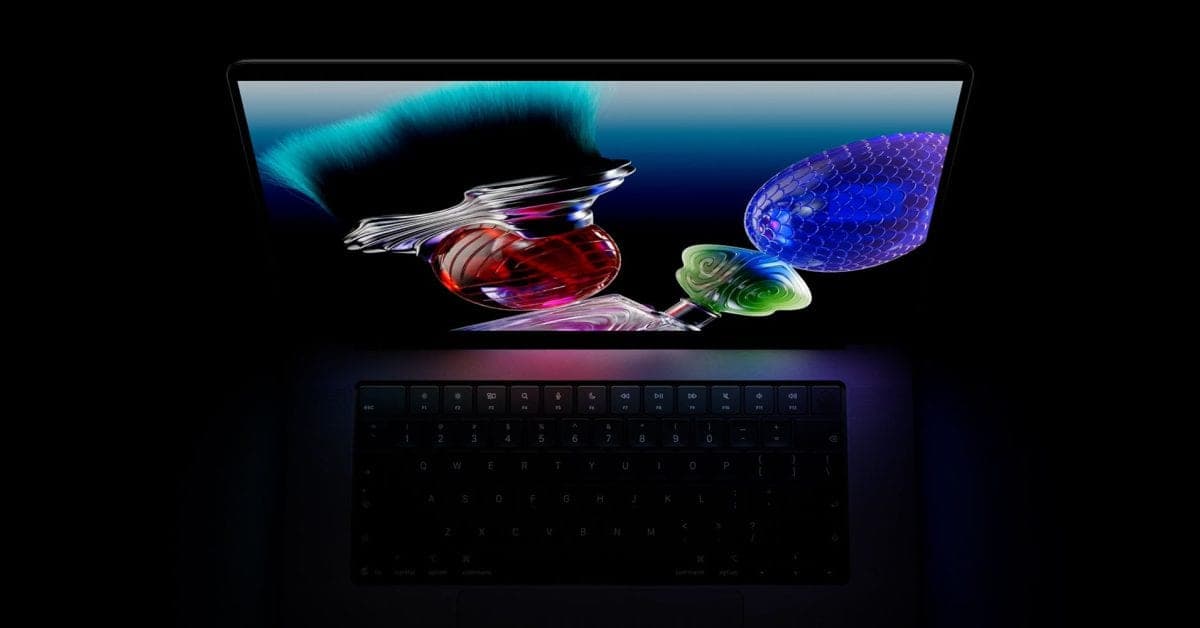
Apple published a white paper arguing the touchscreen is just a bonus and the real prize is the PROLED XDR display, a smaller cousin of its Studio Display XDR.
Tide
Wave
Sci-fi
4/10
Reality
Shipping
A pro studio monitor, folded into a laptop lid.How we rate
Apple published a white paper arguing that the $400 extra for the MacBook Pro with PROLED XDR display buys a screen close to its Studio Display XDR reference monitor, with 1,000 nits of sustained brightness and a 10,000,000:1 contrast ratio.
Touch is framed as a bonus. The Studio Display XDR alone costs $2,899 to $3,599. The laptops go on sale on November 6.
What to know
- Apple published a white paper saying the PROLED XDR display in the new MacBook Pro is essentially a smaller version of its Studio Display XDR reference monitor.
- The screen uses tandem OLED and reaches up to 1,000 nits sustained full-screen brightness, 2,000 nits at peak, and a 10,000,000:1 contrast ratio.
- The MacBook Pro with PROLED XDR costs $400 more than the model with the standard screen, while the Studio Display XDR alone costs $2,899 to $3,599.
- Orders opened on October 28 and the laptops arrive in stores on Friday, November 6.
Apple just explained why the new MacBook Pro with the PROLED XDR display costs $400 more. The answer is not the touchscreen, it says. The answer is the screen itself.
That is a bold way to defend a price. So let's look at what the company actually claims, and how it stacks up against a monitor that costs thousands.
What did Apple actually publish?
Apple released a white paper, a long technical document, about the new display. In it the company argues that the touchscreen is not the headline feature. It calls touch a bonus.
The real story, Apple says, is the quality of the picture. It describes the PROLED XDR display as the best display in a pro laptop.
The paper makes one comparison again and again. The laptop screen is essentially a smaller version of Apple's professional reference monitor, the Studio Display XDR. A reference monitor is a screen that pros use to judge color and brightness, so the picture they see is the picture everyone else will see.
What is PROLED XDR, in plain words?
OLED means each tiny dot of light, called a pixel, makes its own light. Turn a pixel off and it goes fully black. A normal laptop screen uses a backlight behind the pixels, so blacks are never quite black.
PROLED XDR uses tandem OLED. That means two OLED layers are stacked on top of each other. Apple says this is a first for a MacBook Pro display.
Apple lists these numbers for the screen:
- Sustained brightness: up to 1,000 nits across the whole screen, for long periods.
- Peak brightness: up to 2,000 nits, for both HDR and standard content.
- Contrast ratio: 10,000,000:1, with accurate black levels for each pixel.
A nit is a unit of brightness. HDR, short for high dynamic range, means a picture with brighter highlights and deeper shadows than usual.
By the numbers: the key figure is sustained brightness. Many screens can flash bright for a moment and then dim. Holding 1,000 nits across the full screen is harder.
Why does the chip matter for a screen?
Apple says the display is driven in real time by an all-new display engine inside the M5 Pro and M5 Max chips. A display engine is the part of a chip that decides what every pixel should do.
According to Apple, the engine keeps adjusting each pixel based on the content, how you use the laptop, the temperature, and the light in the room. The goal is accurate color out of the box.
It also has a second job. OLED pixels can wear out over time, so Apple says the engine helps protect the life of the panel.
Apple adds that a special manufacturing process keeps every panel consistent with the next one. It says the process also reduces off-axis color shift, which is the color change you see when you look at a screen from the side. Apple calls that a first for any OLED laptop.
How does it compare with the Studio Display XDR?
The Studio Display XDR is Apple's pro monitor. By itself it costs between $2,899 and $3,599. It is much bigger and has a higher resolution, so the screen is not a like-for-like match.
Still, the white paper lines up the two screens, and the descriptions are almost identical. Apart from resolution, the specs match with one exception. The exception is contrast.
- MacBook Pro: a 10,000,000:1 contrast ratio.
- Studio Display XDR: a 1,000,000:1 contrast ratio.
So on that one number, the laptop screen comes out ahead.
In real life Picture a photo editor on a train. Before, the laptop screen was only good for rough edits, and the real work waited for the desk monitor. Apple is saying that the train screen can now be trusted a lot more.
What is Apple CMF 2026?
The PROLED XDR display and the Studio Display XDR are the only two displays that support Apple CMF 2026. It is the company's name for a newer way of matching colors. It follows the older CIE 1931 system, the long-standing standard for how people see color.
Apple says CMF 2026 lines the look of a display up more closely with D65, the standard ideal white. It also helps colors match across different kinds of screens.
Why it matters: if you use two displays side by side, say a laptop and a monitor, white should look like the same white on both. That is the problem Apple says CMF 2026 is built to solve.
What is the $400 for, then?
The white paper makes a simple point about money. If the laptop screen is close to a monitor that costs $2,899 or more, an extra $400 looks small.
That is Apple's framing, and it is worth keeping in mind that it comes from the company selling the laptop. The monitor is far larger, so the two prices do not measure the same thing.
Even so, the argument fits the numbers. The 14-inch MacBook Pro with an M5 Pro chip starts at $2,899, and the 16-inch starts at $3,399. The M5 Max models start at $4,499 for the 14-inch and $4,799 for the 16-inch.
The touchscreen comes along as part of the package. Apple built touch into the panel itself rather than layering it on top, and a redesigned hinge keeps the lid steady when you press the screen.
What else is in the box?
The new laptops come in 14-inch and 16-inch sizes. Both also bring the Dynamic Island, the pill-shaped area at the top of the screen that first appeared on the iPhone, to the Mac.
Other details from the launch:
- Weight: about 3 pounds for the 14-inch and about 4 pounds for the 16-inch.
- Memory and storage: up to 128GB of unified memory and up to 16TB of storage.
- Ports and wireless: three Thunderbolt 5 ports, Wi-Fi 7 and Bluetooth 6.
- Camera and sound: a 12-megapixel Center Stage camera and a six-speaker system.
- Software: macOS 27 with Apple Intelligence.
Fast charging reaches 50 percent in 30 minutes, but only with a stronger power adapter than the one in the box. Apple recommends its 96W adapter for the 14-inch and its 140W adapter for the 16-inch.
When can you get one?
Orders opened on October 28 on apple.com and in the Apple Store app, in 30 countries and regions. The first laptops arrive on Friday, November 6.
Apple is also promoting a live stream with the musician Labrinth on November 4 at 8pm Pacific. The description says he will be experimenting with new ways of making music. Apple has not said the stream is about the laptop, but the timing is close to the launch.
What it means for you
- If you edit photos or video, the screen is the reason to look. Apple says it is built for accurate color, and the sustained brightness is a real number to check in reviews.
- If you mostly browse and write, the standard screen model is $400 cheaper. Apple's case is about creative work, not email.
- Wait for independent tests if you can. The numbers in the white paper are Apple's own, so the real proof will come from people who measure the screen.
- Check the charger. The adapter in the box will not give you the fastest charging Apple lists.
The bottom line
Apple is not asking you to pay $400 for a touchscreen. It is asking you to pay $400 for a screen that it says is a shrunken version of a monitor that costs thousands.
That is a clear pitch, and the numbers behind it are strong. Whether the screen really lives up to it will be clear once reviewers get their hands on it after November 6.
Key facts
- Premium over standard screen
- $400
- Sustained brightness
- Up to 1,000 nits
- Contrast ratio
- 10,000,000:1
- Starting price (14-inch M5 Pro)
- $2,899
- In stores
- Friday, November 6
Got questions?
Quick answers, plain wordsHow much extra does the PROLED XDR display cost?
The MacBook Pro with the PROLED XDR display costs $400 more than the MacBook Pro with the standard screen. The 14-inch model with an M5 Pro chip starts at $2,899.
What is PROLED XDR?
It is Apple's name for the new MacBook Pro screen. It uses tandem OLED, which stacks two OLED layers, and is driven by a new display engine inside the M5 Pro and M5 Max chips.
Is the touchscreen the main reason for the price?
Apple says no. In its white paper the company calls touch a bonus and says the headline is the quality of the display itself.
How bright is the screen?
Apple lists up to 1,000 nits of sustained full-screen brightness and up to 2,000 nits at peak, for both HDR and standard content. A nit is a unit of brightness.
What is a contrast ratio of 10,000,000:1?
It compares the brightest white the screen can show with its darkest black. OLED pixels can switch fully off, so blacks are very deep and the ratio is very high.
How does it compare with the Studio Display XDR?
Apple says the specs are the same apart from resolution and one number: the MacBook Pro has a 10,000,000:1 contrast ratio and the Studio Display XDR has 1,000,000:1. The Studio Display XDR is a larger, higher-resolution monitor.
What is Apple CMF 2026?
It is Apple's name for a newer way of matching colors on screen. Apple says it lines a display up more closely with an ideal white, called D65, and helps colors look the same across different displays.
When can I buy it?
Orders opened on October 28 in 30 countries and regions. The first laptops arrive on Friday, November 6.
What chips does it use?
Both the 14-inch and 16-inch models use the M5 Pro or M5 Max chip. M5 Max models start at $4,499 for the 14-inch and $4,799 for the 16-inch.
SourcesApple
Topics and tagsApple, Funding & deals, apple, macbook pro
Related stories

Apple Watch can now replay what someone just said, in beta
Apple's Live Rewind and Siri Recap are now in beta on the Apple Watch Series 12 and Ultra 4. One shows the last 15 seconds of speech as text, the other sums up whole conversations.
Apple posts record $114.5 billion quarter, then warns of slower growth
Apple's September quarter revenue rose 12% on iPhone, Mac and Services records, but its stock slid after hours as executives talked memory costs and shortages.
 Techlantis
Apple Intelligence is coming to China in December with iOS 27.3
Apple says testing starts November 4 and the public release follows in December, with Alibaba's Qwen chatbot built in and without the new Siri AI.
More in brief
- Google will switch off AI and Search for school accounts until schools opt inNov 3
- Peak Design, the backpack maker, now sells a $100 wireless charger and $25 cablesNov 3
- Tutor Intelligence raises $75M to rent out warehouse robots by the hourNov 3
- Robots race up Mount Tai's 3,100 stone steps in China's first mountain contestNov 3
- Agility Robotics clears its SPAC vote and heads to Nasdaq this weekNov 3
- Marvell to buy Lumentum in a $115 billion all-stock deal for AI opticsNov 2