
Technology·News & analysis
Google Wallet lands on iPhone in the US, without tap-to-pay
Google Wallet is now a free iPhone app for US users. It holds tickets, boarding passes, receipts and cards, and it is built to manage purchases made by Google's AI agents.

Tide
Wave
Sci-fi
3/10
Reality
In your hands
A wallet app that also keeps an eye on what your AI bought.How we rate
Google released Google Wallet for iPhone users in the US on November 17, 2026.
The app collects tickets, boarding passes, receipts, package tracking and loyalty cards, and it syncs with Gmail. Tap-to-pay does not work on iOS, so it cannot replace Apple Wallet at the store. Google also pitches it as the place to manage purchases made by its AI agents across Google. Google has not said whether other countries or tap-to-pay will follow.
What to know
- Google Wallet is now available as an iPhone app for users in the US, with tickets, boarding passes, receipts and package tracking in one place.
- The app syncs with Gmail and other Google apps, and it can scan loyalty cards and gym memberships with the phone camera.
- Tap-to-pay is not supported on iOS at this time, so Apple Wallet still handles paying at a store.
- Google calls the app a secure hub for agentic purchases, meaning buys that Google's AI makes for you.
Google announced that Google Wallet is now an app for iPhone users in the US. It collects your tickets, boarding passes, receipts and cards in one place. It does not let you tap your phone to pay at a store.
That's the news. Now the fun part: why would Google build a wallet for the one phone that already comes with a wallet?
What does the iPhone app do?
Google Wallet on iOS is a place to keep the paper and plastic of daily life. It pulls in your package tracking, digital boarding passes, concert tickets and receipts. It does this by syncing with Gmail and other Google apps.
Google lists three things you can do:
- Digitize physical cards: point the phone camera at a loyalty card or gym membership, and the app imports it.
- Manage payment cards: store cards to check out faster online across Google and anywhere you use Google Pay.
- Stay in control of agentic purchases: see order confirmations, receipts and delivery updates for things Google's AI bought for you.
The app was released on November 17, 2026. Google says the point is to expand access to more people, no matter what type of device they use.
What does it look like?
The app uses a floating pill-shaped bar with two tabs. It has the glassy look of Apple's newest design style, called Liquid Glass.
The home tab starts with a row of recent purchases on their way to you. Below that come boarding passes, and then a grid of loyalty cards. The second tab lists recent transactions tied to Google and summarizes purchase emails. It also holds your passes, which you can pin to the home screen or unpin, and the payment methods saved to your Google Account.
A plus button adds loyalty, gift and payment cards. The payment cards are for use in Chrome. There is also an "Everything else" camera scanner for anything that does not fit another bucket.
In real life You order a pair of earbuds, fly to a conference and buy a ticket for a concert. All three show up in one app: the delivery date, the gate number and the seat.
Why is tap-to-pay missing?
Google says tap-to-pay is not supported on iOS at this time. The reason is the platform itself. Tap-to-pay relies on NFC, short for near-field communication. That is the short-range radio chip that talks to a store terminal when you hold your phone close.
On an iPhone, Apple controls how apps can use that chip, and its own Wallet app is the one that handles in-store payments. Google has not said whether it will ever get access. The announcement does not say if tap-to-pay might be added later.
The catch: Google Wallet on iPhone is not a replacement for Apple Wallet at the checkout counter. Think of it as a companion that organizes things around the purchase, not the purchase itself.
Why does Google want this on iPhone?
Look at the numbers. There are roughly 100 million Android users in the US and about 155 million iPhone users. If Google wants its wallet to matter, it has to be where more of the people are.
The bigger clue is the third item on the list. Google calls the app a secure hub for managing agentic purchases across Google. "Agentic" means an AI agent does the buying. An agent is an AI that can take several steps on its own, such as finding a product, comparing prices and checking out.
Why it matters: if an AI buys something for you, you want one clear place to see what it bought and what it cost. Google wants that place to be its wallet, no matter which phone you hold.
What is agentic checkout?
Agentic checkout is a Google Pay feature that lets Google's AI complete a purchase for you. Google's support page says it uses your selected Google Pay payment method to buy the product, and then sends order updates by email and notification.
Right now it has limits:
- Where: the US and Australia, in English.
- What you need: a valid payment method and an address saved in Google Wallet.
- Which stores: select merchants. Google says eligibility rules apply and the list can change.
- Safety net: a purchase will not go through if the price rises significantly.
Google also offers a pay-over-time option in the US for select purchases in Gemini and AI Mode in Search, in US dollars only. Google says the financing is offered by partner providers, not by Google.
Launch merchants named for agentic checkout include Nike, Sephora, Target, Ulta Beauty, Walmart and Wayfair.
What are the AI shopping tools behind it?
The wallet is one piece of a larger plan. At Google I/O 2026, Google introduced Universal Cart. This is a Gemini-powered shopping cart that works across stores and across Search, Gemini, YouTube and Gmail. Gemini is Google's AI assistant.
Two open standards sit underneath. A standard is a shared set of rules that lets different companies' products work together.
- Universal Commerce Protocol (UCP): an open standard for agentic shopping, from finding a product to buying it and getting help afterward. Google built it with Shopify.
- Agent Payments Protocol (AP2): rules that let an AI agent pay on your behalf, but only inside limits you set, such as brands, products and spending caps. Google announced it in September 2025 with more than 60 partners, including PayPal, Mastercard and American Express. Google later donated it to the FIDO Alliance, an industry group.
An iPhone app gives those tools a home on the phone many US shoppers carry.
How did Google get here?
Google's payments story has had a lot of name changes. The original Google Wallet launched in 2011. Android Pay arrived in 2015. In 2018 the two merged into Google Pay.
In 2022, Google announced a new Google Wallet at its I/O conference on May 11. It began rolling out on Android phones on July 18, 2022. At launch it worked with about 70% of Android devices and was accepted at more than 700,000 merchants. In 2024, the Google Pay app was shut down in the US as a consumer app.
So the name Google Wallet is back in charge. Google Pay still exists as the payment method that works across Google and many stores. The iPhone app is the next step for the revived wallet.
Will people let an AI shop for them?
That is the open question. A survey of US consumers found that 69% are interested in AI agents for shopping. But only 6% want full automation of payment decisions. And 39% would reject autonomous purchasing under any conditions.
That helps explain the design. An app that shows every receipt and delivery update puts you back in the driver's seat. You can see what the agent did, and you can check it.
Google has not said how many people will use the iPhone app, and the launch post gives no user numbers.
What it means for you
- iPhone users in the US: you can download Google Wallet and keep tickets, boarding passes, receipts and loyalty cards in one app.
- Paying in stores: keep using Apple Wallet. Google Wallet on iOS does not support tap-to-pay at this time.
- Online shoppers: saved cards can speed up checkout across Google and anywhere that accepts Google Pay.
- Outside the US: this launch is for the US only. Google has not named other countries.
The bottom line
Google took its wallet to the iPhone, but it left out the feature people expect most from a wallet: tapping to pay. What it kept is organization, receipts and a front row seat to AI shopping.
If AI agents start buying things for us, a single place to check their work will matter. Google is betting that place should be its wallet, even on its rival's phone.
Key facts
- Launch date
- November 17, 2026
- Where
- iPhone app, United States only
- What is missing
- Tap-to-pay at stores
- What it holds
- Tickets, boarding passes, receipts, loyalty cards, payment cards
- Big idea
- A hub for purchases made by Google's AI agents
Got questions?
Quick answers, plain wordsIs Google Wallet available on iPhone?
Yes, but only in the US for now. Google released the iOS app on November 17, 2026. Google has not announced other countries.
Can I pay in stores with Google Wallet on iPhone?
No. Google says tap-to-pay is not supported on iOS at this time. For paying at a store, you still use Apple Wallet.
What can Google Wallet on iPhone do?
It shows tickets, boarding passes, receipts and package tracking. It can scan loyalty cards and gym memberships with the camera. It also stores payment cards for faster online checkout across Google and wherever Google Pay is accepted.
Does it work with Gmail?
Yes. Google says the app syncs with Gmail and other Google apps to keep your package tracking, boarding passes, concert tickets and receipts together.
What are agentic purchases?
They are purchases that an AI agent makes for you. An agent is an AI that can take steps on its own, such as picking a product and checking out. Google Wallet shows the order confirmations, receipts and delivery updates for those buys.
Do I need an Android phone to use it?
No. The point of the launch is that Google Wallet now works on iPhone as well as Android and on the desktop.
Is it free?
Google did not announce a price, and Google Wallet has been a free app on Android. Check the App Store listing for the latest details.
Will tap-to-pay come later?
Google has not said. The announcement only says it is not supported at this time.
Does agentic checkout work in the app today?
Google's agentic checkout is a separate Google Pay feature. It currently works in the US and Australia, in English, at select merchants, with a payment method and address saved in Google Wallet.
SourcesGoogle
Topics and tagsGoogle, Apple, AI agents, Smartphones
Go deeper
Related guide
Guide, 8 minHow to use Gemini: Live camera help, Skills and Android scam protectionUse Gemini Live with your camera, prepare for Gems turning into Skills, and switch on the opt-in scam protection in Google Messages.Related stories
Google Wallet can now unlock your front door with a tap
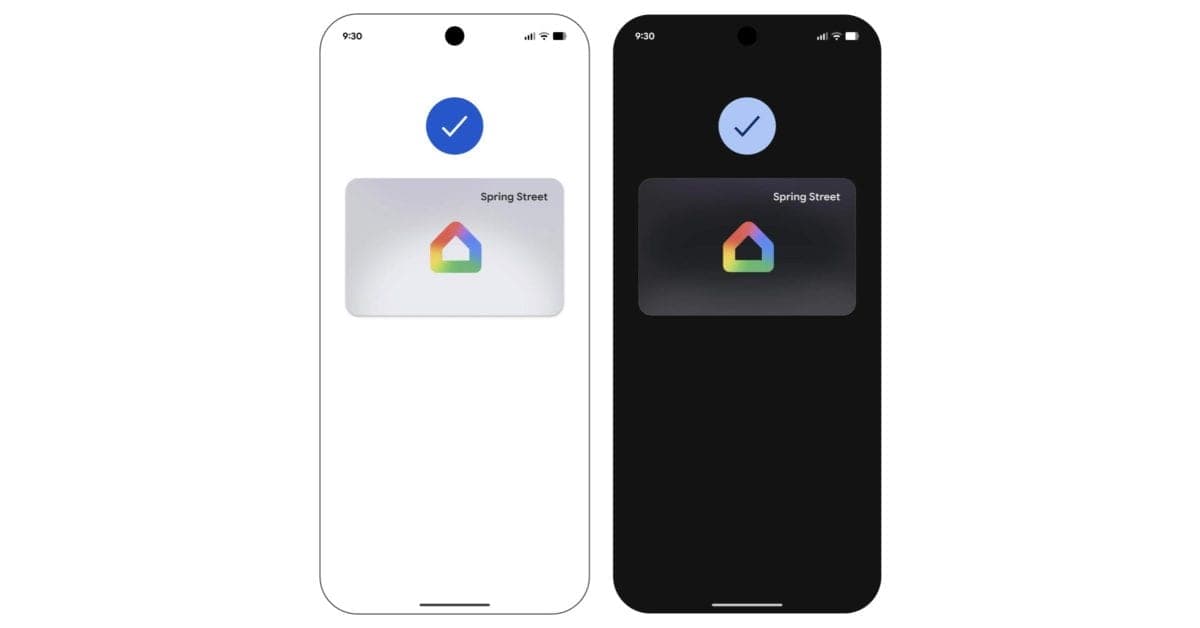
Google Wallet on Android now holds digital home keys for compatible smart locks in Google Home. Tap your phone to open the door, or let it unlock as you walk up.

Google will buy 50 MW of superhot geothermal power from Quaise in Oregon
Quaise Energy says Google agreed to buy 50 megawatts from Project Obsidian at Newberry Volcano from as early as 2030, the first commercial deal for superhot rock power.
Google will make Android app verification worldwide in January 2027
Google says Android developer verification starts rolling out in every region in January 2027, so apps from unregistered developers will need extra steps to install.
More in brief
- ASELSAN's EJDERHA electromagnetic weapon disables 51 drones with one commandNov 21
- Microsoft To Do will shut down on June 30, 2027Nov 21
- Medtronic's Hugo surgical robot cleared for general surgery in the USNov 21
- Google's Gemini now turns noisy fire radio into text for Watch DutyNov 21
- Internet Archive staff move to unionize with CWANov 20
- Etsy sellers are leaving over new terms that allow AI trainingNov 20