
AI·News & analysis
Google is shutting down Gemini's Gems, migrating everyone to 'Skills' instead
Google will start retiring Gemini's custom AI assistant feature, Gems, on November 17, automatically migrating them into a new 'Skills' system, though it hasn't said whether free users will keep access.
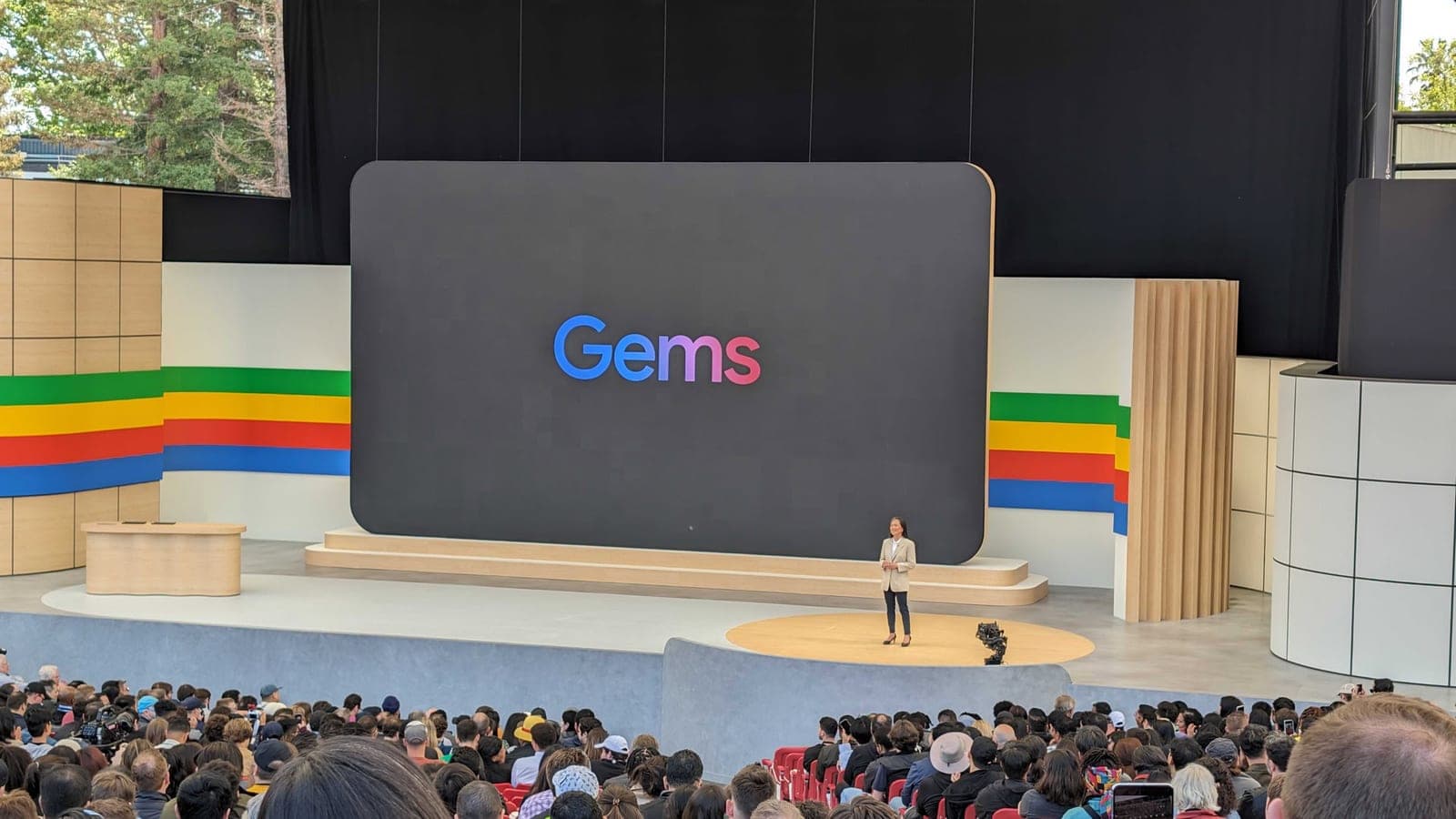
Google will retire Gemini's Gems feature starting November 17, automatically migrating custom AI assistants into a new 'Skills' system.
Gems, launched in 2024, let users build task-specific assistants like a coding partner or running coach. Skills currently require a Google AI Pro or Ultra subscription, and Google hasn't clarified whether free users will keep access to their migrated work. The move follows growing competition from all-in-one agents like Meta's Muse and Instinct.
What to know
- Google will start migrating Gemini's Gems feature to a new 'Skills' system on November 17, 2026.
- Gems, launched in 2024, let users build custom task-specific AI assistants like a running coach or coding partner.
- Skills are currently limited to users with a Google AI Pro or Ultra subscription, raising questions about what happens to free users' Gems.
- The change comes as all-in-one AI agents like Meta's Muse and Instinct gain traction, competing with Google's more fragmented feature approach.
Google giveth, and Google taketh away. Just two years after launching Gems, its custom AI assistant feature, the company is already shutting it down in favor of something called Skills.
What's changing
Google will start migrating Gems to Skills on November 17, 2026, according to a banner now showing inside the Gemini app's Gems manager. Users won't need to do anything to make the switch.
- Deadline: Migration begins November 17.
- What survives: Existing Gems remain usable until they're individually migrated, and the underlying work carries over rather than disappearing.
- What changes: Skills are used differently, typed in with a forward slash in a task thread instead of opening a dedicated Gem.
The catch: Skills currently require a Google AI Pro or Ultra subscription and access to Gemini Spark. Gems, by contrast, have always been available to free users too.
What Gems actually were
Launched in 2024, Gems let people build task-specific AI assistants without repeating the same instructions every time. Google shipped several pre-made options, including a learning coach, a brainstorming assistant, a career guide, a coding partner, and an editor.
In real life If you built a Gem to act as your running coach or trip planner, Google says that work will carry over into Skills automatically, though you may need a paid plan to actually use it after the migration.
Users could also build their own Gems from scratch, for things like a personal nutritionist or a dedicated vacation planner, and share those custom assistants with other people.
Skills are currently limited to Google AI Pro or Ultra subscribers, and Google hasn't said whether free users will keep any access to their migrated Gems once the transition finishes.
What Skills actually are
Skills aren't a brand-new standalone feature invented just to replace Gems. They're part of Gemini Spark, Google's broader personal AI agent system that launched with AI Ultra subscribers in May 2026 before expanding to AI Pro subscribers, who pay $20 a month, in July.
The big picture: inside Spark, Google splits a workflow into three pieces. A Skill is a reusable set of instructions with context attached, a Schedule is an automated trigger based on time or conditions, and a Task is the overall goal you're trying to get done. Skills are meant to be building blocks rather than standalone assistants.
Spark can also connect to outside services through what Google calls Connected Apps, including Google Workspace, Search, Canva, Instacart, and OpenTable, letting a Skill pull in real data or take real actions instead of just generating text. Spark additionally supports a remote web browser and computer with code execution, giving it more reach than a typical chatbot response.
You can call a Skill directly with a slash command, let Gemini decide when to apply it automatically, or combine several Skills inside one larger task, according to Google's own support documentation. That's a more modular system than Gems, which were mostly self-contained assistants built around one specific role.
Why now
The shift comes as competitors lean into a different approach entirely. Meta's Muse and the startup Instinct have both gained traction as all-in-one AI agents that handle tasks through plain conversation, without asking users to first build or select a specialized assistant.
By the numbers: Instinct raised a $1 billion round at a $10 billion valuation just this week, up from a $2.5 billion valuation a month earlier, a sign of how much momentum general-purpose AI agents currently have compared to Google's more compartmentalized Gems and Skills model.
Even under the new Skills branding, the underlying interaction model still isn't as simple as just typing into a chat window. Selecting a skill requires a forward slash command inside a task thread, an interface pattern more familiar to engineers than casual users.
How Google's approach differs from Muse
Google and Meta are betting on genuinely different structures for AI agents, not just different branding. Muse runs as a dedicated app across iOS, Android, a standalone website, and WhatsApp, with pricing tiers reaching up to $100 a month for its most capable version.
What's next: Muse also uses a dedicated secure virtual machine per user, with its own browser and an approval layer before it takes sensitive actions like making purchases, an architecture built specifically around trust for a single all-purpose agent.
Google, by contrast, spreads Gemini across Search, Gmail, Workspace, Chrome, and Android rather than concentrating it in one assistant. Skills and Schedules fit that same philosophy: modular pieces meant to slot into whichever Google product you're already using, rather than a single unified agent you talk to directly.
That structural difference is exactly what makes Gems' shutdown notable. Gems were Google's closest equivalent to a single, ownable assistant persona, and folding them into the more fragmented Skills system moves Google further from Muse's model rather than closer to it.
A familiar pattern for Google
Gems' shutdown fits a pattern critics have pointed to for years: Google tends to give new AI features their own name, icon, and prominent spot in its app navigation, only to fold them into something else once priorities shift.
This isn't unique to the AI era either. Google has a long history of launching and then retiring products and features, a pattern popularly nicknamed the "Google Graveyard." At one point, the company ran multiple separate messaging and communication apps simultaneously before consolidating them.
Gems lasted a little over two years before Google decided a different structure made more sense, which is a relatively short lifespan for a feature that was actively promoted as a way to make Gemini stickier for regular users.
Gems' wind-down was actually first reported over the weekend by 9to5Google, which had found code hints pointing to the change before Google's official in-app announcement.
What Gems users should do now
For now, Google says existing Gems will keep working right up until they're migrated, so there's no immediate need to recreate anything. The bigger open question is what happens after November 17 for users who don't pay for Google AI Pro or Ultra.
Android Authority reported that the "Learn More" link in Google's own in-app banner currently points to a support page that doesn't yet exist, suggesting Google hasn't finished working out exactly how free-tier access will work. Users hoping to keep their custom assistants without upgrading will have to wait for that page to go live.
Google AI Pro currently costs $20 a month, the entry point for Gemini Spark and, by extension, Skills. Whether that price becomes a hard requirement for anyone who wants to keep using what used to be a free feature is the single biggest open question hanging over this migration.
Analysts covering the AI agent race have generally framed Google's advantage as its reach across Search, Gmail, and Android rather than any single named feature, which lines up with a strategy that treats Gems, and now Skills, as just one piece of a much larger system.
The bottom line
Google is trading a feature people could actually shape and share for a walled-off, subscription-gated Skills system, mid-way through the season when standalone chat agents from Meta and startups like Instinct are proving that simpler, general-purpose assistants are what's winning. Whether Skills becomes a genuine upgrade or just Gems with an extra paywall depends entirely on what Google decides about free-tier access before the November 17 deadline arrives.
Key facts
- Migration starts
- November 17, 2026
- Gems launched
- 2024
- New feature name
- Skills
- Skills access
- Google AI Pro/Ultra only (unclear for free users)
- First reported by
- 9to5Google, over the weekend
Got questions?
Quick answers, plain wordsWhat is happening to Gemini's Gems feature?
Google is sunsetting Gems, its custom AI assistant feature, starting November 17, 2026. Gems will be automatically migrated into a new format called Skills.
Will I lose the Gems I already created?
No. Google says Gems will remain usable until they're migrated, and the work put into them will carry over into the new Skills format rather than being deleted.
What are Gemini Skills?
Skills are Google's replacement for Gems, meant to work across different AI tasks. Using one requires typing a forward slash in a task thread to select it, rather than a dedicated Gem interface.
Do I need a paid subscription to use Skills?
As of now, Skills are only available to users with a Google AI Pro or Ultra subscription and access to Gemini Spark. Google hasn't clarified whether free users will get any access after their Gems migrate.
What kinds of Gems did people build?
Google's pre-made Gems included a learning coach, brainstorming assistant, career guide, coding partner, and editor. Users also built their own, like running coaches, nutritionists, and vacation planners.
Why is Google getting rid of Gems?
Google hasn't given a detailed public reason beyond the Skills migration itself, but the change comes as all-in-one AI agents like Meta's Muse and Instinct, which don't require building separate task-specific assistants, gain popularity.
Who first reported the Gems shutdown?
9to5Google reported Gems' wind-down over the weekend, ahead of Google's official announcement inside the Gemini app.
Could Gems users share their custom assistants with others?
Yes, Gems could be shared with other users, which Google had hoped would help make the Gemini app more popular.
When exactly will Gems stop working?
Google says migration starts November 17, 2026, and Gems will keep working until they're individually migrated, which could take longer than a few days for some users.
Is this Google's first time shutting down a product or feature?
No. Google has a long history of retiring apps and features, often called the 'Google Graveyard' by users, including past cases of running multiple overlapping messaging apps at once.
SourcesTechCrunch
Topics and tagsGoogle, google, gemini, ai assistants
Related stories
Google's Guided Vision lets Gemini Live describe the world for blind and low-vision users
Point your Android phone's camera at something and Gemini describes it out loud, then tells you how to move the camera if it can't see well. Google built it with the blind and low-vision community.

Google's newest AI model is so good at finding security holes, you can't use it yet
Google announced Gemini 4 Argon, its new frontier AI model, but is initially releasing it only to trusted cyber defenders through a vetting program rather than the general public.

Google gives Gemini a talking face with Live Avatar
Live Avatar adds animated, lip-synced characters to Gemini 3.8 Live, Google's real-time voice model, in 97 languages. For now it's a business product.
More in brief
- arXiv limits researchers to two papers a month as AI drives submissions to a recordOct 2
- California will fine robotaxi companies that block first responders for over 30 minutesOct 2
- Microsoft launches real-time transcription and new voice models for AI voice agentsOct 1
- Apple's smart home hub reportedly launches October 13, with a camera that never records videoOct 1
- Cloudflare releases Clef, open-weight AI models that make yes-or-no decisions fastOct 1
- GrayKey maker reportedly found a way around the iPhone's Inactivity RebootOct 1