
AI·News & analysis
Google's Gemini 4 Hydrogen beats pricier Argon on one key score
Google released Gemini 4 Hydrogen, a fast model for everyday coding and agent work. It costs $1.50 per million input tokens and reaches the Gemini app and Search today.


Tide
Wave
Sci-fi
5/10
Reality
In your hands
A speedy AI helper that hands tasks to its bigger siblings.How we rate
Google released Gemini 4 Hydrogen, a fast AI model for everyday coding and agent work, in the Gemini app, Search and its developer tools.
It scores 51 on the Artificial Analysis Intelligence Index, one point above the larger Gemini 4 Argon. The API costs $1.50 per million input tokens and $7.50 per million output tokens. Hydrogen is rolling out globally today, replacing the Flash line.
What to know
- Google released Gemini 4 Hydrogen on November 12, a fast model for everyday coding and agent work, replacing the Flash line.
- Hydrogen scores 51 on the Artificial Analysis Intelligence Index, one point above the larger Gemini 4 Argon, and 54 at its top thinking level.
- Developers pay $1.50 per million input tokens and $7.50 per million output tokens, with the same price across the whole 1 million token window.
- It reaches the Gemini app, Google Search AI Mode, AI Studio, the Gemini API and Google Antigravity starting today.
Google announced Gemini 4 Hydrogen on November 12, a fast AI model for everyday coding and agent work. Here is the twist: its benchmark score is a point higher than the bigger Argon model that Google launched four weeks ago.
So why release a speedy model that appears to outrun its big sibling? Let's start with what Hydrogen is.
First, what is Hydrogen?
Hydrogen is the newest member of the Gemini 4 family. The family now has three models.
- Carbon and Argon: the frontier models. They are built for deep, long reasoning on hard problems.
- Hydrogen: the fast one. It is built for quick execution across many agent workflows.
An AI agent is a program that takes several steps on its own, like writing code, running a test and fixing the bug. Hydrogen is meant to do that kind of work quickly and cheaply.
Hydrogen also replaces the Flash line. Google skipped the "Flash" name this time. Its last Flash model, Gemini 3.8 Flash, launched in September.
How does it score?
Google points to the Artificial Analysis Intelligence Index, a score from an outside company that tests AI models. At its default "high" thinking level, Hydrogen scores 51. Argon scores 50.
Turn the thinking up to the new "xhigh" level and Hydrogen reaches 54. For comparison, Claude Sonnet 5.5 and GPT-6.1 Sol both score 55 at their top settings on the same chart.
By the numbers: compared with Gemini 3.8 Flash, Google says Hydrogen is a major jump.
- Speed: tasks finish 2.5 times faster at the default setting.
- Coding: it scores 57% on Terminal-Bench 4.1, up from 18.2%. That is a test of how well a model handles tasks in a command-line terminal.
- Accuracy: fabricated claims, where the model makes things up, drop by more than 5 times.
- Resilience: it adapts better when a tool call fails or a search comes back empty.
These numbers come from Google's own announcement, so treat them as the company's claims until more people test the model.
What does it cost?
For developers, the price is simple. An API is a doorway that lets apps plug into the model. Using it is billed in tokens, small chunks of text of about four characters each.
- Input: $1.50 per million tokens.
- Output: $7.50 per million tokens.
- Cached input: $0.075 per million tokens, a 95% discount on text the model has already seen.
The price is flat across the whole 1 million token context window. A context window is how much text the model can read at once. Many models charge more once you pass a certain size, and Hydrogen does not.
It can also write up to 1 million tokens in one answer. That is useful for long reports built from dense PDFs, spreadsheets, charts, audio and recorded video.
For comparison, our earlier story on Gemini 4 Argon covers its introductory price of $2 and $10 per million tokens.
Why would Google pair it with Carbon?
Here is the idea behind Hydrogen. Software teams use a big model for the hard thinking, like designing a system or hunting a subtle bug. Then they need a fast model to write code, run tests and check changes.
Think of an architect and a builder. The architect draws the plan, and the builder works fast to put it up.
Google is building that handoff into its coding tool, Google Antigravity. A new feature called Orchestrator switches between models inside one session.
- Carbon plus Hydrogen: on Terminal-Bench 4.0, Orchestrator reached near-Carbon success rates.
- Quota: it used 24% less quota, the usage allowance your plan gives you.
- Time: it finished 19% faster.
For jobs that need several agents at once, Carbon can act as the coordinator. Hydrogen then powers the worker agents and the verifier agents that test changes in separate workspaces.
In real life Say you ask an assistant to fix a bug in a big app. The big model reads the problem and plans the fix. Hydrogen then edits the files and runs the tests, which is the slow, repetitive part.
What can it do in practice?
Google shared a long list of demos. Some are practical and some are just fun.
- Coding: it makes small, focused edits instead of rewriting files that have nothing to do with the bug. It also reads many files in parallel instead of one by one.
- Partner tests: on data-heavy business work, partners saw it run 2 to 2.8 times faster than 3.8 Flash while using 12% to 23% fewer tokens.
- Spreadsheets: it turned Google Sheets into an animated pixel canvas using formulas.
- Slides: starting from a YouTube keynote video and a template, it built a multi-slide Google Slides deck and then fixed overlapping text.
- Web design: it built an online store page in one go, with 3D elements and a live product configurator.
Google also says Hydrogen ranks fifth on Agent Arena, a live benchmark from arena.ai for multi-step tasks like research and data analysis. It tops the Vals Tax Agent Bench at 52.3% and ties for first on the Vals Legal Research Bench at 55.8%.
What changes in the Gemini app and Search?
This is where most readers will notice it. In the Gemini app, Hydrogen is listed in the model picker as the model for everyday help.
Free users get it through the Auto model selection when it fits the question. Google says it follows your tone, format and rules more closely. It also calls the right tools more often, such as connected apps like Gmail, Google Drive, Airtable and Dropbox.
In Search, Hydrogen is the default model for AI Mode. It also handles the hardest questions in AI Overviews. Google says it understands multi-part questions and typos better, gives more visual answers and shows a wider range of links.
What's next: Google says Hydrogen is rolling out globally today, so it may take a while to show up on your account.
How does Google say it stays safe?
Because agents act on their own, Google put weight on safety claims. These come from its own tests.
- Overreach: it cuts overreach in agent tasks by up to 81%, compared with 3.8 Flash.
- Permissions: it is up to 2 times less likely to bypass permission limits when a task is blocked.
- Honesty: it scores 96.7% on Google's internal agent honesty test.
- Reasoning: it keeps 99.9% of its chain of thought readable across more than 200,000 audited turns. The chain of thought is the written reasoning the model shows before it answers.
- Prompt injection: it is more than 2.3 times more resilient on the Gray Swan benchmark. A prompt injection is a trick where hidden text on a web page tells an AI to do something its user never asked for.
Google also says its safeguards are better at telling real biosecurity risks from honest medical questions. False refusals on HealthBench Pro stay under 0.4%.
Who gets it, and where?
Hydrogen is available in many places at once.
- Developers: the Gemini API in AI Studio and Android Studio.
- Businesses: Gemini for business through the API or the model drop-down, and Gemini in Google Sheets on eligible plans.
- Everyone: the Gemini app model drop-down and Google Search.
- Coding tool: Google Antigravity, for paid Google AI Pro and Ultra subscribers.
Wait, is Argon already obsolete?
That is the awkward question. Argon launched less than four weeks ago. Carbon followed this week, and Google told developers to keep using Argon for daily coding.
Now a cheaper model scores higher on one index. On Google's own launch table Carbon still beats Argon, and the company says frontier models are for the hardest problems. One index is not the whole picture, so tasks with deep reasoning may still favor the big models.
Argon also offers fewer thinking levels. It has only medium and high, while Hydrogen adds low and xhigh.
What it means for you
- If you use Gemini or Search: you may already be using Hydrogen. Look for it in the model drop-down.
- If you build apps: test Hydrogen at $1.50 and $7.50 per million tokens before paying for a bigger model.
- If you write code with agents: try Antigravity's Orchestrator, which mixes big and fast models in one session.
- If you compare models: wait for independent tests, because the headline numbers come from Google.
The bottom line
Gemini 4 Hydrogen is Google's fast, cheap everyday model, and it reaches the Gemini app, Search and developer tools on day one. It scores a point above Argon on one index, which raises fair questions about where the big models fit.
The simple plan is to use the fast model for everyday work and call the big ones when the problem gets hard.
Key facts
- API price
- $1.50 input, $7.50 output per million tokens
- Context window
- 1 million tokens in, up to 1 million out
- Intelligence Index
- 51 (54 at xhigh), Argon scores 50
- Speed vs Gemini 3.8 Flash
- 2.5 times faster at the default setting
- Terminal-Bench 4.1
- 57% vs 18.2% for 3.8 Flash
Got questions?
Quick answers, plain wordsWhat is Gemini 4 Hydrogen?
It's Google's new fast, general-purpose AI model, released on November 12, 2026. Google calls it a daily driver for agentic workflows, meaning tasks where the AI takes several steps on its own. It takes the place of the Flash line.
How much does Gemini 4 Hydrogen cost?
Developers pay $1.50 per million input tokens and $7.50 per million output tokens. Cached input, which means text the model has already seen, costs $0.075 per million tokens. The price stays flat across the full 1 million token context window.
Is Gemini 4 Hydrogen free?
In the Gemini app, free users get Hydrogen when the Auto model selection decides it fits the question. Google says Hydrogen reaches all tiers of Google AI Studio and the Gemini app, and every user of Google Search.
How is Hydrogen different from Argon and Carbon?
Carbon and Argon are Google's frontier models, built for deep, long reasoning on the hardest problems. Hydrogen is built for fast execution of everyday work, and it can pair with them as the worker in multi-model setups.
Is Hydrogen smarter than Argon?
On one measure, yes. On the Artificial Analysis Intelligence Index, Hydrogen scores 51 at its default level against 50 for Argon. Carbon still leads Argon on Google's own launch table, and Google says its frontier models are for the hardest problems.
What are the four thinking levels?
Hydrogen can think at low, medium, high or a new xhigh level. High is the default. Higher levels spend more time and tokens reasoning, which costs more and takes longer, so you can pick the depth a task needs.
What is Orchestrator in Google Antigravity?
Orchestrator is a new feature that switches between models, such as Carbon and Hydrogen, inside one coding session. On Terminal-Bench 4.0, Google says it came close to Carbon's success rate while using 24% less quota and finishing 19% faster.
Does Hydrogen change Google Search?
Yes. Google says Hydrogen upgrades Search by better understanding long, messy or typo-filled questions, giving more visual answers and showing a wider range of links. It is the default model for AI Mode and handles the hardest questions in AI Overviews.
Is Hydrogen safer than Gemini 3.8 Flash?
Google says so. Compared with 3.8 Flash, it cuts overreach in agent tasks by up to 81% and is up to 2 times less likely to bypass permission limits. These are Google's own tests, not independent ones.
Where can I try Hydrogen today?
Open the model drop-down in the Gemini app, use Google Search, or build with the Gemini API in AI Studio and Android Studio. Paid Google AI Pro and Ultra subscribers can use it in Google Antigravity, and eligible business plans get it in Gemini in Google Sheets.
SourcesGoogle
Topics and tagsGoogle, AI agents, google, gemini
Go deeper
Earlier on this story
Related guide
Guide, 8 minHow to use Gemini: Live camera help, Skills and Android scam protectionUse Gemini Live with your camera, prepare for Gems turning into Skills, and switch on the opt-in scam protection in Google Messages.Related stories

Four Gemini 4 Argon agents beat Minecraft with no human help
Google DeepMind researchers gave four AI agents one goal, defeat the Ender Dragon, and no game tools. Twenty-seven hours and 605 deaths later, the dragon fell.
Google's Gemini 4 Argon reaches the Gemini app, Search and developers
Two weeks after a defenders-only debut, Google is rolling out Gemini 4 Argon to AI Pro and Ultra subscribers and to developers, with a robotics showcase on the side.
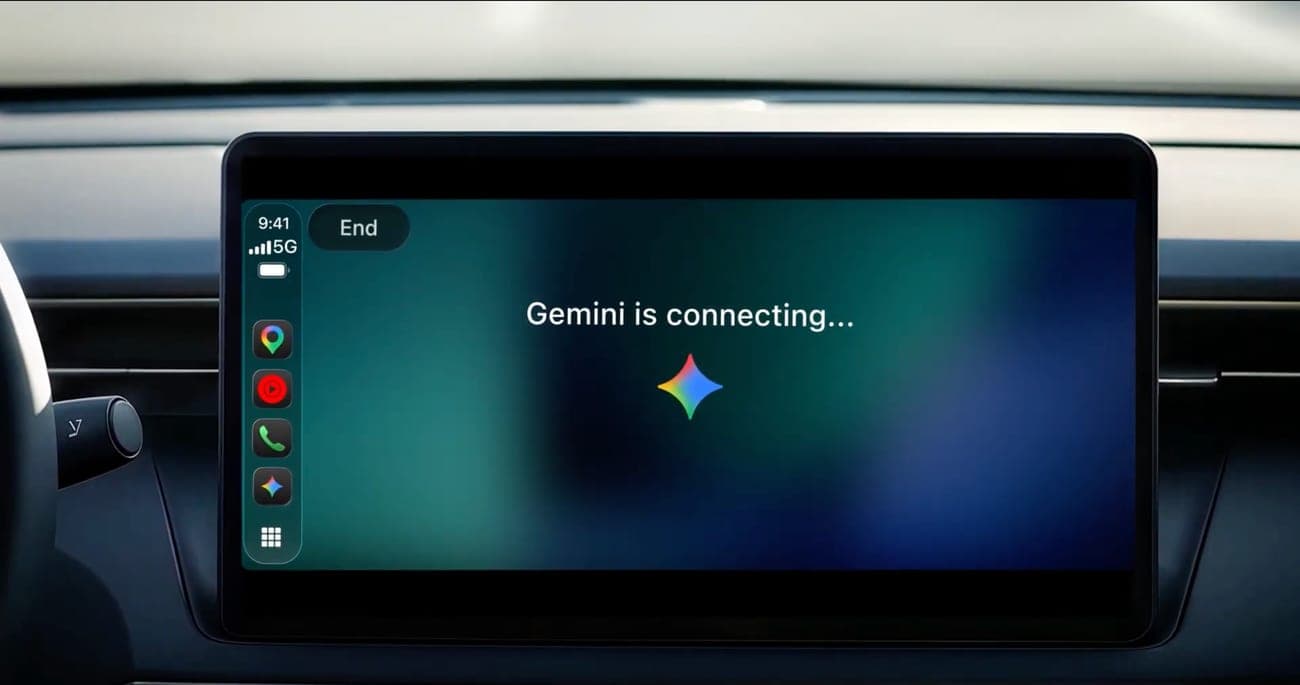
Google brings Gemini Live to Apple CarPlay for hands-free chats
Google's Gemini app is now rolling out on Apple CarPlay, so iPhone drivers can talk to Gemini Live about email, calendar and plans without touching the phone.
More in brief
- Tesla opens Cybercab orders at $29,990, plus $299 a month to drive itNov 14
- Apple Sports adds UFC with live stats for every fight on the cardNov 13
- LangChain raises $300 million at a $3 billion valuation for AI agentsNov 13
- SignDrop, a new Windows zero-day, gives attackers full System rightsNov 13
- Microsoft's AI Frontiers research group is over, says co-founder John LangfordNov 13
- BYD apologizes after wrong wheels ship on its Great Tang SUVNov 13