
Robots·News & analysis
Eka Robotics raises $150M for robot hands that feel what they grip
The Cambridge startup says its vision-force-action model picks about 1,500 objects an hour. A $150 million Series A at a $1.45 billion valuation will fund the push into real factories.
Tide
Ripple
Sci-fi
7/10
Reality
Demo
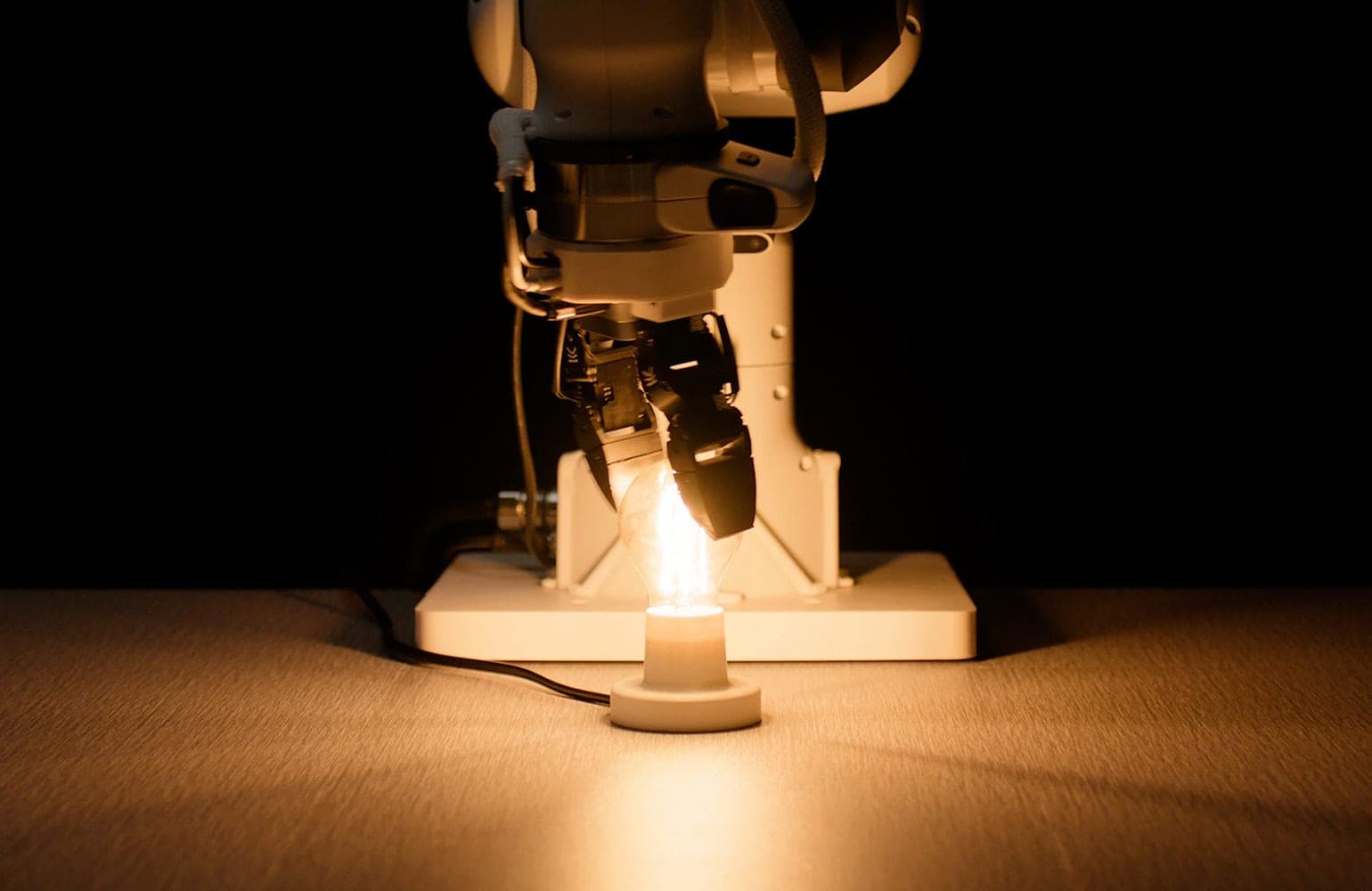
A robot that finally learned to hold a raspberry gently.How we rate
Eka Robotics raised a $150 million Series A at a $1.45 billion valuation, led by Andreessen Horowitz and F-Prime, for a model that lets robot hands sense grip force as well as see.
The company says its robots pick about 1,500 objects an hour with over 95% success, against roughly 600 for a human. Pilots with unnamed industrial customers are underway, and the money goes to more tasks and faster deployments.
What to know
- Eka Robotics raised a $150 million Series A at a $1.45 billion post-money valuation, led by Andreessen Horowitz and F-Prime.
- Its vision-force-action model adds force sensing to cameras, so a robot hand can adjust its grip mid-task.
- Eka says its robots pick about 1,500 objects an hour, against roughly 600 for a human, with more than 95% success.
- Pilots with unnamed industrial customers are running, but the system has not yet proven it can work a full year on a real line.
Eka Robotics has raised $150 million to build robot hands that feel what they hold, according to Andreessen Horowitz, which led the round. Now the fun part: why would a robot need a sense of touch to pick up a light bulb?
What did Eka announce?
Eka Robotics said it closed a $150 million Series A at a post-money valuation of $1.45 billion, TechCrunch reports. Andreessen Horowitz and F-Prime led it. F-Prime is a venture fund affiliated with FMR LLC, the parent company of Fidelity Investments.
The Robot Report says the money will help Eka scale its technology and its customer deployments. Earlier backers Obvious Ventures and E14 Fund came back for more. MFV Partners, Bison Ventures, Glasswing Ventures, Samsung Next and several Fortune 500 strategic investors joined.
- Founded: 2024, in Cambridge, Massachusetts.
- Seed round: about $11 million in May 2025, per PitchBook data cited by SiliconANGLE.
- Total raised: about $161 million.
What is a vision-force-action model?
Most robot AI today learns from what it sees. Cameras tell the robot roughly where an object is. Eka adds a second input: force.
Force sensors in a custom gripper tell the model how firmly the hand is holding something. SiliconANGLE says that lets a robot change its grip partway through a task if an object begins to slip.
Co-founder Pulkit Agrawal explained the logic to TechCrunch. "Vision tells you roughly where the object is," he said, "but the actual grabbing, the actual searching is happening through forces."
In real life Think about finding a keyhole in the dark. Your eyes are no help, so your fingers feel for the edge and guide the key in. Eka wants its robot to do the same thing.
Why it matters: Andreessen Horowitz says vision can tell a robot where a socket is, but once contact starts, the important information changes. Is one edge caught? Should the robot push, rotate or pull back? Touch answers those questions.
How does the robot learn?
Eka does not mainly teach its robot by showing it human demonstrations. It uses reinforcement learning inside a physics simulator instead.
A virtual robot can practice millions of variations in object position, friction and contact. It can also fail in ways humans rarely demonstrate. Eka told TechCrunch it can generate thousands of hours of robot experience in minutes.
Andreessen Horowitz points out two problems with demonstrations. They take human time, and people cannot show every way to drop an egg. The Robot Report says Eka argues robots should master physics, not mimic human data.
The classic risk is the sim-to-real gap, where a skill that works in a simulation falls apart on real hardware. Eka says its results show that barrier is falling. The a16z announcement admits contact is hard to simulate.
How good is it, really?
Here are the numbers Eka gave, as reported by TechCrunch and SiliconANGLE:
- Speed: about 1,500 picks an hour, against about 600 for a human.
- Success rate: more than 95% of picks.
- Weight: objects up to 1 kilogram.
- Variety: objects outside the training data, without retraining.
The Robot Report adds that the same robots can screw in a light bulb and insert wires. SiliconANGLE says Eka's announcement mentions jobs as varied as packing strawberries and assembling server racks for GPUs.
Kris Hauser, a professor at the University of Illinois Urbana-Champaign, told TechCrunch the demo had a "wow factor." He said the robot "was able to adapt to a large number of different objects without retraining."
Hauser also noticed that the robot would try again and again if it failed the first time.
What did the testers say?
TechCrunch spoke with a roboticist at a frontier lab who asked not to be named. This person handed the robot a raspberry, the lab's favorite test item.
The experience of a heavy arm rushing toward them and then slowing just in time to touch them gently stayed with them. They compared it to seeing legged robots first walk reliably five to 10 years ago.
The same person made a practical point. The arm is strong enough to hurt itself at that speed, which suggests the team trusts its software a lot.
The big picture: Raghu Raghuram, the a16z general partner who co-led the round, told TechCrunch he expects superhuman performance on many dexterous tasks over the next few months. That is a big claim, and it is his, not a result anyone has measured.
What is the catch?
Eka's own rivals and fans agree on one thing: the lab is not the factory. The a16z announcement says sustaining performance across full production shifts is the next test.
Hauser raised two open questions with TechCrunch:
- Endurance: can it run on a real assembly line for an entire year without breaking?
- Range: what he saw was pick and place, but many valuable factory jobs involve more than that.
Eka is working in pilots with several industrial customers it has not named, on pick-and-place and wire handling. SiliconANGLE notes the company says it picks about 1,500 items an hour, but those customers have not published results.
The hardware is a factor too. Agrawal told TechCrunch the gripper costs less than $1,000 and is rated for 5 million duty cycles for now. The goal is 20 million, the number standard industrial arms are built for.
Why does this approach stand out?
The robotics world has spent years on the "what to do" side. Vision models spot objects. Language models read instructions. TechCrunch notes that a general model might know plates go in a cupboard, while Eka's model is the part that lifts a dish without breaking it.
Co-founder Tuomas Haarnoja put the split this way to TechCrunch. Most of the field works from the top down, with high-level intelligence pushed toward the physical. Eka works from the bottom up.
TechCrunch also mentions critics such as Rodney Brooks, who argue that robot AI will fail without representing force and touch. Eka's early results, it says, suggest those critics have a point.
For a different take on robot hands, see how Boston Dynamics redesigned the Atlas hand with fewer fingers and a focus on durability.
What does Eka plan next?
Agrawal says the company is starting pragmatically with two areas: pick, arrange and place, and wire handling. The aim is to make both "home runs" before widening the scope.
"Once we have made home runs on them," he told TechCrunch, "the sky is the limit in how much we can do with the approach we are developing."
SiliconANGLE says the new money will help the model take on more tasks and speed up customer deployments. Wired reported in April on a demo of an earlier version, where the grippers screwed in light bulbs and packed chicken nuggets onto a moving conveyor, SiliconANGLE adds.
What's next: watch for named customers and numbers from real production lines. Those will say more than any demo video.
What it means for you
- Factory and warehouse workers: hands-on jobs such as sorting, packing and wire handling are the first targets, and pilots are only starting.
- Anyone buying automation: ask for results over months of production, not minutes of demo, before trusting a throughput claim.
- Robot watchers: force sensing is becoming a serious rival to camera-only approaches, so expect other labs to answer.
- Everyone else: a robot that can hold an egg is still a long way from one that does your dishes.
The bottom line
Eka Robotics got $150 million to back a simple idea: robots need a sense of touch, not only eyes. The early demos impress experienced roboticists, and the numbers come from the company.
The next proof is a year on a real production line. Until then, this is a promising demo with serious funding behind it.
Key facts
- Round
- $150 million Series A
- Valuation
- $1.45 billion post-money
- Lead investors
- Andreessen Horowitz and F-Prime
- Claimed speed
- About 1,500 picks an hour
- Gripper cost
- Under $1,000
Got questions?
Quick answers, plain wordsWhat is Eka Robotics?
Eka Robotics is a Cambridge, Massachusetts startup founded in 2024 by MIT professor Pulkit Agrawal and former Google DeepMind researcher Tuomas Haarnoja. It builds AI and hardware for robots that handle objects with their hands.
How much did Eka Robotics raise?
It raised a $150 million Series A at a $1.45 billion post-money valuation, according to TechCrunch. SiliconANGLE adds that investors have now put about $161 million into the company, after an $11 million seed round reported by PitchBook.
Who led the funding round?
Andreessen Horowitz (a16z) and F-Prime, a venture fund affiliated with FMR LLC, the parent of Fidelity Investments, led the round. Obvious Ventures, E14 Fund, MFV Partners, Bison Ventures, Glasswing Ventures and Samsung Next also took part.
What is a vision-force-action model?
It is an AI model that learns from camera images and from force data at the same time. Force sensors in the gripper tell it how firmly it is holding something, so it can react when an object starts to slip.
How is it different from a vision-language-action model?
A vision-language-action model links language, images and actions. Eka's model focuses on the link between vision, force and action, which TechCrunch says matters most for the final millimeter of a grasp.
How fast is Eka's robot?
Eka says it picks about 1,500 objects an hour, objects that can weigh up to 1 kilogram, and that more than 95% of picks succeed. The human baseline Eka uses is about 600 an hour.
How does Eka train its robots?
Mostly with reinforcement learning in a physics simulator, not by copying human demonstrations. Eka says it can generate thousands of hours of robot experience in minutes, then move that learning to real hardware.
Can I buy an Eka robot?
Not yet as a product you can order. TechCrunch says Eka is running pilots with several unnamed industrial customers on pick-and-place and wire-handling work.
How much does the gripper cost?
TechCrunch reports that Eka's gripper hardware costs less than $1,000. It is rated for 5 million duty cycles for now, and the goal is 20 million, the bar for standard industrial arms.
What is still unproven?
Kris Hauser, a professor at the University of Illinois Urbana-Champaign, says the system must run for a year on a real assembly line without failing. He also notes that what he saw was pick and place, and many factory jobs need more than that.
SourcesAndreessen Horowitz
Topics and tagsIndustrial robots, Funding & deals, eka robotics, dexterous manipulation
Go deeper
Related stories
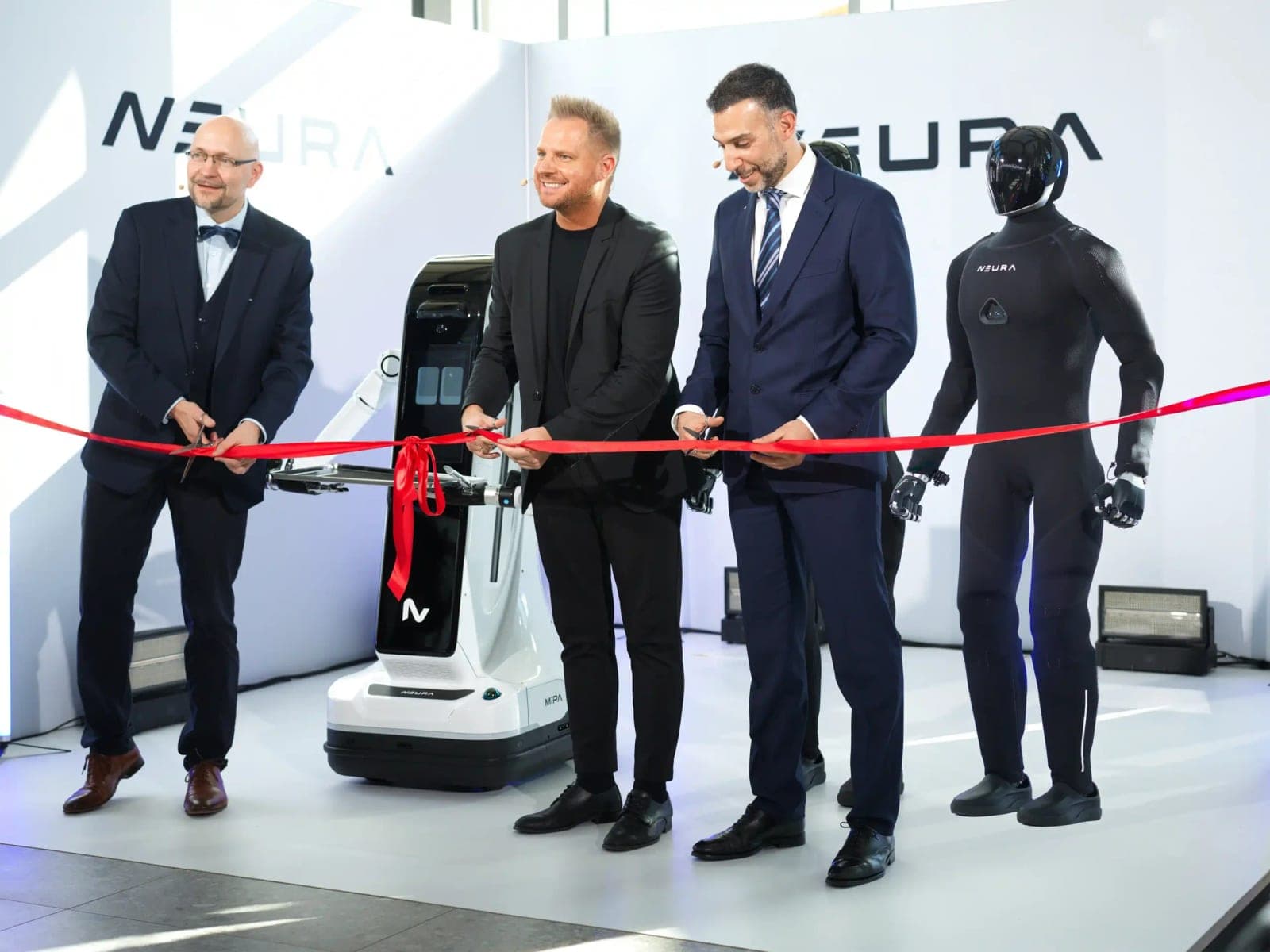
NEURA and TUM open RoboGym in Munich and show the 4NE1 Gen 4 humanoid
NEURA Robotics and the Technical University of Munich opened a 2,300 square meter robot training center near Munich Airport. NEURA also unveiled 4NE1 Gen 4, a humanoid that is 20 percent lighter than the last one.
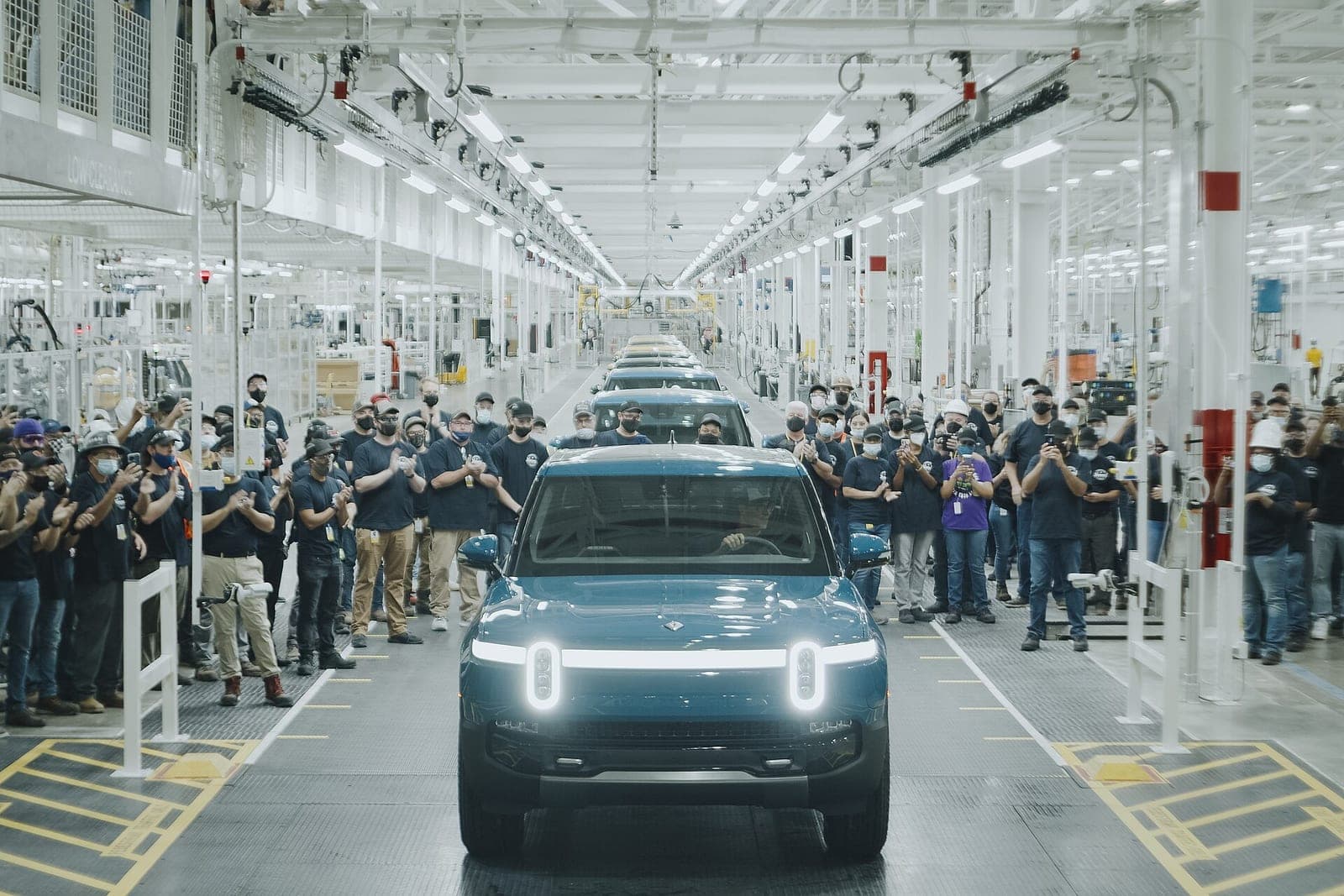
Rivian's robot spinoff Mind Robotics hires ex-Ford EV chief Doug Field
The engineer behind Tesla's Model 3 ramp and Apple's car project will run day-to-day work at Mind, the $1 billion-plus startup teaching robots on Rivian's factory lines.
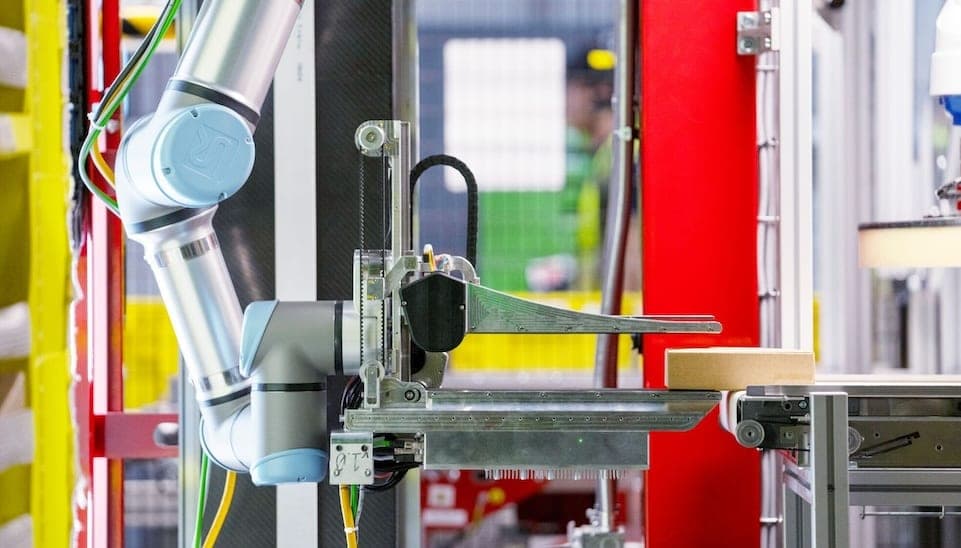
AWS releases open-source toolchain to train and deploy robot AI
Amazon Web Services launched the Physical AI Toolchain, an open-source kit that connects synthetic data, training, simulation and edge deployment for robots, built on NVIDIA's robotics software.
More in brief
- Spotify's Family plan now asks some members to scan a QR codeOct 22
- Dream Labs raises $90M and opens a public API for one robot brainOct 22
- Agile Robots launches Agile ONE SN, a small humanoid for research labsOct 22
- Schaeffler opens a factory where humanoid robots build parts for humanoidsOct 22
- Tesla's Q3 profit fell 43% as AI and Optimus spending climbedOct 22
- Meta creates a new class of non-voting shares to fund its AI pushOct 21