
Robots·News & analysis
Rivian's robot spinoff Mind Robotics hires ex-Ford EV chief Doug Field
The engineer behind Tesla's Model 3 ramp and Apple's car project will run day-to-day work at Mind, the $1 billion-plus startup teaching robots on Rivian's factory lines.
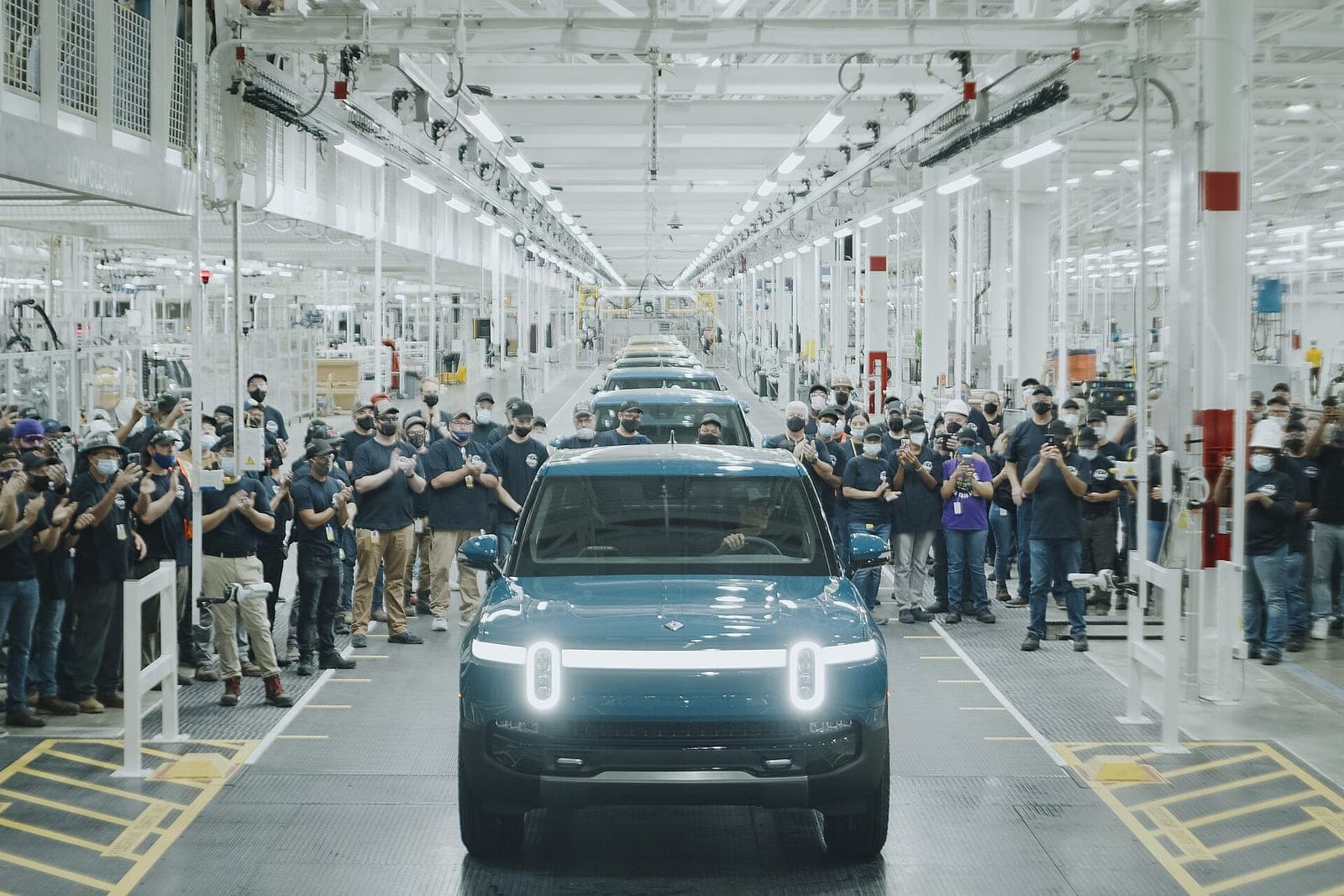
Tide
Ripple
Sci-fi
7/10
Reality
Lab
Robots that learn a car factory by watching the people who run it.How we rate
Mind Robotics, the factory robot startup Rivian spun out in 2025, hired former Ford EV chief Doug Field as president.
Field will run product, engineering and operations day to day, while Rivian CEO RJ Scaringe stays on as chairman. The startup has raised more than $1 billion and trains its AI on Rivian's live vehicle lines. It has not shown its robots in public yet, and Rivian will be its first customer.
What to know
- Doug Field, who led EV and software work at Ford until April, is the new president of Mind Robotics, the industrial robot startup Rivian spun out in 2025.
- Field takes over day-to-day product, engineering and operations; Rivian CEO RJ Scaringe stays involved as chairman.
- Mind has raised more than $1 billion from investors including Kleiner Perkins, Accel, Andreessen Horowitz, Eclipse and the venture arms of Volkswagen and Salesforce.
- Mind trains its AI on live Rivian production lines, and Rivian, which owns about a third of the startup, will be its first customer.
Mind Robotics, the factory robot startup that Rivian spun out last year, has hired Doug Field as its president, TechCrunch reports. The news was shared onstage at TechCrunch Disrupt 2026 in San Francisco on Tuesday.
That's the headline. The better question: why would a man who spent his career building cars now want to build robots that build cars?
Who is Doug Field?
If you have followed electric cars over the last 15 years, you have probably run into his name. Field has worked at almost every company that tried to rethink the car.
- Segway: employee No. 1, per TechCrunch.
- Apple, first stint: vice president of Mac hardware engineering, The Verge reports.
- Tesla, 2013 to 2018: chief vehicle engineer and senior vice president of engineering. He oversaw the Model 3 and helped get the sedan through what became known as "production hell."
- Apple, second stint: vice president of special projects and de facto head of Project Titan, Apple's electric, self-driving car effort. Apple canceled it in 2024.
- Ford, 2021 to April 2026: ran the automaker's EV and software division. He left in April as part of a wider reshuffle of Ford's leadership, TechCrunch says.
The big picture: Field's whole résumé is about one hard problem. Taking a new technology out of the lab and into something that gets built in large numbers.
What is Mind Robotics, exactly?
Mind is an industrial AI and robotics startup. RJ Scaringe, Rivian's founder and CEO, created it in 2025. It started inside Rivian under the code name Project Synapse, as an effort to build "robotics with human-like skills," TechCrunch reported in March.
The company builds the whole stack. That means purpose-built robots, the AI foundation models that run them and the systems to deploy them in factories.
A foundation model is a large AI model trained on huge amounts of data, which can then handle many tasks. Chatbots run on foundation models trained on text. Mind wants one trained on how real things get built.
On its own website, Mind Robotics says it is "building universally capable robots to transform industrial work," starting on the factory floor.
How do the robots learn?
Mind says it is collecting video data at industrial scale, capturing live work on the production line as it happens. Its models learn from skilled operators performing dexterous tasks: the actions, the tools, the context and the decisions behind each step.
In real life Think of a new hire who spends weeks watching the best person on the line. They notice how that person wiggles a stubborn connector into place, not just what the manual says. Mind wants its robots to learn the same way, from many hours of real shifts.
The company lists four kinds of work it is training for:
- Pick and place: grabbing parts that sit at different angles or are partly hidden.
- Sorting: telling apart items that look alike and routing each one correctly at line speed.
- Fastening: joining parts that don't always line up, adjusting force and order, and recovering when something goes wrong.
- Connectors: getting a secure fit on flexible wiring harnesses with tight tolerances.
Why it matters: Classic factory robots are great at the same motion repeated perfectly. Mind is going after the messy jobs that have always needed human hands. The robot can drop as many connectors as it likes during training, and nobody has to crawl under the conveyor to find them.
Why does Rivian matter so much here?
Rivian is Mind's built-in classroom. Scaringe describes Rivian as "a live, high-volume manufacturing environment for model training and deployment," according to TechCrunch.
- Data: Mind uses AI training data from Rivian, The Verge reports.
- Testing: the robots will be tested first in Rivian's factories.
- First customer: Rivian will be the first buyer.
- Ownership: Rivian reported owning about a third of Mind as of June 30, 2026.
Scaringe has said he wants to keep the two companies separate rather than fold robots into the carmaker, The Verge notes. That is a different path from Tesla, which builds its Optimus humanoid in-house. We covered how hard that is in our story on Tesla's Optimus production ramp.
Is it a humanoid?
Scaringe says Mind won't try to copy all of the biomechanics of a human, TechCrunch reports. The Verge adds that the company hasn't confirmed whether it is building a humanoid design or something else entirely.
The catch: nobody outside the company has seen a Mind robot yet. The startup has not shown its robots in public. Mind's site describes hardware that "works alongside the people and systems already in place."
That puts Mind in a crowded and busy field. Tesla and Hyundai are among the companies pursuing humanoid robots for factory and warehouse work, The Verge notes. It is a very exciting time to be a robot, and a slightly confusing time to guess what one will look like.
Who's paying for all this?
A lot of people. Mind has raised more than $1 billion in under a year.
| Round | Amount | Notes |
|---|---|---|
| Seed (2025) | $115 million | From Eclipse |
| March 2026 | $500 million | Reported by TechCrunch |
| About two months later | $400 million | Led by Kleiner Perkins |
The latest round valued Mind at more than $3 billion, according to the Wall Street Journal, as cited by TechCrunch. Investors include Accel, Andreessen Horowitz, Eclipse, Kleiner Perkins and the venture arms of Volkswagen and Salesforce. Volkswagen also has a software joint venture with Rivian.
By the numbers: Mind has 32 open positions, The Verge reports, across research, hardware, robotics software and more. The company is based in Palo Alto, California.
So what changes with Field in charge?
Scaringe will stay involved as chairman. Field will run the day-to-day business, including product, engineering and operations, TechCrunch reports.
Field's job is to turn a well-funded research effort into robots that actually work on a real production line. That is the same leap he worked on with the Model 3.
Scaringe told the Disrupt audience he called Field to ask for a recommendation for the role. The two then started talking about how to build and deploy robots "into our society, into our economy," and found they agreed on the mission and on how to build teams.
In a statement, Scaringe called Field "a remarkable leader with a track record of delivering new technologies in successful products." He added: "That's exactly what Mind needs as we deploy robots into real factories and beyond."
In his own statement, Field called integrating AI and robotics one of the most important, and most difficult, engineering challenges of our time. Then he named what he sees as Mind's edge:
"Mind has assembled an exceptional team and has a unique advantage: the ability to deploy and learn inside a real, high-volume factory from day one."
He added that he is "thrilled to join RJ in building a team, culture, and technology that will redefine what we can make in America."
Is this Rivian's only spinoff?
No. Mind is the second company Scaringe has spun out of Rivian. The first is Also, a micromobility company that is starting with high-end e-bikes.
The setup is similar. Scaringe is chairman at Also, and Chris Yu, the former chief product officer of Specialized, runs it day to day. Also has raised more than $300 million, per TechCrunch. Rivian owns about a third of it too.
What's next: Field starts building out the team, and the first test is Rivian's own vehicle lines. If Mind's robots work there, other manufacturers become the obvious next customers.
What it means for you
- Nothing to buy yet: Mind's robots are not on sale and have not been shown in public. This is a factory story, not a gadget story.
- Watch the factory floor: if robots learn messy jobs like plugging in wiring, cars and other products could get built faster and with fewer defects over time.
- Physical AI is getting real money: more than $1 billion for one startup in under a year shows how much investors are betting on AI that works with its hands, not just with words.
The bottom line
Mind Robotics just hired one of the best-known engineers in the car world to run it. He has done this before: taking an ambitious machine and getting it built at scale. Now the startup has to show its robots can do real work on Rivian's lines.
Key facts
- New role
- Doug Field, president of Mind Robotics
- Funding raised
- More than $1 billion
- Valuation
- More than $3 billion (WSJ, via TechCrunch)
- First customer
- Rivian, which owns about a third of Mind
- Open jobs
- 32 (The Verge)
Got questions?
Quick answers, plain wordsWhat is Mind Robotics?
Mind Robotics is an industrial AI and robotics startup that Rivian CEO RJ Scaringe founded in 2025 and spun out of Rivian. It builds robots and the AI models that run them for factory work, starting with car manufacturing.
Who is Doug Field?
Field is an engineer and executive who was employee No. 1 at Segway, led Mac hardware engineering at Apple, ran vehicle engineering at Tesla during the Model 3 ramp, led Apple's car project and then ran Ford's EV and software work from 2021 until April 2026.
What will Doug Field do at Mind Robotics?
As president, he will handle the day-to-day business, including product, engineering and operations, according to TechCrunch.
Is RJ Scaringe leaving Mind Robotics?
No. Scaringe stays involved as chairman. The Verge describes him as acting CEO and chair. He remains CEO of Rivian.
How much money has Mind Robotics raised?
More than $1 billion: a $115 million seed round from Eclipse, a $500 million round in March 2026 and a $400 million round led by Kleiner Perkins about two months later, per TechCrunch.
Is Mind Robotics building a humanoid robot?
Scaringe has said Mind won't try to copy all of a human's biomechanics. The Verge notes the company hasn't confirmed what form its robots take.
Can I see Mind's robots?
Not yet. The company has not shown its robots in public, The Verge reports.
What tasks will Mind's robots do?
Mind's website lists pick and place, sorting, fastening and plugging in connectors: tasks where parts vary and the robot has to adjust instead of repeating one fixed motion.
Does Rivian own Mind Robotics?
Rivian holds a minority stake. It reported owning about a third of Mind as of June 30, 2026, and it will be Mind's first customer.
What was Project Synapse?
Project Synapse was the early internal name for Mind Robotics, when Scaringe started it as an effort to build robots with human-like skills, TechCrunch reported in March.
SourcesTechCrunch, mindrobotics.com
Topics and tagsApple, Tesla, Industrial robots, mind robotics
Go deeper
Related stories
AWS releases open-source toolchain to train and deploy robot AI
Amazon Web Services launched the Physical AI Toolchain, an open-source kit that connects synthetic data, training, simulation and edge deployment for robots, built on NVIDIA's robotics software.

Boston Dynamics names former Alexa chief Rohit Prasad as its new CEO
The man who helped build Alexa now runs the company behind Spot, Stretch and Atlas. He starts on October 7 with a clear brief: put more AI in the robots.
Runway's Praxis-1 wants to teach robots from video instead of demos
The AI video company announced Praxis-1, an open-weight model that turns its video pretraining into robot control, and is testing it with early partners before a public release.
More in brief
- Anthropic tells investors its Q3 revenue hit $16.8 billion ahead of its IPOOct 15
- Mexico gives Meta, TikTok and X one month to shield kids from harmful contentOct 15
- OpenAI engineer charged over hidden recording device in executive roomOct 15
- Eight US states sue OpenAI over ChatGPT's safety for kidsOct 14
- Xbox Nano is a $50 controller small enough for your pocketOct 14
- Linux kernel developers move to drop the rule that made coders disclose AI helpOct 14