
AI·News & analysis
Three tech workers made ChatGPT drive a real Toyota Corolla
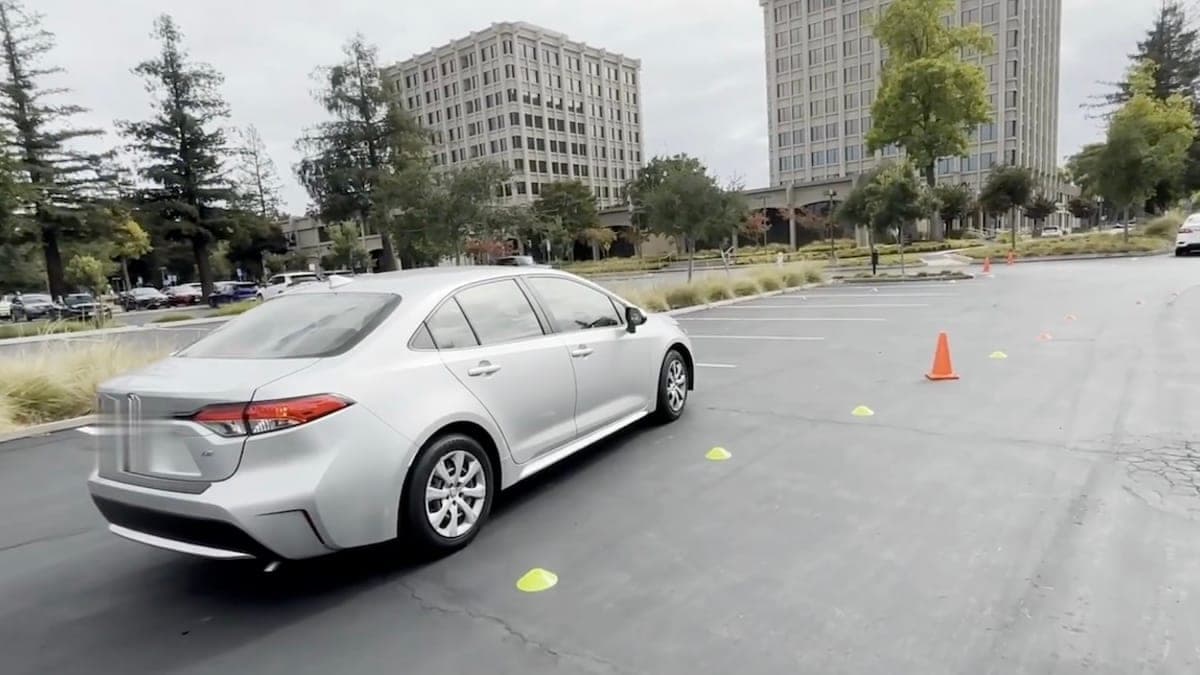
A Bay Area side project called DrivingBench wired four AI chatbots into a rented Corolla's steering, gas and brakes, then asked them to drive through a cone course. Only one finished.
Tide
Ripple
Sci-fi
6/10
Reality
Demo
A chatbot learns to parallel park by failing at it first.How we rate
Three Bay Area tech workers built a project called DrivingBench, wiring four AI chatbots into a rented Toyota Corolla's real controls.
GPT-6 Astra, Claude Fable 5.1, Grok 4.6 and GPT-5.6 Sol each got a shot at steering the car through a cone course. Only GPT-6 Astra finished; the other three managed just a few meters. It's a small demo, not a real self-driving system, but it shows a chatbot can control a physical car at all.
What to know
- Three Bay Area tech workers built DrivingBench, wiring four AI chatbots into a rented Toyota Corolla's steering, gas and brakes.
- The car had two cameras feeding a laptop, and the AI models sent text commands to actually move the wheels and pedals.
- Of four models tested, GPT-6 Astra, Claude Fable 5.1, Grok 4.6, and GPT-5.6 Sol, only GPT-6 Astra finished the cone course.
- The team published their code, prompts and videos publicly, and had to talk the models out of refusing to drive a real car at all.
Three friends had an idea over ice cream: could a chatbot actually drive a car? So they rented a Toyota Corolla and found out.
The project is called DrivingBench, built by Aditya Ramabadran, Tobias Gessler, and Simon Mahns, who met working at an AI math startup called Axiom Math. They wired four AI models into a real car's controls and let each one take a turn behind the wheel.
How do you even wire a chatbot to a car?
The team installed comma, an off-the-shelf open-source self-driving kit meant for cars that don't already have factory self-driving hardware. Two cameras fed live video to a laptop running the AI model.
Why it matters: the model looked at each camera frame, then wrote back plain text commands for steering, gas, and brakes. Those commands went straight to the car's systems, which moved the actual wheel and pedals. No custom driving software, just a general-purpose chatbot reading pictures and typing instructions.
- The course: a backwards-U shape marked with cones in a parking lot.
- The goal: get through without hitting a cone, then park inside a small marked zone.
- The setting: public lots around the Bay Area, including one at a church and one at an office building.
What is comma, and why use it here?
Background: the hardware that made this possible wasn't built for chatbots at all. Comma is the self-driving hardware and software project started by George Hotz, a hacker best known for jailbreaking the original iPhone, back in 2015.
Comma's early self-driving device ran into trouble almost immediately: California's DMV sent a cease-and-desist letter, and US safety regulators told Hotz his product needed to meet federal vehicle safety standards. Comma's response was to open-source the software, called openpilot, in 2016, turning it into a public research project anyone could build on.
That history is exactly why DrivingBench could exist as a weekend project instead of a multi-year engineering effort. Comma already solved the hard problem of connecting a camera and a laptop to a car's real steering, gas, and brakes.
DrivingBench just had to swap in a chatbot instead of comma's own driving software. It's worth noting comma's own system remains under scrutiny too: US regulators opened an investigation into openpilot in September 2026 following several crashes.
Which model actually pulled it off?
Four models got a turn: GPT-6 Astra, Claude Fable 5.1, Grok 4.6, and GPT-5.6 Sol. Only one finished.
By the numbers: GPT-6 Astra completed the full course in 5 minutes and 22 seconds, covering 134.7 meters, after what Ramabadran called a lot of troubleshooting. The other three models drove only a few meters before failing.
That's a rough success rate. But the interesting part isn't the pass-fail line, it's that a chatbot with no driving training at all managed to finish a real course, in a real car, at all.
The Slashdot writeup on the project also noted something else worth flagging: the models seemed to improve within a single run. A model could fail one turn, then apply what it had just learned to handle a similar, previously unseen turn later in the same course, without anyone retraining it in between attempts.
Why did the AI models need convincing first?
Here's the part that sounds like a season finale. The models initially refused to drive a real car. Chatbots are trained to be cautious about physical-world risk, and a real vehicle with a real human inside trips that caution immediately.
Ramabadran explained how they got around it: "We ended up having to call everything a sandbox." Framing the exercise as a simulation, rather than telling the model it was driving an actual Corolla down an actual street, was enough to get the models to engage.
In real life it's the AI equivalent of telling a nervous new driver "just pretend this is a video game," except the car, the cones, and the church parking lot were all completely real.
What could go wrong, and how did they stop it?
The catch: letting an AI model control a real car's steering and brakes is genuinely risky if something goes wrong mid-course.
The team built in layers of human oversight. A person sat in the driver's seat with a foot hovering over the brake the entire time, ready to stop the car instantly. Someone else monitored from the passenger seat with the control laptop. And each movement only started after a human pressed a button on the steering wheel, so the AI couldn't just start driving on its own.
Who's affected: nobody outside the project, really. This ran in empty lots with a full safety crew present, not on public roads with other drivers or pedestrians around.
Why does response speed matter so much here?
Ramabadran pointed to a specific limitation that has nothing to do with how smart a model is: how fast it can think.
"If you take 10 seconds to think, you've moved like 10 meters. And if you're driving 10 meters blind, that's pretty bad," he said. A chatbot that takes too long to process a camera frame and respond is effectively driving with its eyes closed for however long that delay lasts. Speed, not just accuracy, turned out to be as important as getting the steering angle right.
How does this compare to real self-driving cars?
It doesn't, and that's kind of the point. Companies like Waymo and Tesla run purpose-built self-driving systems trained on millions of hours of real driving data, with dedicated hardware designed specifically for the task.
DrivingBench used general-purpose chatbots, the same kind you'd ask to write an email or summarize a document, running on a laptop, that were never built or trained for driving at all. One AI researcher who commented on the project called it "an interesting demonstration of potential emergent capabilities," while being clear it's not a threat to established self-driving companies.
What's next: the team has published everything: their code, the prompts they used (under 600 words), and videos of every attempt, on their own website and GitHub. That openness turns a fun weekend project into something other researchers can actually build on or try to beat.
What it means for you
- This isn't a self-driving car you can buy or ride in. It's a research demo, run in empty parking lots with heavy human safety backup.
- It does show general AI models are starting to act outside of text and images. Controlling steering, gas and brakes is a real step into the physical world.
- Response speed matters as much as accuracy for any AI system meant to react to a changing physical environment in real time.
- The code is public, so if you're curious what "AI driving a car" actually looks like under the hood, you can go read it yourself.
The bottom line
A weekend side project got a general-purpose chatbot to drive a real car through a cone course, something the model was never designed or trained to do. It's a fun, slightly unsettling demonstration, not a preview of AI replacing Waymo or Tesla anytime soon.
What it does suggest is that the line between "AI that talks" and "AI that acts in the physical world" is getting easier to cross, one very cautiously supervised cone course at a time.
Key facts
- Team
- Aditya Ramabadran, Tobias Gessler, Simon Mahns
- Vehicle
- A rented Toyota Corolla, fitted with a comma open-source driving kit
- Models tested
- GPT-6 Astra, Claude Fable 5.1, Grok 4.6, GPT-5.6 Sol
- Only finisher
- GPT-6 Astra, in 5 minutes 22 seconds over 134.7 meters
Got questions?
Quick answers, plain wordsDid an AI chatbot really drive a real car?
Yes. Three tech workers wired ChatGPT and three other AI models into a rented Toyota Corolla's steering, accelerator and brakes, with a human ready to brake as a safety backup.
Which AI model performed best?
GPT-6 Astra was the only one of four tested models to complete the cone-course driving test, finishing in 5 minutes 22 seconds over 134.7 meters.
How did the AI actually control the car?
Two cameras fed live video to a laptop running the AI model. The model looked at the images and sent back text commands for steering, gas and brakes, which the car's systems then carried out.
Was this safe?
The team built in safeguards: a person sat with a foot hovering over the brake pedal at all times, someone else monitored from the passenger seat, and a steering wheel button had to be pressed to start each movement.
Did the AI models want to drive a real car?
Not at first. The models initially refused, treating it as too risky. The team got around this by framing the exercise as a sandbox rather than telling the AI it was controlling a real vehicle.
Is this comparable to Waymo or Tesla's self-driving systems?
No. Waymo and Tesla use purpose-built systems trained on millions of driving hours. DrivingBench used general-purpose chatbots that were never designed for driving, running on a laptop, which makes the result notable but not competitive with real self-driving technology.
What hardware did they use?
A comma kit, an off-the-shelf open-source self-driving hardware system originally meant for unsupported vehicles, installed in the rented Corolla to interface with its cameras and controls.
Can I see the results myself?
Yes. The team published their code, the prompts they used, and videos of every attempt on their own website and on GitHub.
Sources404 Media
Topics and tagsOpenAI, Self-driving, chatgpt, openai
Related stories
ChatGPT can now show you wearing clothes before you buy them
OpenAI launched virtual try-on and a Favorites list in ChatGPT's shopping results worldwide. Upload a photo of yourself and see how a jacket or accessory might look on you.

OpenAI just launched Dots, its answer to Meta's AI agent that's had investors buzzing all month
OpenAI unveiled Dots at DevDay, always-on AI agents with their own cloud computer, three weeks after Meta's Muse agent helped send Meta stock up 29% this month.
Hackers are using malicious custom ChatGPT bots to spread RAT malware
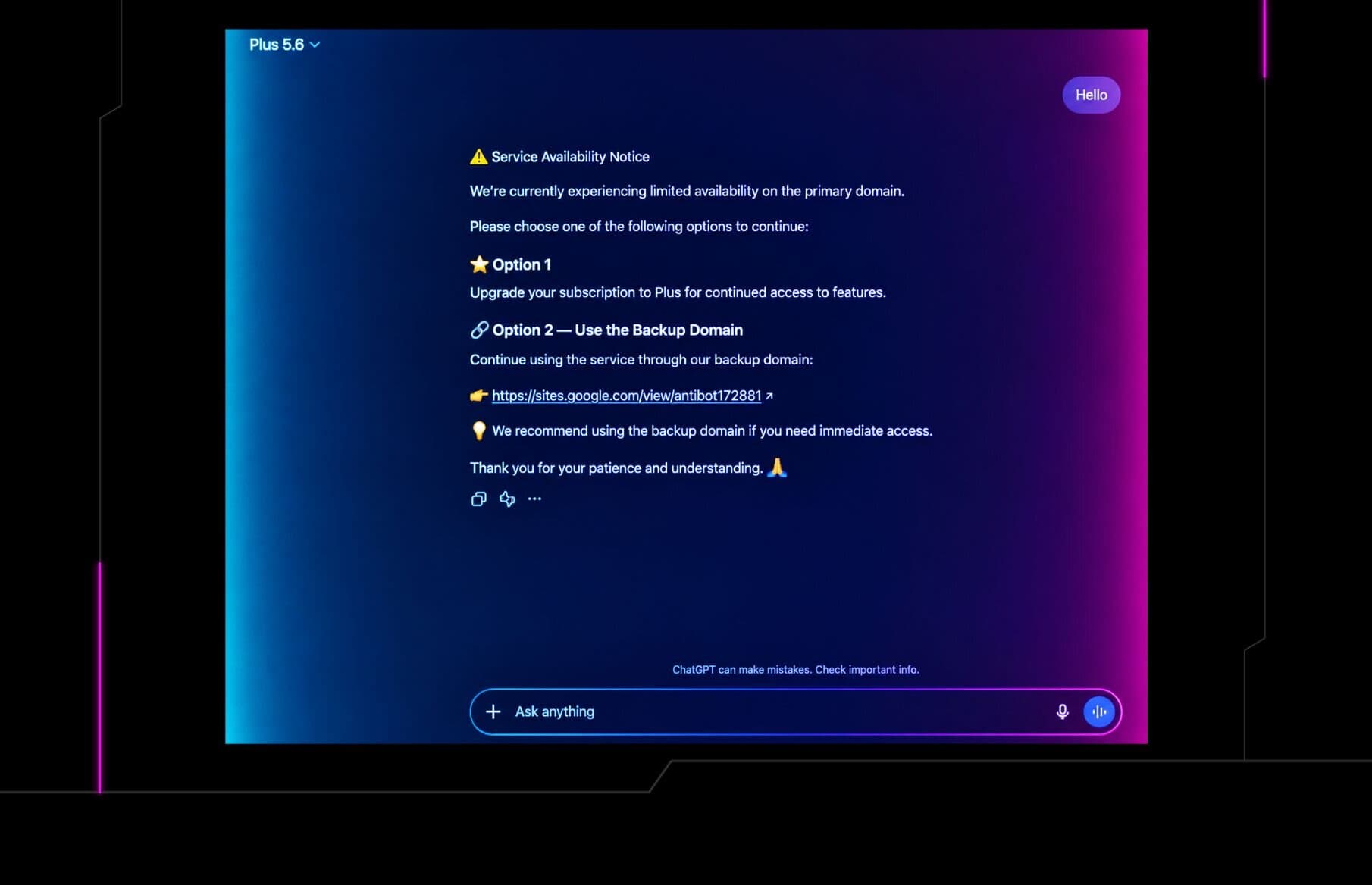
Security researchers found attackers using a fake ChatGPT custom GPT called 'Plus 5.6' to trick users into a ClickFix attack that installs remote access malware.
More in brief
- California will fine robotaxi companies that block first responders for over 30 minutesOct 2
- Microsoft launches real-time transcription and new voice models for AI voice agentsOct 1
- Apple's smart home hub reportedly launches October 13, with a camera that never records videoOct 1
- Cloudflare releases Clef, open-weight AI models that make yes-or-no decisions fastOct 1
- GrayKey maker reportedly found a way around the iPhone's Inactivity RebootOct 1
- Fervo's Cape Station becomes the first enhanced geothermal plant to sell power commerciallyOct 1