
Robots·News & analysis
Boston Dynamics unveils Stretch Gen 2, a tougher truck-unloading robot
The second Stretch unloads up to 1,000 boxes an hour and is built to break less. Boston Dynamics cut 81% of its internal cables and made repairs take hours, not days.

Tide
Ripple
Sci-fi
6/10
Reality
Shipping
A robot that empties shipping containers so people don't have to.How we rate
Boston Dynamics unveiled Stretch Gen 2, the second generation of its robot that unloads trailers and shipping containers, on November 3, 2026.
It can unload up to 1,000 cases an hour and has 81% less internal cabling, so it breaks down less. A full drive swap now takes about an hour instead of a day. Stretch is already running at customer sites, and software updates will keep arriving about once a month.
What to know
- Boston Dynamics unveiled Stretch Gen 2 on November 3, 2026, the second generation of its trailer and container unloading robot.
- It unloads up to 1,000 cases an hour, up from the 600 to 800 the first version typically handled, thanks to a gripper that can lift several boxes at once.
- The company cut 81% of the internal cabling, about half a mile of wire, and a full drive swap now takes about one hour instead of a day.
- A recent software update raised the unload rate across its fielded robots by 24%, and new releases arrive about monthly.
Boston Dynamics unveiled Stretch Gen 2 on November 3, the second version of its robot that empties trailers and shipping containers. So what do you improve on a robot that already works? Mostly, you make it break less.
That is the whole story of this release, and it is a good one. Flashy robots get the headlines. The dull ones that never stop get the contracts.
What is Stretch, exactly?
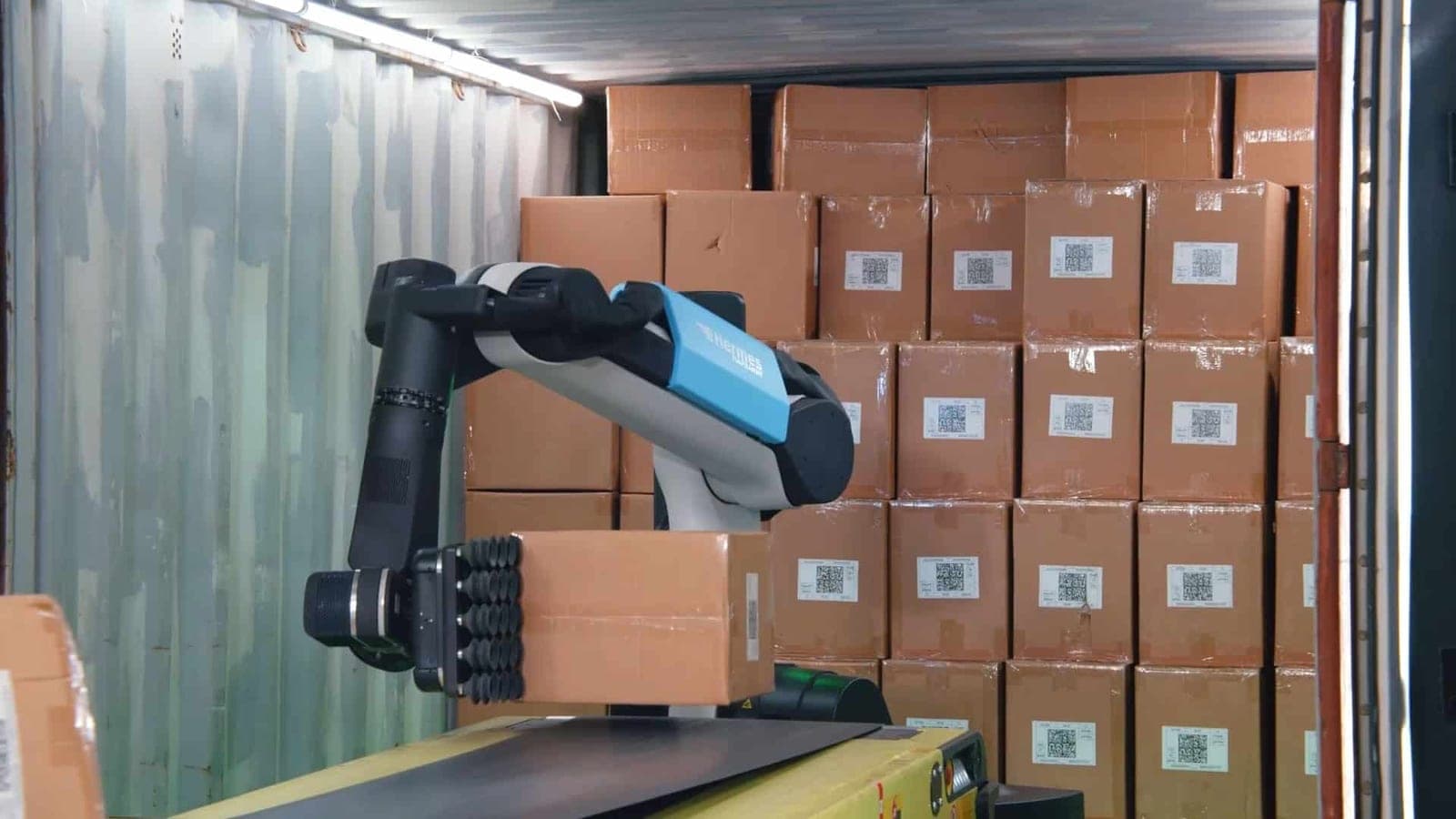
Stretch is a box-moving robot for warehouses. It is a wheeled base with a long arm on top and a gripper that holds boxes with suction cups.
Its main job is unloading. When a truck or shipping container shows up with boxes stacked on the floor, Stretch drives inside, picks them up one by one and puts them on a conveyor belt that carries them into the building.
The company calls this one of the hardest jobs in a warehouse. VP Brian Donnelly, who runs logistics robotics at the company, said it plainly: "Fundamentally, unloading trailers is one of the worst jobs in the warehouse." A container that sat in a yard all summer can be brutally hot. In winter it can be freezing.
Why build a second version?
The first Stretch was built to reach customers fast. Donnelly said the team wanted to get a product into the market as quickly as possible, and that it "was not the easiest to manufacture."
Since then the robots have piled up experience. Boston Dynamics says Stretch has logged more than 100,000 operating hours and handled tens of millions of boxes. The team studied that data to find what takes robots offline, then designed Gen 2 around those problems.
Donnelly said the work took about two and a half years. The goal was "simplification, hardening the robot, and really driving improved reliability and performance."
What got tougher?
Here are the main hardware changes, as the company describes them:
- 81% less cabling: about half a mile of internal wire is gone. Cables in a robot that moves constantly get bent again and again, and that wear causes faults.
- Automotive-grade connectors: these are the plugs that join parts together. They are built to stay latched through shaking and bumpy floors. Donnelly said Hyundai, which owns Boston Dynamics, helped source a wiring harness through its car supply chain.
- Joints that never hit a stop: the new joints can keep rotating past 360 degrees. Old joints had hard stops that put stress on the metal. This also lets the robot pick a smoother path.
- A safer emergency stop: the button now sits lower and is recessed, and new panel materials mean a falling box is far less likely to set off a false stop or crack a panel.
In real life Think of a laptop charger cable that frays near the plug because you bend it every day. Stretch has fewer of those weak spots, so fewer things can wear out.
How can it grab more than one box?
The new gripper can pick up several boxes in one arm movement, which pushes the peak rate to 1,000 cases per hour.
A "case" is one box. The company says the real speed depends on weight and on how neatly the boxes are stacked, so 1,000 is a best case, not a promise for every truck. The first Stretch typically handled 600 to 800 cases per hour.
Why does carrying two boxes help so much? Donnelly explained that most of a pick cycle is arm movement. If the arm travels the same distance but carries more, you get more boxes per trip.
Every suction cup in the gripper is sensed and controlled on its own. A cup only opens its valve to pull air when it touches a box. That saves power, because the vacuum pump is not pulling air through cups that hold nothing. It also lets the robot set the boxes down one at a time on the belt.
Can it be fixed quickly?
Yes, and this may matter most to the people who buy it. When a warehouse robot is down, boxes pile up at the dock.
Boston Dynamics removed the flexing cables and complex wiring harnesses. It uses standard, high-strength fasteners, so a technician needs fewer tool changes. A full swerve drive swap now takes about one hour. Before, it could take a full day. A swerve drive is the module that both spins the wheel and steers it, which lets the base turn in tight spaces.
New built-in diagnostics also help a customer's own maintenance team handle routine repairs. That means less waiting for an outside service visit.
What about the software?
Stretch Gen 2 runs on a redesigned onboard computer. The company says regular software updates improve how it spots boxes, plans its movements, picks and models its surroundings. These updates reach a whole fleet with no hardware changes.
Donnelly said the latest update raised the unload rate across the fleet of robots already in the field by 24%. New software comes out roughly every month.
The vision system is pre-trained, so it recognizes most packages from day one without anyone programming it. Onboard lights let it work in a dark trailer.
Who is already using it?
The company says Gen 2 is already running at several customer sites and can be set up in about two weeks at existing locations.
Stretch has a track record. DHL Supply Chain announced a $15 million investment in January 2022, the first commercial purchase of Stretch. DHL later said it plans to deploy more than 1,000 additional Stretch robots by 2030. Retailers such as Gap and H&M have also used it.
The operating experience is simple, Donnelly said. A person drives the robot into a container, steps out of the safety work area and presses a big Play button. The robot does the rest. Workers who once lifted boxes all day now run the robots.
What does this mean for Boston Dynamics?
The launch comes weeks after Boston Dynamics named Rohit Prasad, a former Amazon AI executive, as its CEO. We covered that in our story on his appointment.
Boston Dynamics sells three robots: Spot, a four-legged inspection robot; Atlas, a humanoid in early production; and Stretch. Stretch is the one that earns a steady living in busy warehouses, so a more reliable version matters to the business.
The company also says Stretch is the market leader with more deployments than any competing logistics product. Other companies make unloading robots too, so that is the company's own claim.
What it means for you
- Faster deliveries, maybe: trucks that unload faster can free up dock space and help packages move sooner. Do not expect to notice it tomorrow.
- Safer work: hot, heavy trailer unloading is hard on the body. Robots take over the most punishing part.
- Jobs change: people who used to lift boxes are now the ones running and watching the robots, according to the company.
- Reliability is the product: the biggest upgrades here are fewer faults and faster repairs, not new tricks.
The bottom line
Stretch Gen 2 is a "make it last" upgrade. It is faster on paper, easier to fix and easy to improve with software.
It is not a humanoid or a viral video. It is a robot that wants to keep unloading trucks every day, and that is exactly what logistics companies pay for.
Key facts
- Unveiled
- November 3, 2026
- Peak speed
- Up to 1,000 cases per hour
- Cabling removed
- 81%, about half a mile
- Drive swap time
- About 1 hour (was a full day)
- Battery
- Two shifts; 90% charge in about 75 minutes
Got questions?
Quick answers, plain wordsWhat is Stretch Gen 2?
It is the second generation of Stretch, a robot from Boston Dynamics that unloads boxes from trailers and shipping containers. The company unveiled it on November 3, 2026.
How fast can Stretch Gen 2 unload boxes?
Up to 1,000 cases per hour. The company says the real rate depends on how heavy the boxes are and how neatly they are stacked. The first Stretch typically handled 600 to 800 cases per hour.
What is multipick?
Multipick means the robot grabs more than one box in a single arm movement. Since most of the time goes into moving the arm, carrying two boxes per trip raises the number of boxes unloaded each hour.
What changed from the first Stretch?
Boston Dynamics removed 81% of the internal cabling, added automotive-grade connectors, built a stronger gripper, added joints that spin past 360 degrees, lowered and recessed the emergency stop, and made parts easy to swap.
How long does the battery last?
The battery lasts two work shifts. A fast charger brings it to 90% in about 75 minutes.
Can it work in a dark trailer?
Yes. Stretch Gen 2 has onboard lighting, so it can work inside a dark trailer or container.
Does it need to be programmed for each box?
No. Its vision system is pre-trained and detects most packages from day one. A person drives it into the container, steps out of the work area and presses a Play button.
Who uses Stretch?
Logistics and retail companies. DHL was the first commercial buyer, announced in January 2022. Gap, H&M, Otto Group and others have also used it, and Boston Dynamics says Stretch has more deployments than any competing unloading robot.
Does Stretch get better after it is installed?
Yes. Boston Dynamics sends regular software updates that improve box detection, motion planning and pick strategy across a whole fleet, with no hardware changes. A recent update raised the fleet's unload rate by 24%.
Who owns Boston Dynamics?
Hyundai Motor Group, which bought a controlling stake in 2021. Rohit Prasad, a former Amazon AI executive, became its CEO in October 2026.
SourcesBoston Dynamics
Topics and tagsBoston Dynamics, boston dynamics, warehouse robots, logistics
Go deeper
Related stories
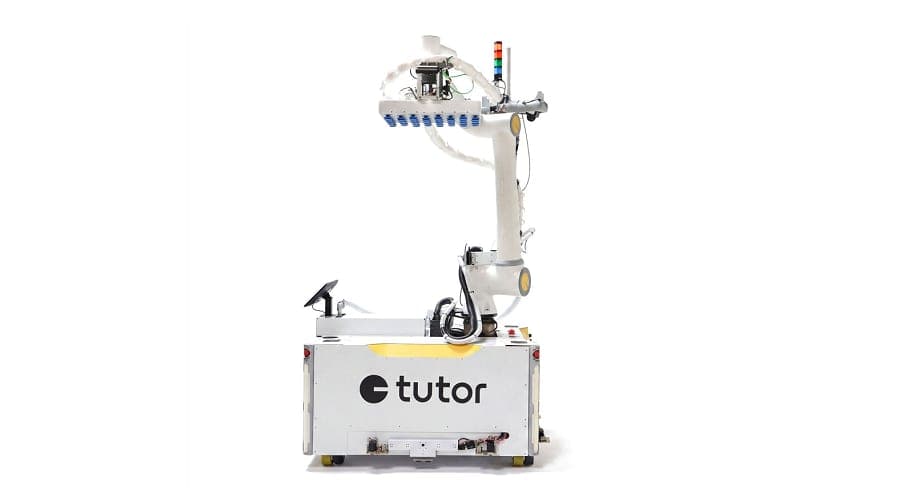
Tutor Intelligence raises $75M to rent out warehouse robots by the hour
The MIT spinoff closed a $75 million Series B led by Andreessen Horowitz. Its robots work in factories and warehouses, and customers pay by the hour or by the pick.
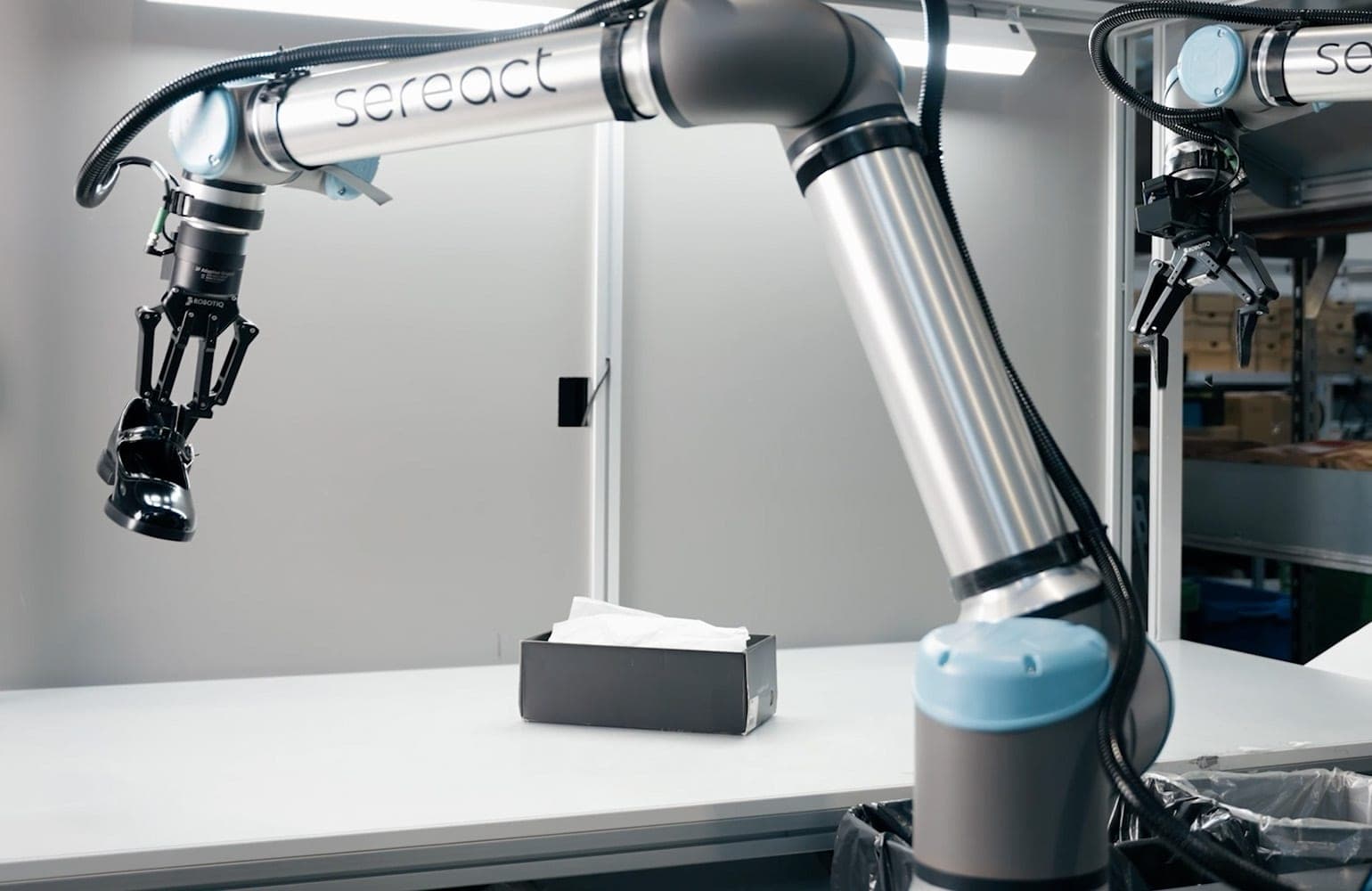
Teradyne Robotics and Sereact team up to put AI-driven robot arms in warehouses
Sereact's Cortex AI will run on Universal Robots arms, and hundreds of dual-arm systems already sort returned fashion at Zalando sites in Germany and Poland.

Boston Dynamics names former Alexa chief Rohit Prasad as its new CEO
The man who helped build Alexa now runs the company behind Spot, Stretch and Atlas. He starts on October 7 with a clear brief: put more AI in the robots.
More in brief
- YouTube is going back on the Billboard charts in 2027Nov 9
- Apple starts selling $50 packs for extra Apple Intelligence useNov 9
- Windows 11 tests a way to switch off the Sticky Keys popup for goodNov 9
- US regulators question whether Waymo's school bus fix workedNov 9
- NVIDIA unveils GR00T 2 and Isaac Lab 3.0 to teach robots delicate workNov 9
- Tesla launches its robotaxi service in San Antonio, its eighth cityNov 9