
Robots·News & analysis
Teradyne Robotics and Sereact team up to put AI-driven robot arms in warehouses
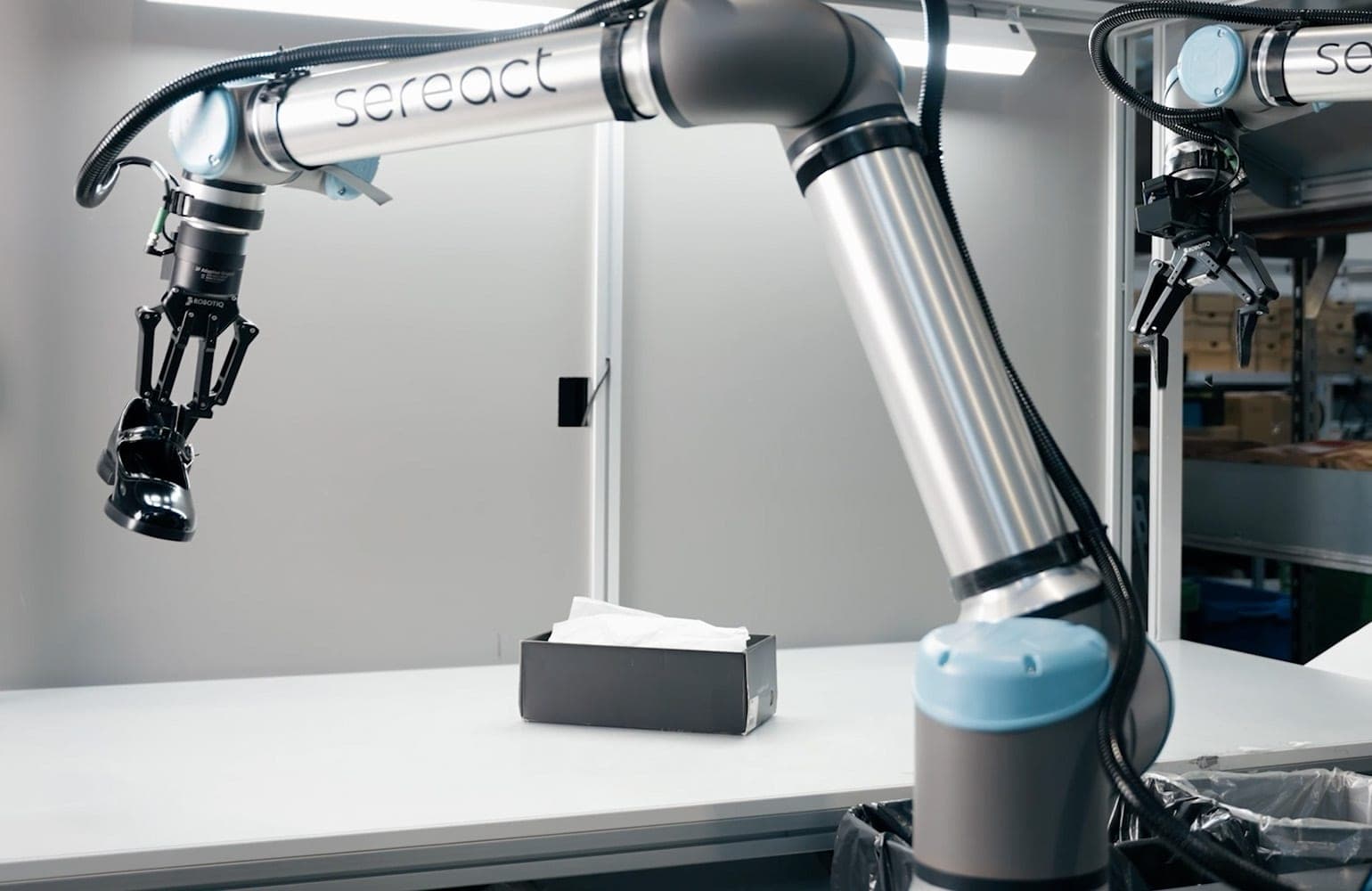
Sereact's Cortex AI will run on Universal Robots arms, and hundreds of dual-arm systems already sort returned fashion at Zalando sites in Germany and Poland.
Tide
Ripple
Sci-fi
4/10
Reality
Shipping
A robot that sorts your returned shoes without ever seeing them.How we rate
Teradyne Robotics and Sereact announced an official partnership in Berlin on October 21, putting Sereact's Cortex physical AI on Universal Robots arms.
The key detail is that hundreds of dual-arm systems already run at live European sites, including Zalando fashion returns with CEVA Logistics. UR says it has more than 100,000 deployments worldwide. Sereact opened a Boston headquarters this summer to bring the joint system to North America.
What to know
- Teradyne Robotics, the company behind Universal Robots, and Sereact announced an official partnership on October 21 in Berlin.
- Sereact's Cortex AI runs on Universal Robots arms for tasks like returns handling and piece-picking.
- Hundreds of UR robots in dual-arm systems are already working at live customer sites across Europe.
- The robots process returned fashion for Zalando at CEVA Logistics sites in Greven, Germany, and Swiebodzin, Poland.
Teradyne Robotics and Sereact announced an official partnership to put AI-driven robot arms to work in warehouses. That's the news. Now the fun part: what does a robot do with a returned shoe it has never seen?
What was announced?
Teradyne Robotics, the company behind Universal Robots (UR) and Mobile Industrial Robots, partnered with Sereact, a Stuttgart-founded physical AI company. The announcement came on October 21 in Berlin.
Physical AI is software that lets a robot understand the messy real world and act in it, not just repeat a fixed motion. Sereact's version is called Cortex. Under the deal, Cortex runs on UR robot arms.
The target is what the companies call unstructured tasks, such as handling returns and picking single items out of a mixed pile.
Why it matters: The companies say they have already shipped hundreds of UR robots in dual-arm systems to live customer sites across Europe. This is not a lab promise.
Who are the two companies?
Teradyne Robotics makes UR's collaborative robot arms, often called cobots, which are built to work near people. UR says its platform is open, connected and proven through more than 100,000 industrial deployments.
Sereact was founded in Stuttgart in 2021 by Ralf Gulde and Marc Tuscher. Its software lets robots grasp, identify and handle objects they have never seen before.
The Robot Report notes Sereact opened a US headquarters in Charlestown, Massachusetts this summer. The company's own release describes it as a Boston headquarters.
Sereact's funding gives a sense of its size. The Next Web reports a $116 million Series B this year, and customers such as IKEA, DHL, BMW and Mercedes-Benz, according to the release it saw. FashionNetwork reports Zalando joined that round as a strategic investor in July.
What does Cortex actually do?
Cortex is what the companies call a Vision-Language-Action model. In plain words, it looks at a scene through cameras, takes an instruction, and decides how the arm should move.
At the NVIDIA GTC Berlin 2026 show, Cortex ran on two UR12e-1300 arms in the NVIDIA booth. They showed a returns-handling job that is already running in live logistics centers.
Sereact CEO Ralf Gulde puts the pitch this way: "One brain serves every robot, with no retraining for each new item or task. And what one robot learns, every robot benefits from."
In real life Think of one very good warehouse worker who shares everything they learn with every other worker the moment they learn it. That is the idea behind one brain on many arms.
Where is it already working?
The joint system is deployed with CEVA Logistics for Zalando, the European fashion and lifestyle platform. It says it connects 62 million active customers with more than 7,000 brands across 29 markets.
At Zalando fulfillment centers in Greven, Germany, and Swiebodzin, Poland, the robots now process returned fashion items on their own. The companies call this the first phase of a broader plan to scale returns automation across Europe.
The Next Web reports the systems are sold as robotics-as-a-service, where the customer pays for the robots as a service instead of buying them. CEVA's Chris Walton says the model sorts items faster and with fewer manual steps.
Supply Chain Digital adds that Zalando says about 50% of its online sales are returned. That makes returns a very large pile of mixed items.
Why are returns the hard part?
Gulde explains it directly: "Returned products almost never arrive in a robot-friendly sequence. Items differ in shape, orientation and packaging, and the mix changes continuously."
A robot programmed in advance expects a known item in a known spot. A crumpled jacket next to a shoebox does not fit that script.
Sereact's pitch is that Cortex needs no training for each product and no fixed list of articles, the companies said. Gulde told The Next Web that a system working only on items it has seen before "does not work in a returns operation at all."
The big picture: Sereact also says that by quickly reconditioning returned goods for resale, the solution helps retailers follow European Union rules that ban destroying or landfilling returned merchandise.
What else can the pair do?
Returns are the first showcase, not the whole plan. The companies list a long set of jobs for the joint system:
- Picking and sorting: piece-picking and sortation, and order induction.
- Stores and stock: store replenishment and bin consolidation.
- Factory work: machine tending and kitting.
- Shipping: packing and goods handling.
Gulde says every one of these runs on the same production model. Sereact also gains reach: it says partnering with Teradyne Robotics and its global distribution and integrator network helps bring the system to customers around the world.
What is NVIDIA's part?
NVIDIA technology sits under the whole stack, The Robot Report reports. Cortex is trained in NVIDIA Isaac Sim, an open simulation framework, using NVIDIA Cosmos open world models, which means AI models that predict how the physical world behaves.
After that it is post-trained with reinforcement learning, a method where software improves by trying things and getting scored, using the NVIDIA Isaac Lab framework. It is benchmarked on Teradyne Robotics hardware before any model is deployed.
On the warehouse floor, Cortex runs on NVIDIA Jetson Thor at the robot cell, where decisions must happen at line speed. NVIDIA DGX Spark handles site-level development, validation and model updates.
Teradyne Robotics also said it is contributing SimReady OpenUSD robot assets for UR and MiR products to the SimReady Central Library on Hugging Face. That helps developers reuse robot models in simulation.
How big is Sereact already?
Sereact's own numbers, as Industrial Production reports them, are 200 systems in use across Europe and more than one billion picks. Around one in 53,000 operations needs human help.
Industrial Production lists Active Ants, Austrian Post, BMW, bol., Daimler Truck, DHL, Mercedes-Benz, PepsiCo and the Rohlik Group among its customers.
The company's Series B was announced as $110 million, led by Headline. FashionNetwork reports Zalando's investment brought the round to $116 million and total funds raised to over $145 million.
Cortex 2, the next version, is meant to first imagine possible actions with a world model, then pick the most promising one before the arm moves. Co-founder Marc Tuscher describes it as giving robots "a form of imagination."
What does CEVA say about the service?
CEVA's Chris Walton calls returns one of the toughest challenges in logistics, citing unpredictable volumes, manual quality checks, seasonality and a disproportionately high cost per unit, according to Supply Chain Digital.
The companies say the robots take over repetitive handling and reduce physical strain on workers. Staff move to supervising stations, handling exceptions and checking quality.
What's next?
The next step is geography. Sereact opened its US headquarters this summer to bring the joint solution to North America, and the partnership gives it Teradyne's sales and integrator network.
The Zalando rollout is also only phase one. The companies say it will grow across Europe.
What neither company has published are prices, the number of robots per site, or targets for how many systems they plan to ship. Those numbers will show how fast this grows.
What it means for you
- Online shoppers: returned items may get sorted and back on sale faster, though the companies have not promised any change for customers.
- Retailers and warehouses: a robot that handles unknown items makes returns easier to automate than before.
- Robotics fans: physical AI is moving from demos into paid, live work.
The bottom line
Teradyne Robotics brings the arms and the customers. Sereact brings the AI brain. Together they say hundreds of systems already run in Europe, including real Zalando returns. The test now is how fast it spreads beyond Germany and Poland.
Key facts
- Announced
- October 21, 2026, Berlin
- Deployed
- Hundreds of dual-arm UR systems in Europe
- Live sites
- Greven (Germany), Swiebodzin (Poland)
- Model shown
- Cortex on two UR12e-1300 arms
- UR installed base
- More than 100,000 deployments
Got questions?
Quick answers, plain wordsWhat did Teradyne Robotics and Sereact announce?
An official partnership, announced October 21, 2026 in Berlin. Sereact's Cortex physical AI platform runs on robot arms from Universal Robots to automate jobs like returns handling and piece-picking in retail, logistics and manufacturing.
What is Teradyne Robotics?
The company behind Universal Robots, which makes collaborative robot arms, and Mobile Industrial Robots, which makes mobile robots. It says its platform has more than 100,000 industrial deployments.
What is Sereact?
A physical AI company founded in Stuttgart in 2021. Its software, Cortex, lets robots grasp, identify and sort items they have never seen before, according to the companies.
What is Cortex?
Sereact's AI model for robots. The company calls it a Vision-Language-Action model, meaning it looks at a scene, understands an instruction and decides how to move. At the Berlin demo it ran on two UR12e-1300 arms.
What are the robots doing at Zalando?
They autonomously process returned fashion items at CEVA Logistics sites in Greven, Germany, and Swiebodzin, Poland. The companies call this the first phase of a broader plan to automate returns across Europe.
Why are returns so hard for robots?
Returned items rarely arrive in a neat order. Shapes, orientations and packaging differ, and the mix keeps changing, Sereact CEO Ralf Gulde says. Robots programmed in advance struggle with that.
Is this only a demo?
No. Teradyne Robotics says it has moved well beyond demo or pilot stage, with hundreds of UR robots in dual-arm systems already running at customer sites in Europe.
What else can the joint system do?
The companies list returns handling, store replenishment, piece-picking and sortation, order induction, machine tending, bin consolidation, kitting, packing and goods handling.
Does NVIDIA play a role?
Yes. Cortex is trained in NVIDIA Isaac Sim with NVIDIA Cosmos world models, then refined with reinforcement learning in Isaac Lab. In deployment it runs on NVIDIA Jetson Thor, and on DGX Spark for site-level testing, The Robot Report reports.
Is it coming to North America?
That is the plan. Sereact opened a US headquarters in Boston, Massachusetts this summer to bring the joint solution to North America.
SourcesUniversal Robots, sereact.ai
Topics and tagsrobots, physical ai, logistics, sereact
Go deeper
Related stories
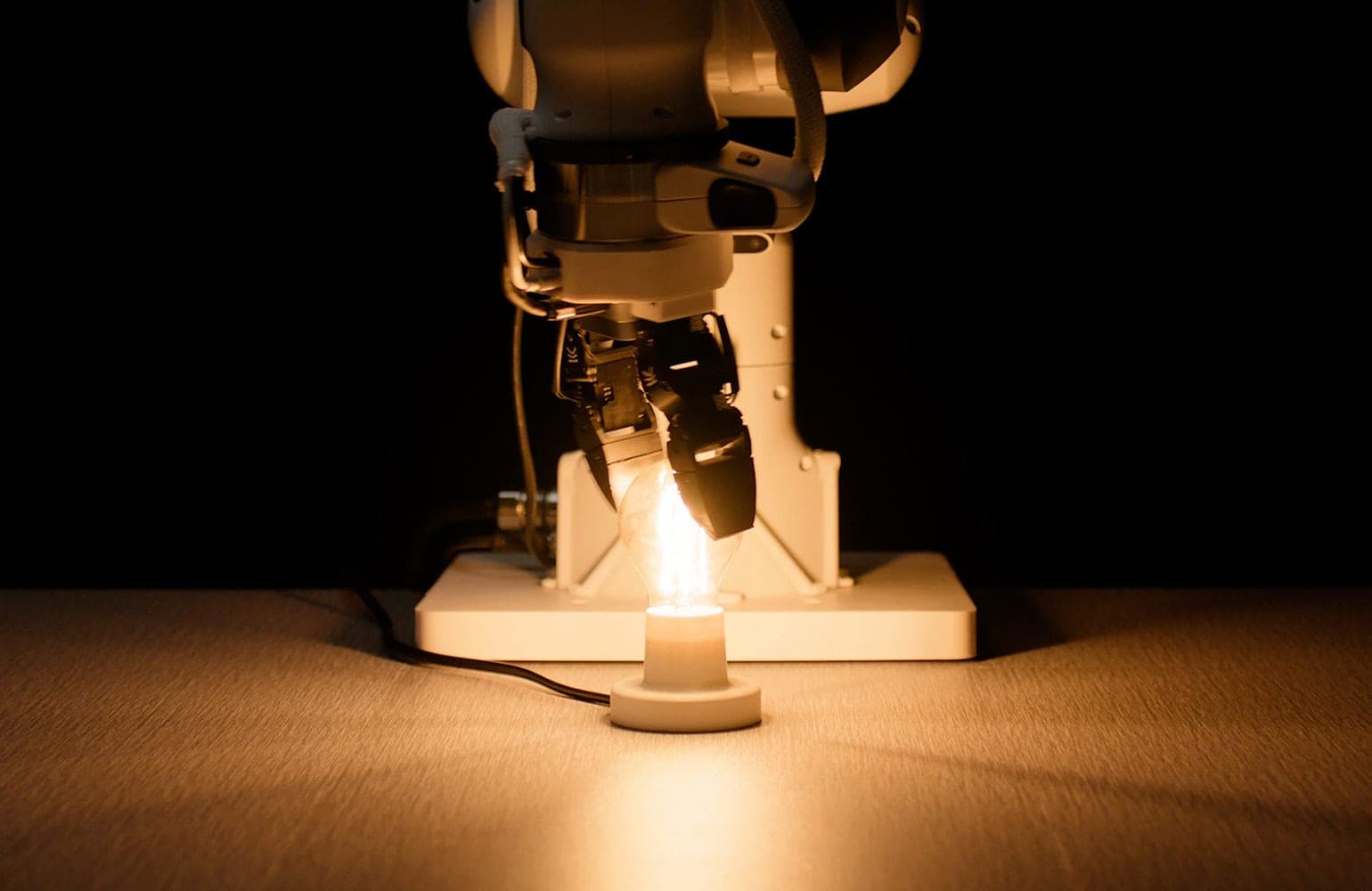
Eka Robotics raises $150M for robot hands that feel what they grip
The Cambridge startup says its vision-force-action model picks about 1,500 objects an hour. A $150 million Series A at a $1.45 billion valuation will fund the push into real factories.
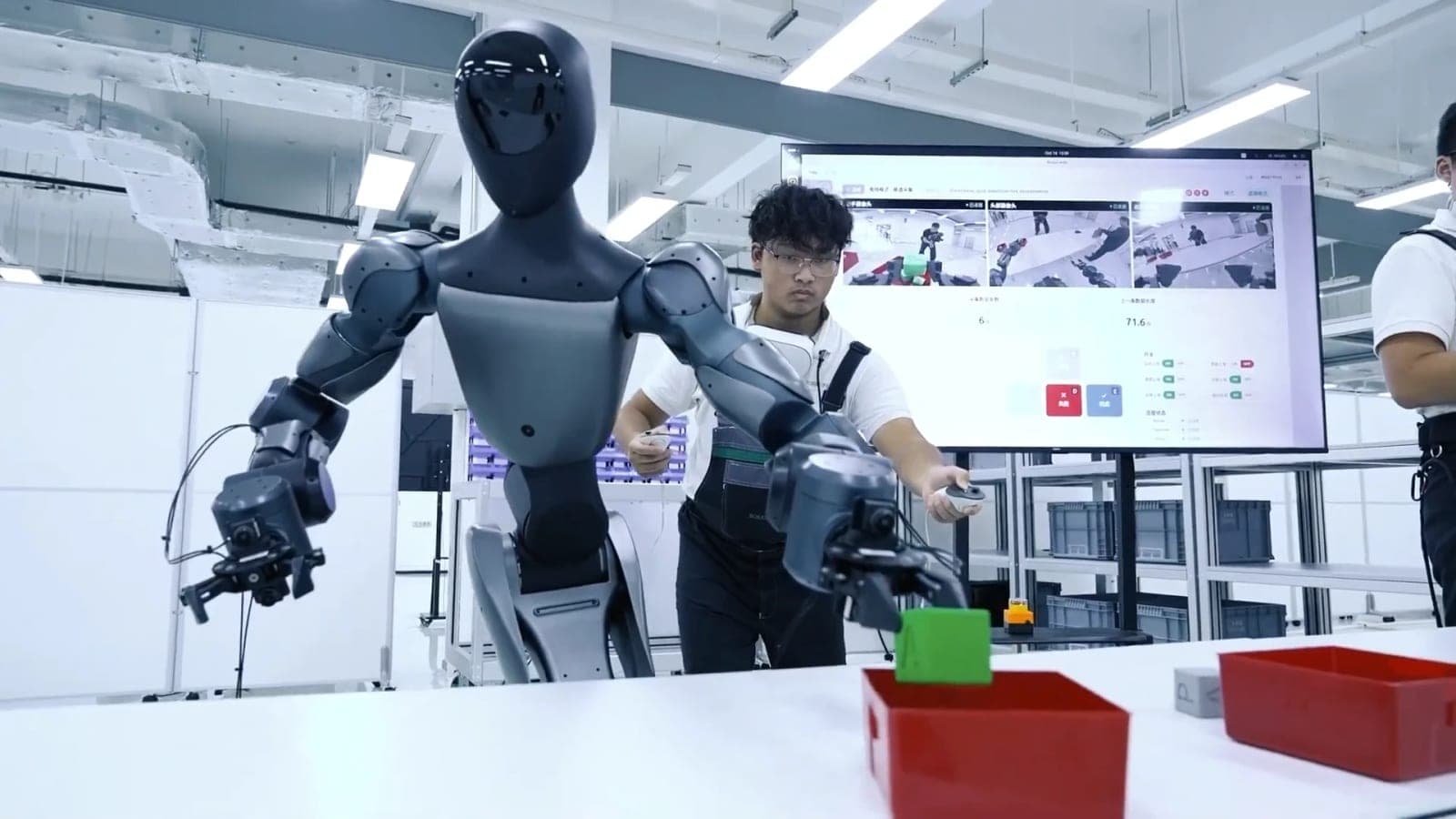
Schaeffler opens a factory where humanoid robots build parts for humanoids
Six humanoid robots work five stations on a joint-module line in Taicang, China, and the same site trains robots for other companies.
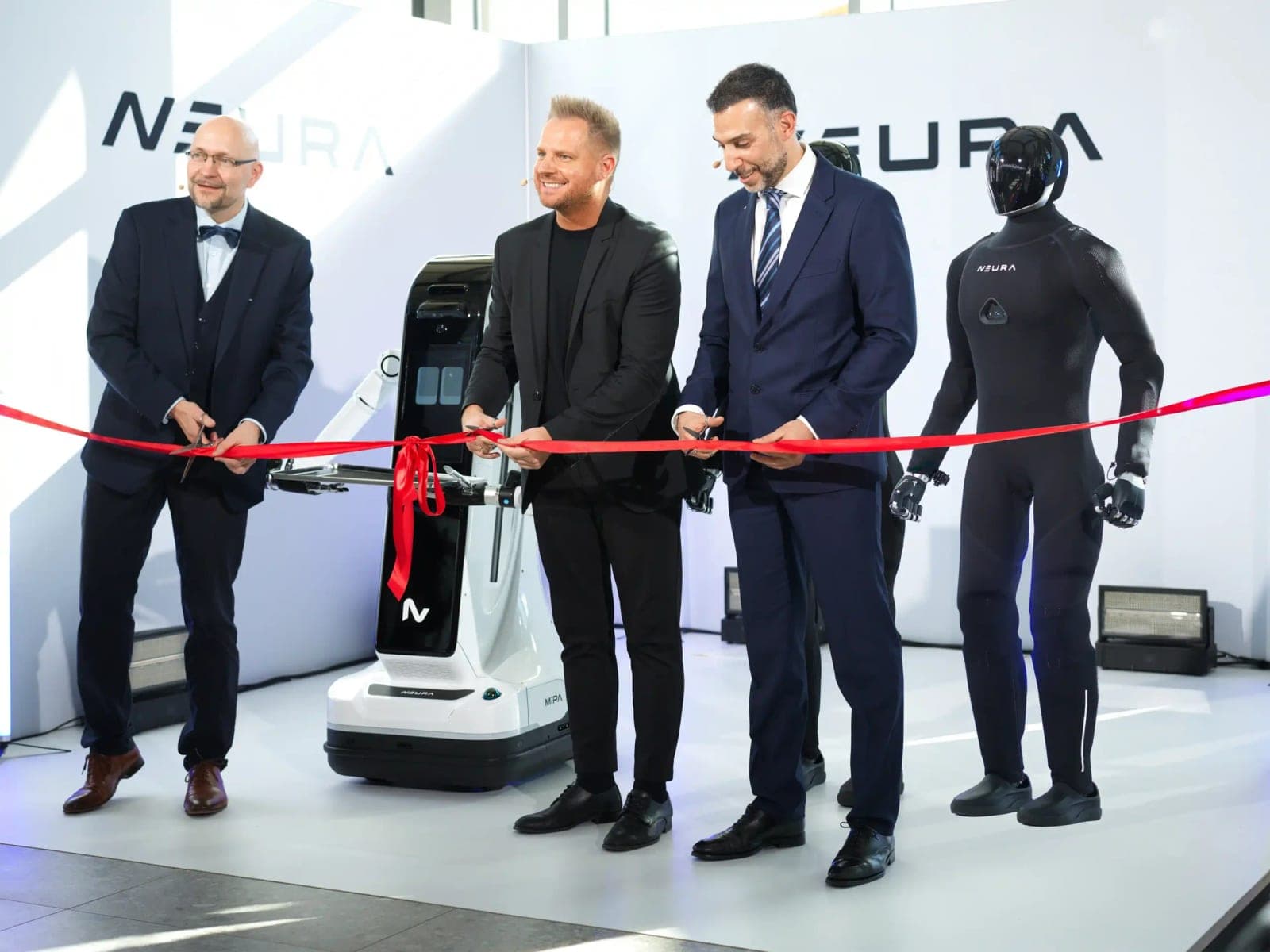
NEURA and TUM open RoboGym in Munich and show the 4NE1 Gen 4 humanoid
NEURA Robotics and the Technical University of Munich opened a 2,300 square meter robot training center near Munich Airport. NEURA also unveiled 4NE1 Gen 4, a humanoid that is 20 percent lighter than the last one.
More in brief
- Spotify's Family plan now asks some members to scan a QR codeOct 22
- Dream Labs raises $90M and opens a public API for one robot brainOct 22
- Agile Robots launches Agile ONE SN, a small humanoid for research labsOct 22
- Tesla's Q3 profit fell 43% as AI and Optimus spending climbedOct 22
- Meta creates a new class of non-voting shares to fund its AI pushOct 21
- PHP patches two critical flaws that could let attackers take over serversOct 21