
Technology·News & analysis
AT&T sues Comcast over its "fiber-powered" Xfinity internet ads
AT&T says Comcast's "fiber-powered" label misleads people, because most Xfinity homes still connect through coaxial cable. Comcast has not yet answered the claims in court.

Tide
Wave
Sci-fi
1/10
Reality
In your hands
A fight over one word on an internet ad.How we rate
AT&T sued Comcast in a federal court in Northern California, claiming the "fiber-powered" label on Xfinity internet is false advertising.
AT&T says most Xfinity homes connect by coaxial cable, not fiber. It wants a permanent ban on the phrase and Comcast's related profits. The case follows a June industry review and a similar AT&T suit against Charter, and Comcast has not yet answered in court.
What to know
- AT&T sued Comcast on Friday, November 13, 2026, in federal court in Northern California, arguing that calling Xfinity internet "fiber-powered" is false advertising.
- AT&T says most Xfinity homes are reached by coaxial cable, not fiber, so the claim suggests a fiber-to-the-home service that Comcast does not offer in most places.
- AT&T asks for an order that stops Comcast from using the phrase and for Comcast to hand over profits earned from the ads.
- A June review by an advertising self-regulation group found Comcast's disclosure accurate but not prominent enough. AT&T has a similar lawsuit against Charter.
AT&T has sued Comcast, saying the "fiber-powered" label on Xfinity internet is false advertising. The case was filed on Friday, November 13, 2026.
That is the news. The fun part is that the whole fight comes down to one small word: "powered."
What does AT&T say Comcast did?
AT&T filed the lawsuit in the US District Court for the Northern District of California. The case is AT&T Teleholdings Inc v. Comcast Cable Communications LLC. It says the campaign for Xfinity internet, sold to people across the country, rests on one claim: that Xfinity internet and its Wi-Fi are "Fiber-Powered."
AT&T argues that the claim is "literally false." It points to phrases such as "Powered by fiber" and "the most reliable, fiber-powered Wi-Fi." It also points to Comcast ads that say fiber connections beat "copper-based" ones.
In AT&T's view, a shopper who sees all of that will think Xfinity is delivered to the home over fiber, like AT&T Fiber. AT&T says Xfinity is mostly not.
First, what is the difference between fiber and cable?
Fiber optic lines carry data as pulses of light through thin glass strands. Coaxial cable carries signals through a copper core. Both can be part of one network.
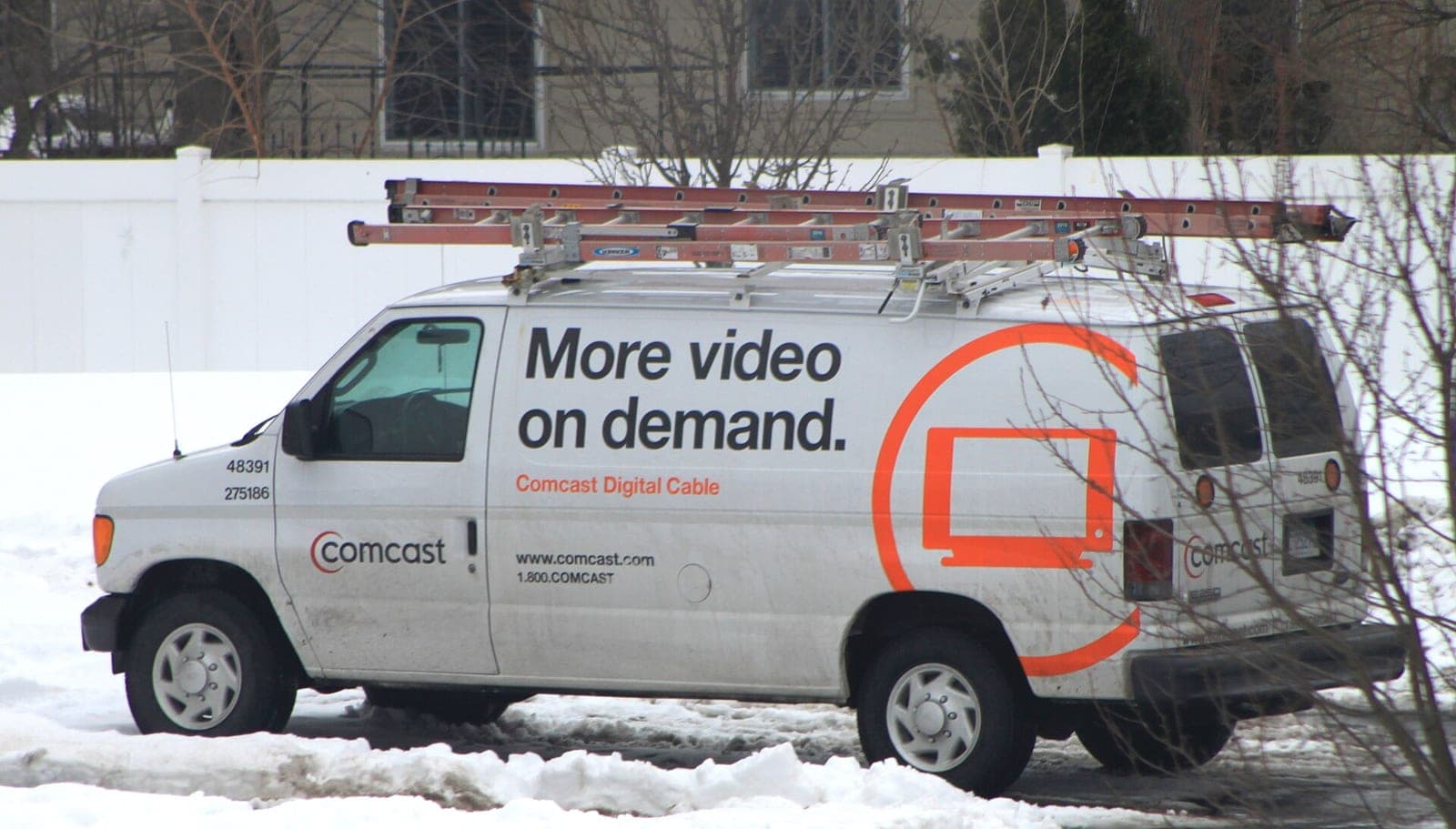
Comcast's network is a mix. AT&T calls it a hybrid fiber-coaxial network, or HFC. Fiber covers much of the distance, but the last stretch to your home, the "last mile," runs over coaxial cable.
Fiber-to-the-home is different. The fiber goes all the way to the house. That kind of service can give you upload speeds that match your download speeds. With cable, uploads are far slower than downloads.
In real life Think of a delivery truck that drives on a big highway and then hands your package to someone on a bicycle. The highway part is fast. The last bit depends on the bike.
By the numbers: AT&T says the vast majority of Xfinity internet runs over HFC. Comcast has built fiber-to-the-home in only small parts of its cable territory. Yet it uses the "fiber-powered" label in most of the areas where cable makes the final connection.
What is AT&T asking for?
AT&T says Comcast broke US and California competition laws. It calls the advertising a fraudulent business act and an unfair method of competition.
The requests are:
- A permanent ban: an order that Comcast stop describing its hybrid fiber-coaxial service as "Fiber-Powered."
- Profits: AT&T wrote that Comcast "should be required to restore to AT&T any and all profits earned as a result of its false and misleading advertising," or provide other restitution the court deems appropriate.
- A fallback: even if the judge does not find the ads literally false, AT&T asks the court to find them misleading, because they can deceive a substantial share of reasonable consumers into thinking Xfinity arrives over fiber alone.
What did the advertising watchdog say?
This is not AT&T's first try. It first challenged the claims through the advertising industry's self-regulation system, run by BBB National Programs and its National Advertising Division, or NAD.
In June, the NAD found that Comcast's disclosure was accurate. The disclosure says the internet is powered by fiber and connected to the premises by coaxial cable. That, the NAD said, explains that the service is not fiber-to-the-home.
The problem was how easy it was to see. The "fiber-powered" claim often sits next to price offers and other fine print. The coaxial disclosure did not stand out in that block, and in some ads it sat several panels away from the claim. It also had no asterisk pointing to it.
The NAD recommended that Comcast make the disclosure more prominent and place it closer to the "fiber-powered" claim. Comcast said it would comply. AT&T's lawsuit shows it is not satisfied with how Comcast's ads look today.
Is this the first lawsuit like this?
No. AT&T has a similar fight with Charter, which also calls its cable internet "fiber-powered." Charter changed its disclosures after an AT&T complaint to the NAD in March. AT&T sued Charter in August in federal court in the Northern District of Texas.
Charter filed a motion to dismiss in October. It argued that "powered" fits the way the word is normally used. In its words, computers are "powered by Intel chips," and its network is powered by fiber in the same way.
Charter also said its disclosures are clear enough. "A company bent on hiding its coaxial connection does not illustrate it, explain it in an FAQ, and disclose it on-screen in its advertising," it told the court.
AT&T answered that a Spectrum TV commercial showed a small, brief disclosure at the bottom of the screen during loud music and fast visuals, and that the voiceover did not read it aloud.
What is the backdrop for Comcast?
The suit lands while Comcast is under pressure in broadband. Comcast lost 144,000 residential broadband customers in the third quarter of 2026. A year earlier it lost 91,000 in the same quarter. It is also cutting jobs in its cable division.
Its customers have been moving to fiber and fixed wireless rivals. On an earnings call last month, Comcast co-CEO Mike Cavanagh complained about what he called "irrational pricing" from competitors.
Comcast CFO Jason Armstrong said fiber providers are offering $30 to $40 monthly broadband deals in some markets. He called that irrational because building fiber costs $1,500 or more per home.
In that setting, the word "fiber" is worth a lot to both sides. It is also a word shoppers have learned to look for.
The catch: AT&T has had its own label trouble. It once advertised its 4G LTE service as "5GE," or "5G Evolution," and showed a 5GE icon on 4G phones. The NAD found that the term was likely to mislead people into thinking they had 5G. AT&T had said the ads taught customers about its network investments.
What did people notice in the ads?
In December 2025, a Reddit user posted a Comcast ad for "fiber-powered Wi-Fi" with speeds of up to 300 Mbps for $40 a month before taxes and fees. The user asked how radio waves and light waves could be merged, and whether Comcast supplied an adapter.
A reply explained that it was the same cable service, and that "fiber-powered" described the fiber backbone behind it. That small exchange is the kind of confusion AT&T says the ads create.
Comcast has not given its side in the material we reviewed. Reporters asked it for comment, and its answer in court will matter more than a quote.
What it means for you
- Read the fine print: if an ad says "fiber," look for how the last stretch to your home is connected. Coaxial cable means cable-style upload speeds.
- Compare uploads: if you video call or back up files a lot, upload speed matters as much as download speed.
- Nothing changes today: your Xfinity service stays the same, and the court has not ruled. Ads may change if Comcast settles or loses.
- Expect a slow case: a federal lawsuit like this usually takes a long time. The Charter case is still at the motion to dismiss stage after months.
For another story about how carriers describe their networks, see carriers and the satellite dead-zone venture.
The bottom line
AT&T says "fiber-powered" tells shoppers they get fiber at home when most Xfinity homes get coaxial cable. Comcast has said it would make its disclosure clearer, but AT&T wants a court to stop the phrase altogether.
The court has not ruled, and Comcast has not yet answered in court. Whatever happens, the case shows how much the word "fiber" is worth in broadband ads.
Key facts
- Filed
- November 13, 2026
- Court
- US District Court, Northern District of California
- Case
- AT&T Teleholdings Inc v. Comcast Cable Communications LLC
- Comcast broadband customers lost, Q3 2026
- 144,000
- AT&T asks for
- A ban on the phrase and Comcast's related profits
Got questions?
Quick answers, plain wordsWhy did AT&T sue Comcast?
AT&T says Comcast falsely advertises Xfinity internet and Wi-Fi as "fiber-powered." AT&T argues that most Xfinity homes are connected with coaxial cable, so the phrase misleads shoppers.
What does "fiber-powered" mean?
Comcast uses it for a network that carries data over fiber for much of the trip and over coaxial cable for the last stretch into the home. AT&T says the phrase suggests fiber all the way to the house.
What is the difference between cable and fiber internet?
Fiber-to-the-home runs fiber optic lines right up to your house and can offer matching upload and download speeds. Cable internet ends with coaxial cable, which makes uploads much slower than downloads.
Where was the lawsuit filed?
In the US District Court for the Northern District of California. AT&T says Comcast broke US and California competition laws.
What does AT&T want from the court?
AT&T wants a permanent order that stops Comcast from calling its hybrid fiber-coaxial service "Fiber-Powered." It also asks that Comcast restore profits earned from the advertising, or give other relief the court sees fit.
Did an advertising watchdog look at this before?
Yes. After AT&T complained, the National Advertising Division found in June that Comcast's disclosure was accurate but not prominent enough, and it recommended placing it closer to the claim. Comcast said it would comply.
Is AT&T suing anyone else over the same phrase?
Yes. AT&T sued Charter in August in federal court in Northern Texas over Spectrum's "fiber-powered" claims. Charter filed a motion to dismiss in October.
Has Comcast responded?
Not yet in what we could find. Reporters asked Comcast for comment, and the company's side will come out in its court filings.
Will my Xfinity internet change because of this?
Nothing changes for your service today. The lawsuit is about the wording of the ads, not about the network itself, and the court has not ruled.
SourcesBBB National Programs
Topics and tagscomcast, att, broadband, fiber
Related stories
New York makes T-Mobile drop data caps on low-income home internet
T-Mobile agreed to remove a 50GB monthly cap and speed cut from the cheap home internet plans New York law requires, and to offer them statewide.

UK landlines switch off on January 31, and Openreach says no extension
Openreach says the old copper phone network closes on January 31, 2027, with about one million lines still to move and no more delays.
AT&T, T-Mobile and Verizon make their dead zone satellite venture official
The three biggest US carriers signed a joint venture to pool spectrum for satellite-to-phone coverage and named wireless veteran Paul Roth as interim CEO.
More in brief
- ASELSAN's EJDERHA electromagnetic weapon disables 51 drones with one commandNov 21
- Microsoft To Do will shut down on June 30, 2027Nov 21
- Medtronic's Hugo surgical robot cleared for general surgery in the USNov 21
- Google's Gemini now turns noisy fire radio into text for Watch DutyNov 21
- Internet Archive staff move to unionize with CWANov 20
- Etsy sellers are leaving over new terms that allow AI trainingNov 20