
Technology·News & analysis
New York makes T-Mobile drop data caps on low-income home internet
T-Mobile agreed to remove a 50GB monthly cap and speed cut from the cheap home internet plans New York law requires, and to offer them statewide.


Tide
Wave
Sci-fi
2/10
Reality
Shipping
Fast internet, with the speed limit finally lifted.How we rate
New York's attorney general and governor announced that T-Mobile must end a 50GB monthly data cap and a speed cut to about 600 Kbps on the low-income home internet plans the state's Affordable Broadband Act requires.
The state says the plans were also limited to 5G areas and hidden from search engines. T-Mobile does not admit a violation. It has 120 days to comply.
What to know
- New York's attorney general found that T-Mobile capped its low-income home internet plans at 50GB a month, then cut speeds from 25 Mbps to about 600 Kbps.
- Under the agreement, T-Mobile must remove the caps, deliver the full 25 Mbps and offer the plans wherever it sells home internet in the state.
- The state says a typical customer could burn through 50GB in about four days.
- T-Mobile neither admits nor denies the findings, and has 120 days to make the changes.
New York's attorney general and governor announced a settlement with T-Mobile over its cheap home internet plans. The plans had a hidden catch: use 50GB and your speed falls off a cliff. Now the question is how a plan that promised 25 Mbps ended up running at a crawl after about four days.
What did T-Mobile actually do?
New York says T-Mobile broke the state's Affordable Broadband Act on its home internet plans for low-income households. Three things went wrong, according to the state's investigation.
- A data cap: Each plan came with 50GB of data per month. After that, speeds dropped.
- A speed cut: After the cap, the maximum download speed fell from 25 Mbps to about 600 Kbps. That is a drop of roughly 97%.
- Limited places and hidden pages: The plans were offered only in areas with 5G, and the web page about them was coded so search engines could not list it.
A data cap is a monthly limit on how much you can download before the provider slows you down or charges more. Throttling is the slowdown itself.
The state says a typical customer could reach 50GB in about four days. After that, the plan was close to unusable for the rest of the month.
Wait, what are Mbps and Kbps?
Internet speed is counted in bits per second. One Mbps (megabit per second) is a million bits. One Kbps (kilobit per second) is a thousand.
So 25 Mbps is roughly 40 times faster than 600 Kbps. At 25 Mbps you can stream video and join a video call at the same time. At 600 Kbps a web page loads slowly and a video call stutters.
In real life Picture a family of four on one of these plans. Two kids stream school videos, a parent works from home, and by the end of the first week the cap is gone and the internet barely loads.
What is the Affordable Broadband Act?
New York passed the law in 2021. It says any home internet provider with at least 20,000 customers in the state must offer a low-cost plan to households that qualify.
There are two price tiers:
- $15 a month: speeds of at least 25 Mbps.
- $20 a month: speeds of at least 200 Mbps.
Providers must also make "reasonable efforts" to tell people these plans exist. The law does not use the words "data cap". New York's argument is that a plan whose speed falls far below 25 Mbps after a few days does not meet the speed minimum at all.
Who qualifies for the plans?
A household can sign up if anyone living in it receives certain public benefits. The state's list includes:
- Medicaid and SNAP (food assistance)
- HEAP or other utility assistance
- Free or reduced-price school lunch
- SCRIE or DRIE, New York City's rent freeze programs for seniors and people with disabilities
Households can also qualify by income level. The state points people to broadband.ny.gov/consumer-resources to enroll.
What happens to T-Mobile now?
Under the agreement, T-Mobile must make several changes. The company has 120 days to remove its speed limits and expand availability.
- No data caps on plans offered under the law.
- 25 Mbps for every subscriber, except during network congestion.
- Plans in every area where T-Mobile sells home internet in New York, including 4G-only areas.
- A findable web page, so search engines can list the details.
The catch: T-Mobile neither admits nor denies the state's findings. That is common in settlements. It lets a company agree to change without accepting blame.
What does T-Mobile say?
T-Mobile says it has a long history of helping New York customers stay connected through low-cost broadband. In a statement it said it is updating its plan to meet the state's requirements while keeping the same low price.
The company also said the agreement "makes the plan available to more eligible customers". It did not explain why it had set the caps in the first place.
Attorney General Letitia James put it more bluntly. "Reliable and affordable internet service is a basic need for all New Yorkers, but T-Mobile flouted the law designed to help vulnerable New Yorkers access it," she said. She also urged eligible New Yorkers to enroll in a low-cost plan.
Why does home internet over a cell network matter?
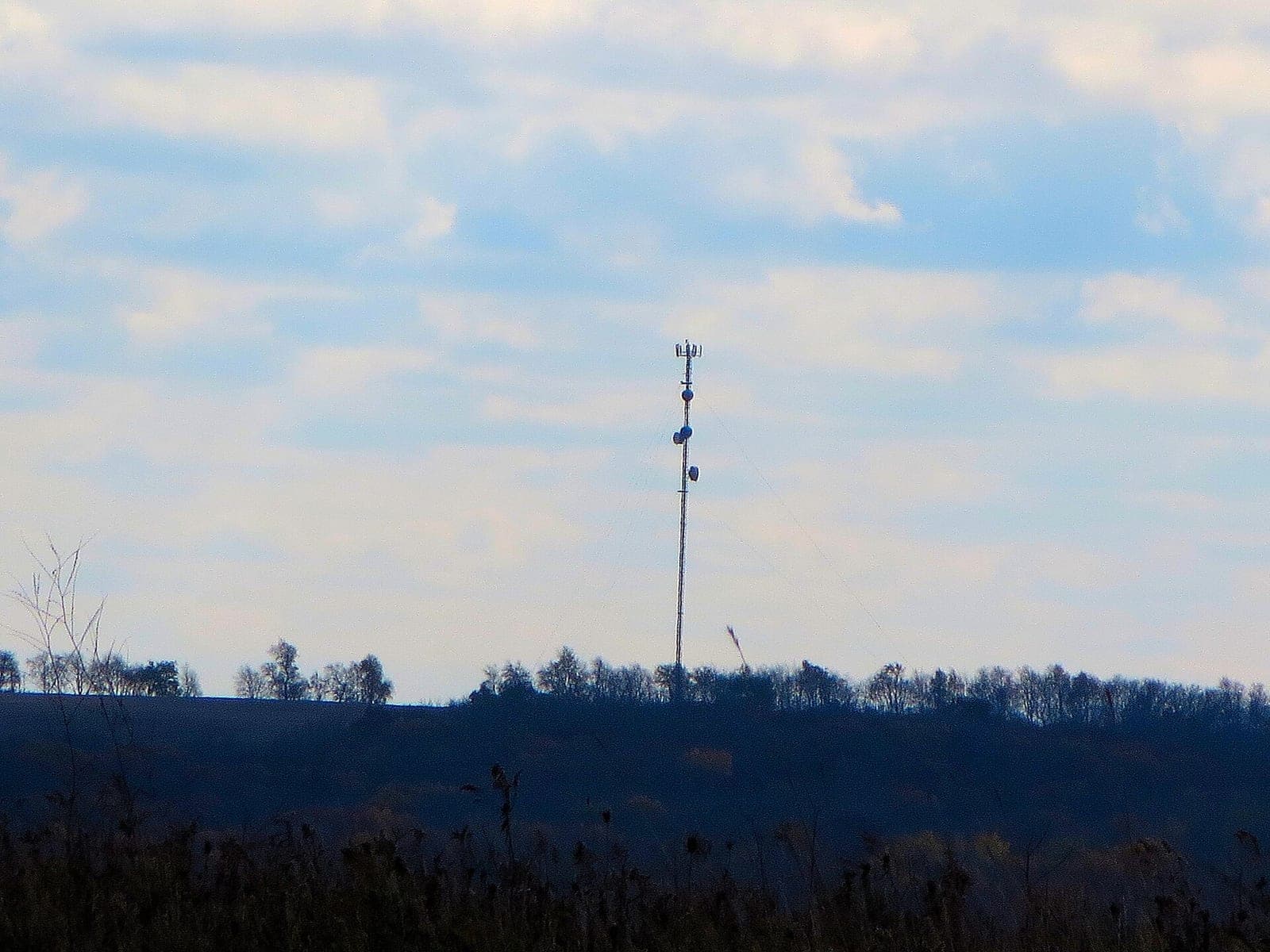
T-Mobile's home internet is called fixed wireless. It uses the same cell towers as phones, but a small receiver at your home picks up the signal and turns it into Wi-Fi. There are no cables to your house.
That makes it quick to set up and often cheaper than cable. It also means the carrier is sharing tower capacity between phones and homes, which is one reason carriers like to put limits on heavy use.
The settlement applies only to this fixed wireless service. It does not cover T-Mobile's mobile phone plans. For more on how the big carriers are rethinking coverage, see our story on the carrier satellite venture.
How long did this take?
New York's Department of Public Service contacted the attorney general's office in June 2025 with concerns about T-Mobile's plan. That began an investigation of about 18 months.
The law itself had a longer road. Broadband industry groups, including CTIA, the wireless industry association, sued to stop it. A federal judge blocked it in 2021. An appeals court reversed that in 2024, and the Supreme Court declined to hear the industry's challenge. The state began enforcing the law in January 2025.
A group of 22 states backed New York in that case, which shows how closely other states are watching. This settlement is one of the first signs of how the law is being enforced in practice.
Why did 4G areas get left out?
This part of the story is easy to miss. T-Mobile offered the low-income plans only at homes eligible for its 5G home internet. The state says T-Mobile also sold full-price home internet plans in 4G areas, and those could deliver 25 Mbps.
In other words, the network could do the job in those places. The cheap plan just was not offered there. Now T-Mobile has to offer it wherever it sells home internet in the state.
The hidden web page is a similar story. The state says T-Mobile coded the page so search engines would skip it. Someone searching for "low-income internet New York" would not have found the plan's details, which made it much harder for a family to learn it existed.
What should you watch next?
The 120-day clock is the main thing. By then, the speed limits should be gone and the plans should be available across the state.
Eligible households can enroll through the state's site before then. Anyone already on the plan should see the cap lift without doing anything. If your speeds still fall off after heavy use once the deadline passes, the state's consumer resources page is the place to start.
What it means for you
- If you are on the plan: Expect the cap and the speed limit to go away within 120 days. You do not need to do anything, but check your speeds.
- If you might qualify: Check whether anyone in your household gets Medicaid, SNAP or another listed benefit, then apply through the state's site.
- If you live in a 4G area: The plan should now be available to you, which it was not before.
- If you live elsewhere: Look for the fine print. A cheap plan with a cap can cost you more in lost speed than it saves in dollars.
The bottom line
New York told T-Mobile that a low-income internet plan must deliver the speed it advertises all month, not just for four days. T-Mobile agreed to lift the cap, widen the plan's reach and make it easier to find.
The company admits no wrongdoing, but the plan will change within 120 days. For eligible households, that means $15 internet that actually works after the first week.
Key facts
- Data cap removed
- 50GB per month on ABA plans
- Speed after the cap
- Down from 25 Mbps to about 600 Kbps
- Required prices
- $15 a month for 25 Mbps, or $20 for 200 Mbps
- Deadline
- 120 days to expand availability and lift speed limits
- Announced
- November 9, 2026, by Gov. Kathy Hochul and AG Letitia James
Got questions?
Quick answers, plain wordsWhat did New York say T-Mobile did wrong?
The state says T-Mobile put a 50GB monthly data cap on its low-income home internet plans and cut speeds sharply after that. It also offered the plans only in 5G areas and kept the information page hidden from search engines.
What is the New York Affordable Broadband Act?
It is a state law that requires home internet providers with at least 20,000 customers to offer low-cost plans to eligible households. The price is $15 a month for at least 25 Mbps, or $20 a month for at least 200 Mbps.
Does the law mention data caps?
Not directly. New York officials argue that a cap that cuts speed far below 25 Mbps means the plan no longer meets the law's minimum speed.
Did T-Mobile admit it broke the law?
No. The settlement says T-Mobile neither admits nor denies the state's findings. T-Mobile says it is updating its plan to meet the state's requirements while keeping the same low price.
How fast is 600 Kbps?
It is about 0.6 Mbps, a small fraction of the 25 Mbps the plan advertised. That is slow enough that video calls, streaming and big downloads become frustrating.
Who can get these plans?
A household qualifies if a member gets Medicaid, SNAP, HEAP or utility assistance, free or reduced-price school lunch, or SCRIE or DRIE, or if the household meets the income limit. Sign-up details are at broadband.ny.gov/consumer-resources.
What changes for current customers?
T-Mobile must remove the data caps and deliver 25 Mbps to all subscribers on these plans, except during network congestion. It has 120 days to do so.
Is this about T-Mobile phone plans?
No. It covers only T-Mobile's home internet, a fixed wireless service that uses the cell network to deliver internet to one address. Mobile phone plans are not part of the settlement.
Why did T-Mobile only offer the plans in 5G areas?
T-Mobile did not explain the restriction publicly. The state found it also sold full-price home internet in 4G areas that could deliver 25 Mbps, so it said the limit was not justified.
When did the investigation start?
In June 2025, New York's Department of Public Service raised concerns about the plan with the attorney general's office. The settlement came about 18 months later.
SourcesNew York Attorney General
Topics and tagsAI policy, t mobile, home internet, regulation
Related stories

UK landlines switch off on January 31, and Openreach says no extension
Openreach says the old copper phone network closes on January 31, 2027, with about one million lines still to move and no more delays.
AT&T, T-Mobile and Verizon make their dead zone satellite venture official
The three biggest US carriers signed a joint venture to pool spectrum for satellite-to-phone coverage and named wireless veteran Paul Roth as interim CEO.

FAA lifts a nationwide ground stop after a communications outage
A failure in the network linking air traffic controllers and pilots stopped takeoffs across the US for hours on Friday. Officials blame old equipment and a patch.
More in brief
- Tesla opens Cybercab orders at $29,990, plus $299 a month to drive itNov 14
- Apple Sports adds UFC with live stats for every fight on the cardNov 13
- LangChain raises $300 million at a $3 billion valuation for AI agentsNov 13
- SignDrop, a new Windows zero-day, gives attackers full System rightsNov 13
- Microsoft's AI Frontiers research group is over, says co-founder John LangfordNov 13
- BYD apologizes after wrong wheels ship on its Great Tang SUVNov 13