
Robots·News & analysis
Robot dogs are now doing the night shift at factories, and software just started supervising them
ANYbotics rebranded its Data Navigator software into Shift, a platform that schedules and supervises fleets of its four-legged ANYmal robots as they inspect industrial plants around the clock.
Tide
Ripple
Sci-fi
6/10
Reality
Shipping
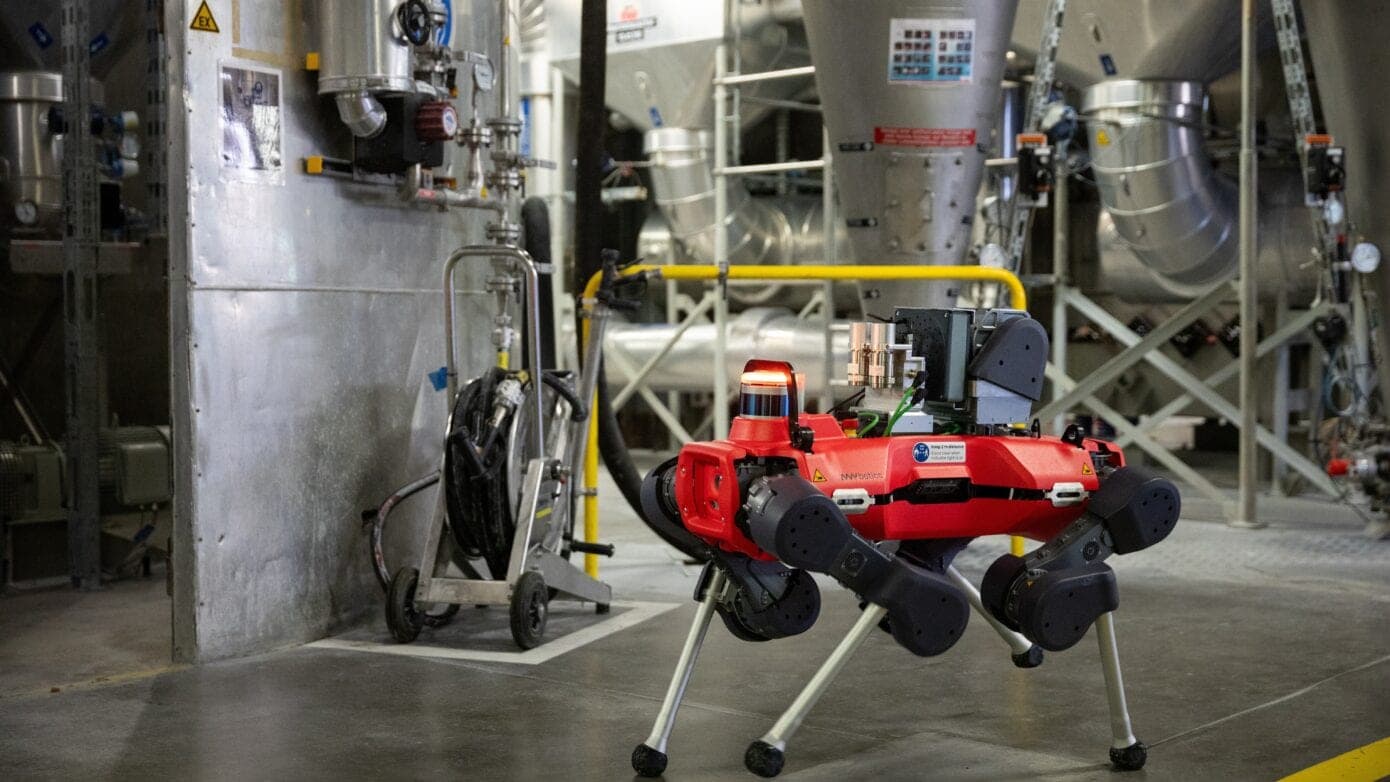
Four-legged robots clocking in for the overnight inspection shift.How we rate
ANYbotics rebranded its robot software into Shift, a platform that schedules and supervises entire fleets of four-legged inspection robots running missions around the clock in industrial plants.
It matters because it marks a shift from robots as standalone tools to robots as a managed, always-on part of plant operations. One customer already credits the system with avoiding roughly $3 million in downtime, a concrete sign the approach is paying off beyond the pitch deck.
What to know
- ANYbotics rebranded its Data Navigator software as Shift, a platform that schedules, supervises, and coordinates fleets of its ANYmal four-legged inspection robots.
- Shift has four core functions: fleet management, fast deployment to new sites, AI-based analysis of thermal, visual, and acoustic sensor data, and routing confirmed findings into systems like SAP and GE APM.
- A US aluminum manufacturer running three ANYmal robots in parallel through Shift estimates it has avoided about $3 million in downtime.
- The rename reflects a shift from single-robot data access to full plant operations: the robots now run scheduled missions around the clock while Shift supervises the work.
- ANYbotics says the update requires no disruption to existing deployments, with customer data, logins, and API endpoints staying unchanged.
A four-legged robot walking its scheduled rounds through a factory at 2 a.m. isn't the surprising part anymore. The surprising part is that there's now software whose entire job is managing its shift.
What exactly did ANYbotics launch?
ANYbotics renamed its Data Navigator software to Shift, an operations platform built to manage fleets of its ANYmal four-legged inspection robots. Shift schedules inspection missions, tracks robot status, and supervises the work as robots move through industrial facilities around the clock.
Why it matters: this isn't a cosmetic rebrand. ANYbotics says the name reflects a real change in what the software does, moving from giving customers access to one robot's data to coordinating entire fleets running continuous plant operations.
Why rename a product that already existed?
Background: Data Navigator originally helped customers access and navigate inspection data collected by individual robots. As ANYbotics customers scaled from single robots to full fleets handling daily plant operations, the software had to grow with them.
Jacob Euler-Rolle, ANYbotics' Head of Product Management for Workflow Integration, put it plainly: "Robots now run their own shift around the clock. Shift schedules and supervises that work, then hands findings and evidence to the team" each morning.
In real life it's like a night-shift supervisor who never needs a coffee break, except the workers it's supervising are robot dogs walking past pressure gauges instead of people on a factory floor.
What problem is this actually solving?
By the numbers: ANYbotics cites estimates that undetected equipment failures cost major industrial companies roughly $1.4 trillion annually in downtime, with each hour of an outage averaging about $250,000.
Why it matters: a robot spotting a problem is only useful if someone acts on it quickly. Shift is built specifically to close that gap, turning a robot's sensor reading into a work order inside a plant's existing maintenance software, rather than leaving it sitting in a report nobody reads until it's too late.
What does the platform actually do, piece by piece?
Shift covers four areas. Fleet management handles scheduling and monitoring, including battery levels, positioning, and live video from each robot. Fast deployment tools help teams extend inspection coverage to new sites quickly. Asset intelligence analyzes thermal, visual, and acoustic sensor data over time to catch meaningful changes early. Workflow integration sends confirmed findings into systems like SAP, GE APM, and Microsoft Teams, so the data lands where maintenance teams already work.
Why it matters: each piece addresses a different failure point in getting from "robot sees something" to "human fixes something." Splitting it into four integrated modules suggests ANYbotics learned which specific steps customers were getting stuck on.
Has this actually saved anyone money?
A US aluminum manufacturer running three ANYmal robots in parallel, coordinated through Shift and feeding results into its SAP workflows, estimates it has avoided approximately $3 million in downtime. A metals operation under the Viohalco Group has also used the platform to get a single view of asset condition across steel, aluminum, and copper plants.
Why it matters: industrial robotics pitches are full of theoretical savings. A customer citing a specific dollar figure tied to a real deployment is a more concrete signal than a vendor's own projections.
Does this work with robots that aren't made by ANYbotics?
Not currently. The platform is built around ANYbotics' own ANYmal and ANYmal X robots. But the company has described a longer-term goal of extending Shift into a hardware-agnostic command center that could eventually manage third-party robots too.
Why it matters: if that vision plays out, Shift would stop being just a tool for ANYbotics' own hardware and start competing as management software for industrial robot fleets generally, a much bigger market than one company's own robot sales.
Where did ANYmal, the actual robot, come from?
Background: ANYbotics was founded in 2016 as a spin-off from the Robotic Systems Lab at ETH Zurich, one of the world's leading robotics research institutions. The lab had been building a series of quadruped research robots since around 2009, and ANYmal grew out of that decade of research before becoming a commercial product.
Why it matters: ANYmal wasn't built from scratch as a product pitch. It emerged from years of academic research into legged locomotion, the kind of work that later became influential across the broader field of learning-based robot movement. That research pedigree is part of why ANYmal can reliably climb stairs and navigate rough industrial terrain that would stop a wheeled robot.
How does this compare to other inspection robots on the market?
Background: ANYbotics isn't alone in selling legged robots for industrial inspection. Boston Dynamics' Spot robot competes in a similar space, and both companies have pushed into oil and gas, chemical, and power generation facilities where hazardous or hard-to-reach equipment makes human inspection slow or risky.
Why it matters: as more companies field competing robot fleets, the software managing those fleets becomes just as important competitively as the robots themselves. ANYbotics positioning Shift as eventually hardware-agnostic suggests it sees fleet management, not just robot sales, as where the next phase of competition will play out.
Are these robots built for genuinely dangerous environments?
Background: ANYbotics has also been expanding what ANYmal can physically access. The company's ANYmal X variant is designed to be Ex-certified, meaning it's rated safe to operate in hazardous, potentially explosive environments like oil and gas facilities, a certification standard that most robots don't meet.
Separate recent updates have added automated door access, letting robots pass through both unlocked and locked doors without a person present, and gas-leak detection payloads that can locate leaks and measure concentrations.
Why it matters: each of those capabilities removes a specific reason a human still needed to be involved. A robot that can't open a secure door, or can't legally enter a hazardous zone, still needs a person to bridge that gap. Shift's fleet-wide scheduling only becomes fully "around the clock" once the robots themselves can handle those physical obstacles on their own.
What happens to existing ANYbotics customers?
ANYbotics says current deployments won't be disrupted by the change. Customer data, configurations, logins, and API endpoints all stay the same, and the Shift 1.0 interface updates automatically with no changes to pricing, packaging, or contracts.
What it means for you
- If your industry relies on physical inspections (energy, mining, manufacturing), robot fleets managed by software like this are moving from pilot projects to standard operations.
- The real value isn't the robot walking around, it's what happens after it spots something. Shift's bet is that routing findings directly into existing maintenance software is what actually prevents downtime.
- Reported dollar savings, like the $3 million downtime figure here, are becoming the real benchmark for industrial robotics, not just how advanced the robot itself looks.
- Watch for "hardware-agnostic" fleet management platforms becoming their own competitive category, separate from who makes the robots themselves.
The bottom line
ANYbotics renamed its software because the job it does actually changed: robots that used to need someone to check their data now run scheduled missions on their own, with Shift supervising the work and handing off only what actually needs human attention.
That's a quieter kind of progress than a flashier robot demo, but a customer citing millions in avoided downtime is the kind of proof that tends to matter more than a new coat of paint on the name.
Key facts
- Formerly called
- Data Navigator
- Core modules
- 4 (fleet, deploy, AI, integration)
- Reported customer savings
- ~$3 million downtime avoided
- Deployments worldwide
- 200+
- Headquarters
- Zurich, Switzerland
Got questions?
Quick answers, plain wordsWhat is ANYbotics Shift?
Shift is ANYbotics' operations platform for managing fleets of its ANYmal four-legged inspection robots. It schedules inspection missions, monitors robot health and status, analyzes sensor data for anomalies, and routes confirmed findings into a plant's existing maintenance software.
Is Shift a new product or a rebrand of something that already existed?
It's a rebrand and expansion of ANYbotics' existing Data Navigator software, which originally helped customers access inspection data from individual robots. As deployments scaled to full robot fleets running daily plant operations, the company evolved the product and renamed it Shift.
What specific problem does Shift try to solve?
Undetected equipment failures reportedly cost major industrial companies around $1.4 trillion annually in downtime, with each hour of an outage averaging roughly $250,000. Shift is built to bridge the gap between a robot physically detecting a problem and a maintenance team acting on it.
What are the four main parts of the Shift platform?
Fleet management for scheduling and monitoring robots, fast deployment tools for expanding inspection coverage to new sites, asset intelligence that analyzes thermal, visual, and acoustic data over time to catch early changes, and workflow integration that sends confirmed findings into systems like SAP, GE APM, and Microsoft Teams.
Does Shift work with robots other than ANYbotics' own ANYmal?
Not yet. ANYbotics has described a longer-term vision of extending Shift to third-party robots as a hardware-agnostic command center for robotic operations, but the current platform is built around its own ANYmal and ANYmal X robots.
What results have customers reported using the platform?
A US aluminum manufacturer running three ANYmal robots in parallel, coordinated through Shift and integrated with its SAP workflows, estimates it avoided approximately $3 million in downtime. A Viohalco Group steel and metals operation has also used the platform to get a unified view of asset condition across multiple plants.
Do existing ANYbotics customers need to do anything to get Shift?
No. ANYbotics says the Shift 1.0 release updates automatically for existing deployments, with no changes to customer data, configurations, logins, pricing, or API endpoints.
Where is ANYbotics based and how big is its robot fleet deployment?
ANYbotics is headquartered in Zurich, Switzerland, with a US office in San Francisco. The company says it has supported more than 200 robot deployments worldwide, running inspections across power utilities, mining, oil and gas, and chemical plants.
SourcesANYbotics
Topics and tagsIndustrial robots, anybotics, robots, industrial ai
Related stories
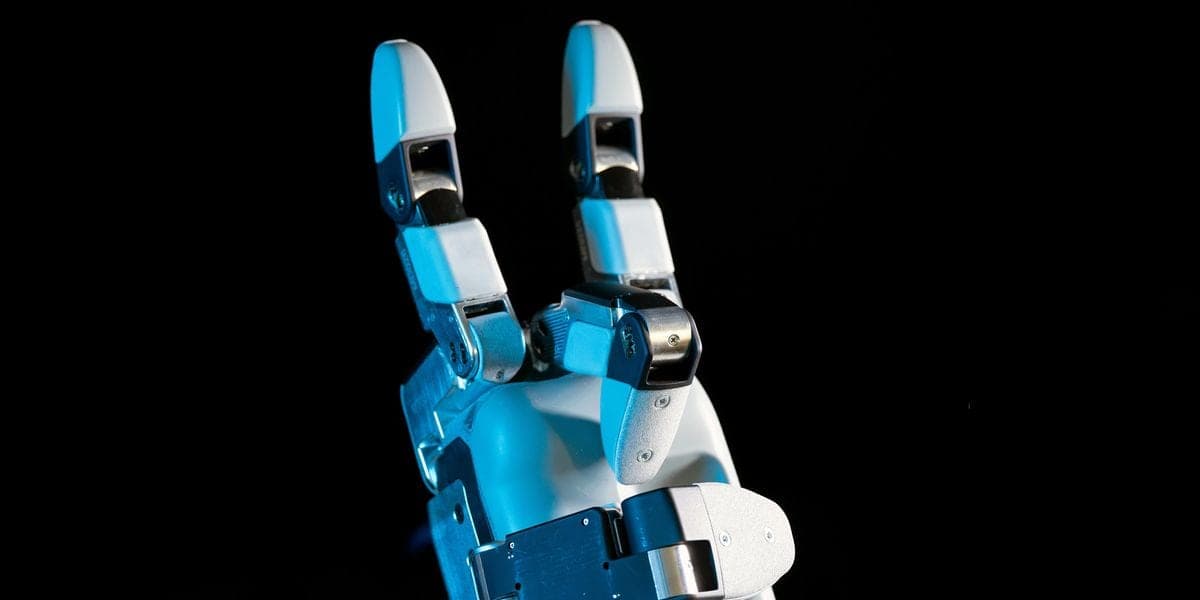
Boston Dynamics gave its Atlas robot a four-fingered hand on purpose, and it works better than five
Boston Dynamics redesigned Atlas's hand with 13 degrees of freedom and only four digits, dropping the pinky entirely because the team found reliability and manufacturability mattered more than looking human.

SoftBank is betting $225 million that self-driving bulldozers can fix a labor shortage
SoftBank invested $225 million in Utah robotics company ASI and formed a joint venture to deploy autonomous haul trucks, dozers, loaders and compactors on big construction projects.
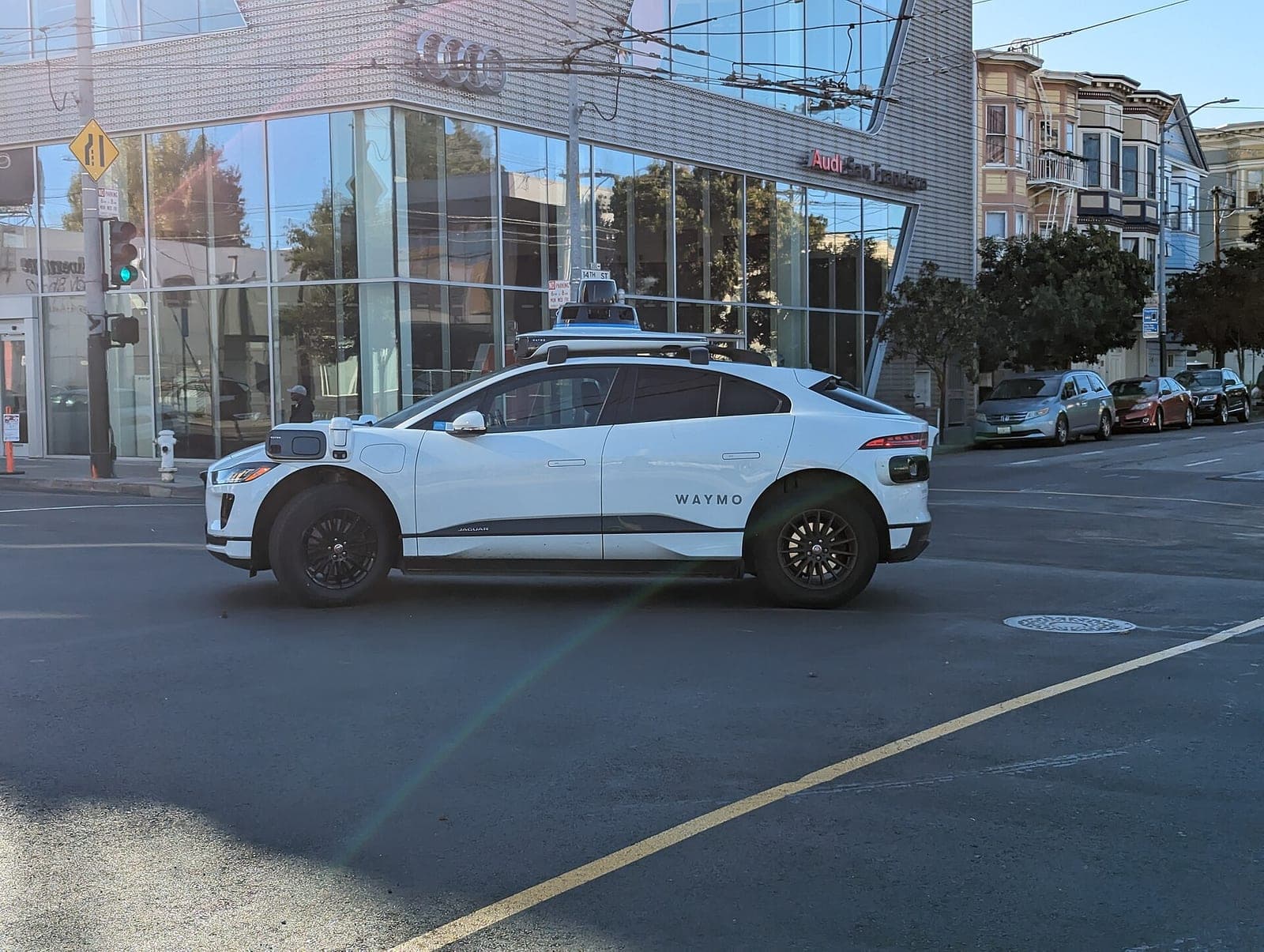
California will fine robotaxi companies that block first responders for over 30 minutes
Governor Gavin Newsom signed SB 1246, which requires robotaxi operators like Waymo, Tesla and Zoox to send on-site help when their cars cause problems, and to keep remote drivers in the US.
More in brief
- Microsoft launches real-time transcription and new voice models for AI voice agentsOct 1
- Apple's smart home hub reportedly launches October 13, with a camera that never records videoOct 1
- Cloudflare releases Clef, open-weight AI models that make yes-or-no decisions fastOct 1
- GrayKey maker reportedly found a way around the iPhone's Inactivity RebootOct 1
- Fervo's Cape Station becomes the first enhanced geothermal plant to sell power commerciallyOct 1
- Cloudflare renames its data platform Basin and makes it generally availableOct 1