
Robots·News & analysis
Zipline raises $1.5 billion as Walmart signs up 300 more drone sites
The drone delivery company is now valued at $21.5 billion, and Uber is aiming for one million Zipline deliveries a day by 2029.

Tide
Wave
Sci-fi
6/10
Reality
Shipping
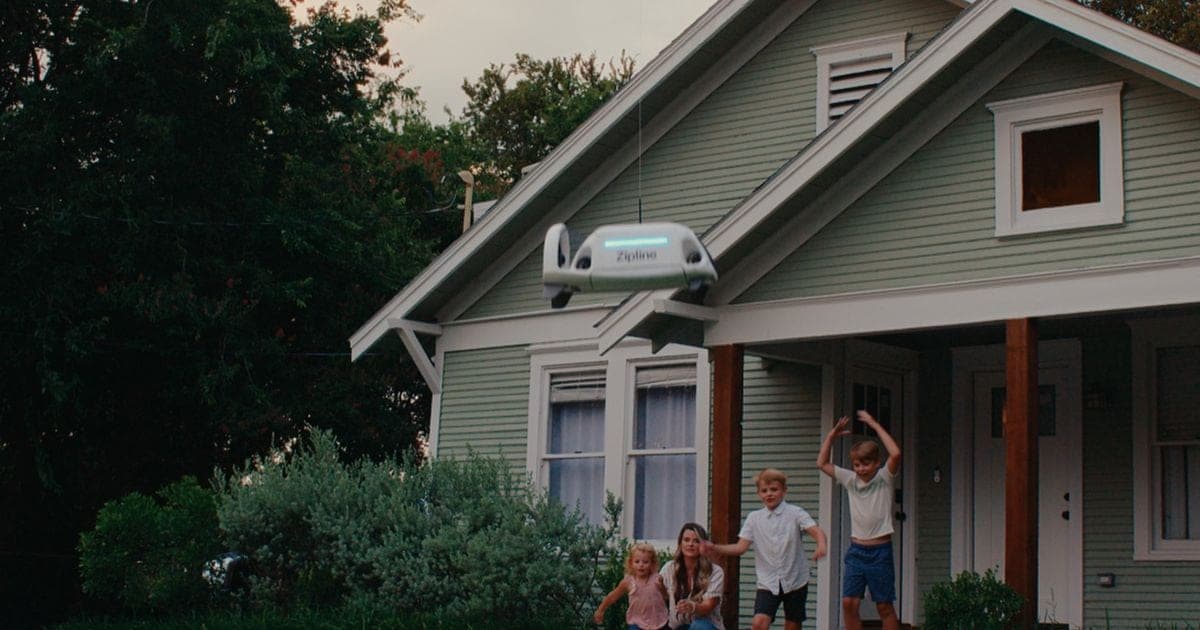
A flying pod lowers your burrito onto the patio.How we rate
Drone delivery company Zipline raised $1.5 billion at a $21.5 billion valuation, led by Paradigm, WCM Investment Management and Layer Global.
Walmart signed a multi-year deal for 300 more Zipline sites, and Uber is aiming for one million deliveries a day by 2029. The money will pay for US factories and hiring. No launch date was given for the first new sites.
What to know
- Zipline raised $1.5 billion at a $21.5 billion valuation, up from $7.6 billion in January.
- Walmart and Zipline will launch 300 additional drone delivery sites under a new multi-year deal.
- Uber is targeting one million deliveries a day with Zipline by 2029, through Uber Eats.
- Zipline says the median October order arrived 19 minutes after checkout, and it has flown 150 million autonomous miles.
Zipline announced on Thursday that it raised $1.5 billion, and that Walmart will launch 300 more Zipline drone sites. The drone company is now valued at $21.5 billion.
That's a lot of money for a robot that drops tacos on your patio. So what exactly are investors buying?
What did Zipline announce?
The round values Zipline at $21.5 billion after the new money (a "post-money" valuation). Paradigm, WCM Investment Management and Layer Global led it.
Valor Equity Partners, Fidelity Management & Research Company, Uber, Tiger Global, J.P. Morgan, ARK Invest and Salesforce Ventures also took part.
Zipline says it will spend the money on two things: expanding its US factories and hiring more people. The goal is what it calls a nationwide drone delivery network.
By the numbers: in January, Zipline raised more than $600 million at a $7.6 billion valuation. Ten months later the price tag is about 2.8 times higher.
Back in September, talks of a raise of about $1 billion at a $20 billion value had surfaced. The final numbers came in above that.
What is Walmart getting?
Walmart and Zipline signed a new national, multi-year agreement to launch 300 additional sites. The companies say it could grow further.
The two have worked together since 2021. But today they share only 21 active drone delivery sites, so 300 is a big jump.
Why it matters: a "site" is a spot, usually at a store, where drones take off and land. More sites means more of your neighbors live inside a drone's delivery range.
So far Zipline's Walmart business has centered on one metro, Dallas-Fort Worth, plus a hub in Pea Ridge, Arkansas, near Walmart's headquarters. The company's FAA authorization in Dallas-Fort Worth allows up to 75 sites there. Wing, for its part, holds a contract for more than 270 Walmart locations by 2027.
The announcement names no states and no date for the first new site. So don't expect a drone at your door next week.
In real life Think of a site like a bus stop for drones. The more stops a city has, the more people live close enough to a stop to use it.
What does Uber want?
Uber invested in this round. It is also a customer with a very big goal: one million deliveries a day with Zipline by 2029.
Zipline's service is being added to Uber Eats. It starts in markets where Zipline already flies, then spreads to new cities.
Walmart has another drone partner, Wing, which is owned by Alphabet, Google's parent company. We covered its own plans in Wing and Walmart will fly drone deliveries to Denver and Seattle in 2027. Walmart is not choosing one partner. It is signing up both.
How fast is it, really?
Zipline shared some numbers about its service. These are the company's own figures, so read them as a progress report from the team that wrote it.
- Dallas-Fort Worth: more than one million deliveries there this year.
- Median time: 19 minutes from checkout in October, against 30 minutes or more for traditional delivery.
- Bakery orders: a median of 10 minutes, because the food is quick to prepare.
- Distance flown: 150 million commercial autonomous miles, which Zipline says were flown without a safety incident.
Zipline also shared results from a group of its longest-working restaurants. Between March and October, Zipline's share of their delivery revenue grew from 10.8% to 34.9%.
Those restaurants saw a 26% rise in delivery sales, and 80% of that rise came from Zipline orders. Zipline says the orders were new business and did not take sales from other delivery apps.
The catch: this is a group the company picked, and it did not say how many restaurants are in it. It is a good sign, but it is not the whole network.
Why would drones beat a car?
Zipline's argument is simple. Roads are crowded, and delivery costs keep rising. The sky has no traffic.
Today only about 5% of US restaurant orders are for delivery. Most of those are limited to customers within a couple of miles, because longer trips cost more and take longer.
A drone doesn't sit in traffic, so a restaurant can reach customers farther away. Zipline says some partners are building new kitchens and storefronts designed around drone orders. One example it names is the company Wonder.
How do the drones work?
Zipline builds the whole system itself: the aircraft, the launch and landing equipment, and the software that sends orders to the right drone.
For home delivery it uses a drone called Platform 2. It carries up to eight pounds and serves customers within a 10-mile radius. A pod lowers your order on a line, so the drone never has to land in your yard.
The bigger Platform 1 aircraft are used for long trips for businesses and governments. They can fly 120 miles round trip.
Zipline began in 2014 in Africa, delivering blood in Rwanda. It later added Ghana and Nigeria. It started US work in 2020, carrying medical supplies for Novant Health in North Carolina.
In 2022 it got an FAA air carrier certificate called Part 135. That approval lets a company run long-range commercial drone deliveries, and it was a key step toward today's business.
Zipline now delivers food, retail, farm and health products in five African countries, several US cities and Japan. Its medical deliveries reach many hospitals and clinics. In Côte d'Ivoire it is building a nationwide network meant to serve more than 2,200 health facilities and 12 million people.
What about the noise and the neighbors?
Drones are loud, and not everyone wants a drone site nearby. Zipline knows it.
The company recently rolled out a flying style it calls sound-optimized dynamic flying. In plain words, the aircraft adjust how they fly to be quieter, faster and more energy efficient. It also says its next-generation aircraft will fly higher and quieter with heavier orders over longer distances. No date or specifications came with that.
What's next: local pushback is real. In Westborough, Massachusetts, residents and officials challenged an Amazon drone facility over noise, safety, zoning and environmental concerns. Amazon withdrew its application on October 30, but plans to send a revised one.
The lesson for every drone company is the same. FAA approval covers the airspace, but towns still decide a lot about the ground where drones take off.
What it means for you
- Where you live matters: if your town has a Walmart near a Zipline site, drone delivery may appear as an option. The 300 new sites have no announced locations yet.
- Speed is the pitch: a median of 19 minutes is faster than most car deliveries, at least in the company's own data.
- Expect debates: if a drone site is proposed near you, noise, hours and location will be the questions your town asks.
- Competition helps: Walmart works with both Zipline and Wing, so you may see more choice and better service.
The bottom line
Zipline just got the money and the biggest retail promise it has ever had. Now it has to turn a pile of cash and 300 planned sites into real drones in real neighborhoods.
The numbers so far look strong, but most are the company's own. The next year will show whether drone delivery becomes a normal button in your app.
Key facts
- Raise
- $1.5 billion at a $21.5 billion valuation
- Led by
- Paradigm, WCM Investment Management, Layer Global
- Walmart deal
- 300 additional sites, multi-year
- Uber goal
- 1 million deliveries a day by 2029
- Median delivery time
- 19 minutes after checkout (October)
Got questions?
Quick answers, plain wordsHow much did Zipline raise?
Zipline raised $1.5 billion at a $21.5 billion post-money valuation. Paradigm, WCM Investment Management and Layer Global led the round.
What is Zipline?
Zipline is a drone delivery company founded in 2014. It makes its own aircraft, launch and landing systems and logistics software, and delivers food, retail goods and medical supplies.
How many drone sites will Walmart add with Zipline?
Walmart and Zipline are working to launch 300 additional sites under a new national multi-year agreement. Today the two companies share 21 active drone delivery sites.
What is Uber's role?
Uber invested in the round. It is also targeting one million deliveries a day with Zipline by 2029, and Zipline's service is being added to Uber Eats.
Where can you get Zipline delivery today?
In several US cities, including the Dallas-Fort Worth area, plus Japan and five African countries. The company has not named the locations for the new Walmart sites.
How fast is Zipline delivery?
In October the median order arrived 19 minutes after checkout, against 30 minutes or more for traditional delivery, Zipline says. Quick-prep items like bakery orders took a median of 10 minutes.
How big and how far can the drones go?
The home delivery drones, called Platform 2, carry up to eight pounds and serve customers within a 10-mile radius. The larger Platform 1 aircraft cover 120 miles round trip.
Is Zipline safe?
Zipline says it has flown 150 million commercial autonomous miles without a safety incident. That is the company's own figure.
What about noise?
Zipline recently rolled out a flight style that adjusts how the aircraft fly to cut noise, and says its next-generation aircraft will fly higher and quieter. No specifications or date were given.
Why do some towns push back on drone delivery?
Residents have raised noise, safety, zoning and environmental worries. In Westborough, Massachusetts, Amazon withdrew a drone facility application on October 30 after local pushback.
SourcesZipline
Topics and tagsFunding & deals, zipline, drone delivery, walmart
Go deeper
Related stories
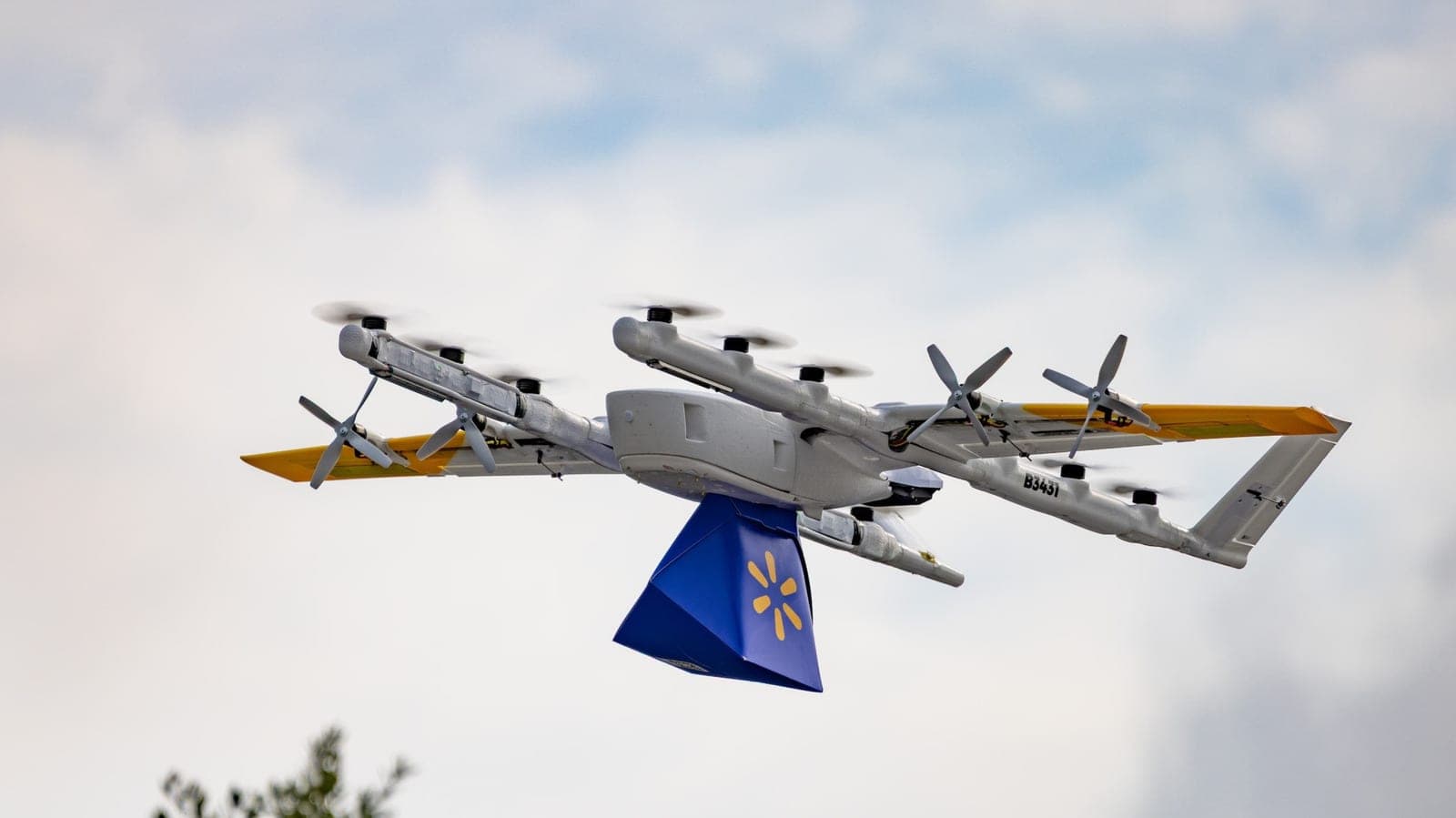
Wing and Walmart will fly drone deliveries to Denver and Seattle in 2027
The two new metros push the partnership to nearly 20 US markets as Wing works toward drone delivery from more than 270 Walmart stores and 40 million customers.
Tutor Intelligence raises $75M to rent out warehouse robots by the hour
The MIT spinoff closed a $75 million Series B led by Andreessen Horowitz. Its robots work in factories and warehouses, and customers pay by the hour or by the pick.
Lowe's launches drone delivery for tools and paint, betting on 20-minute fulfillment
Lowe's is piloting drone delivery of small home improvement supplies near Charlotte, North Carolina, partnering with DoorDash and Alphabet's Wing to get items to customers in as fast as 20 minutes.
More in brief
- YouTube is going back on the Billboard charts in 2027Nov 9
- Apple starts selling $50 packs for extra Apple Intelligence useNov 9
- Windows 11 tests a way to switch off the Sticky Keys popup for goodNov 9
- US regulators question whether Waymo's school bus fix workedNov 9
- NVIDIA unveils GR00T 2 and Isaac Lab 3.0 to teach robots delicate workNov 9
- Tesla launches its robotaxi service in San Antonio, its eighth cityNov 9