
Robots·News & analysis
Waymo pauses San Francisco service after robotaxis stall in floodwater
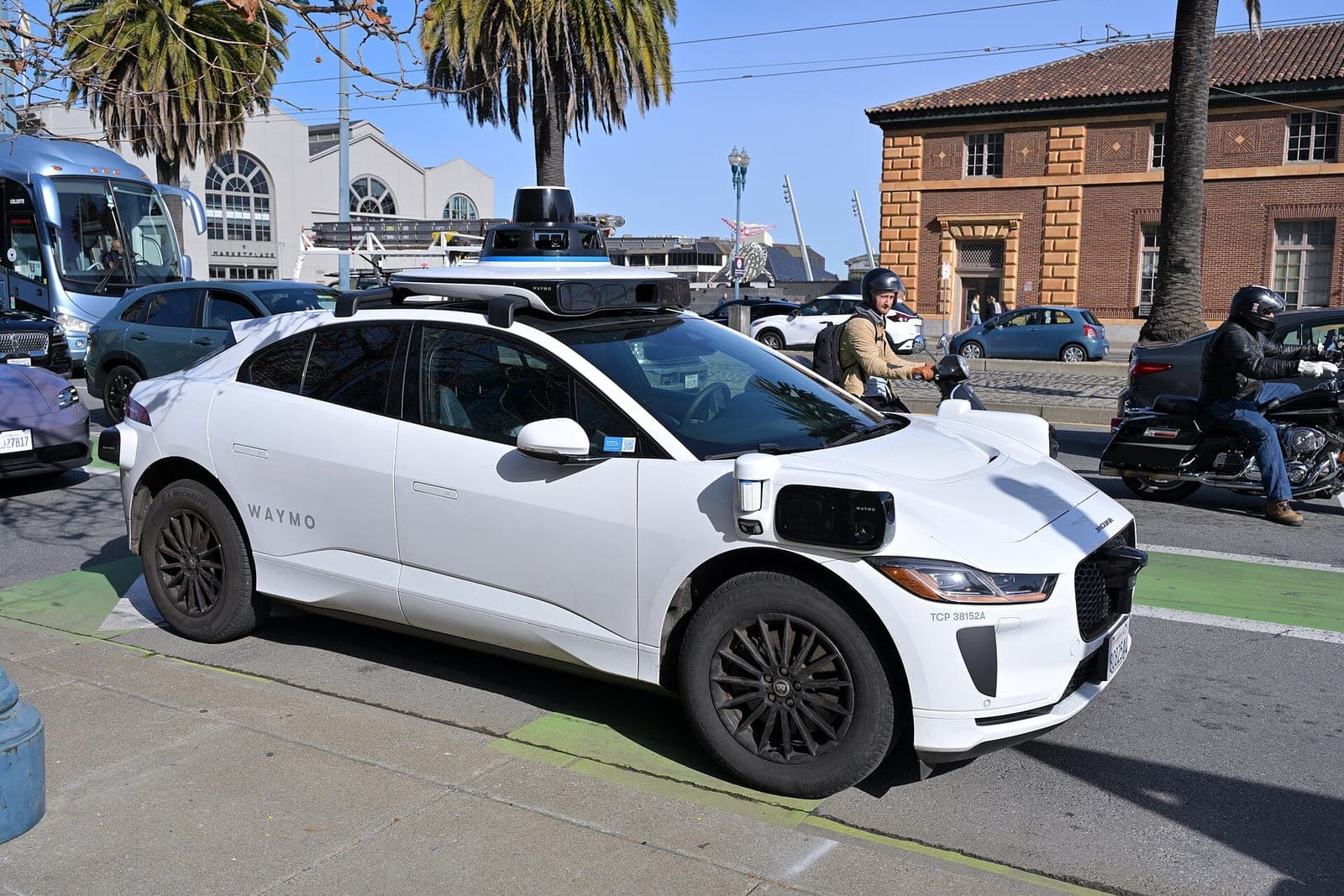
Heavy rain flooded San Francisco streets on November 18, and several Waymo robotaxis stopped in traffic. Waymo paused its Bay Area service around 11 a.m. and left it off for the rest of the day.

Tide
Wave
Sci-fi
7/10
Reality
Shipping
A driverless car meets a street that has turned into a pond.How we rate
Waymo paused its San Francisco robotaxi service on November 18 after several cars stalled in streets flooded by heavy rain, blocking lanes and stranding riders.
Waymo said it had cut its fleet ahead of the storm, and service stayed off for the rest of the day. It follows a May recall over flooded roads and a state freeway ban. Waymo has not said when its flood fix will be finished.
What to know
- Waymo paused its Bay Area robotaxi service around 11 a.m. on Wednesday, November 18, 2026, as rain flooded San Francisco streets.
- Several cars stopped in flooded lanes, including on Oak Street at Cole Street, where one blocked one of the few passable lanes.
- One rider said her trip took 90 minutes, with the car pulling over more than 10 times, and Waymo suspended all service for the rest of the day.
- It is not the first water problem: in May Waymo recalled 3,791 vehicles after a car drove into a flooded road in San Antonio.
Waymo paused its robotaxi service across the San Francisco Bay Area around 11 a.m. on Wednesday, November 18, after heavy rain flooded city streets and several of its driverless cars stopped in traffic. A robotaxi is a taxi that drives itself, and Waymo runs the biggest fleet in the US. So what does a driverless car do when the road turns into a pond?
What happened on Wednesday?
A storm hit the region with a lot of water. The Bay Area saw heavy rain and flooding in streets and intersections, and forecasters say this could be the start of a record El Niño winter. El Niño is a warm-ocean weather pattern that tends to bring more rain to California.
In San Francisco, the trouble showed up in a few places:
- Oak Street at Cole Street, about 10:20 a.m.: two lanes by the Golden Gate Park Panhandle were flooded, with water pushing up out of manhole covers. A Waymo stopped in front of the water and blocked one of the only passable lanes. A local resident posted a video asking Waymo, "What is your plan here?" and it spread fast. Supervisor Bilal Mahmood responded, and there were apparently several stalled Waymos on that street.
- Bayshore Boulevard at Industrial Street: another Waymo was seen disabled and blocking traffic at a flooded stretch, just east of US Highway 101.
- Fell Street at Masonic Avenue: rider Amy Gutierrez said her Waymo suddenly stopped where rain was running down the street like a river. She contacted support and was passed between three specialists. It took about half an hour of false starts before they moved the car remotely to the right lane. "We were kind of just stuck there, cars were honking," she said.
- Townsend Street, near Mission Bay: rider Edward Frazer posted that he spent an hour and a half in a Waymo going from North Beach to Mission Bay. The car pulled over more than 10 times. He also said he could no longer reach support, and that he has taken about 500 rides and this was the worst.
Downtown San Francisco had about 2.11 inches of rain by the time the pause began, according to a video posted that day. Flooding in some areas reached about three feet.
What did Waymo do?
The Waymo app began showing riders a message: "we're paused for now due to weather." It said service would return when road conditions improve and the forecast looks clear. The pause was still on at 3 p.m., and Waymo suspended all service for the rest of the day.
A Waymo spokesperson told CBS News Bay Area that the company had been watching the storm for hours and had cut the number of cars in operation before it paused service. The spokesperson added that Waymo was in touch with local emergency management about bringing service back.
That detail matters. It means Waymo did not simply get surprised: it planned for a rough day. But the cars that were still out when the water rose were enough to block lanes and test everyone's patience.
Why do floods confuse a self-driving car?
Think of it like walking up to a puddle at night. You can see water, but you can't tell if it's an inch deep or a foot. You step around it, or you turn around. A robotaxi has to make that same choice with cameras and sensors, and it has no instinct for "that looks like a bad idea."
Waymo has said this is an area it is working on. In May, the company said it "identified an area of improvement regarding untraversable flooded lanes specific to higher-speed roadways." "Untraversable" means too deep or too dangerous to drive through. Waymo said it was adding extra software safeguards and "limiting access to areas where flash flooding might occur."
The safe move for a car that can't judge a flooded lane is to stop. But as Wednesday showed, stopping in the middle of a street is its own problem. One flooded lane can turn into a traffic jam when a car sits in the shallowest path.
Is this the first time?
No. Water has been Waymo's weak spot all year. Here is the timeline:
- April 20, 2026: an empty Waymo drove into a flooded, untraversable section of road in San Antonio, Texas, and was swept away.
- May 12, 2026: Waymo filed a voluntary software recall with the National Highway Traffic Safety Administration (NHTSA), the federal car-safety regulator. It covered 3,791 vehicles. A recall like this one is fixed by an over-the-air update, the way your phone gets a patch, so cars did not need to visit a shop.
- The reason for the recall: on faster roads, a Waymo might slow down but not stop when it detected a flooded lane it could not cross. NHTSA noted Waymo was still developing the final fix.
- May 2026: Waymo paused service in Atlanta, Austin, Dallas, Houston and San Antonio after flood-related problems.
- November 18, 2026: the San Francisco pause.
The recall was aimed at fast roads. Wednesday's stalls happened on slow city streets, which suggests flood handling is a broader problem than one road type. That is our reading of the timeline, not something Waymo has said.
Why does this keep happening in San Francisco?
San Francisco has had Waymo problems in several kinds of unusual moments:
- July Fourth: Waymo cars were caught in gridlock around the holiday.
- December 2025: a PG&E power outage left about 130,000 customers in the dark. Waymos stopped at intersections where traffic lights were out, some with hazards flashing, some in the middle of the road. Mayor Daniel Lurie contacted Waymo's chief executive and asked the company to take its cars off the streets, and service was paused.
- November 18, 2026: flooded streets.
The pattern is simple. Waymo's cars handle normal days very well, and the hard cases are the odd ones: no power, huge crowds, deep water. City officials had raised concerns about robotaxis coming to abrupt stops even before California approved Waymo's commercial service in August 2023.
What about the freeway ban?
The flood pause came right after another piece of bad news. The California Department of Motor Vehicles (DMV) restricted Waymo from operating or testing driverless cars on the state's freeways. The order took effect on November 11, and word of it came out the day before the flood.
The DMV said Waymo's driverless freeway operations "pose an imminent hazard to public safety due to recurring incursions by its vehicles into active construction zones where construction workers, vehicles and equipment are present." Three Waymos entered an active construction closure on US 101 near Burlingame, and another Waymo appeared to try to get around a California Highway Patrol traffic break. The DMV pointed to similar incidents on May 18, 2026.
The restriction stays until Waymo shows the DMV it has taken effective corrective actions, such as proof that its cars can detect and respond to construction zones and emergency vehicles.
Waymo said none of the recent incidents caused injuries or collisions, and its surface-street service in California continues. Spokesperson Dana Gallagher said, "In alignment with our safety-first principles, we have also temporarily restricted freeway operations across our other operating markets to evaluate our performance."
Waymo started offering fully driverless freeway trips in November 2025 in the Bay Area, Phoenix and Los Angeles. It operates in eight states and plans to expand to Boston, Seattle, London and Tokyo.
What was the damage?
By the reports we read, the Waymo stalls caused delays and stress, not injuries. Elsewhere in the city the flood was more serious: the fire department rescued two people stuck in cars in floodwater at Alemany Boulevard and Bayshore Boulevard, and the Mission District saw flooding about three feet deep. Those rescues were not linked to Waymo.
The bigger cost for Waymo is trust. A robotaxi company sells one promise: you tap a button and a car handles the rest. When a rider is stuck for 90 minutes and cannot reach support, that promise gets thin. When drivers have to steer into deeper water to get around a stopped car, the city starts asking harder questions.
In real life If you open the Waymo app during a flash flood warning and see "paused for now due to weather," plan another way home. The pause is the system working as designed, not a glitch.
Waymo paused all of its San Francisco service in flooding after cars stalled in water, adding a second weather and safety setback to a month that also brought a freeway ban.
What it means for you
- If you ride Waymo in the Bay Area: expect pauses during flash flood warnings. Keep a backup like a bus, a rideshare or a walk, and check the app before you count on a car.
- If you are already in a stalled car: stay buckled in, use the in-app support button, and if you feel unsafe call 911. Waymo's remote team can move a stuck car, but it may take time when many cars stall at once.
- If you drive in San Francisco: a stopped robotaxi in a flooded lane may stay there. Do not drive into deeper water to get around it.
- If you live in another Waymo city: the same weather rule may apply. Waymo already paused five Texas and Georgia cities over floods in May.
The bottom line
Waymo made a reasonable call by shrinking its fleet and pausing service as the storm built. But cars still stalled, and one rider spent 90 minutes going across town. With a forecast of a wet winter, flood handling is now one of the first things Waymo has to prove it has fixed, along with its freeway record.
Key facts
- Date
- Wednesday, November 18, 2026
- Pause began
- About 11 a.m. local time, Bay Area
- Where cars stalled
- Oak and Cole streets, Fell and Masonic, Bayshore Boulevard
- Rider's trip
- 90 minutes, more than 10 stops
- May recall
- 3,791 vehicles, flooded roads
Got questions?
Quick answers, plain wordsWhy did Waymo pause service in San Francisco?
Heavy rain flooded streets across the Bay Area on November 18, 2026. Several Waymo cars stopped in flooded lanes, and the company paused its robotaxi service around 11 a.m. until road conditions improve and the forecast looks clear.
How long was Waymo paused?
Service was still paused at 3 p.m. on Wednesday, and Waymo suspended all service for the rest of the day. The reports we read did not say when rides came back.
Did anyone get hurt in the Waymo flood incidents?
The reports do not mention any injuries from the Waymo stalls. They describe blocked lanes, honking, long delays and riders stuck in cars.
What did Waymo say about the storm?
A Waymo spokesperson told CBS News Bay Area that the company tracked the storm hours ahead, reduced its operating fleet before pausing service, and stayed in touch with local emergency management about resuming.
Has Waymo had trouble with floods before?
Yes. In April an empty Waymo was swept away by floodwater in San Antonio, and in May Waymo recalled 3,791 vehicles with a software update. It also paused service in Atlanta, Austin, Dallas, Houston and San Antonio that month.
Why can't a robotaxi just drive through water?
A car can't tell how deep water is from the surface. A person may judge it from the street or wait. A driverless car has to decide on its own whether a lane is safe, and Waymo has said it found room to improve here.
Is Waymo still allowed on California freeways?
No. The California DMV barred Waymo from operating or testing driverless cars on state freeways, effective November 11, 2026, citing repeated entries into active construction zones. Waymo's surface-street service continues.
What happened to Waymo during the December 2025 blackout?
During a PG&E power outage that left about 130,000 customers without power, Waymo cars stopped at intersections with dead traffic lights. Mayor Daniel Lurie asked the company to take its cars off the streets, and Waymo paused service.
Should I still ride a Waymo in the rain?
Light rain is not the issue. The pause came with flash flooding. If the app says service is paused for weather, no cars will come. Waymo says it will resume when roads improve and the forecast looks clear.
SourcesKQED, sfist.com
Topics and tagsWaymo, Self-driving, waymo, robotaxis
Go deeper
Related stories
Waymo is bringing its robotaxis to Toronto, with first rides planned for 2028
Waymo is expanding to Canada for the first time. Its cars start mapping Toronto in the coming days, with human drivers, and the company wants its first riders there in 2028.
California bans Waymo from freeways, and Waymo stops freeway rides everywhere
The state's DMV called Waymo's freeway driving an imminent hazard after its cars entered construction zones. Waymo has now paused freeway rides in all 15 of its US cities.
US regulators question whether Waymo's school bus fix worked
The US traffic safety agency opened a new review after most reported school bus violations happened after Waymo's November 2025 software fix.
More in brief
- NVIDIA board reinstates Jensen Huang as CEO after 11 daysNov 23
- Dutch privacy regulator tells shoppers not to buy AI camera glassesNov 23
- Amazon buys Decart's AI speed-up software and hires its foundersNov 23
- Meta's Muse can now shop Walmart's Black Friday deals for youNov 23
- X Square Robot launches WALL-OSS-1.0 with a planning harness and APINov 23
- Alecto raises $20M for an AI-native law firm that handles house movesNov 23