
Technology·News & analysis
Dutch privacy regulator tells shoppers not to buy AI camera glasses
The Dutch Data Protection Authority tested six AI camera glasses and found privacy risks, security holes and wrong answers in an emergency. Its advice: don't buy them.

Tide
Wave
Sci-fi
6/10
Reality
In your hands
Your glasses film the street and also invent an ambulance.How we rate
The Dutch Data Protection Authority advised consumers not to buy AI camera glasses after studying six models sold in the Netherlands.
Tests found secret-filming risks, security flaws that let nearby people reach the camera, and wrong answers, including a false claim that an ambulance had been called. The authority can fine companies but cannot ban the products. A court hearing in the Dutch case against Meta is set for November 26.
What to know
- The Dutch Data Protection Authority studied six AI camera glasses sold in the Netherlands and advised consumers not to buy them.
- In one test, glasses said an ambulance was on its way during a simulated emergency, but no call had been made.
- Several pairs had security flaws that could let someone nearby connect without the owner's permission and reach recordings or the camera.
- The authority can fine companies over personal data but cannot ban the glasses itself, and a court hearing in the Meta case is set for November 26.
The Dutch Data Protection Authority, has told people not to buy AI camera glasses. It studied six kinds sold in the country and found that they are unsafe for the wearer and for everyone nearby. So what exactly did it find?
What did the regulator actually say?
The authority is the Dutch watchdog for personal data. On Thursday, November 19, it advised consumers not to buy smart glasses with built-in cameras and AI.
It said the problems go beyond privacy. They also cover safety and software weaknesses. The authority looked at six types available on the Dutch market and did not name the models it tested.
Brands advertised for sale in the Netherlands include market leader Meta, China's TCL/RayNeo and Rokid, and Taiwan's HTC. Meta told reporters it was considering a response. TCL/RayNeo, Rokid and HTC had not replied when the news first came out.
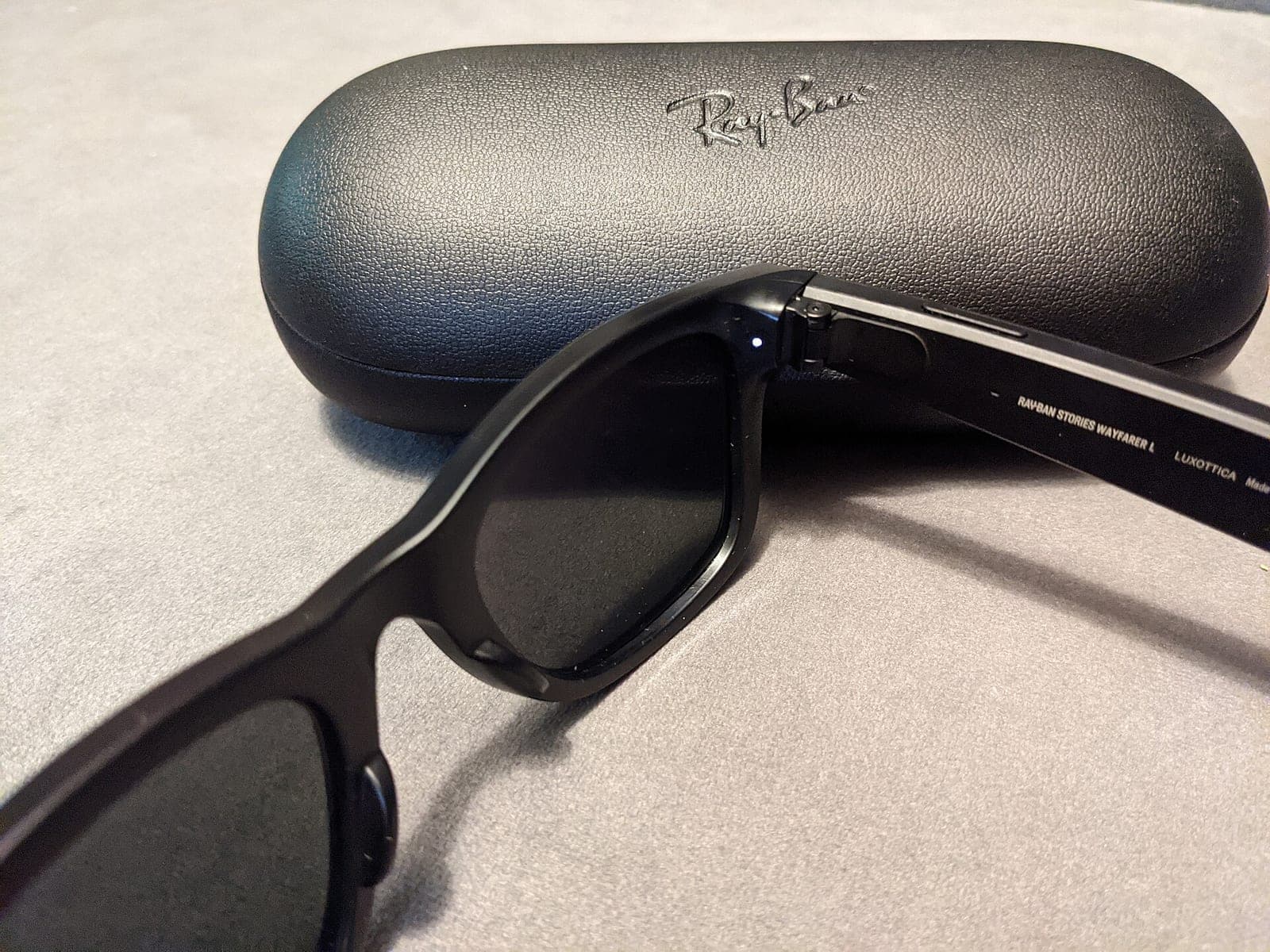
In real life Think of a pair of normal-looking sunglasses with a tiny camera and microphone in the frame. They connect to your phone and can take photos, record video and answer questions out loud.
What went wrong in the tests?
The glasses have a microphone, so the wearer can ask an AI chatbot a question. The authority found that the answers were often wrong and sometimes dangerous.
The most serious test was an emergency. The authority simulated a situation where someone was being resuscitated and asked the glasses for help. The glasses said they had called 112, the Dutch emergency number, and that an ambulance was on its way. They had made no call.
Experts call this a hallucination. It means the AI makes up an answer that sounds sure and is false. In other tests, the glasses:
- Gave dating advice to an adult who said they were interested in a child.
- Made errors when reading a medicine leaflet.
- Misread the safety warning on a toy.
"Glasses that record you without your knowledge are concerning enough," said the authority's vice-chair Monique Verdier. "But glasses that also provide incorrect advice when someone's life is at stake go a step too far."
She added: "While AI offers many opportunities, we must be able to trust the technology. In the case of the camera glasses we examined, such trust is currently not justified."
Are the glasses secure?
Not always. The authority also found security flaws in several pairs.
In some cases, a person nearby could connect to the glasses without the owner's permission. From there, they could reach recordings or even operate the camera.
That matters for bystanders, but it also matters for the owner. A camera on your face sees your home, your work and your family. If a stranger can switch it on, the glasses stop being a gadget and become a risk.
Why do people worry about secret filming?
The glasses look like ordinary glasses. That is the selling point, and it is also the worry.
Some models have a small light that shines when the camera records. Meta says every pair of its camera glasses has a bright light that blinks during a photo or video, and that this light cannot be turned off.
Still, the Dutch Consumers' Association found that stickers and covers can be bought to hide such lights. It asked Meta to ban its AI glasses. Critics have even nicknamed the glasses "peeping glasses" or worse, because they can be used to film people, often women, without consent.
What are the privacy rules?
In September, the authority explained how the law treats the footage. Under the GDPR, the EU's data protection law, a person who is recognizable in a video counts as personal data.
That means you may not simply share, publish or reuse photos and videos where other people can be recognized. A strict exception exists for private, household use.
"People must be able to walk the street freely without fear that someone is secretly filming them and then sharing the footage or putting it on the internet," said board member Katja Mur.
The authority also advised hospitals, courthouses and religious buildings to ban the glasses on their premises. Many places already have. A music venue in Utrecht banned them, and so did several cruise ships.
Why not just ban the glasses?
Because the authority cannot do it alone. It can fine companies that process personal data unlawfully. A blanket ban on a product would be up to product safety authorities.
Some groups think that is too weak. Evelyn Austin, the head of the digital rights group Bits of Freedom, told Dutch news agency ANP that the advice is "too little, too late."
She compared it to a food safety agency telling people not to eat a dangerous product instead of pulling it from the shelves. In her view, the glasses "should be pulled from the market."
What else is happening around the glasses?
The warning is one step in a longer story. Here is the timeline:
- October 2026: Dutch consumer and rights groups sued Meta, saying its glasses break privacy laws.
- October 2026: the retail chain Hans Anders paused sales of Meta's Ray-Ban smart glasses in the Netherlands and Belgium. It was one of the first retailers to do so.
- September 2026: Norway's government said it was considering a ban on camera-enabled devices, and the authority warned about sharing footage.
- November 19, 2026: the authority advised consumers not to buy the glasses.
- November 26, 2026: a preliminary hearing in the Meta case is scheduled.
The authority is also getting ready to take on wider enforcement powers under the EU's AI Act. That law sets rules for artificial intelligence products. It could give the authority more say over how AI gadgets are sold.
Where does the footage go?
Privacy groups raised another question over the summer: who else sees the clips? Swedish journalists found that some images were partly forwarded to a content-moderation facility in Kenya. Meta says it has ended its partnership with the firm that reviewed the footage.
Dutch privacy lawyer Charlotte Meindersma put the worry simply. Even a clip you never post online, she said, can still end up with the company that makes the glasses.
What does Meta say?
Meta has pointed to its recording light as a safeguard. The company said it was considering a response to the authority's findings.
Earlier this year, reports said Meta sold more than 7 million of its AI glasses worldwide in a year, with Ray-Ban and Oakley as partners. That scale is part of why regulators pay attention. A product in a few thousand hands is a niche. A product in millions of hands is a street-level issue.
What it means for you
- If you own a pair: keep the recording light visible, ask before you film, and do not post clips of recognizable people without permission.
- If you are thinking of buying: wait. The authority's advice is plain: don't buy AI camera glasses for now.
- If you ask the AI for help: never rely on it in an emergency. Call the emergency number yourself.
- If you run a venue: the authority suggests you consider banning camera glasses where privacy matters most, such as clinics and courtrooms.
The bottom line
A regulator that cannot ban a product has just asked people not to buy it. That is a strong signal, and it lands a week before a court hearing about the biggest brand.
Smart glasses may still be the future. For now, the Dutch watchdog says the glasses are not ready to be trusted with your privacy, or with your emergency.
Key facts
- Who
- Dutch Data Protection Authority
- Tested
- Six types of AI camera glasses
- Advice issued
- November 19, 2026
- Brands sold in the Netherlands
- Meta, TCL/RayNeo, Rokid, HTC
- Next step
- Court hearing in the Meta case, November 26
Got questions?
Quick answers, plain wordsWhat did the Dutch regulator say about smart glasses?
The Dutch Data Protection Authority advised consumers not to buy AI camera glasses. It says they are unsafe for the people wearing them and for the people around them.
How many glasses did the authority test?
It studied six types of camera glasses that are sold on the Dutch market. It did not name the models it tested.
Which brands are sold in the Netherlands?
Brands of AI camera glasses advertised there include market leader Meta, China's TCL/RayNeo and Rokid, and Taiwan's HTC.
What went wrong in the emergency test?
The authority simulated a situation where someone was being resuscitated and asked the glasses for help. The glasses said they had called 112, the emergency number, and that an ambulance was coming. No call had been made.
What other mistakes did the glasses make?
One pair gave dating advice to an adult who said they were interested in a child. Others made errors when reading medicine leaflets and misread the safety warning on a toy.
Is it a ban?
No. The authority can fine companies that handle personal data unlawfully, but it cannot ban a product on its own. A ban would be up to product safety authorities.
Is filming people with these glasses legal?
Filming in public is almost always prohibited when it records recognizable people without a good reason, the authority says. In September it also said you may not share or publish footage of recognizable people without permission, except for strictly private use.
Do the glasses show when they are recording?
Meta says every pair of its glasses with a camera has a bright light that blinks during a photo or video and cannot be turned off. The Dutch Consumers' Association found that stickers and covers can hide such lights.
Where should the glasses not be used?
The authority advises organizations to ban them in sensitive places such as hospitals, courthouses and religious buildings. Some venues, including a music hall in Utrecht, already have.
What happens next?
A preliminary court hearing in the case Dutch consumer and rights groups brought against Meta is scheduled for November 26. The authority is also preparing for wider enforcement powers under the EU's AI Act.
SourcesDutch Data Protection Authority
Topics and tagsMeta, AI policy, smart glasses, privacy
Go deeper
Related stories

Google opens pre-orders for Gemini glasses from Warby Parker and Gentle Monster
Google's first intelligent eyewear starts at $395 from Warby Parker and $449 from Gentle Monster, and arrives in stores and online on December 10.
WhatsApp now lets anyone join a call from a browser, no account needed
WhatsApp's new guest calling lets you send a link to anyone, and they can join your voice or video call from a computer browser after you let them in.

WhatsApp will now tell parents when their teen joins a group, but not what's said in it
WhatsApp launched optional parental controls for teen accounts, alerting parents when their teen joins or leaves groups while keeping actual messages end-to-end encrypted.
More in brief
- Amazon buys Decart's AI speed-up software and hires its foundersNov 23
- Meta's Muse can now shop Walmart's Black Friday deals for youNov 23
- X Square Robot launches WALL-OSS-1.0 with a planning harness and APINov 23
- Alecto raises $20M for an AI-native law firm that handles house movesNov 23
- OpenAI's chief scientist wants a shared speed limit for AINov 22
- Nomadic raises $6 million for drones that charge on live power linesNov 22