
Robots·News & analysis
Volvo picks Nvidia to bring hands-free, door-to-door driving by 2030
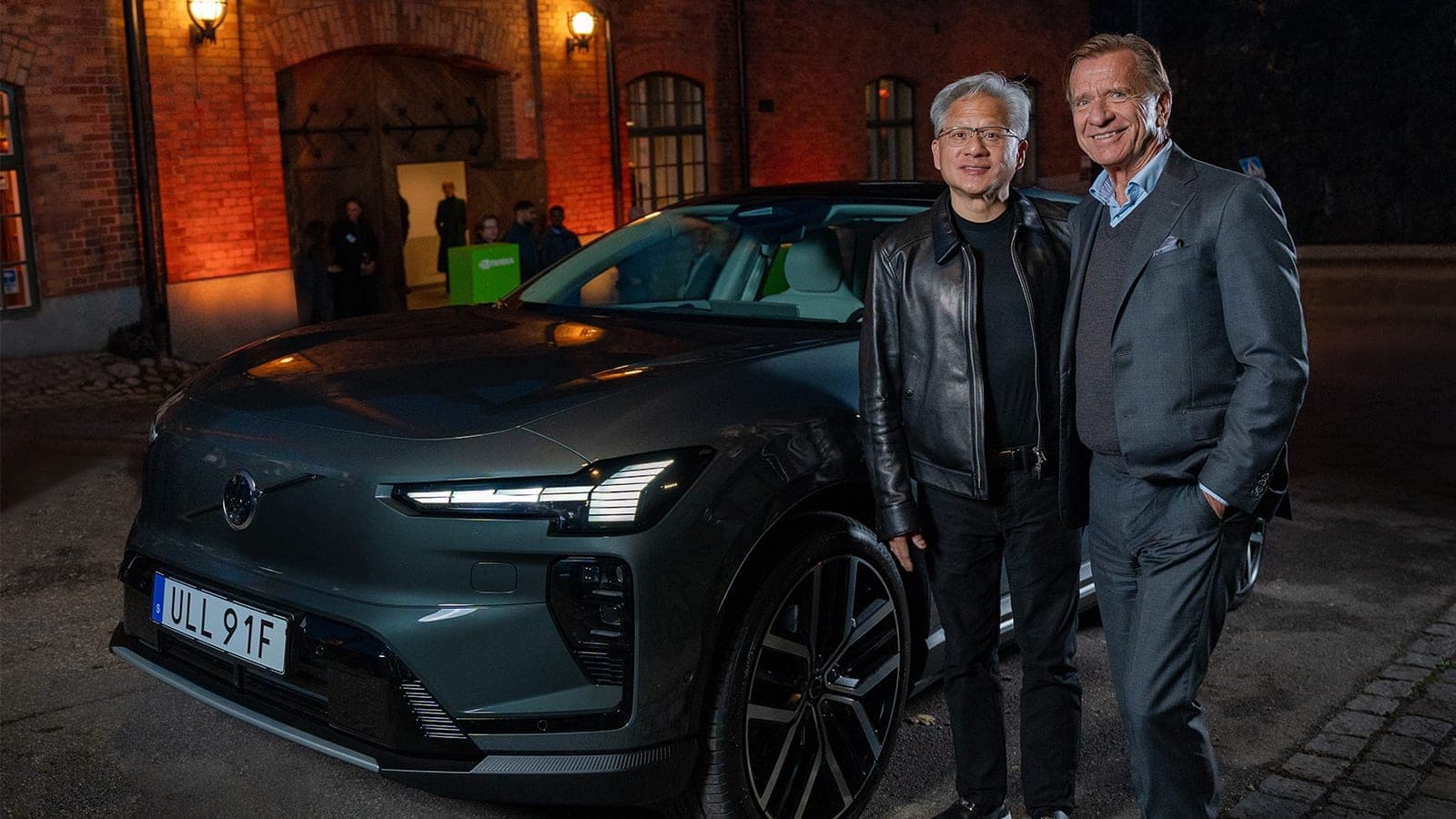
Volvo Cars is expanding its partnership with Nvidia to build a supervised system that can drive from your door to your destination, city streets included, before the end of the decade.
Tide
Ripple
Sci-fi
7/10
Reality
Demo
A Volvo that handles the unprotected left turn while you supervise.How we rate
Volvo Cars is expanding its partnership with Nvidia to build automated driving that can take a car from door to door, city streets included.
The first version is supervised Level 2++, so the driver stays responsible, and it runs on Nvidia's Hyperion platform and Alpamayo software. It will come to Volvos at many price points in several regions, not China. Volvo says it launches before 2030 and hasn't set a price.
What to know
- Volvo Cars announced an expanded partnership with Nvidia to build automated driving that works door to door: highways, busy city streets and parking.
- Volvo will use Nvidia's Hyperion sensor and compute platform, the Halos safety system and Alpamayo driving software, and it plans no lidar for now, The Verge reports.
- The first phase is a supervised Level 2++ system, with the driver still responsible, launching in several regions at once (not China) before 2030.
- Volvo hasn't picked a price model yet, but says the features won't be limited to its most expensive cars.
Volvo Cars is teaming up more closely with Nvidia to build cars that can drive you from your door to your destination, with you watching. Volvo announced the expanded partnership on Thursday, and the first system should arrive before 2030.
So what exactly is Volvo building, and why does a carmaker famous for safety want an AI chipmaker in the driver's seat?
What did Volvo and Nvidia announce?
In its announcement, Volvo says the new technology will let future Volvo cars navigate complex real-world environments from door to door. That covers highways, busy city streets and parking.
It's built from a stack of Nvidia parts:
- Hyperion: Nvidia's sensor and compute architecture, the "eyes and brain" hardware of the car.
- Halos OS: Nvidia software that Jensen Huang names alongside Hyperion as the base for safer cars.
- Alpamayo: Nvidia's driving software, which The Verge says uses "reasoning" models to understand tricky road situations and plan when to steer, brake or speed up.
The technology will debut in a next-generation Volvo car. Volvo ties it to what it calls its recently announced largest-ever product push. The plan, in the companies' words, is a gradual introduction of "eyes-off and mind-off driving."
"Volvo has been synonymous with car safety for almost 100 years," said Håkan Samuelsson, president and CEO of Volvo Cars. "By working with NVIDIA, we bring together two distinct strengths: industry-leading safety knowledge and world-class AI technology."
Nvidia CEO Jensen Huang said accelerated computing "has transformed the car into an intelligent machine that can understand the world around it."
First, what's Level 2++?
Volvo calls the new system Level 2++, The Verge reports. Self-driving is graded on six levels. At Level 2, the car helps with steering and speed, but you are still the driver and must supervise the whole time.
"Level 2++" isn't an official level. It's an industry way of saying "a Level 2 system that can do a lot more." In Volvo's case, that means handling city traffic: traffic lights, stop signs and unprotected left turns, without the driver steering.
Think of it like a very good student driver with a perfect memory. It does the driving, but the instructor (you) never gets to nap.
Volvo's head of software engineering, Alwin Bakkenes, told Reuters the first phase will focus on supervised driving features, with drivers remaining responsible for the vehicle. More advanced features, including hands-free driving on city streets and highways, are meant to come step by step.
In real life Picture typing your office address into the map, then letting the car handle the stop signs, lights and the left turn out of your street while you keep your eyes on the road, ready to take over at any moment.
How does it compare with Tesla and Mercedes?
The Verge compares Volvo's plan to Tesla's Full Self-Driving (Supervised), which also does hands-free, point-to-point driving on local roads with the driver watching.
Nvidia's Ali Kani, who runs the company's automotive team, told The Verge it will also resemble the Nvidia-powered system that Mercedes-Benz recently rolled out on its new CLA sedan.
That makes Volvo part of a growing club. Reuters lists Mercedes, Jaguar Land Rover and Hyundai among Nvidia's car partners, and notes that Mercedes, BMW and Ford are all working on advanced driver-assistance systems.
The big picture: Reuters also reports that Tesla is pushing for wider approval of its assisted-driving tech in Europe, including in cities, with an EU-wide vote possible in December. Hands-free city driving is turning into a feature every big carmaker wants on its spec sheet.
What does Volvo add to Nvidia's tech?
Nvidia brings the chips, sensors and software. Volvo says it brings nearly a century of safety research, and Bakkenes told The Verge about two specific contributions:
- Driver understanding: Volvo's own systems that study driver behavior in much more detail than a basic camera that checks if your eyes are open.
- Connected safety: Volvo cars can share information about hazards and conditions ahead, such as roadworks. That lets the system "see" past what one car's sensors can detect.
"Our brand Volvo is synonymous with safety, and safety is synonymous with trust," Bakkenes told The Verge.
Nvidia's Kani echoed that to Reuters: "The most important functionality of autonomous driving assist technology is safety."
Why no lidar this time?
Lidar is a sensor that maps the world with laser pulses. According to The Verge, Volvo's new setup will not include lidar, though Volvo could add it later if it decides to.
That's a change of direction. Volvo had planned to put lidar sensors on some of its models, but The Verge notes that plan fell apart after its supplier, Luminar, went bankrupt.
It's not the only reset. The Verge also reports that Volvo effectively sidelined Ride Pilot, its Level 3 system meant for unsupervised driving, in the US after it failed to get regulatory approval. This time, Volvo is starting with a supervised system and building up from there.
The catch: a supervised system still needs you. Until regulators approve something more, "hands-free" means your hands can rest, not your attention.
When can you get one, and what will it cost?
The timeline is wide. Bakkenes told The Verge the system will launch "before the end of the decade." Volvo hasn't said which model gets it first.
Here's what we know so far:
- Lineup: Volvo plans to offer it across its range, from entry-level to high-end cars, The Verge reports.
- Price: no pricing model yet. Bakkenes told Reuters the features would not just be available for higher-priced models.
- Regions: several launch at the same time, excluding China, according to Reuters. Volvo is majority owned by China's Geely Holding.
- Business model: Kani told The Verge that point-to-point driving may prove more valuable than a highway-only system, and that Nvidia wants to help Volvo build ongoing software-based offerings.
By the numbers: Volvo sold more than 710,000 cars in 2025, and 46% of them were electrified, according to the companies' release. The two companies have worked together since 2017.
Why does this matter beyond Volvo?
Volvo is betting that the brand people trust most for safety can make hands-free city driving feel trustworthy, too. That's the core of the pitch from both CEOs.
For Nvidia, every new car partner is another customer for the same platform. The chipmaker calls itself the world leader in AI and accelerated computing, and cars are one more place that computing can live.
For drivers, it means systems like Tesla's will no longer be the only option for supervised city driving. By 2030, several brands could offer something similar, each with its own take on safety.
What it means for you
- Not yet: nothing changes in today's Volvos. The system arrives in a next-generation car, before 2030.
- You stay the driver: the first version is supervised. You must watch the road and be ready to take over.
- Not just for luxury trims: Volvo says the features won't be limited to its priciest cars, though the price is still open.
- Outside China: if you live in one of Volvo's launch regions, it should arrive there at the same time as elsewhere.
The bottom line
Volvo is joining the race for supervised, door-to-door driving, using Nvidia's hardware and AI with its own safety know-how on top. The first system will need you watching, and it won't arrive until later this decade. If it works as planned, the brand known for safety could become a quiet favorite for hands-free city driving.
Key facts
- Launch window
- Before the end of the decade (Volvo)
- Automation level
- Level 2++, driver stays responsible
- Nvidia tech
- Hyperion, Halos, Alpamayo
- Regions
- Several at once, excluding China (Reuters)
- Partnership since
- 2017
Got questions?
Quick answers, plain wordsWhat did Volvo and Nvidia announce?
Volvo Cars is expanding its partnership with Nvidia to build automated driving for future Volvo cars that can handle a trip door to door, from highways and city streets to parking, using Nvidia's Hyperion platform, Halos and Alpamayo software.
When will Volvo's hands-free driving launch?
Volvo says before the end of the decade, so by 2030. It will debut in a next-generation Volvo car. The company hasn't said which model comes first.
Is this full self-driving?
No. The first version is a supervised Level 2++ system. The car can steer, brake and navigate, but the driver stays responsible and must keep watching the road.
What does Level 2++ mean?
It's an industry label, not an official level. It means a Level 2 system, where the human supervises, that can also handle complex city driving such as traffic lights, stop signs and unprotected left turns.
Will Volvo's system use lidar?
Not at launch, according to The Verge. The system relies on Nvidia's Hyperion cameras and sensors, though Volvo could add lidar later.
How much will it cost?
Volvo hasn't chosen a pricing model yet. Its software chief told Reuters the features would not only be available on higher-priced models.
Will it be available in China?
No. Reuters reports the system will launch in several regions at the same time, excluding China.
Which Volvo models will get it?
Volvo plans to offer it across its lineup, from entry-level to high-end cars, but hasn't named the first models, The Verge reports.
How is this different from Tesla's Full Self-Driving?
It works in a similar way: supervised, point-to-point driving on local roads. Volvo adds its own driver-understanding systems and car-to-car hazard sharing, and Nvidia supplies the hardware and software.
Which other carmakers use Nvidia's driving tech?
Reuters lists Mercedes-Benz, Jaguar Land Rover and Hyundai among Nvidia's automotive partners. Mercedes recently rolled out an Nvidia-powered system on its new CLA sedan.
SourcesNVIDIA
Topics and tagsNVIDIA, Self-driving, volvo, nvidia
Go deeper
Related stories
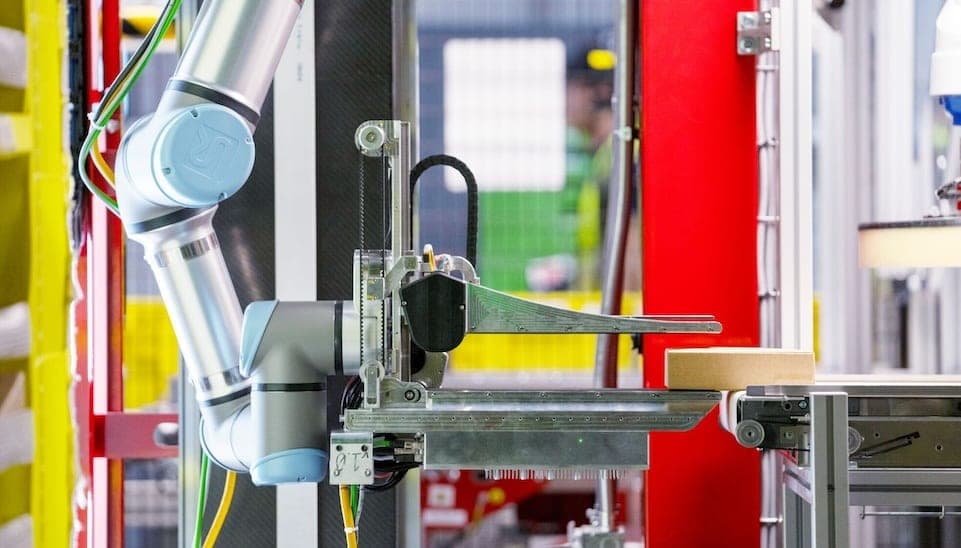
AWS releases open-source toolchain to train and deploy robot AI
Amazon Web Services launched the Physical AI Toolchain, an open-source kit that connects synthetic data, training, simulation and edge deployment for robots, built on NVIDIA's robotics software.
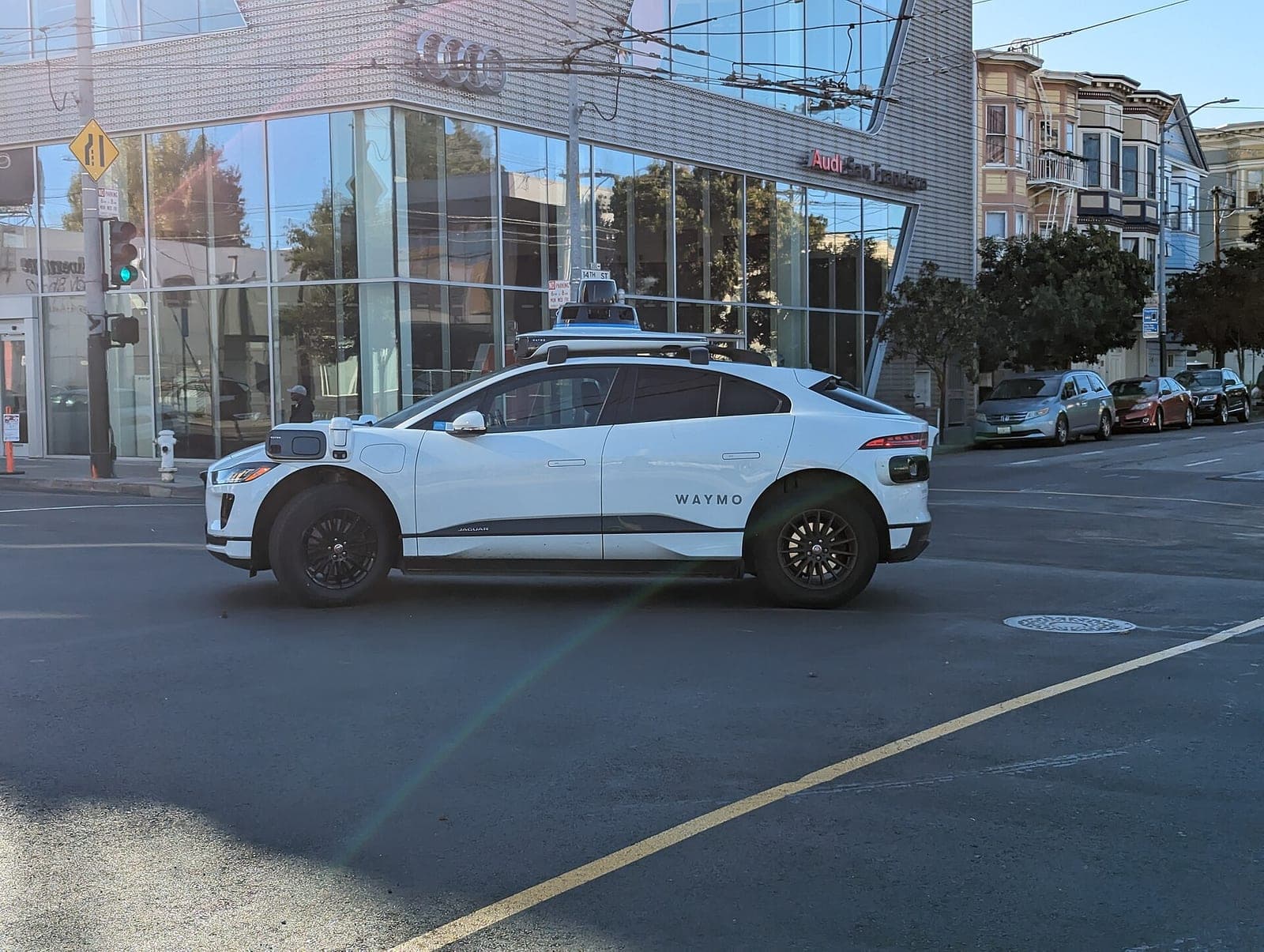
California will fine robotaxi companies that block first responders for over 30 minutes
Governor Gavin Newsom signed SB 1246, which requires robotaxi operators like Waymo, Tesla and Zoox to send on-site help when their cars cause problems, and to keep remote drivers in the US.
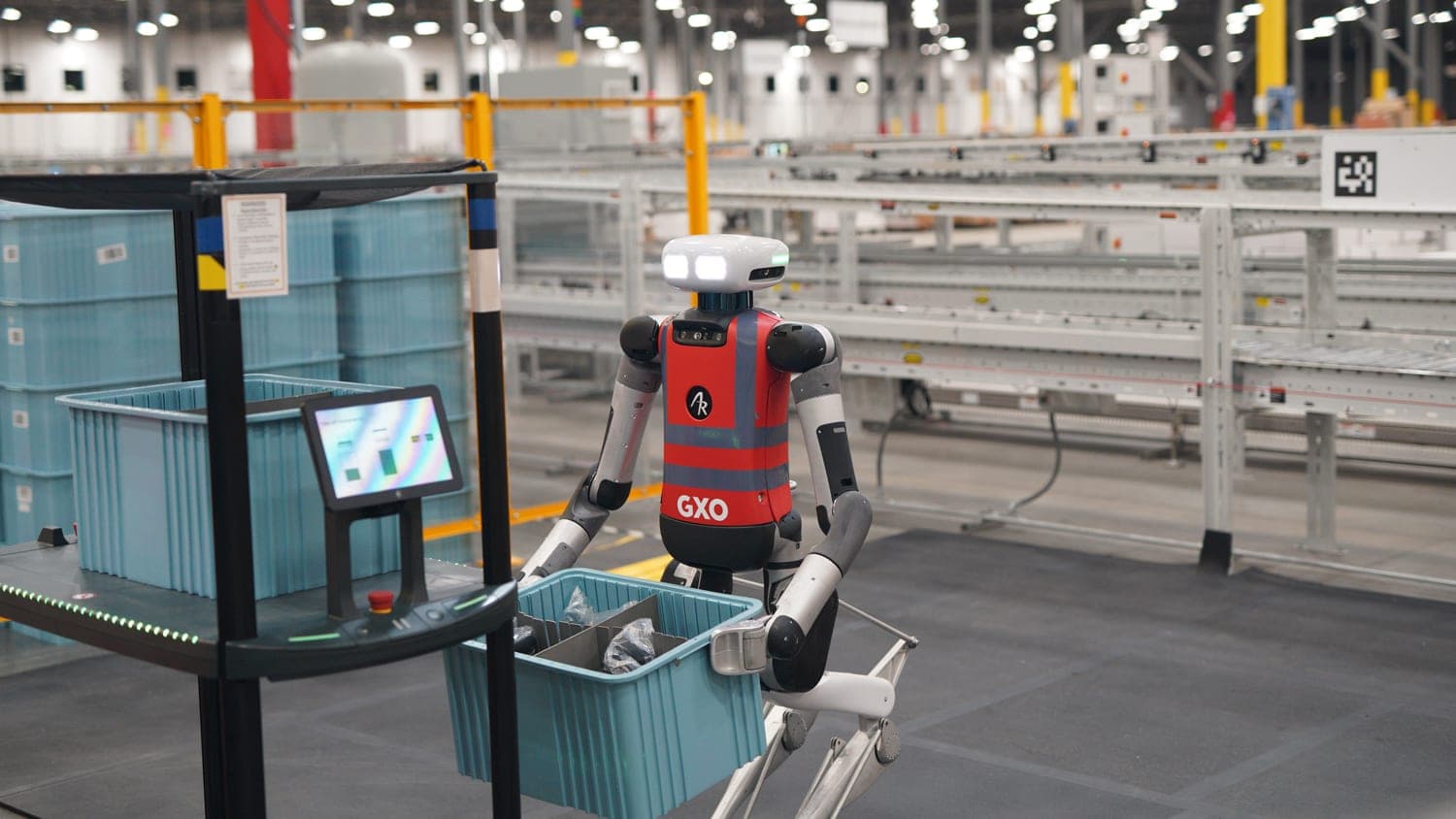
Agility picks Nyobolt batteries so Digit 5 can work 20 hours a day
Agility Robotics named UK battery maker Nyobolt as the supplier behind Digit 5's new pack, which runs for 90 minutes and recharges in nine.
More in brief
- E Ink's Kaleido 4 brings richer color and video to future e-readersOct 15
- Google shows it can grow quantum computing's rarest ingredient on its Willow chipOct 15
- Bank of America hired 1,000 contractors to patch bugs that AI models foundOct 15
- Microsoft takes down a phishing marketplace behind 1 billion scam messagesOct 15
- UK Legal Aid Agency hackers took records going back to 1978Oct 15
- United now lets you check if your flight has Starlink Wi-FiOct 15