
Technology·News & analysis
E Ink's Kaleido 4 brings richer color and video to future e-readers
E Ink announced Kaleido 4, the next version of the color screen inside most color e-readers, with double the color range, 50% more contrast and video at up to 18 frames per second.
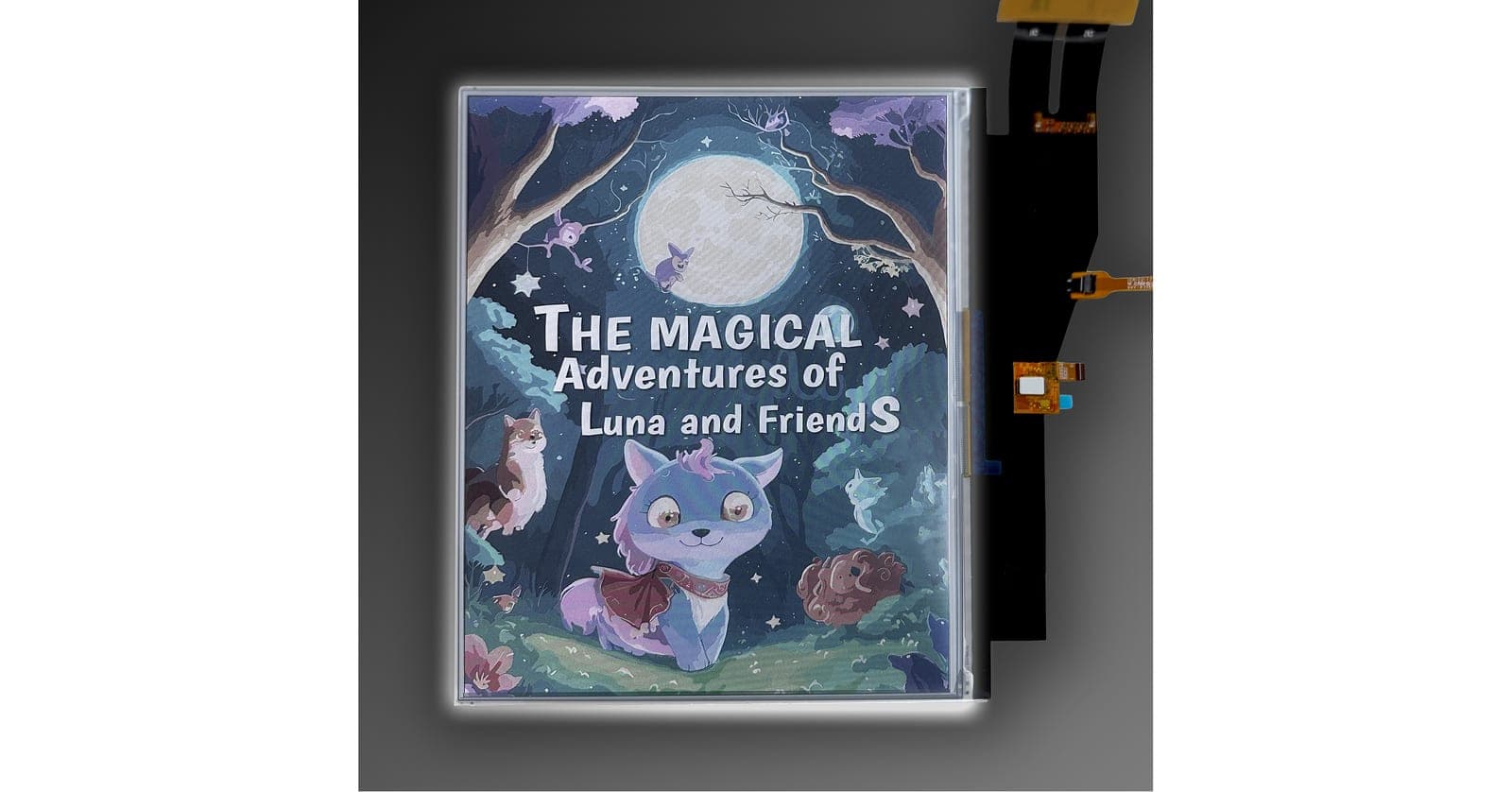
Tide
Ripple
Sci-fi
3/10
Reality
Demo
Paper that plays video, slowly, but it plays.How we rate
E Ink announced Kaleido 4, a new version of the color e-paper used in most color e-readers, with more than 40K colors, 15% brighter whites and 50% more contrast.
A new oxide backplane lets it refresh faster and play video at up to 18 frames per second. Kaleido screens are inside readers from Kobo, PocketBook and Boox. The first device, Hanvon's M10C II, is launching in China, and other brands haven't announced models yet.
What to know
- E Ink announced Kaleido 4, the next generation of the color e-paper used in e-readers from Kobo, PocketBook and Boox.
- E Ink says Kaleido 4 doubles color gamut volume to more than 40K colors, raises white reflectance by 15% and contrast by 50%.
- A new oxide TFT backplane allows faster refreshes and video playback at up to 18 frames per second.
- The first device to use it is Hanvon Technology's M10C II note-taking tablet, sold in China; Amazon and Kobo haven't announced Kaleido 4 devices.
E Ink announced Kaleido 4, the next version of the color screen found in most color e-readers. So will your next e-reader finally show color that doesn't look faded, and text that doesn't look gray?
What is Kaleido, anyway?
Kaleido is E Ink's main color e-paper technology. The current version, Kaleido 3, is inside e-readers and tablets from Kobo, PocketBook and Boox, The Verge reports. Amazon's Kindle Colorsoft uses a customized version.
Here's how it works. An ordinary e-paper panel has only black and white pigments. Kaleido lays a color filter over that panel, a bit like a stained-glass window on top of a newspaper.
That approach has a clear upside and a few downsides, according to The Verge:
- Speed: the screen refreshes fast, so turning pages feels quick.
- Color quality: colors show at a lower resolution than text and tend to look washed out.
- Text: the filter makes plain black and white text look darker than on a regular e-reader.
So color e-readers have always asked you to trade a little text clarity for color.
Who is E Ink?
E Ink is the company behind the paper-like screens in most e-readers. It's based on technology from MIT's Media Lab and is listed on Taiwan's Taipei Exchange, according to its announcement.
Its screens go well beyond books. E Ink lists e-readers and e-notes, electronic shelf labels in stores, digital signs and connected gadgets among its uses. The big selling point is low power: an e-paper screen only uses energy when the image changes.
What's new in Kaleido 4?
E Ink lists four main upgrades over the previous generation:
- Color: double the color gamut volume, to more than 40K colors.
- Brightness: white reflectance up 15%, so the page looks whiter.
- Contrast: up 50%.
- Motion: video playback at up to 18 frames per second, thanks to new algorithms.
E Ink says these changes also reduce how grainy the screen looks. The 50% contrast jump could matter most, because it targets the muddy text that has always been Kaleido's weak spot. The Verge makes the same point: brighter whites and stronger contrast should help plain text look cleaner.
Even doubled, the palette is far from a phone's. The Verge notes that modern LCD and OLED screens show millions of colors, and Kaleido 4 still shows color at a lower resolution than text.
Wait, video on e-paper?
Yes, slowly. E Ink says Kaleido 4 can play video at up to 18 frames per second.
Engadget puts that in perspective. It sounds tiny next to the 120Hz OLED screen in your phone. But e-paper is usually so slow that 18 fps is a real change.
The speed comes from a new oxide TFT backplane. That's the grid of tiny switches behind the screen that tells each dot what to do. E Ink says it supports higher driving voltages and faster refreshes.
Amazon made a similar change in the original Kindle Colorsoft, both The Verge and Engadget note.
The speed shows up in everyday use too. On the first Kaleido 4 device, E Ink and its partner say page turning and scrolling are 27% faster. That's the part you'd feel every time you flip a page or scroll a PDF, long before you ever try a video.
In real life If you read comics or cookbooks on a color e-reader, Kaleido 4 should make the pictures look less faded. If you mostly read novels, the bigger win is text that looks closer to black on white.
Why not use E Ink's other color screen?
E Ink also makes Gallery 3, a different color technology. Instead of a filter, it moves actual colored pigments around to form images. The reMarkable Paper Pro uses it.
Gallery 3 produces richer images and text, Engadget says. The catch is speed: it refreshes slowly, which The Verge says can feel frustrating to use.
That's why Kaleido stays the popular choice. It's like choosing between a fast sketch and a slow oil painting. Most people want the page to turn now.
Which device gets it first?
Hanvon Technology, a leader in China's e-reader market, is first. Its M10C II smart e-paper notebook is the world's first product with Kaleido 4, E Ink says. It's available only in China.
What the M10C II offers, according to E Ink's announcement:
- Speed: page turning and scrolling 27% faster, using the new backplane plus Hanvon's "Enhanced Pressure Floating" technology and T2000 timing controller.
- Light: a redesigned front light for more natural color.
- Pen: a wireless, battery-free pen with 8,192 levels of pressure sensitivity.
- Glass: micro-etched tempered glass that cuts glare and parallax and feels more like paper when you write.
- Software: OCR, voice and AI office apps, cloud library syncing, ripple reduction, better scaling for third-party apps and better font rendering.
"Color ePaper needs to deliver more than simply 'color,'" said Johnson Lee, Chairman and CEO of E Ink. He said the two companies want to expand color e-paper into "professional reading, learning and mobile office scenarios."
Wang Jie, Vice President of Hanvon Technology, called the launch "not simply a screen upgrade." He said Hanvon tuned the display, fast refresh, handwriting, recording and AI features together. The goal, in his words, is to take color e-paper "beyond reading devices" and into work like R&D tools, document review and meeting notes.
When will it reach my e-reader?
Nobody has said. Amazon and Kobo haven't announced any Kaleido 4 devices, The Verge reports.
The big picture: E Ink is pitching Kaleido 4 for more than books. Its announcement says e-paper is moving from e-books into classrooms and offices, where people read color PDFs, slide decks, data charts, school illustrations and engineering drawings. For that, E Ink says, color e-paper has to balance color, brightness, contrast and clarity.
What's next: don't expect a rush. The eBook Reader notes that it usually takes device makers a year or two to move to a new screen generation, and some keep selling the old one.
It also points out that Amazon doesn't name E Ink screen generations in its Kindle specs. So even if a future Kindle uses Kaleido 4, the box might not say so. Amazon's announcement for the new Kindle Colorsoft promised "a completely redesigned display" with higher contrast, but The eBook Reader thinks it's most likely not a Kaleido 4 screen. Our coverage of Amazon's redesigned Kindle lineup has the latest Colorsoft details.
Engadget adds that the real test is a side-by-side comparison with older Kaleido screens, which reviewers haven't done yet. The eBook Reader saw early comparison photos from China and said the difference looked hard to spot, though the photos themselves weren't very good.
What it means for you
- No rush to upgrade: no Kaleido 4 e-reader is sold outside China yet.
- Better text on color screens: 50% more contrast could close the gap with black and white e-readers.
- Richer pictures: comics, magazines and charts should look less faded.
- Wait for reviews: spec sheets are promising, but side-by-side tests will tell how big the change really is.
The bottom line
Kaleido 4 is a solid step for the screen inside most color e-readers: more color, more contrast and enough speed for basic video. For now it lives in one note-taking tablet in China. If Kobo, PocketBook or Boox pick it up, your next color e-reader could be the first one where you don't have to choose between color and crisp text.
Key facts
- Colors
- More than 40K, double the color gamut volume
- Contrast
- 50% higher than Kaleido 3
- White reflectance
- 15% higher
- Video
- Up to 18 fps
- First device
- Hanvon M10C II (China)
Got questions?
Quick answers, plain wordsWhat is E Ink Kaleido 4?
Kaleido 4 is the newest generation of E Ink's color e-paper screen technology, announced on October 15, 2026. It follows Kaleido 3, which is used in color e-readers and tablets from brands like Kobo, PocketBook and Boox.
What's better about Kaleido 4 than Kaleido 3?
E Ink says Kaleido 4 doubles the color gamut volume to more than 40K colors, increases white reflectance by 15% and improves contrast by 50%. It also refreshes faster and can play video at up to 18 frames per second.
Can Kaleido 4 play video?
Yes, at up to 18 frames per second, according to E Ink. That's slow next to a 120Hz phone screen, as Engadget points out, but fast for e-paper.
Which devices use Kaleido 4?
The first is Hanvon Technology's M10C II smart e-paper notebook. It's sold only in China. Amazon and Kobo haven't announced any devices with Kaleido 4 screens.
Will the next Kindle Colorsoft use Kaleido 4?
Amazon hasn't said. The Kindle Colorsoft uses a customized Kaleido screen, and Amazon doesn't name E Ink screen generations in its product details, according to The eBook Reader.
How is Kaleido different from E Ink Gallery 3?
Kaleido puts a color filter over a black and white e-paper panel, which refreshes fast but shows color at lower resolution. Gallery 3, used in the reMarkable Paper Pro, moves colored pigments to make richer images, but refreshes slowly.
Will text look sharper on Kaleido 4?
It could. The Verge notes that Kaleido 3's color filter makes plain text look darker. Kaleido 4's 15% brighter whites and 50% higher contrast should make text look less muddy, though reviewers still need to compare them side by side.
What is an oxide TFT backplane?
It's the layer of tiny switches behind the screen that drives each pixel. E Ink says Kaleido 4's new oxide backplane supports higher driving voltages and faster refreshes. Amazon used a similar change in the original Kindle Colorsoft.
What features does the Hanvon M10C II have?
Besides the Kaleido 4 screen, it has a redesigned front light, a battery-free pen with 8,192 pressure levels, micro-etched tempered glass that cuts glare, and OCR, voice and AI office apps. Hanvon says page turning and scrolling are 27% faster.
When will Kaleido 4 come to e-readers in the US?
No date has been announced. The eBook Reader notes that it usually takes device makers a year or two to switch to a new screen generation, and some keep selling older versions.
SourcesE Ink
Topics and tagse ink, e readers, displays, hardware
Related stories
Amazon redesigned the entire Kindle lineup and built a $35 remote so you never have to touch the screen
Amazon introduced a completely redesigned Kindle family with flush-front displays across every model, plus Kindle Click, a $35 Bluetooth remote for turning pages without touching the screen.
Formlabs launches Form Studio 1, a $699 resin 3D printer made for home use
The company behind pro printers for dentists and factories now sells a low-odor resin printer you can put on a desk, with shipping starting November 16.

AMD's 192GB 'Gorgon Halo' chip powers a $7,099 mini-PC for local AI
The Ryzen AI Max+ Pro 495 packs 192GB of unified memory into a mini-PC, enough in theory to run models with hundreds of billions of parameters, at a price that has doubled from a year ago.
More in brief
- Anthropic gives six METR researchers employee-like access to check its AIOct 15
- FTC subpoenas OpenAI and Anthropic over AI safety incidentsOct 15
- Google shows it can grow quantum computing's rarest ingredient on its Willow chipOct 15
- Volvo picks Nvidia to bring hands-free, door-to-door driving by 2030Oct 15
- Bank of America hired 1,000 contractors to patch bugs that AI models foundOct 15
- Microsoft takes down a phishing marketplace behind 1 billion scam messagesOct 15