
Technology·News & analysis
PHP patches two critical flaws that could let attackers take over servers
The PHP project released emergency updates for two flaws rated 9.2 out of 10. Cloudflare says attacks are already emerging, so admins are being told to update now.

Tide
Wave
Sci-fi
5/10
Reality
Shipping
AI models are now finding bugs in the code that runs the web.How we rate
The PHP project released emergency updates for two critical flaws, both rated 9.2 out of 10, that can let unauthenticated attackers run code on servers that handle web requests.
Cloudflare says early attacks are already emerging. Outlets cite estimates that up to 70% of websites could be affected. Only PHP 8.2 and newer get full patches, so admins are told to update now or take systems offline.
What to know
- The PHP project released PHP 8.5.12, 8.4.27, 8.3.36 and 8.2.35 on October 21, 2026 to fix two critical flaws, CVE-2026-109618 and CVE-2026-109619, both rated 9.2 out of 10.
- The flaws can allow unauthenticated remote code execution on any PHP installation that serves web requests, with the highest risk for Apache with mod_php.
- Cloudflare says it is already seeing early attacks, and agencies in the US, UK, EU and Australia urge admins to update or take sites offline.
- OpenAI says its GPT-5.6 Sol model found the flaws, and Wiz says it found them independently.
The PHP project announced emergency security updates on Wednesday for two critical flaws. Left unpatched, they can let an attacker run their own code on a web server without ever logging in.
That is the news. The bigger question is why so many people are suddenly checking which version of PHP their website runs.
What is PHP, and why does this matter?
PHP is a free, open-source programming language that much of the web is built on. Wired says it has grown from the 1990s into an essential scripting language for websites and software.
Publishing systems like WordPress and Drupal run on it, and so does the e-commerce platform Magento. AppleInsider adds Joomla to that list.
The big picture: CNET cites the Wall Street Journal, which says the flaws could affect up to 70% of the world's websites. That is an estimate from the outlet, not a count from the PHP project.
What exactly are the two flaws?
The PHP project published both advisories on its website. Each one is rated 9.2 out of 10 for severity.
- CVE-2026-109618: out-of-memory handling can interrupt PHP while internal request data is only partly set up. Cleanup may then treat that broken data as valid.
- CVE-2026-109619: request-owned internal state can outlive the memory behind it. A later request handled by the same worker may use that stale state before it is reset.
Both can lead to remote code execution, which means an attacker makes your server run their commands. The PHP project says the risk is highest for Apache with mod_php, where an unauthenticated request can trigger the attack before any application code runs.
In real life Imagine a shop where every customer's note gets handled at the same counter. These bugs let a stranger slip a note that makes the counter staff do what the stranger wants, before anyone checks who they are.
Who is at risk?
The PHP project says the flaws affect all PHP installations serving web requests. That includes PHP-FPM, Apache with mod_php, php-cgi, FrankenPHP and LiteSpeed.
Wired reports the flaws go back to PHP 5, released in July 2004. Only PHP 8.2 and newer still get patches, which is where the trouble sits.
The catch: Wired points out that foundational web layers like PHP can sit forgotten in old infrastructure. A server nobody has touched in years may still be reachable from the internet.
How do you fix it?
Update to PHP 8.5.12, 8.4.27, 8.3.36 or 8.2.35. The PHP project says Linux distributions and long-term support vendors received the patches in advance, so check your vendor for updated packages.
For PHP 8.1 and older, the project no longer ships updates. Its security team provided minimal source backports for PHP 7.4, 8.0 and 8.1, and some vendors offer their own fixes, so the advice is to contact your vendor or move to a supported version.
"There are no complete mitigations, updating is the only safe choice," the PHP Foundation wrote in its advisories, as quoted by Wired.
Is there a stopgap if you cannot update today?
The PHP project lists partial measures, and it is blunt that they do not make an installation safe. They only reduce exposure to specific attack paths.
- Memory limit: set memory_limit to -1 in a way applications cannot override, such as php_admin_value in the FPM pool or the Apache configuration.
- Upload size: set a low post_max_size, 8M for apps that need no uploads or 32M for those that do.
- Session progress: set session.upload_progress.enabled to 0 and restart every worker.
- PHP 8.5: set fatal_error_backtraces to 0, which blocks one confirmed path.
The PHP project also suggests limits at the web server or proxy, covering decoded request size, input field count, multipart part count, header count and nesting depth. Those limits should apply to requests without a usable Content-Length too.
For availability, it recommends a container or cgroup limit that kills only the affected worker. It warns against using RLIMIT_AS or RLIMIT_DATA, since those can cause the vulnerable allocation failure.
Treat that list as a bandage while you schedule the real update.
Are attacks already happening?
Cloudflare says yes. CNET reports that Cloudflare's chief technology officer, Dane Knecht, said the company deployed a firewall fix but was still seeing early attacks emerging.
Wired says Cloudflare reported early attacks before the PHP Foundation had even detailed the flaws. The security firm Sansec wrote ahead of the release that it expected mass attacks within 15 minutes.
Wired also cites reports from Bleeping Computer and Ars Technica that some details may have leaked before the official release. The PHP site had warned it could release early if details became public or if exploitation appeared in the wild.
What are governments and experts saying?
The PHP project gave advance notice on October 20 without naming versions or details. Agencies then told teams to get ready.
- UK NCSC: organizations should prepare for immediate updating and consider taking systems offline until they are fully fixed.
- CERT-EU and Australia's ACSC: both told IT teams to be ready to update, with the possibility of temporary downtime.
- NSA Cyber: posted an advisory urging organizations that use PHP to prepare for the update.
- FBI: cyber assistant director Brett Leatherman asked victims to isolate systems, keep web server and PHP logs, and report to a local FBI field office.
Security consultant Lukasz Olejnik told Wired, "This is not a drill," and warned that the worst case is wormable malware. Consultant Davi Ottenheimer described the bug as a front door with no lock, since one crafted upload to any server is the whole attack.
How did AI find the bugs?
OpenAI said in a blog post that its GPT-5.6 Sol model discovered the vulnerabilities, according to CNET. OpenAI added that Wiz identified them independently.
Wired reports that Wiz says it used AI tools in part, and that OpenAI and Calif say they found the issues independently and then worked together. Wiz also built a demonstration it calls php2shell and says the flaws can sometimes be exploited fairly easily.
Wiz writes that attackers could execute code on affected servers or read sensitive process memory. That memory may hold passwords, tokens, API keys and certificates.
Why it matters: OpenAI said this incident shows how AI can uncover security flaws with internet-scale impact. The same abilities can help attackers build exploits quickly. For another side of AI and bug reports, see our story on Google pausing its open source bug bounty.
What it means for you
- If you run a website: ask your host or developer which PHP version you use, and update to a fixed release today.
- If you use WordPress or similar: the fix is at the server level, so check your hosting provider's notices, not only plugin updates.
- If you run old PHP: versions before 8.2 get no regular patches, so contact your vendor or plan an upgrade.
- If you only browse: nothing to install, but expect some sites to go down briefly while they patch.
The bottom line
Two critical PHP flaws are now fixed in four supported versions, and attacks have started. The fix is simple to describe and slow to spread across millions of servers.
If a site you rely on is offline for a few hours, a patch is probably the reason.
Key facts
- CVE numbers
- CVE-2026-109618 and CVE-2026-109619
- Severity
- 9.2 out of 10 (critical)
- Fixed in
- PHP 8.5.12, 8.4.27, 8.3.36 and 8.2.35
- Released
- October 21, 2026, just before 10 a.m. ET
- Reach
- Up to 70% of websites, per the Wall Street Journal
Got questions?
Quick answers, plain wordsWhat are the two PHP vulnerabilities?
They are CVE-2026-109618 and CVE-2026-109619. The first involves out-of-memory handling that can leave request data half initialized. The second lets request state survive after its memory was freed. Both can lead to remote code execution.
How serious are they?
Both are rated 9.2 out of 10 on the CVSS scale, which the PHP Foundation calls critical. They can be exploited without logging in, and the PHP project says there is no complete mitigation besides updating.
Which PHP versions fix the flaws?
PHP 8.5.12, 8.4.27, 8.3.36 and 8.2.35. Source downloads and Windows binaries are on the PHP downloads page, and Linux distributions received the patches in advance.
Am I affected if I run an old PHP version?
Very likely yes. Wired reports the flaws reach back to PHP 5, released in July 2004. PHP 8.1 and older no longer get project updates, though the PHP security team provided minimal source backports for 7.4, 8.0 and 8.1, and some vendors ship their own fixes.
Do WordPress and similar sites need action?
Sites built on PHP, such as WordPress, Drupal, Joomla and Magento, run on the language underneath. Their owners or hosts need to update the PHP version itself, so check with your hosting provider.
Is anyone attacking these flaws already?
Cloudflare says it is seeing early attacks emerging, and it has deployed a firewall fix. Sansec wrote ahead of the release that it expected mass attacks within 15 minutes.
Do regular internet users need to do anything?
AppleInsider notes that there are no patches needed for browsers or apps. The work falls on whoever runs the web server, though you may see more site outages than usual.
Who found the vulnerabilities?
OpenAI says its GPT-5.6 Sol model discovered them, and that Wiz identified them independently. Wired adds that OpenAI and the security firm Calif say they worked together.
Can I protect my server without updating?
The PHP project lists partial measures, such as a low post_max_size and turning off session.upload_progress. It states clearly that these reduce exposure but do not make an installation safe, so updating is the real fix.
SourcesPHP
Topics and tagsCybersecurity, php, cybersecurity, vulnerabilities
Related stories
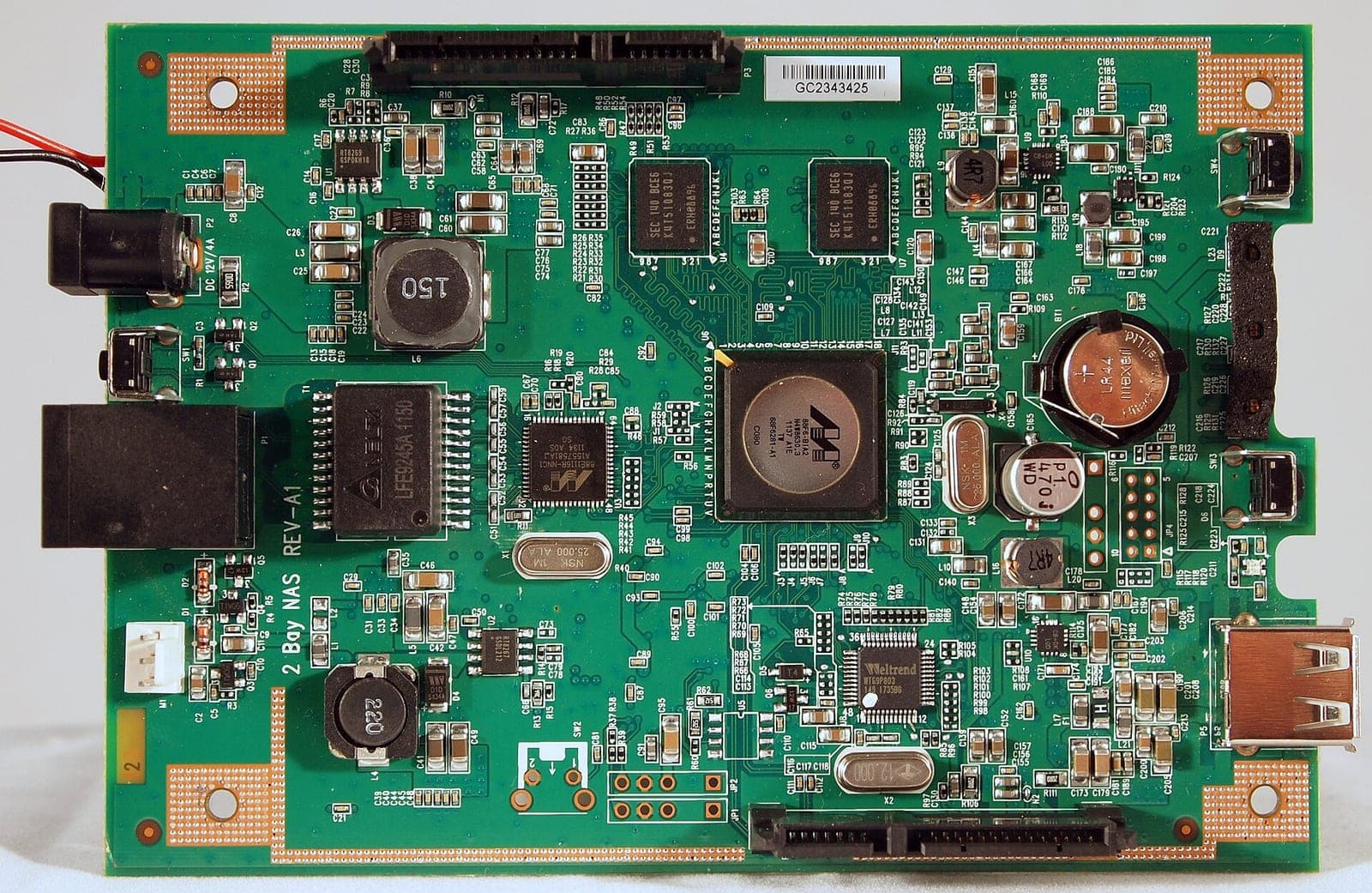
Hackers turned old D-Link and Ubiquiti devices into paid internet proxies
GreyNoise found an attacker who broke into at least 143 storage boxes, video recorders and servers in 34 countries and quietly signed them up to a pay-for-bandwidth app.
Microsoft takes down a phishing marketplace behind 1 billion scam messages
Microsoft and Health-ISAC seized domains behind YAM Store, CoGUI and Iron Man, three services that sold scammers accounts, fake websites and ready-made lures used in more than 1 billion messages this year.

UK Legal Aid Agency hackers took records going back to 1978
Eighteen months after the attack, the Ministry of Justice says about 250,000 stolen Legal Aid Agency records predate 2007, and some probation data was taken too.
More in brief
- Meta pauses Muse chat sharing after 6,800 links surface in DNSOct 21
- ChatGPT now lets you lock sensitive chats behind a PINOct 20
- Antigravity halves the A1 drone's entry price with watch and ring controlsOct 20
- Perplexity Computer can now run fully on your Mac, even offlineOct 20
- HPE is sending an AI computer to the Moon on Astrolab's FLIP roverOct 20
- Yelp's new AI agent will phone restaurants to check the wait for youOct 20