
Technology·News & analysis
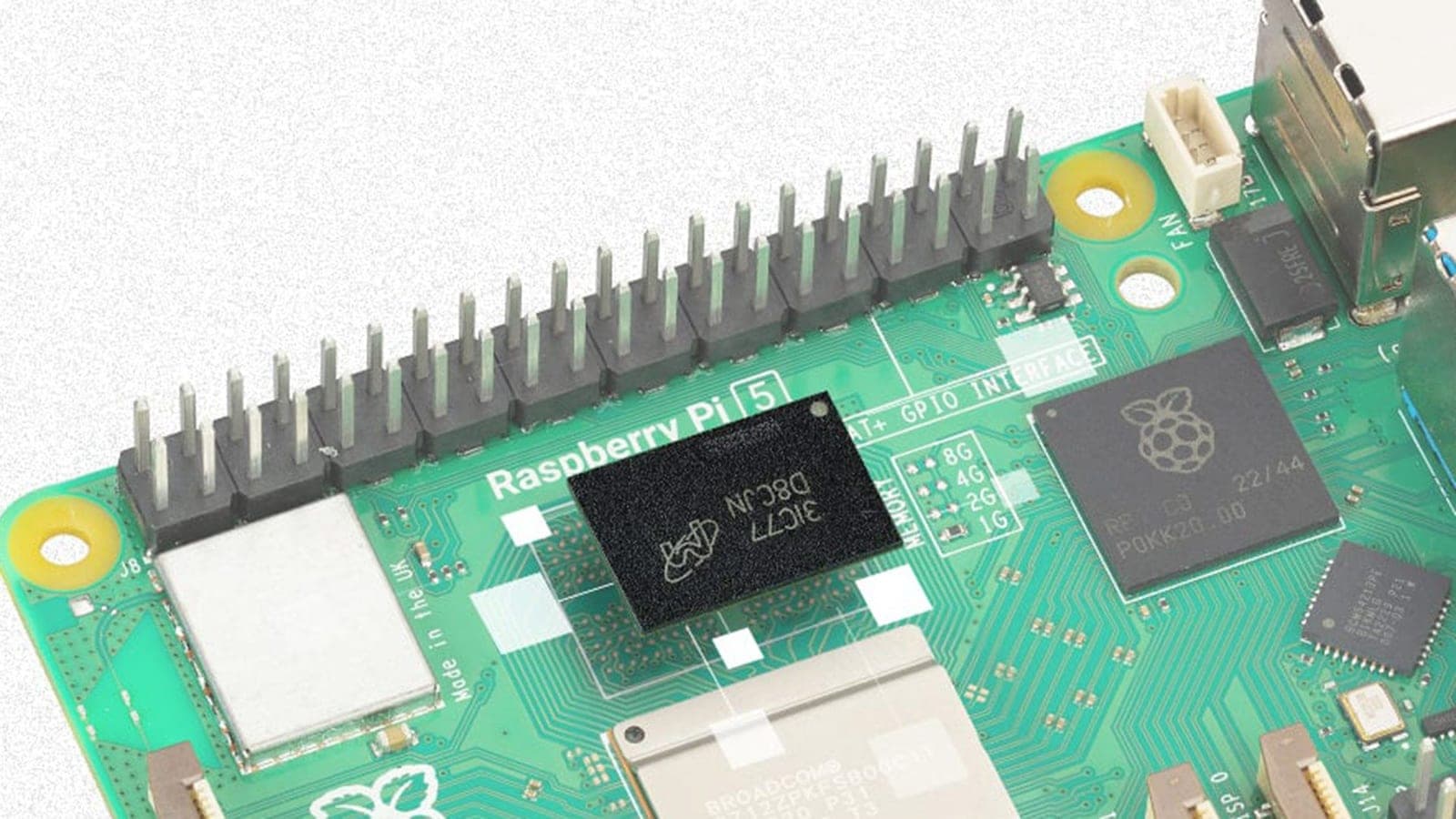
The 16GB Raspberry Pi 5 now costs $385, triple its launch price
Raspberry Pi added $80 to its top Pi 5 model, blaming a memory shortage it calls unavoidable but temporary. Makers are already looking at cheaper boards and mini PCs.
Tide
Ripple
Sci-fi
2/10
Reality
In your hands
A pocket computer priced like a small desktop.How we rate
Raspberry Pi raised the price of its 16GB Pi 5 by $80 to $385, more than triple its $120 launch price.
The 16GB Compute Module 5 went up $40 as well. CEO Eben Upton blames a lack of alternative supply for 16GB memory chips, in a long-running memory shortage. Raspberry Pi says it hopes to roll the increases back when memory costs fall, but it gave no date.
What to know
- The 16GB Raspberry Pi 5 rose $80 to $385, more than triple the $120 it cost at launch.
- The 16GB Compute Module 5 went up $40 and now costs between $375 and $415, according to The Verge.
- CEO Eben Upton says the rise is unavoidable because there is no alternative supply of 16GB memory chips.
- Upton says the company wants to roll prices back once memory costs fall, and tells buyers not to pay for more memory than they need.
Raspberry Pi has raised the price of its top Pi 5 again, and the number is hard to ignore. The 16GB model now costs $385, which is more than triple what it cost when it launched.
So how does a board built to be cheap end up costing this much? The short answer is memory, and the longer answer is below.
What exactly got more expensive?
The big picture: The Verge reports that the Raspberry Pi 5 with 16GB of RAM now costs $385 after an $80 increase. RAM is the short-term memory a computer uses while it works. This model launched at $120.
The change took effect immediately, according to Tom's Hardware. Two other products are affected:
- Raspberry Pi 5, 16GB: up $80, now $385.
- Compute Module 5, 16GB: up $40, now between $375 and $415, The Verge reports. A compute module is a bare Pi brain on a small board that companies build into their own gadgets.
- Raspberry Pi 500+, 16GB: price held. Tom's Hardware notes it already costs $485.
Tom's Hardware adds that the Compute Module 5 16GB launched at $135 and has also been raised before.
Why is memory so expensive?
Why it matters: The reason behind the rise is the same one behind many price hikes this year. Memory chips are in short supply, and AI data centers are buying a large share of them.
Raspberry Pi CEO Eben Upton says these particular rises came from a lack of "alternative supply" for 16GB DRAM. DRAM is the common type of memory chip used as RAM. The Verge says this comes on top of shortages of other components.
Tom's Hardware quotes Upton describing "the steep rises in the cost of memory over the past two years." He explained that other computer makers have had to make similar decisions lately. He also said Raspberry Pi had been doing what it could to limit the costs passed on to customers.
Is this the first increase?
By the numbers: No. Tom's Hardware calls it one of several waves of price increases since what it nicknames the "RAMpocalypse" began. The 16GB model had risen before, which is how an $80 jump took it to $385.
Here is the recent timeline from the outlets we read:
- December 2025 and February 2026: earlier increases, which TechRadar says were blamed on competition for chip-making capacity.
- April 2026: a round of rises of roughly $11 to $150 depending on the model, TechRadar reports. Upton said memory chip prices for the Pi 4 and Pi 5 had gone up about sevenfold in a year.
- October 2026: the 2GB Pi 4 and Pi 5 went up by $12.50, to $67.50 and $77.50, Tom's Hardware reports.
- November 2, 2026: the 16GB Pi 5 and 16GB Compute Module 5 rise.
The 1GB boards have not risen recently. In April, TechRadar says, some older "classic" products that use stock chips were not affected, such as the Pi Zero family.
Why do the biggest boards get hit hardest?
The catch: Upton explained in April that the higher-capacity memory has the tightest supply, so it gets pricier first. The 16GB chip has no easy substitute, which is exactly what he cited this time.
The gap between models shows it. Tom's Hardware points out that a 2GB Pi 5 now costs $77.50 while the 16GB model costs $385. That is nearly five times as much for eight times the memory.
Raspberry Pi has tried to soften the blow before. In April it launched a new Pi 4 with 3GB of memory, priced at $83.75, to give buyers a middle option, according to TechRadar. Upton said the company was doing engineering work to expand the range of memory sizes it offers.
In real life Say you want a Pi to run a home media server. You do not need 16GB for that. A cheaper model does the job, and the $385 board would be like renting a truck to carry one bag of groceries.
How do the cheaper boards compare?
By the numbers: Tom's Hardware looked at the small boards in its October report. The Pi 5 with 2GB launched two years ago at $50. It crept up and then stayed at $65 for a long time. It now sells for $77.50, which is 55% above its launch price.
The Pi 4 with 2GB tells a similar story. It launched at $45, was cut to $35 when memory got cheaper, and reached $55 before the latest rise. It now costs $67.50.
So the pain is real across the range. It is simply much bigger at the top, where one board now costs about as much as a small desktop PC.
What does Raspberry Pi say you should do?
What's next: Upton did not hide that the rises are unpopular. He said, in the words quoted by The Verge: "Though these increases are unavoidable, we know they are unwelcome news for our customers."
His advice is simple. Upton encourages buyers to "make sure you're not paying for more memory than you need." He suggested Pis with less memory, or older Pi models, as alternatives to the 16GB board.
He also repeated a promise. The Verge quotes him saying the current memory situation is difficult but ultimately temporary, and that Raspberry Pi looks forward to rolling back its increases when memory costs fall again. No timeline was given.
Are makers walking away?
Why it matters: Tom's Hardware thinks the price could hurt Raspberry Pi's business in particular. Pi boards were designed around a tight budget, and for years they stuck to a target price of $25 to $35.
The outlet says the company is now squeezed from both sides. At the low end, simple microcontrollers are popular for small projects. A microcontroller is a tiny, cheap chip that runs one program, with no screen or full operating system. Tom's Hardware names the Raspberry Pi Pico and ESP32 boards.
At the high end, with some Pis approaching $400 or $500, makers start to look at entry-level mini PCs. Tom's Hardware says a cheap mini PC can have a stronger processor and graphics, can be easier to expand, and can run the most popular operating systems and apps. The Verge makes a similar comparison, noting that the 16GB Pi 5 is nearing the price of a desktop mini PC.
Tom's Hardware also reported earlier that a bare-bones board, where hobbyists solder on their own memory, is not an easy way out. It says recent firmware, which means the built-in software that runs the board, now locks devices to their official factory memory sizes.
What it means for you
- If you need a Pi 5 for a normal project, look at the 2GB, 4GB or 8GB versions first. Most hobby uses do not need 16GB.
- If you build products with a Compute Module, expect higher bills on the 16GB versions and check the current prices before ordering.
- If you already own a Pi, nothing changes. The rise only affects new purchases.
- If you were waiting for a price drop, Upton says increases should roll back when memory gets cheaper, but there is no date.
The bottom line
The 16GB Raspberry Pi 5 now costs $385, up $80 and more than three times its launch price. Raspberry Pi blames the lack of alternative supply for 16GB memory chips and calls the rise unavoidable but temporary.
For most people, the smart move is the one the company itself suggests: buy the amount of memory your project actually needs. The cheaper boards are still there, and they do most of the work.
Key facts
- New price, 16GB Pi 5
- $385 (up $80)
- Launch price, 16GB Pi 5
- $120
- 16GB Compute Module 5
- Up $40, now $375 to $415
- 16GB Raspberry Pi 500+
- Held at $485
Got questions?
Quick answers, plain wordsHow much does the 16GB Raspberry Pi 5 cost now?
$385. That is an $80 increase, and it took effect immediately, according to Tom's Hardware.
What did the 16GB Raspberry Pi 5 cost at launch?
$120. The price is now more than three times that.
Why did Raspberry Pi raise the price?
CEO Eben Upton points to a lack of alternative supply for 16GB memory chips, on top of shortages of other components and steep memory cost rises over the past two years.
Which other products got more expensive?
The 16GB Raspberry Pi Compute Module 5 rose $40. The Verge says the 16GB versions now cost between $375 and $415.
Did the Raspberry Pi 500+ get more expensive too?
No. Tom's Hardware reports the price of the 16GB Raspberry Pi 500+ all-in-one keyboard computer is being held. It already costs $485.
Will the prices come back down?
Upton says the memory market is difficult but ultimately temporary, and that Raspberry Pi looks forward to rolling back its increases when memory costs fall. He gave no date.
Is there a cheaper way to get a Raspberry Pi 5?
Yes. Lower-memory versions cost far less. Tom's Hardware says the 2GB Pi 5 went up $12.50 to $77.50 a month ago, and 1GB models have not risen recently.
What does Raspberry Pi suggest buyers do?
Upton asks buyers to make sure they are not paying for more memory than they need, and suggests Pis with less memory or older Pi models as alternatives.
SourcesThe Verge
Topics and tagsraspberry pi, ram shortage, hardware, prices
Go deeper
Related stories

E Ink's Kaleido 4 brings richer color and video to future e-readers
E Ink announced Kaleido 4, the next version of the color screen inside most color e-readers, with double the color range, 50% more contrast and video at up to 18 frames per second.
Formlabs launches Form Studio 1, a $699 resin 3D printer made for home use
The company behind pro printers for dentists and factories now sells a low-odor resin printer you can put on a desk, with shipping starting November 16.

Amazon redesigned the entire Kindle lineup and built a $35 remote so you never have to touch the screen
Amazon introduced a completely redesigned Kindle family with flush-front displays across every model, plus Kindle Click, a $35 Bluetooth remote for turning pages without touching the screen.
More in brief
- Anthropic confirms Claude Code now steers away from cloning existing gamesNov 2
- Canada stopped changing clocks, and Microsoft's calendars are catching upNov 2
- Affinity for iPad launches, and it is free for individualsNov 2
- Supermarket freezer hacks spread to Belgium, Sweden and beyondNov 2
- Linux 7.4 has the biggest merge window ever, and AI is behind much of itNov 2
- UK landlines switch off on January 31, and Openreach says no extensionNov 1